
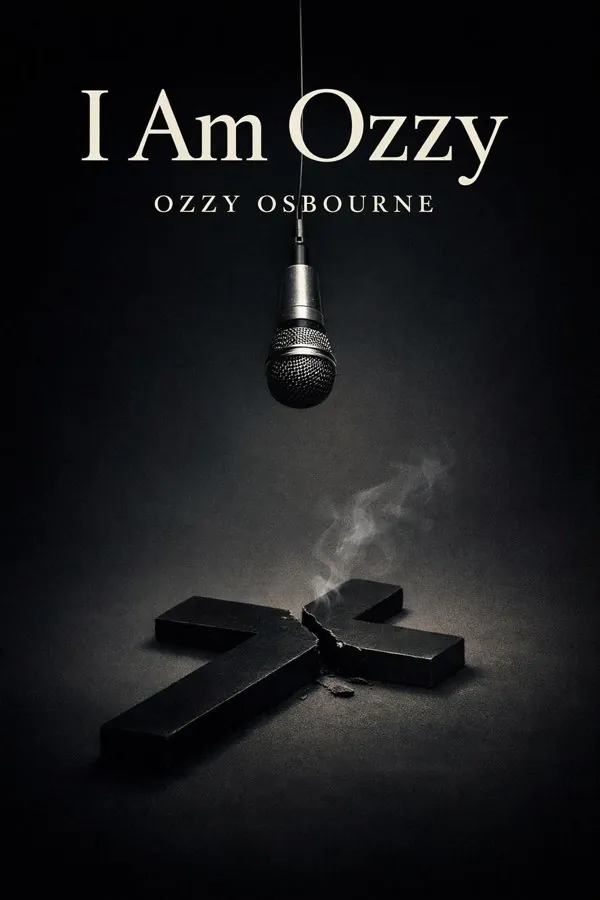
I Am Ozzy: Summary & Key Insights
 10 min9 chaptersAudio available
Key Takeaways from I Am Ozzy
A hard beginning does not guarantee a hard ending, but it leaves marks that shape everything that follows.
Sometimes the first real lifeline in a difficult life is not a person but a possibility.
Revolutions often begin by accident, when a group of misfits responds honestly to the world around them.
Success does not cure inner chaos; it often gives that chaos more room to grow.
The most entertaining stories in a memoir can hide the darkest pattern underneath.
What Is I Am Ozzy About?
I Am Ozzy by Ozzy Osbourne is a biographies book spanning 4 pages. Some lives feel too chaotic to be real, and Ozzy Osbourne’s is one of them. I Am Ozzy is the unfiltered autobiography of a man who rose from poverty in Birmingham to become the unmistakable voice of Black Sabbath, a solo rock legend, and an unlikely television star. But this is not a polished celebrity memoir built around image control. It is a blunt, funny, frequently shocking account of survival through violence, addiction, fame, failure, and reinvention. Ozzy writes the way he speaks: rough, self-mocking, emotionally direct, and often more reflective than his public persona suggests. What makes this book matter is not just the backstage mythology. Beneath the outrageous stories is a serious portrait of class, trauma, self-destruction, loyalty, and resilience. Ozzy shows how talent can emerge from unlikely places, how success can magnify personal demons, and how family and persistence can pull someone back from the edge more than once. As the frontman of Black Sabbath and later a solo artist with a career spanning decades, he has lived through multiple eras of popular culture. That experience gives his story weight, while his honesty gives it heart.
This FizzRead summary covers all 9 key chapters of I Am Ozzy in approximately 10 minutes, distilling the most important ideas, arguments, and takeaways from Ozzy Osbourne's work. Also available as an audio summary and Key Quotes Podcast.
I Am Ozzy
Some lives feel too chaotic to be real, and Ozzy Osbourne’s is one of them. I Am Ozzy is the unfiltered autobiography of a man who rose from poverty in Birmingham to become the unmistakable voice of Black Sabbath, a solo rock legend, and an unlikely television star. But this is not a polished celebrity memoir built around image control. It is a blunt, funny, frequently shocking account of survival through violence, addiction, fame, failure, and reinvention. Ozzy writes the way he speaks: rough, self-mocking, emotionally direct, and often more reflective than his public persona suggests.
What makes this book matter is not just the backstage mythology. Beneath the outrageous stories is a serious portrait of class, trauma, self-destruction, loyalty, and resilience. Ozzy shows how talent can emerge from unlikely places, how success can magnify personal demons, and how family and persistence can pull someone back from the edge more than once. As the frontman of Black Sabbath and later a solo artist with a career spanning decades, he has lived through multiple eras of popular culture. That experience gives his story weight, while his honesty gives it heart.
Who Should Read I Am Ozzy?
This book is perfect for anyone interested in biographies and looking to gain actionable insights in a short read. Whether you're a student, professional, or lifelong learner, the key ideas from I Am Ozzy by Ozzy Osbourne will help you think differently.
- ✓Readers who enjoy biographies and want practical takeaways
- ✓Professionals looking to apply new ideas to their work and life
- ✓Anyone who wants the core insights of I Am Ozzy in just 10 minutes
Want the full summary?
Get instant access to this book summary and 100K+ more with Fizz Moment.
Get Free SummaryAvailable on App Store • Free to download
Key Chapters
A hard beginning does not guarantee a hard ending, but it leaves marks that shape everything that follows. Ozzy Osbourne’s childhood in Aston, a working-class district of Birmingham, is central to understanding the rest of his life. He grows up in a crowded home with little money, limited opportunity, and constant pressure. School is not a refuge. He struggles academically, feels misunderstood, and carries shame from dyslexia, bullying, and his inability to fit neatly into the systems around him. In many ways, his early life teaches him two conflicting lessons: first, that the world can be harsh and humiliating; second, that humor and rebellion can help you survive it.
Before music becomes a path forward, he drifts through low-paying jobs and petty crime, ending up in jail after a failed burglary. That episode matters because it becomes one of the first moments when he sees where a directionless life can lead. He is not a romantic outlaw in these chapters. He is scared, lost, and deeply aware that he could disappear into the background like many boys from his neighborhood.
What makes this section powerful is how ordinary it feels. Ozzy’s beginnings are not glamorous. They are full of frustration, boredom, and the desire to escape. That makes his later rise more meaningful. His story reminds readers that talent often grows in places ignored by society, and that early failure does not cancel future possibility.
In practical terms, this chapter speaks to anyone who has felt trapped by class, education, or circumstance. Your environment influences you, but it does not have to define your final identity. Actionable takeaway: identify one label from your past that still limits you, and consciously replace it with a skill or ambition you can build today.
Sometimes the first real lifeline in a difficult life is not a person but a possibility. For Ozzy, music is that possibility. Hearing the Beatles changes his sense of what a life could look like. Suddenly, someone from England, from ordinary streets rather than aristocratic circles, can become larger than life. That revelation is crucial. Music does not simply entertain him; it gives him a framework for identity. Instead of being the boy who struggles in school and drifts between trouble and dead-end work, he can become someone with a voice, purpose, and tribe.
This shift illustrates an important principle: art can offer both expression and direction. Ozzy is not academically gifted in conventional terms, but he has instinct, charisma, and emotional force. The book shows how raw ability often appears messy before it becomes marketable. Early rehearsals, local gigs, and forming bands are less about instant success than about persistence and experimentation. He is trying on futures until one starts to fit.
Readers can apply this lesson far beyond music. Many people discover confidence only after finding a domain where their unusual qualities become assets instead of liabilities. The loud kid becomes a performer. The obsessive kid becomes an expert. The outsider becomes an innovator. Ozzy’s journey underscores that identity is often built by action rather than discovered through introspection alone.
The practical example here is simple: if your current environment keeps reflecting your weaknesses back at you, seek a context that rewards your strengths. That may mean joining a creative group, learning a new craft, or returning seriously to an old passion. Actionable takeaway: choose one activity that makes you feel more like yourself, and give it a fixed place in your weekly routine.
Revolutions often begin by accident, when a group of misfits responds honestly to the world around them. Ozzy’s meeting with Tony Iommi, Geezer Butler, and Bill Ward leads to the formation of Black Sabbath, but the band’s significance goes far beyond success. They create a sound that reflects industrial Birmingham: dark, heavy, bleak, and powerful. While others are chasing polished optimism, they turn anxiety, gloom, and aggression into music. In doing so, they help invent heavy metal.
One of the most striking insights in this part of the book is that innovation does not always come from a master plan. Black Sabbath does not sit down and decide to create a new genre. They combine their influences, limitations, personalities, and surroundings, and something original emerges. Tony’s guitar style, shaped partly by a factory accident that injured his fingers, becomes central to the band’s heavy sound. Geezer brings darker lyrical themes. Ozzy contributes a voice that is vulnerable, eerie, and instantly recognizable. Together, they transform personal and environmental hardship into artistic identity.
This is a useful lesson for teams in any field. Great collaboration is not about finding people who are identical. It is about combining distinct strengths into something none of them could produce alone. Black Sabbath works because each member supplies a different energy, and because they all take their atmosphere seriously rather than imitating others.
For creators, entrepreneurs, and professionals, this chapter is a reminder to stop apologizing for what makes your perspective unusual. Your background may contain the seed of your originality. Actionable takeaway: look at one constraint or hardship in your life or work, and ask how it might become a source of distinction rather than a disadvantage.
Success does not cure inner chaos; it often gives that chaos more room to grow. As Black Sabbath rises, Ozzy enters the surreal world of touring, money, and recognition. Yet the book makes clear that fame is not a clean reward for effort. It intensifies impulses already present: insecurity, excess, impulsiveness, and addiction. The same unpredictability that makes Ozzy magnetic onstage becomes dangerous offstage. The myths of rock stardom begin to merge with self-destruction.
This section matters because it strips away the fantasy that achievement automatically produces stability. Ozzy gets what many people dream about, but the emotional infrastructure needed to handle it is missing. There is little routine, little accountability, and constant access to substances. The environment rewards extremity. Wild stories become part of the brand, and the line between performance and real collapse starts to blur.
The broader application is relevant to modern life, even outside celebrity culture. Promotions, public attention, rapid business growth, and sudden wealth can expose personal weaknesses rather than resolve them. If someone lacks discipline, balance, or self-awareness before success, external rewards may make the problem bigger. That is why internal habits matter as much as ambition.
Ozzy’s honesty here invites readers to ask a difficult question: what in my life would become dangerous if amplified? Maybe it is stress, ego, spending, drinking, or the inability to rest. Recognizing that in advance is a form of wisdom. Actionable takeaway: identify one habit that would become destructive under greater pressure or freedom, and put a concrete boundary around it now before circumstances do it for you.
The most entertaining stories in a memoir can hide the darkest pattern underneath. I Am Ozzy contains outrageous episodes involving alcohol, drugs, and reckless behavior, but the deeper point is not spectacle. Addiction repeatedly strips Ozzy of judgment, relationships, health, and control. He becomes trapped in a cycle familiar to many readers: temporary relief, worsening behavior, guilt, promises to change, then relapse. The rock-and-roll setting may be extreme, but the psychological loop is recognizable.
What makes Ozzy’s account compelling is that he does not present himself as a glamorous rebel. He often sounds bewildered by his own behavior, aware that he is hurting the very people who love him. This removes some of the mythologizing around addiction and replaces it with something more useful: an understanding that self-destruction is not freedom. It is captivity wearing the costume of rebellion.
For readers, the practical value lies in seeing how denial works. Addiction is rarely sustained by enjoyment alone. It survives through rationalization, enabling environments, and the belief that talent or charm will somehow offset damage. Ozzy’s life shows the opposite. Success cannot negotiate with addiction forever. Eventually the cost appears in broken trust, derailed work, legal trouble, and physical decline.
Even if a reader has never struggled with substance abuse, the pattern applies to any compulsive behavior that overrides values. The lesson is to take repeated loss of control seriously and early. Humor can coexist with honesty, but it cannot replace it. Actionable takeaway: if a habit repeatedly causes regret, secrecy, or harm, stop calling it a quirk and name it clearly so you can begin addressing it.
Sometimes survival depends on meeting someone who sees both your talent and your self-sabotage clearly. Sharon Osbourne becomes one of the decisive forces in Ozzy’s life and career. After being fired from Black Sabbath, he is in a downward spiral, emotionally and professionally adrift. Sharon helps rebuild him, not by softening reality but by imposing structure, strategy, and belief. Together they launch a solo career that does more than extend his relevance; it proves that a public collapse does not have to be the end of a creative life.
This chapter is about reinvention through partnership. Ozzy has charisma and artistic identity, but Sharon brings organization, toughness, and business acumen. Their relationship is far from simple, yet the book makes clear that major recoveries often require both personal effort and external support. Reinvention is rarely a solo act, even when it produces a solo career.
There is a practical lesson here for anyone facing career disruption. Being forced out of one role can expose strengths that were hidden or underused. Ozzy’s post-Sabbath success shows that losing a platform is painful, but it can also create the urgency needed to build something more individual. Reinvention becomes possible when someone stops treating a setback as proof of worthlessness and starts treating it as a transitional shock.
Readers can apply this by looking closely at who helps them grow versus who merely tolerates their decline. The right ally does not always feel comfortable, but they help convert scattered potential into action. Actionable takeaway: identify one person who brings discipline, clarity, or courage into your life, and actively involve them in a goal that requires real change.
Love does not erase damage, but it can force a person to face it. Beneath the public image of Ozzy as a wild rock icon is a recurring struggle with family life: marriages, children, guilt, absence, and attempts to repair what addiction and fame have broken. The memoir does not present him as a model father or husband, and that honesty gives this theme its weight. He repeatedly confronts the reality that charisma in public does not compensate for unreliability at home.
This part of the story expands the memoir beyond music history. It asks what happens when private responsibilities collide with a life built around excess and constant motion. Ozzy loves his family, yet love alone proves insufficient without consistency, sobriety, and accountability. That is a lesson many people resist. Intention matters, but behavior matters more. Saying you care while repeatedly causing harm eventually loses meaning.
The modern application is broad. Many ambitious people justify neglect in the name of career, pressure, or personality. Ozzy’s story shows the cumulative cost of that mindset. Families absorb the consequences of unmanaged chaos. Children remember unpredictability. Partners carry emotional labor. If those patterns go unexamined, public success can sit on top of private wreckage.
At the same time, the memoir leaves room for repair. Responsibility begins when excuses end. It may involve apology, treatment, changed routines, and a willingness to rebuild trust slowly rather than demand instant forgiveness. Actionable takeaway: think of one close relationship strained by your inconsistency, and take one concrete step this week that demonstrates reliability instead of merely expressing regret.
Public identity is rarely fixed, and sometimes reinvention arrives from the least likely direction. By the time The Osbournes appears on television, Ozzy has already lived several careers: working-class dropout, heavy metal pioneer, disgraced addict, and solo survivor. Reality TV adds another twist. Instead of only being feared, mocked, or mythologized, he becomes visible as a confused, affectionate, oddly relatable family man. The show introduces him to audiences who may know little about metal but recognize the humanity beneath the legend.
This transformation highlights an important idea: people are more than their most famous headline. Ozzy’s image had long been dominated by scandal and spectacle, but television reveals vulnerability, domestic chaos, humor, and tenderness. It does not erase his past. It reframes it. The public begins to see not just a symbol of excess but a person shaped by age, family, and survival.
For readers, this offers a useful perspective on personal branding and reputation. A past identity can feel permanent, especially if others keep repeating it back to you. But reinvention is possible when new contexts reveal overlooked dimensions of character. In professional life, this might mean moving industries, taking on a different role, or showing a side of yourself that contradicts an outdated label.
The caution, of course, is that reinvention must be grounded in reality. It works best when it reveals truth rather than manufactures it. Ozzy’s appeal on television comes from authenticity, not polish. Actionable takeaway: if people around you only see an old version of you, create a new setting where your current strengths can become visible through consistent action.
One reason I Am Ozzy remains so readable is that it treats pain without surrendering to self-pity. Ozzy tells deeply troubling stories with humor, often making himself the punchline. This is more than style. It is a survival mechanism. Humor allows him to revisit humiliation, confusion, and regret without becoming paralyzed by them. It also keeps the memoir from becoming a simple confession. Instead, it becomes a record of endurance.
This matters because many autobiographies about destruction drift toward either self-glorification or moral heaviness. Ozzy avoids both by maintaining a comic awareness of his own absurdity. He does not deny the damage he caused, but he also refuses to pretend that his life can be understood through solemn language alone. Rock history, addiction, fame, and family conflict all coexist with slapstick, profanity, and disbelief. That combination feels psychologically true. People often survive unbearable periods by laughing at what should have crushed them.
For readers, the practical lesson is not to use humor as avoidance, but as balance. Humor becomes destructive when it hides accountability. It becomes helpful when it makes honesty bearable. In workplaces, families, and personal struggles, the ability to laugh at your ego can reduce defensiveness and open the door to change. It can also keep difficult conversations human.
The memoir suggests that resilience is not always dignified. Sometimes it is messy, loud, and ridiculous. But if it keeps you moving toward truth, it has value. Actionable takeaway: the next time you reflect on a mistake, try describing it with honesty and a little humility instead of either harsh self-condemnation or denial.
All Chapters in I Am Ozzy
About the Author
Ozzy Osbourne is an English singer, songwriter, and television personality whose career helped define heavy metal. Born John Michael Osbourne in Birmingham, England, he first gained fame as the lead vocalist of Black Sabbath, the band widely credited with pioneering the metal genre. His distinctive voice, dark stage presence, and unpredictable persona made him one of rock’s most recognizable figures. After leaving Black Sabbath, he launched a successful solo career with albums that expanded his influence across generations of fans. Later, he reached a new audience through the reality TV series The Osbournes. Across decades marked by acclaim, controversy, addiction, and reinvention, Ozzy has remained a singular cultural icon whose life story is as famous as his music.
Get This Summary in Your Preferred Format
Read or listen to the I Am Ozzy summary by Ozzy Osbourne anytime, anywhere. FizzRead offers multiple formats so you can learn on your terms — all free.
Available formats: App · Audio · PDF · EPUB — All included free with FizzRead
Download I Am Ozzy PDF and EPUB Summary
Key Quotes from I Am Ozzy
“A hard beginning does not guarantee a hard ending, but it leaves marks that shape everything that follows.”
“Sometimes the first real lifeline in a difficult life is not a person but a possibility.”
“Revolutions often begin by accident, when a group of misfits responds honestly to the world around them.”
“Success does not cure inner chaos; it often gives that chaos more room to grow.”
“The most entertaining stories in a memoir can hide the darkest pattern underneath.”
Frequently Asked Questions about I Am Ozzy
I Am Ozzy by Ozzy Osbourne is a biographies book that explores key ideas across 9 chapters. Some lives feel too chaotic to be real, and Ozzy Osbourne’s is one of them. I Am Ozzy is the unfiltered autobiography of a man who rose from poverty in Birmingham to become the unmistakable voice of Black Sabbath, a solo rock legend, and an unlikely television star. But this is not a polished celebrity memoir built around image control. It is a blunt, funny, frequently shocking account of survival through violence, addiction, fame, failure, and reinvention. Ozzy writes the way he speaks: rough, self-mocking, emotionally direct, and often more reflective than his public persona suggests. What makes this book matter is not just the backstage mythology. Beneath the outrageous stories is a serious portrait of class, trauma, self-destruction, loyalty, and resilience. Ozzy shows how talent can emerge from unlikely places, how success can magnify personal demons, and how family and persistence can pull someone back from the edge more than once. As the frontman of Black Sabbath and later a solo artist with a career spanning decades, he has lived through multiple eras of popular culture. That experience gives his story weight, while his honesty gives it heart.
You Might Also Like

An American Marriage
Tayari Jones
10 min
Benjamin Franklin: An American Life
Walter Isaacson
10 min
I Know Why The Caged Bird Sings
Maya Angelou
10 min
Long Walk to Freedom
Nelson Mandela
10 min
Persepolis
Marjane Satrapi
10 min
Surely You're Joking, Mr. Feynman!
Richard P. Feynman
10 minBrowse by Category
Ready to read I Am Ozzy?
Get the full summary and 100K+ more books with Fizz Moment.