
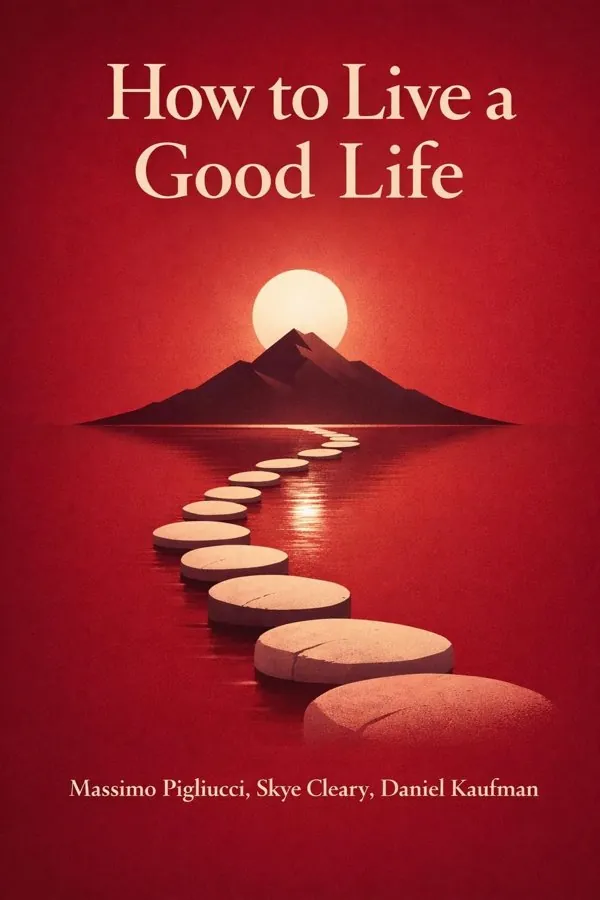
How to Live a Good Life: A Guide to Choosing Your Personal Philosophy: Summary & Key Insights
by Massimo Pigliucci, Skye Cleary, Daniel Kaufman
 10 min4 chaptersAudio available
What Is How to Live a Good Life: A Guide to Choosing Your Personal Philosophy About?
How to Live a Good Life: A Guide to Choosing Your Personal Philosophy by Massimo Pigliucci, Skye Cleary, Daniel Kaufman is a western_phil book spanning 4 pages. This book presents a collection of essays by philosophers and thinkers exploring how different philosophical traditions—from Stoicism and Buddhism to existentialism and pragmatism—offer guidance for living a meaningful and ethical life. Each chapter introduces a distinct school of thought and provides practical insights for applying its principles to everyday living.
This FizzRead summary covers all 4 key chapters of How to Live a Good Life: A Guide to Choosing Your Personal Philosophy in approximately 10 minutes, distilling the most important ideas, arguments, and takeaways from Massimo Pigliucci, Skye Cleary, Daniel Kaufman's work. Also available as an audio summary and Key Quotes Podcast.
How to Live a Good Life: A Guide to Choosing Your Personal Philosophy
This book presents a collection of essays by philosophers and thinkers exploring how different philosophical traditions—from Stoicism and Buddhism to existentialism and pragmatism—offer guidance for living a meaningful and ethical life. Each chapter introduces a distinct school of thought and provides practical insights for applying its principles to everyday living.
Who Should Read How to Live a Good Life: A Guide to Choosing Your Personal Philosophy?
This book is perfect for anyone interested in western_phil and looking to gain actionable insights in a short read. Whether you're a student, professional, or lifelong learner, the key ideas from How to Live a Good Life: A Guide to Choosing Your Personal Philosophy by Massimo Pigliucci, Skye Cleary, Daniel Kaufman will help you think differently.
- ✓Readers who enjoy western_phil and want practical takeaways
- ✓Professionals looking to apply new ideas to their work and life
- ✓Anyone who wants the core insights of How to Live a Good Life: A Guide to Choosing Your Personal Philosophy in just 10 minutes
Want the full summary?
Get instant access to this book summary and 100K+ more with Fizz Moment.
Get Free SummaryAvailable on App Store • Free to download
Key Chapters
Philosophy’s classical roots are found in the thinkers who first asked how human beings might flourish amid change and uncertainty. The Stoics, like Epictetus and Seneca, taught us that virtue and reason stand above circumstance. Stoicism trains the mind to distinguish between what is within our control—our own judgments and choices—and what lies beyond it. By accepting the limits of control, we do not become passive but resilient. The Stoic path transforms frustration into tranquility because it insists that our moral character, not luck or status, defines a good life. A reader practicing Stoicism might begin each day by contemplating impermanence, not as a gloomy rehearsal but as liberation from anxiety. Every moment becomes an opportunity to act rightly, regardless of external fortune.
Epicureanism, often misunderstood as indulgence, instead teaches moderation and gratitude. Epicurus saw true pleasure as the absence of pain—freedom from bodily discomfort and, more importantly, from mental turmoil. Friendship, simple food, and thoughtful conversation sustain joy far more reliably than wealth or fame. To follow Epicurus is to unlearn our confusion about desire: realizing that many of the things we chase actually disturb our peace. Within this clarity, we find that pleasure is not hedonism, but harmony.
Then comes Aristotle, whose vision of eudaimonia—the flourishing of a life well-lived—combines practical wisdom with moral cultivation. For Aristotle, virtue is not innate but forged through habit. We become courageous by acting bravely, just by practicing justice. Flourishing means not a momentary happiness but the steady excellence of living in accordance with reason. Whereas Stoicism might emphasize inner stability, Aristotle reminds us that the good life is inherently social. We thrive in friendship, civic engagement, and shared purpose. Thus ancient wisdom teaches three complementary arts: Stoic self-mastery, Epicurean contentment, and Aristotelian virtue.
When we turn East, we find not a contrast but a deep resonance. Buddhism begins with suffering—acknowledging it, examining its roots, and transforming it. The Buddha’s insight was that suffering arises from craving, the mind’s habitual attachment to what changes. Mindfulness, then, becomes more than meditation; it’s a practice of awareness that loosens our grip on false permanence. By seeing reality as it is, we cultivate compassion—for ourselves and others—as a response to shared vulnerability. The cessation of suffering is not numbness; it is freedom from the illusions that bind us.
Confucianism, meanwhile, begins with relationships rather than the self. To live well is to fulfill one’s roles—child, parent, friend, citizen—with sincerity and ethical integrity. Confucius taught that harmony in society depends on moral cultivation within each person. Rituals (li) express respect and empathy, transforming everyday interactions into acts of virtue. The Confucian path highlights that goodness is relational, built through obligation, gratitude, and care. Happiness is not found in isolation but in belonging.
Daoism offers a counterpoint of graceful spontaneity. To follow the Dao is to attune oneself to the underlying flow of the universe. Action without force—wu wei—means participating in the rhythms of life without resistance or excessive will. In practice, this means simplicity, flexibility, and humility. The Daoist sage doesn’t impose control but acts harmoniously, trusting life’s organic patterns. In a world driven by striving, Daoism whispers that letting go and adapting may be the truest form of strength. Together, these Eastern philosophies expand our sense of well-being beyond the individual, showing that inner peace and social harmony are deeply intertwined.
+ 2 more chapters — available in the FizzRead app
All Chapters in How to Live a Good Life: A Guide to Choosing Your Personal Philosophy
About the Authors
Massimo Pigliucci is a professor of philosophy at the City College of New York, known for his work on Stoicism and philosophy of science. Skye Cleary is a philosopher and author specializing in existentialism and love. Daniel Kaufman is a professor of philosophy at Missouri State University, focusing on ethics and metaphysics.
Get This Summary in Your Preferred Format
Read or listen to the How to Live a Good Life: A Guide to Choosing Your Personal Philosophy summary by Massimo Pigliucci, Skye Cleary, Daniel Kaufman anytime, anywhere. FizzRead offers multiple formats so you can learn on your terms — all free.
Available formats: App · Audio · PDF · EPUB — All included free with FizzRead
Download How to Live a Good Life: A Guide to Choosing Your Personal Philosophy PDF and EPUB Summary
Key Quotes from How to Live a Good Life: A Guide to Choosing Your Personal Philosophy
“Philosophy’s classical roots are found in the thinkers who first asked how human beings might flourish amid change and uncertainty.”
“When we turn East, we find not a contrast but a deep resonance.”
Frequently Asked Questions about How to Live a Good Life: A Guide to Choosing Your Personal Philosophy
How to Live a Good Life: A Guide to Choosing Your Personal Philosophy by Massimo Pigliucci, Skye Cleary, Daniel Kaufman is a western_phil book that explores key ideas across 4 chapters. This book presents a collection of essays by philosophers and thinkers exploring how different philosophical traditions—from Stoicism and Buddhism to existentialism and pragmatism—offer guidance for living a meaningful and ethical life. Each chapter introduces a distinct school of thought and provides practical insights for applying its principles to everyday living.
You Might Also Like
A Little History of Philosophy
Nigel Warburton
10 min
Areopagitica
John Milton
10 min
How To Think Like A Philosopher: Essential Principles For Clear Thinking
Peter Cave
10 min
Language, Truth and Logic
A. J. Ayer
10 min
The Age of Reason
Thomas Paine
10 min
The Essays
Michel De Montaigne
10 minBrowse by Category
Ready to read How to Live a Good Life: A Guide to Choosing Your Personal Philosophy?
Get the full summary and 100K+ more books with Fizz Moment.