
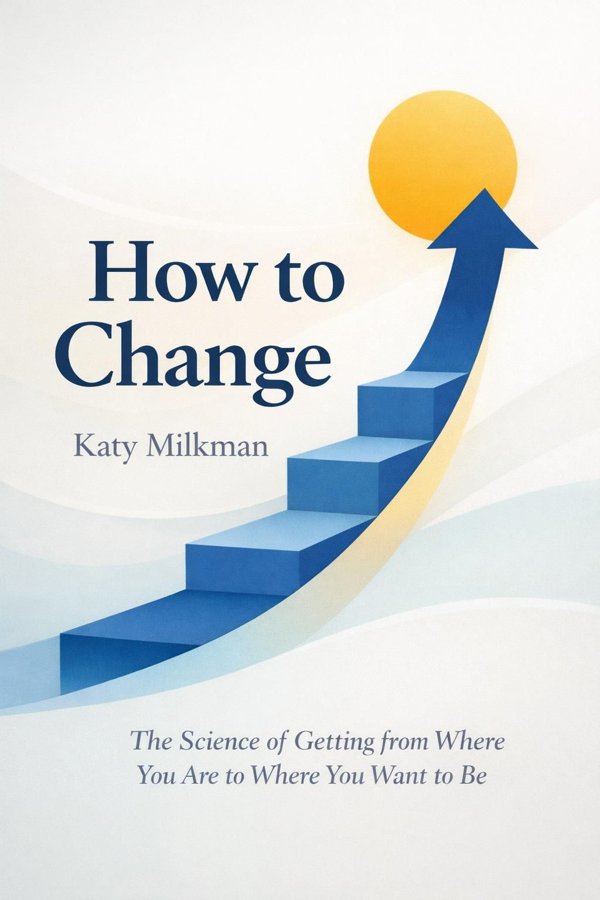
How to Change: The Science of Getting from Where You Are to Where You Want to Be: Summary & Key Insights
by Katy Milkman
 10 min11 chaptersAudio available
What Is How to Change: The Science of Getting from Where You Are to Where You Want to Be About?
How to Change: The Science of Getting from Where You Are to Where You Want to Be by Katy Milkman is a psychology book spanning 11 pages. In this book, behavioral scientist Katy Milkman explores the science behind personal change and how to overcome common barriers to achieving goals. Drawing on research in psychology and economics, she provides evidence-based strategies for making lasting improvements in habits, health, and productivity. The book offers practical tools for individuals and organizations to design environments that foster positive change.
This FizzRead summary covers all 11 key chapters of How to Change: The Science of Getting from Where You Are to Where You Want to Be in approximately 10 minutes, distilling the most important ideas, arguments, and takeaways from Katy Milkman's work. Also available as an audio summary and Key Quotes Podcast.
How to Change: The Science of Getting from Where You Are to Where You Want to Be
In this book, behavioral scientist Katy Milkman explores the science behind personal change and how to overcome common barriers to achieving goals. Drawing on research in psychology and economics, she provides evidence-based strategies for making lasting improvements in habits, health, and productivity. The book offers practical tools for individuals and organizations to design environments that foster positive change.
Who Should Read How to Change: The Science of Getting from Where You Are to Where You Want to Be?
This book is perfect for anyone interested in psychology and looking to gain actionable insights in a short read. Whether you're a student, professional, or lifelong learner, the key ideas from How to Change: The Science of Getting from Where You Are to Where You Want to Be by Katy Milkman will help you think differently.
- ✓Readers who enjoy psychology and want practical takeaways
- ✓Professionals looking to apply new ideas to their work and life
- ✓Anyone who wants the core insights of How to Change: The Science of Getting from Where You Are to Where You Want to Be in just 10 minutes
Want the full summary?
Get instant access to this book summary and 100K+ more with Fizz Moment.
Get Free SummaryAvailable on App Store • Free to download
Key Chapters
One of the most powerful levers we can use to spark change is what I call the 'fresh start effect.' Research shows that we are far more motivated to pursue our goals when we feel like we’re turning a page in our lives—when one chapter closes and another begins. These temporal landmarks—like New Year’s Day, birthdays, or even the start of a new job—give us a psychological sense of separation between our past, imperfect selves and the future version of us who can do better.
In studies my colleagues and I conducted, we found that gym attendance, savings contributions, and even student engagement spike right after these milestones. People intuitively treat those moments as fresh beginnings—opportunities to reset and rewrite their story. But that power isn’t limited to the calendar. You can create your own fresh starts anytime you need one: Monday mornings, the first day of spring, or after any life transition. The key is to recognize the moment as a boundary that gives you permission to see yourself anew.
I encourage readers to actively engineer these moments—to mark them with intention and ritual. When you harness the fresh start effect deliberately, you capitalize on our brain’s natural tendency to think in terms of chapters. The emotional lift that comes with new beginnings can help you overcome inertia and take meaningful action. Soon, your focus shifts from your missteps to your momentum.
Every one of us faces the same inner tug-of-war: short-term temptations versus long-term aspirations. You might know you should work out, but the allure of a favorite show or game usually wins. Instead of fighting that impulse head-on, I propose an embrace-and-redirect approach called 'temptation bundling.' The idea is to pair something you crave with something you should do but tend to avoid.
This concept was born out of my own struggle. As a PhD student, I wanted to exercise more but often skipped the gym. So I made a deal with myself: I could only listen to my favorite audiobooks while working out. Suddenly the gym became a source of enjoyment instead of guilt. Research showed that people who bundled temptations this way exercised more consistently—and looked forward to it.
The science behind this is simple: when immediate rewards are coupled with effortful activities, our motivation to engage in them grows. Instead of viewing self-discipline as deprivation, we reframe good behavior as pleasure. Whether it’s only watching your favorite series while cooking healthy meals or enjoying a special snack during study sessions, temptation bundling builds habits by making them emotionally sustainable. Over time, you begin to associate the act of doing what’s good for you with genuine satisfaction.
+ 9 more chapters — available in the FizzRead app
All Chapters in How to Change: The Science of Getting from Where You Are to Where You Want to Be
About the Author
Katy Milkman is a professor at the Wharton School of the University of Pennsylvania, specializing in behavioral economics and decision-making. Her research focuses on understanding how people can make better choices and how insights from behavioral science can be applied to improve lives. She is also the co-founder of the Behavior Change for Good Initiative.
Get This Summary in Your Preferred Format
Read or listen to the How to Change: The Science of Getting from Where You Are to Where You Want to Be summary by Katy Milkman anytime, anywhere. FizzRead offers multiple formats so you can learn on your terms — all free.
Available formats: App · Audio · PDF · EPUB — All included free with FizzRead
Download How to Change: The Science of Getting from Where You Are to Where You Want to Be PDF and EPUB Summary
Key Quotes from How to Change: The Science of Getting from Where You Are to Where You Want to Be
“One of the most powerful levers we can use to spark change is what I call the 'fresh start effect.”
“Every one of us faces the same inner tug-of-war: short-term temptations versus long-term aspirations.”
Frequently Asked Questions about How to Change: The Science of Getting from Where You Are to Where You Want to Be
How to Change: The Science of Getting from Where You Are to Where You Want to Be by Katy Milkman is a psychology book that explores key ideas across 11 chapters. In this book, behavioral scientist Katy Milkman explores the science behind personal change and how to overcome common barriers to achieving goals. Drawing on research in psychology and economics, she provides evidence-based strategies for making lasting improvements in habits, health, and productivity. The book offers practical tools for individuals and organizations to design environments that foster positive change.
You Might Also Like
The Body Keeps the Score
Bessel van der Kolk
10 min
Surrounded by Idiots
Thomas Erikson
10 min
Emotional Intelligence
Daniel Goleman
10 min
Attached
Amir Levine
10 min
Why Does He Do That
Lundy Bancroft
10 min
Women Who Run with the Wolves
Clarissa Pinkola Estés
10 minBrowse by Category
Ready to read How to Change: The Science of Getting from Where You Are to Where You Want to Be?
Get the full summary and 100K+ more books with Fizz Moment.