
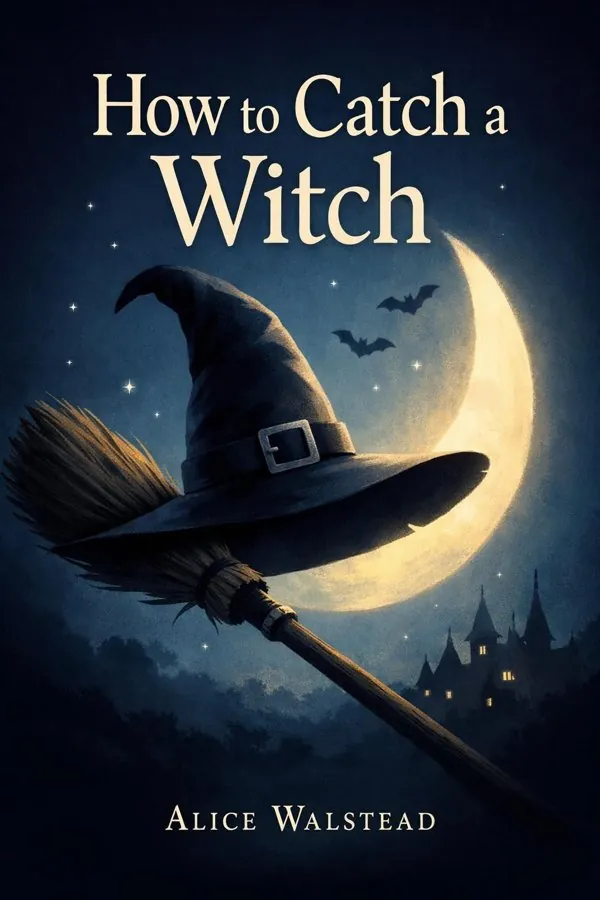
How to Catch a Witch: Summary & Key Insights
 10 min8 chaptersAudio available
Key Takeaways from How to Catch a Witch
The fastest way to teach a child something meaningful is often to hide the lesson inside delight.
Children learn best when challenges feel like possibilities instead of obstacles.
A child who sees failure as final will stop trying too soon.
The sound of a story often teaches as much as its plot.
Fear becomes manageable when laughter enters the room.
What Is How to Catch a Witch About?
How to Catch a Witch by Alice Walstead is a bestsellers book. How to Catch a Witch by Alice Walstead is a lively Halloween picture book that blends spooky fun with inventive problem-solving. Part of the widely loved How to Catch series, the story follows a group of determined kids as they design clever traps to capture a mischievous witch who is flying, sneaking, and spell-casting her way through the night. Along the way, readers encounter playful rhymes, colorful chaos, and a suspenseful chase that feels exciting without ever becoming too scary for young audiences. What makes this book matter is its ability to turn a seasonal read into something more meaningful. Beneath the festive surface, it encourages creativity, teamwork, persistence, and the joy of trying again after failure. Children see that every plan may not work, but each attempt teaches something new. That lesson makes the story especially valuable for parents, teachers, and caregivers looking for read-alouds that entertain while reinforcing confidence and resilience. Alice Walstead has become known for crafting energetic, engaging stories for young readers, and this book showcases her talent for combining humor, rhythm, and kid-friendly adventure into a memorable Halloween experience.
This FizzRead summary covers all 8 key chapters of How to Catch a Witch in approximately 10 minutes, distilling the most important ideas, arguments, and takeaways from Alice Walstead's work. Also available as an audio summary and Key Quotes Podcast.
How to Catch a Witch
How to Catch a Witch by Alice Walstead is a lively Halloween picture book that blends spooky fun with inventive problem-solving. Part of the widely loved How to Catch series, the story follows a group of determined kids as they design clever traps to capture a mischievous witch who is flying, sneaking, and spell-casting her way through the night. Along the way, readers encounter playful rhymes, colorful chaos, and a suspenseful chase that feels exciting without ever becoming too scary for young audiences.
What makes this book matter is its ability to turn a seasonal read into something more meaningful. Beneath the festive surface, it encourages creativity, teamwork, persistence, and the joy of trying again after failure. Children see that every plan may not work, but each attempt teaches something new. That lesson makes the story especially valuable for parents, teachers, and caregivers looking for read-alouds that entertain while reinforcing confidence and resilience.
Alice Walstead has become known for crafting energetic, engaging stories for young readers, and this book showcases her talent for combining humor, rhythm, and kid-friendly adventure into a memorable Halloween experience.
Who Should Read How to Catch a Witch?
This book is perfect for anyone interested in bestsellers and looking to gain actionable insights in a short read. Whether you're a student, professional, or lifelong learner, the key ideas from How to Catch a Witch by Alice Walstead will help you think differently.
- ✓Readers who enjoy bestsellers and want practical takeaways
- ✓Professionals looking to apply new ideas to their work and life
- ✓Anyone who wants the core insights of How to Catch a Witch in just 10 minutes
Want the full summary?
Get instant access to this book summary and 100K+ more with Fizz Moment.
Get Free SummaryAvailable on App Store • Free to download
Key Chapters
The fastest way to teach a child something meaningful is often to hide the lesson inside delight. How to Catch a Witch succeeds because it first wins attention with a playful Halloween chase, then gently introduces deeper ideas about imagination, courage, and experimentation. The witch is not presented as truly frightening, but as an exciting challenge that turns the night into a game. That balance matters. Children are invited to explore spooky themes in a safe emotional space, which helps them engage with fear through curiosity rather than avoidance.
The story uses familiar Halloween imagery, flying broomsticks, potions, tricks, and moonlit mischief, to create instant appeal. Yet the real magic comes from how these elements motivate the characters to think creatively. The children are not passive observers waiting for adults to solve the problem. Instead, they become inventors and planners. Their mission gives young readers a model for active thinking: when something mysterious appears, you can respond with ideas, teamwork, and enthusiasm.
This makes the book especially useful during the Halloween season. Parents and teachers can use it to channel holiday excitement into conversation and activities. After reading, children might design their own pretend witch traps with blocks, recycled materials, or drawings. They can discuss what makes something spooky but still fun, or compare this witch to witches in other stories.
The broader concept is simple but powerful: stories tied to seasonal excitement can become gateways to learning. When children are emotionally engaged, they absorb more. A fun Halloween read can therefore support creativity, vocabulary development, and emotional confidence all at once.
Actionable takeaway: Use the book as both entertainment and a prompt, invite children to invent one harmless Halloween trap of their own and explain how it works.
Children learn best when challenges feel like possibilities instead of obstacles. One of the book’s central strengths is how it transforms the task of catching a witch into an imaginative problem-solving adventure. Rather than relying on force or fear, the characters brainstorm unusual solutions, experiment with playful devices, and keep adapting their plans. The process matters more than the result, and that is exactly what makes the story valuable.
Every trap reflects a childlike way of thinking: bold, inventive, and unrestricted by practicality. In real life, adults often rush to the most efficient answer, but children benefit from seeing many possible answers explored. The book celebrates that mindset. A failed attempt is not treated as embarrassment. It is simply part of the fun. That framing teaches a growth-oriented view of mistakes. If something does not work, you try again with a new idea.
This concept can be applied far beyond the page. In classrooms, the story can introduce basic engineering thinking: identify a challenge, imagine a solution, test it, revise it. At home, it can encourage playful design tasks, such as building a trap for a toy monster or making a maze for a stuffed animal. The emphasis should remain on creative process, not perfection.
Just as importantly, the book validates imaginative thinking itself. In a world that often prioritizes correct answers, stories like this remind children that wild ideas have value. Creativity is not separate from intelligence; it is one of its most joyful forms. By watching characters think in surprising ways, readers gain permission to do the same.
Actionable takeaway: After reading, ask a child to solve a silly imaginary problem with three different ideas, reinforcing that the first answer is only the beginning of creative thinking.
A child who sees failure as final will stop trying too soon. How to Catch a Witch offers a healthier message: failed attempts are evidence of effort, learning, and momentum. Throughout the story, plans do not unfold perfectly. The witch slips away, outsmarts traps, and keeps the chase going. But instead of giving up, the characters adjust and continue. This repeated cycle turns persistence into the real hero of the book.
That lesson is especially important for young readers. Children frequently encounter frustration while learning to read, write, build, share, or master new routines. A playful story about unsuccessful traps may seem simple, but it mirrors a serious developmental challenge: how to keep going when something does not work right away. Because the consequences are humorous rather than heavy, children can absorb the lesson without defensiveness.
The story also helps redefine success. Success is not only catching the witch. It is participating, trying, collaborating, and learning from each attempt. Adults can build on this idea by asking reflective questions: Which trap almost worked? What did the characters learn? Why is trying again brave? These conversations help children understand that progress often looks messy.
This message has practical applications in everyday life. A child struggling with a puzzle can be reminded of the trap-builders who kept experimenting. A classroom can use the book to normalize revision in art or writing. Families can celebrate effort by praising thoughtful attempts, not just outcomes.
The emotional value here is substantial. Persistence becomes less about pressure and more about playful resilience. That is a lesson children can carry far beyond Halloween.
Actionable takeaway: Praise a child’s next difficult effort by naming what they learned from trying, not just whether they succeeded.
The sound of a story often teaches as much as its plot. One reason How to Catch a Witch works so well as a read-aloud is its energetic rhyming structure. Rhythm and rhyme create momentum, making the story feel musical, memorable, and engaging. For young readers, this is not just entertaining; it actively supports early literacy.
Rhyming text helps children notice sound patterns, predict language, and hear how words connect. That kind of phonological awareness is foundational for reading development. When children can anticipate a rhyme, they become participants in the storytelling experience instead of passive listeners. They may guess the next word, repeat key lines, or delight in hearing familiar sound combinations return.
The pace of the language also keeps suspense light and fun. Because the text moves quickly, the witch’s antics feel playful instead of threatening. This is a major advantage in books for younger audiences: the verbal bounce reassures listeners even when the subject is spooky. In other words, rhyme controls emotional tone as well as reader attention.
Adults can use the book to support literacy in practical ways. Pause before a rhyming word and let children fill it in. Ask them to spot words that sound alike. Invite them to invent their own Halloween rhymes after the story. Even reluctant listeners often engage more readily when language has a beat and a predictable pattern.
The key idea is that style matters. A well-crafted rhyming picture book can strengthen memory, vocabulary, listening skills, and confidence all at once. The story becomes easier to revisit, quote, and enjoy repeatedly, which further deepens learning through repetition.
Actionable takeaway: During your next read-aloud, pause before rhyming words and let children predict the ending sounds to build phonological awareness.
Fear becomes manageable when laughter enters the room. That principle is at the heart of How to Catch a Witch. The book uses Halloween imagery, magic, mystery, and nighttime suspense, but it filters them through humor. The witch is mischievous rather than horrifying, and the chase feels silly, inventive, and upbeat. This tonal choice allows children to enjoy spooky excitement without becoming overwhelmed.
For many young readers, Halloween stories are an early chance to experiment with fear in a controlled setting. Books like this help them practice emotional regulation. They encounter symbols that might otherwise feel intimidating, dark skies, spells, witches, sneaky surprises, but within a narrative that repeatedly signals safety and fun. This builds emotional flexibility. Children learn that something can look spooky and still be enjoyable.
Humor also encourages conversation. A child may be more willing to talk about what scares them when the context is playful. Parents and teachers can ask which parts seemed funny, which parts seemed spooky, and why the difference matters. These simple discussions help children name emotions and understand that feelings can shift depending on context.
In practical settings, this makes the book useful for easing seasonal anxieties. If a child is nervous about Halloween decorations, costumes, or nighttime events, reading a humorous Halloween book can provide gentle exposure. The story creates a bridge between uncertainty and confidence.
Most importantly, the book shows that monsters and magic in fiction do not always symbolize danger. Sometimes they are invitations to imagine, laugh, and explore. That distinction matters for young minds still learning how to interpret the world.
Actionable takeaway: If a child is hesitant about Halloween, read the book together and talk about one spooky detail that becomes funny because of the story’s playful tone.
Big challenges become less intimidating when they are shared. Although the story centers on catching a witch, one of its most meaningful underlying messages is the value of collaboration. The trap-building effort feels communal, energetic, and collective. Rather than celebrating a lone hero, the book highlights the excitement of working together toward a common goal.
This matters because children need stories that frame cooperation as powerful and enjoyable. In many early social settings, classrooms, playgrounds, families, success depends on taking turns, sharing ideas, and listening to others. The book models these behaviors naturally. Different attempts, perspectives, and contributions combine to drive the adventure forward. The fun comes not only from the witch’s clever escapes, but from the group’s shared determination.
Teamwork in the story can be translated into real-world practice. Teachers might use it to launch a cooperative STEM activity where small groups build pretend traps from classroom supplies. Families can create a Halloween scavenger hunt that requires siblings to solve clues together. The story becomes a template for collaborative play rather than competitive performance.
There is also a subtle emotional lesson here: working with others makes disappointment easier to handle. If one trap fails, the group keeps the energy alive. Shared effort softens frustration and creates space for encouragement. Children learn that they do not have to solve every problem alone.
The broader takeaway is that creativity often improves in community. One child might think of the glitter, another the net, another the bait. Together, the idea becomes stronger and more exciting. The book presents cooperation not as a rule adults impose, but as a source of adventure and possibility.
Actionable takeaway: Turn the story into a group activity by asking children to design one imaginary trap together, ensuring each person contributes at least one idea.
The best picture books do more than tell a story; they recruit the reader into the experience. How to Catch a Witch has that interactive quality. The premise itself invites children to think alongside the characters: How would you catch her? What trap would you build? What would happen next? This mental participation is one reason the book remains so engaging during repeated readings.
Interactive storytelling supports comprehension because children are not merely following events, they are making predictions, evaluating plans, and imagining alternatives. That kind of involvement deepens attention. Instead of receiving the plot passively, readers become co-problem-solvers. This is especially useful for younger children whose focus often improves when a book asks for imaginative input.
Adults can amplify this feature with simple prompts. Before turning the page, ask what the witch might do next. After a trap fails, ask how they would redesign it. Invite children to point out visual clues in the illustrations that suggest what is coming. These practices build narrative reasoning and verbal expression while making reading feel like play.
The book also demonstrates that participation does not require screens or complicated materials. A lively premise, strong rhythm, and open-ended challenge are enough to activate a child’s imagination. In that sense, it models the enduring power of traditional read-aloud experiences.
This interactivity has long-term benefits. Children who are encouraged to predict, question, and invent during reading often become more confident thinkers in other areas as well. They learn that stories are not closed systems with only one correct interpretation; they are spaces for ideas.
Actionable takeaway: During your next reading, stop at three moments and ask, “What would you do now?” to turn the story into an imaginative conversation.
Children remember stories not only for their plots, but for when and how those stories entered family life. How to Catch a Witch is the kind of book that easily becomes a seasonal ritual. Its Halloween setting gives it a special place on the calendar, and that recurring return can make reading feel ceremonial, comforting, and memorable.
Seasonal books serve an important developmental function. They help children mark time, anticipate traditions, and connect reading with celebration. Re-reading the same story each autumn builds familiarity, which boosts confidence and comprehension. A child who once simply listened may later predict lines, recognize patterns, and notice details in the illustrations. Over time, the book grows with the reader.
Ritualized reading also strengthens emotional bonds. A Halloween story read by flashlight, before a costume party, or on a chilly October evening can become part of a family’s identity. These repeated experiences tell children that books belong inside joyful traditions, not only inside school tasks. That association can nurture a lasting love of reading.
In educational settings, seasonal read-alouds can anchor thematic units. This book fits well into lessons about autumn, imagination, rhyming language, or simple engineering challenges. Because it is tied to a familiar holiday, it offers immediate relevance and enthusiasm.
The larger idea is that books gain power through repetition and context. A fun seasonal title can become a touchstone children look forward to year after year. That anticipation is valuable. It turns reading into an event rather than an obligation.
Actionable takeaway: Make the book part of an annual Halloween tradition by pairing it with one simple ritual, such as cocoa, costumes, or a homemade craft after reading.
All Chapters in How to Catch a Witch
About the Author
Alice Walstead is a children’s author known for creating energetic, imaginative picture books that combine humor, rhythm, and kid-friendly adventure. She is especially recognized for her contributions to the bestselling How to Catch series, which has become a favorite among families, teachers, and librarians for its playful premises and strong read-aloud appeal. Her stories often center on curiosity, creativity, persistence, and festive fun, making them popular choices for seasonal reading and classroom story time. Walstead has a talent for writing in a lively rhyming style that keeps young readers engaged while also supporting early literacy. Through books like How to Catch a Witch, she has helped build a world of interactive, entertaining stories that encourage children to think big, laugh often, and enjoy the magic of books.
Get This Summary in Your Preferred Format
Read or listen to the How to Catch a Witch summary by Alice Walstead anytime, anywhere. FizzRead offers multiple formats so you can learn on your terms — all free.
Available formats: App · Audio · PDF · EPUB — All included free with FizzRead
Download How to Catch a Witch PDF and EPUB Summary
Key Quotes from How to Catch a Witch
“The fastest way to teach a child something meaningful is often to hide the lesson inside delight.”
“Children learn best when challenges feel like possibilities instead of obstacles.”
“A child who sees failure as final will stop trying too soon.”
“The sound of a story often teaches as much as its plot.”
“Fear becomes manageable when laughter enters the room.”
Frequently Asked Questions about How to Catch a Witch
How to Catch a Witch by Alice Walstead is a bestsellers book that explores key ideas across 8 chapters. How to Catch a Witch by Alice Walstead is a lively Halloween picture book that blends spooky fun with inventive problem-solving. Part of the widely loved How to Catch series, the story follows a group of determined kids as they design clever traps to capture a mischievous witch who is flying, sneaking, and spell-casting her way through the night. Along the way, readers encounter playful rhymes, colorful chaos, and a suspenseful chase that feels exciting without ever becoming too scary for young audiences. What makes this book matter is its ability to turn a seasonal read into something more meaningful. Beneath the festive surface, it encourages creativity, teamwork, persistence, and the joy of trying again after failure. Children see that every plan may not work, but each attempt teaches something new. That lesson makes the story especially valuable for parents, teachers, and caregivers looking for read-alouds that entertain while reinforcing confidence and resilience. Alice Walstead has become known for crafting energetic, engaging stories for young readers, and this book showcases her talent for combining humor, rhythm, and kid-friendly adventure into a memorable Halloween experience.
More by Alice Walstead
You Might Also Like
The Godfather
Mario Puzo
10 min
The Handmaid's Tale
Margaret Atwood
10 min
The Hunger Games
Suzanne Collins
10 min
The Nightingale
Kristin Hannah
10 min
The Seven Husbands of Evelyn Hugo
Taylor Jenkins Reid
10 min
Backwater Justice
Fern Michaels
10 minBrowse by Category
Ready to read How to Catch a Witch?
Get the full summary and 100K+ more books with Fizz Moment.