
How To Catch A Reindeer: Summary & Key Insights
 10 min9 chaptersAudio available
Key Takeaways from How To Catch A Reindeer
Every great adventure begins with a single moment of curiosity, and in How To Catch A Reindeer, that moment belongs to Comet.
The magic of this story comes from disruption.
Imagination becomes most powerful when it leaves the realm of fantasy and becomes a plan.
A trap in this story is never just a trap.
Movement gives the story its momentum, but atmosphere gives it its magic.
What Is How To Catch A Reindeer About?
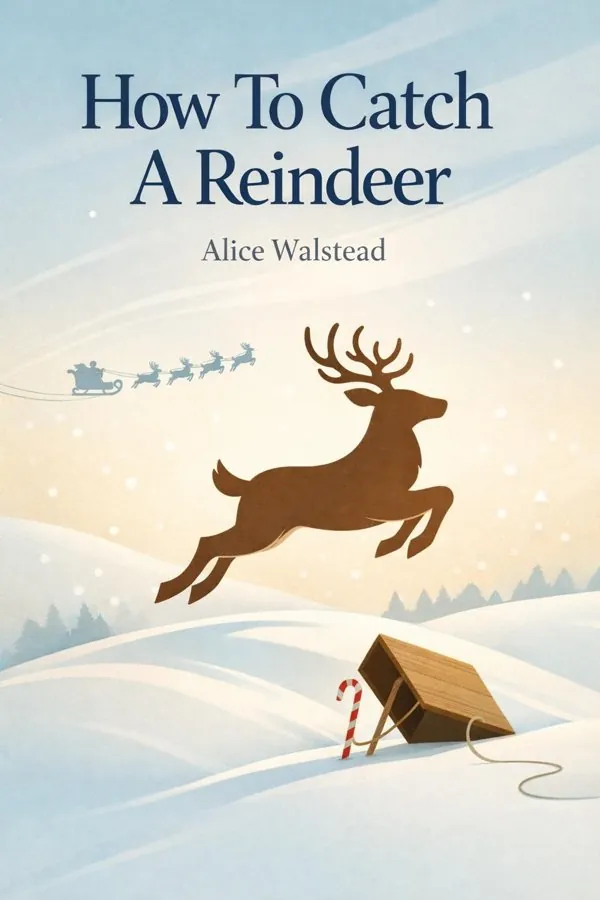
How To Catch A Reindeer by Alice Walstead is a bestsellers book spanning 4 pages. What makes a Christmas story memorable is not just the holiday setting, but the way it transforms wonder into action. How To Catch A Reindeer by Alice Walstead does exactly that. Set on Christmas Eve, the story follows Comet, one of Santa’s trusted reindeer, as she wanders away from the sleigh team in search of adventure. Her unexpected detour sparks a lively chase, as children dream up festive traps, playful plans, and imaginative ways to guide her back before Santa’s big night is thrown off course. At first glance, this is a bright, rhyming picture book full of seasonal fun. But beneath its playful surface, it offers more than a simple holiday romp. It celebrates curiosity, teamwork, problem-solving, and the joyful creativity children bring to every challenge. Walstead, best known for her bestselling How to Catch series, has built a reputation for turning familiar childhood fantasies into interactive, laugh-out-loud adventures. Her books invite young readers to participate rather than simply observe, making them especially appealing for family read-alouds. This story matters because it captures the spirit of Christmas: excitement, kindness, imagination, and the idea that even a little chaos can lead to connection and joy.
This FizzRead summary covers all 9 key chapters of How To Catch A Reindeer in approximately 10 minutes, distilling the most important ideas, arguments, and takeaways from Alice Walstead's work. Also available as an audio summary and Key Quotes Podcast.
How To Catch A Reindeer
What makes a Christmas story memorable is not just the holiday setting, but the way it transforms wonder into action. How To Catch A Reindeer by Alice Walstead does exactly that. Set on Christmas Eve, the story follows Comet, one of Santa’s trusted reindeer, as she wanders away from the sleigh team in search of adventure. Her unexpected detour sparks a lively chase, as children dream up festive traps, playful plans, and imaginative ways to guide her back before Santa’s big night is thrown off course.
At first glance, this is a bright, rhyming picture book full of seasonal fun. But beneath its playful surface, it offers more than a simple holiday romp. It celebrates curiosity, teamwork, problem-solving, and the joyful creativity children bring to every challenge. Walstead, best known for her bestselling How to Catch series, has built a reputation for turning familiar childhood fantasies into interactive, laugh-out-loud adventures. Her books invite young readers to participate rather than simply observe, making them especially appealing for family read-alouds. This story matters because it captures the spirit of Christmas: excitement, kindness, imagination, and the idea that even a little chaos can lead to connection and joy.
Who Should Read How To Catch A Reindeer?
This book is perfect for anyone interested in bestsellers and looking to gain actionable insights in a short read. Whether you're a student, professional, or lifelong learner, the key ideas from How To Catch A Reindeer by Alice Walstead will help you think differently.
- ✓Readers who enjoy bestsellers and want practical takeaways
- ✓Professionals looking to apply new ideas to their work and life
- ✓Anyone who wants the core insights of How To Catch A Reindeer in just 10 minutes
Want the full summary?
Get instant access to this book summary and 100K+ more with Fizz Moment.
Get Free SummaryAvailable on App Store • Free to download
Key Chapters
Every great adventure begins with a single moment of curiosity, and in How To Catch A Reindeer, that moment belongs to Comet. On the most important night of the year, when Santa’s team is meant to move with perfect timing, Comet decides to explore on her own. That choice instantly changes the tone of the story. Christmas Eve is no longer just a well-rehearsed delivery mission; it becomes an unpredictable, playful journey shaped by wonder and surprise.
Comet’s curiosity is especially meaningful because it reflects a childlike impulse readers know well. Children are constantly asking what is around the corner, what happens if they try something new, or what exciting thing they might discover if they step outside the plan. In that sense, Comet is not just a reindeer. She is a stand-in for every young reader whose imagination sometimes races ahead of the rules. Rather than painting curiosity as a flaw, the story treats it as a natural spark that brings energy to the holiday world.
At the same time, the book gently shows that curiosity has consequences. Comet’s wandering creates urgency. Santa’s flight depends on cooperation, and one missing reindeer affects the whole team. This balance is important. The story does not shame exploration, but it reminds readers that freedom works best alongside responsibility.
In everyday life, parents and teachers can use this idea to talk about healthy curiosity. A child who asks bold questions, experiments with building materials, or invents unusual games is showing the same spirit Comet does. The key is helping that child learn when to explore independently and when to stay connected to the group.
Actionable takeaway: Encourage curiosity, but pair it with conversations about responsibility, timing, and how individual choices affect others.
The magic of this story comes from disruption. Christmas Eve is usually imagined as a night of perfect precision: Santa’s route is set, the sleigh is packed, and every reindeer has an essential role. By introducing one small break in that order, Alice Walstead turns routine into excitement. Comet’s disappearance creates just enough chaos to make the story lively without making it frightening.
This contrast between structure and spontaneity is one of the book’s smartest features. Children live in a world shaped by routines such as bedtime, school schedules, holiday traditions, and family expectations. Yet they also crave surprise. How To Catch A Reindeer validates both needs. It begins with the comfort of a familiar Christmas setting, then spices that setting with an unexpected twist. The result is reassuring and adventurous at the same time.
This dynamic mirrors real holiday experiences. Families often prepare carefully for celebrations, but memorable moments rarely unfold exactly as planned. Cookies burn, decorations fall down, relatives arrive late, and children ask impossible questions at the least convenient times. Still, those imperfect moments often become the stories families remember most. The book quietly suggests that a little disorder does not ruin the holiday spirit; it can actually deepen it.
For educators, this idea can become a useful discussion starter. Ask children how they feel when plans change. What helps them stay calm? What new opportunities can appear when something unexpected happens? Through Comet’s adventure, children can see that surprises are not always problems. Sometimes they are invitations to think creatively.
Actionable takeaway: Use the story to help children practice flexibility by talking about how to stay positive and resourceful when plans do not go as expected.
Imagination becomes most powerful when it leaves the realm of fantasy and becomes a plan. That is exactly what happens when the children in the story realize Comet is loose. Instead of simply watching events unfold, they leap into problem-solving mode, designing festive traps and playful schemes to catch the runaway reindeer. This shift from wonder to action is central to the book’s appeal.
The children’s response is inventive rather than forceful. They do not rely on fear, punishment, or rigid control. Instead, they use holiday materials, cheerful ideas, and lots of trial and error. That matters because it frames creativity as a practical tool. In many children’s books, imagination is decorative. Here, it becomes functional. The message is clear: when faced with a challenge, your ideas matter.
This is particularly valuable for young readers, who are often still learning how to solve problems independently. A child building a blanket fort, designing a homemade treasure hunt, or figuring out how to stop toy cars from rolling off a table is already practicing the same mental muscles the story celebrates. The traps may be whimsical, but the mindset behind them is real: observe the problem, brainstorm possibilities, test solutions, and keep going.
Adults can bring this lesson into everyday life through simple activities. Invite children to create their own safe “reindeer traps” from paper, blocks, or craft supplies. Ask them why they chose certain materials and what they think might work better next time. This turns reading into hands-on learning and reinforces the connection between creativity and perseverance.
Actionable takeaway: Encourage children to face small challenges by brainstorming multiple possible solutions instead of waiting for an adult to provide the answer.
A trap in this story is never just a trap. It is a symbol of playful thinking. The children’s candy canes, sparkling decorations, and holiday-themed setups are not simply attempts to catch Comet; they are expressions of inventive problem-solving rooted in the world children understand best. By making each plan whimsical, Alice Walstead turns strategy into a form of celebration.
This matters because children often learn most effectively through play. A direct lecture about planning, experimentation, or cause and effect can feel abstract. But a reindeer-catching challenge built from marshmallows and Christmas lights feels immediate and fun. The story naturally introduces design thinking: What might attract Comet? What materials should we use? Why did the first idea fail? What should we change next? These are the same questions behind engineering, art, and collaborative learning.
Importantly, the traps are not cruel or threatening. They are imaginative invitations rather than acts of aggression. That softens the concept of “catching” and keeps the tone warm. Children are not trying to dominate Comet; they are trying to reconnect her with Santa’s team. In that way, the traps become less about capture and more about guidance.
Parents and teachers can apply this idea through festive projects. For example, children might build a “trap” for a stuffed animal using recycled boxes, ribbons, and pretend treats, then explain their reasoning. The goal is not whether the trap works perfectly, but whether the child can think through a challenge with creativity and joy.
Actionable takeaway: Turn playful building projects into opportunities for children to practice planning, testing, and improving their ideas without fear of failure.
Movement gives the story its momentum, but atmosphere gives it its magic. As Comet dashes through snowy scenes and glowing holiday spaces, the chase becomes more than a search mission. It turns into a celebration of Christmas wonder. Snow, lights, decorations, and nighttime excitement create a world that feels both cozy and electrifying, reminding readers that the holiday season is built as much from feeling as from events.
The chase matters because it keeps readers emotionally invested. A wandering reindeer could have been a quiet subplot, but by turning the search into an active pursuit, the book invites participation. Children do not merely watch from the sidelines. They imagine where Comet might go next, whether the latest trap will work, and how the story will resolve before Santa’s flight is delayed. This forward motion is especially effective in read-aloud settings, where anticipation keeps children engaged page after page.
There is also an important emotional layer here. Chases in children’s books can sometimes feel stressful, but this one remains light and joyful. The snowy setting and bright illustrations soften the tension. The story communicates urgency without fear, which is a valuable balance for younger readers. It allows them to experience suspense in a safe form.
In a broader sense, the chase reflects how children experience special occasions. Holidays often feel fast, bright, and full of sensory detail. By capturing that energy, the book mirrors the emotional speed of Christmas itself.
Actionable takeaway: When reading the story aloud, pause to ask children what details they notice in the scenes, helping them connect storytelling with observation, mood, and sensory imagination.
Behind the silliness of runaway reindeer and holiday traps lies a serious truth: big moments depend on teamwork. Santa’s Christmas journey is not a solo act. It requires preparation from elves, cooperation among the reindeer, and help from children who want to set things right. When Comet wanders off, everyone’s role becomes more visible, and the story highlights how a shared goal can bring different characters together.
This idea is powerful for children because teamwork is one of the first life skills they are expected to practice consistently. In classrooms, on sports teams, during sibling play, and even at the dinner table, children are asked to cooperate. Yet teamwork can be difficult. It requires listening, compromise, patience, and trust. How To Catch A Reindeer offers a cheerful example of these qualities in action. The children do not succeed through one hero’s brilliance alone. Progress comes through group effort, shared excitement, and collective problem-solving.
The story also suggests that every participant matters. Santa has authority, Comet has energy, and the children contribute creativity. No role is meaningless. This is an encouraging message for young readers, who may sometimes feel too small to make a difference. The book reassures them that their ideas and efforts can help solve important problems.
Adults can strengthen this lesson by using the story as a springboard for collaboration activities. Children can work together to design a holiday-themed obstacle course, invent a group story, or solve a classroom challenge using shared materials. The goal is not just to finish the task, but to notice how cooperation improves the process.
Actionable takeaway: Emphasize that successful problem-solving often requires shared effort, and give children regular opportunities to practice teamwork in playful, low-pressure settings.
A satisfying story does not simply end the action; it restores emotional balance. When Comet returns, the resolution feels rewarding because it heals the tension created by her absence. Santa’s team can move forward, the children’s efforts are validated, and the holiday mission is back on track. This ending offers closure without losing the playful spirit that made the journey enjoyable.
What makes this resolution meaningful is that it connects adventure with belonging. Comet’s temporary independence may be exciting, but the story ultimately reminds readers that she is part of something larger. Returning is not presented as defeat. It is presented as reconnection. That distinction matters. Children often wrestle with the balance between wanting independence and needing security. Comet’s arc shows that belonging to a team does not erase individuality; it gives that individuality a place to matter.
There is also a subtle emotional lesson in the relief everyone feels when she comes back. Caring about someone means noticing when they are missing and celebrating when they return. In a child’s world, this can connect to everyday experiences: a favorite toy found after being lost, a friend returning to school, or a family member arriving home after a trip. The emotional rhythm is familiar and comforting.
For read-aloud discussions, adults can ask children how they think Comet felt during her adventure and how others felt when she returned. These questions help young readers move beyond plot and into empathy.
Actionable takeaway: Use the ending to talk with children about independence, belonging, and how it feels when we reconnect with the people and places that make us feel safe.
Children often fall in love with books through sound before they fully grasp structure, and How To Catch A Reindeer understands this beautifully. Its rhyming style creates momentum, humor, and musicality, making the story feel playful from the first page to the last. Rhyme does more than decorate the text; it becomes part of the reading experience, helping young listeners anticipate patterns and engage more actively.
This is one reason the book works so well as a read-aloud. Predictable rhythm gives children little anchors to hold onto. They begin to guess the next word, repeat favorite lines, and join in with enthusiasm. That participation builds confidence. Even early readers who cannot decode every sentence independently can feel included because the sound structure helps them follow along.
Rhyme also supports language development. It increases awareness of phonics, word endings, and verbal patterns. When children hear similar sounds grouped together, they begin to recognize relationships between words in an intuitive way. In a festive story like this, those educational benefits arrive wrapped in laughter and excitement rather than formal instruction.
Adults can extend this idea beyond the book by inviting children to invent their own rhyming lines about Christmas, reindeer, or winter adventures. Even simple pairings can build vocabulary and listening skills while keeping the mood light. The goal is not perfect poetry, but joyful language play.
Actionable takeaway: Read the book aloud with expression, pause for children to predict rhyming words, and use the story as a fun entry point into sound awareness and early literacy.
All Chapters in How To Catch A Reindeer
About the Author
Alice Walstead is an American children’s author widely recognized for her work on the bestselling How to Catch series, a collection of playful picture books that blend rhyme, humor, and interactive storytelling. Her books often revolve around magical or seasonal characters and invite children to imagine how they might solve whimsical problems using creativity and determination. Walstead’s writing is especially popular with families, teachers, and librarians because it lends itself naturally to read-aloud sessions, classroom activities, and holiday traditions. She has a talent for taking familiar childhood fascinations, such as Santa, reindeer, or mythical creatures, and turning them into lively adventures that feel both exciting and approachable. Through books like How To Catch A Reindeer, she has helped establish a modern holiday read-aloud style that is fun, participatory, and warmly imaginative.
Get This Summary in Your Preferred Format
Read or listen to the How To Catch A Reindeer summary by Alice Walstead anytime, anywhere. FizzRead offers multiple formats so you can learn on your terms — all free.
Available formats: App · Audio · PDF · EPUB — All included free with FizzRead
Download How To Catch A Reindeer PDF and EPUB Summary
Key Quotes from How To Catch A Reindeer
“Every great adventure begins with a single moment of curiosity, and in How To Catch A Reindeer, that moment belongs to Comet.”
“The magic of this story comes from disruption.”
“Imagination becomes most powerful when it leaves the realm of fantasy and becomes a plan.”
“A trap in this story is never just a trap.”
“Movement gives the story its momentum, but atmosphere gives it its magic.”
Frequently Asked Questions about How To Catch A Reindeer
How To Catch A Reindeer by Alice Walstead is a bestsellers book that explores key ideas across 9 chapters. What makes a Christmas story memorable is not just the holiday setting, but the way it transforms wonder into action. How To Catch A Reindeer by Alice Walstead does exactly that. Set on Christmas Eve, the story follows Comet, one of Santa’s trusted reindeer, as she wanders away from the sleigh team in search of adventure. Her unexpected detour sparks a lively chase, as children dream up festive traps, playful plans, and imaginative ways to guide her back before Santa’s big night is thrown off course. At first glance, this is a bright, rhyming picture book full of seasonal fun. But beneath its playful surface, it offers more than a simple holiday romp. It celebrates curiosity, teamwork, problem-solving, and the joyful creativity children bring to every challenge. Walstead, best known for her bestselling How to Catch series, has built a reputation for turning familiar childhood fantasies into interactive, laugh-out-loud adventures. Her books invite young readers to participate rather than simply observe, making them especially appealing for family read-alouds. This story matters because it captures the spirit of Christmas: excitement, kindness, imagination, and the idea that even a little chaos can lead to connection and joy.
More by Alice Walstead

You Might Also Like

The Godfather
Mario Puzo
10 min
The Handmaid's Tale
Margaret Atwood
10 min
The Hunger Games
Suzanne Collins
10 min
The Nightingale
Kristin Hannah
10 min
The Seven Husbands of Evelyn Hugo
Taylor Jenkins Reid
10 min
Backwater Justice
Fern Michaels
10 minBrowse by Category
Ready to read How To Catch A Reindeer?
Get the full summary and 100K+ more books with Fizz Moment.