
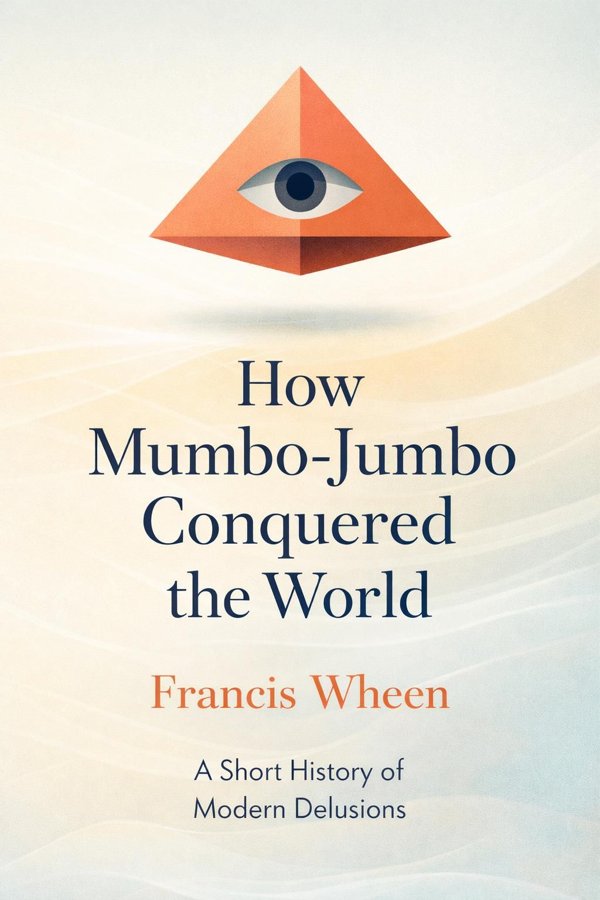
How Mumbo-Jumbo Conquered the World: A Short History of Modern Delusions: Summary & Key Insights
 10 min12 chaptersAudio available
What Is How Mumbo-Jumbo Conquered the World: A Short History of Modern Delusions About?
How Mumbo-Jumbo Conquered the World: A Short History of Modern Delusions by Francis Wheen is a civilization book spanning 12 pages. In this witty and incisive work, Francis Wheen explores how irrational beliefs, pseudoscience, and superstition have come to dominate public life in the modern world. From the rise of New Age mysticism to the cult of celebrity and the spread of conspiracy theories, Wheen dissects the cultural and political forces that have allowed nonsense to flourish in an age that should be defined by reason and evidence.
This FizzRead summary covers all 12 key chapters of How Mumbo-Jumbo Conquered the World: A Short History of Modern Delusions in approximately 10 minutes, distilling the most important ideas, arguments, and takeaways from Francis Wheen's work. Also available as an audio summary and Key Quotes Podcast.
How Mumbo-Jumbo Conquered the World: A Short History of Modern Delusions
In this witty and incisive work, Francis Wheen explores how irrational beliefs, pseudoscience, and superstition have come to dominate public life in the modern world. From the rise of New Age mysticism to the cult of celebrity and the spread of conspiracy theories, Wheen dissects the cultural and political forces that have allowed nonsense to flourish in an age that should be defined by reason and evidence.
Who Should Read How Mumbo-Jumbo Conquered the World: A Short History of Modern Delusions?
This book is perfect for anyone interested in civilization and looking to gain actionable insights in a short read. Whether you're a student, professional, or lifelong learner, the key ideas from How Mumbo-Jumbo Conquered the World: A Short History of Modern Delusions by Francis Wheen will help you think differently.
- ✓Readers who enjoy civilization and want practical takeaways
- ✓Professionals looking to apply new ideas to their work and life
- ✓Anyone who wants the core insights of How Mumbo-Jumbo Conquered the World: A Short History of Modern Delusions in just 10 minutes
Want the full summary?
Get instant access to this book summary and 100K+ more with Fizz Moment.
Get Free SummaryAvailable on App Store • Free to download
Key Chapters
The Enlightenment was the great leap forward—humankind’s declaration that reason would liberate it from myth and divine whim. Voltaire, Kant, Hume, and many others fought for the idea that evidence, debate, and universal human rights could replace dark superstition. The tragedy, as I see it, is that this legacy has been betrayed. In the closing decades of the twentieth century, the intellectual atmosphere began to thicken with fog once more. Astrology reappeared as lifestyle advice in respectable papers; corporate leaders quoted mystics rather than scientists; even politicians used ‘spiritual energy’ as a policy metaphor. It was as if history had spun backward.
I wanted readers to understand that this betrayal didn’t happen overnight. It crept in gradually, as skepticism was portrayed as cynicism and belief began to seem more virtuous than expertise. The Enlightenment valued the contest of ideas, but today’s culture prizes comfort and affirmation. Rational debate became suspect for its ‘coldness’, as though demanding proof were an act of cruelty. The irony is that the Enlightenment’s tools still exist—education, free inquiry, public discourse—but we wield them timidly. We have allowed 'belief' to occupy spaces once reserved for reason.
To betray reason is to betray democracy itself. When public opinion begins to prefer sentimental reassurance over factual precision, the citizen becomes a consumer, and the politician becomes a performer. My lament in this chapter isn’t nostalgic—it’s a warning that the rational foundations of modern civilization endanger themselves when treated as optional.
Postmodernism arrived disguised as intellectual liberation. It spoke the language of freedom—no grand narratives, no absolute truths, no oppressors in white lab coats insisting that facts exist independently of perspective. Yet, beneath this progressive posture lay a toxin. By denying objective reality, postmodernism unintentionally undermined the very principle that allowed it to flourish: rational critique. The paradox was cruel. The tools forged by Enlightenment reason were being used to dismantle the concept of reason itself.
I watched as this philosophy spilled from art departments into political and social thinking. Suddenly every opinion became equal, every version of truth a cultural artifact rather than a testable statement. Scientific debates were recast as struggles between 'discourses'. Facts were no longer settled by evidence but by the rhetorical power of the speaker. The outcome, unsurprisingly, was chaos—a cacophony where pseudoscience and prophecy claimed academic legitimacy.
When everything is relative, even absurdity finds refuge. Conspiracy theories, faith healing, and magical economic thinking gained immunity because to criticize them was to assert an 'oppressive' rational framework. My argument in this chapter is not merely against postmodernism as a philosophy but against its cultural consequences. Relativism didn’t democratize truth—it privatized it, fragmenting common sense into infinite solipsism. Once we abandon shared standards of verification, civilization becomes a theatre of competing fantasies.
+ 10 more chapters — available in the FizzRead app
All Chapters in How Mumbo-Jumbo Conquered the World: A Short History of Modern Delusions
About the Author
Francis Wheen is a British journalist, writer, and broadcaster known for his sharp wit and political commentary. He has written for publications such as The Guardian and Private Eye and is the author of several acclaimed books, including a biography of Karl Marx.
Get This Summary in Your Preferred Format
Read or listen to the How Mumbo-Jumbo Conquered the World: A Short History of Modern Delusions summary by Francis Wheen anytime, anywhere. FizzRead offers multiple formats so you can learn on your terms — all free.
Available formats: App · Audio · PDF · EPUB — All included free with FizzRead
Download How Mumbo-Jumbo Conquered the World: A Short History of Modern Delusions PDF and EPUB Summary
Key Quotes from How Mumbo-Jumbo Conquered the World: A Short History of Modern Delusions
“The Enlightenment was the great leap forward—humankind’s declaration that reason would liberate it from myth and divine whim.”
“Postmodernism arrived disguised as intellectual liberation.”
Frequently Asked Questions about How Mumbo-Jumbo Conquered the World: A Short History of Modern Delusions
How Mumbo-Jumbo Conquered the World: A Short History of Modern Delusions by Francis Wheen is a civilization book that explores key ideas across 12 chapters. In this witty and incisive work, Francis Wheen explores how irrational beliefs, pseudoscience, and superstition have come to dominate public life in the modern world. From the rise of New Age mysticism to the cult of celebrity and the spread of conspiracy theories, Wheen dissects the cultural and political forces that have allowed nonsense to flourish in an age that should be defined by reason and evidence.
You Might Also Like
The Structure of Scientific Revolutions
Thomas S. Kuhn
10 min
Genius
Harold Bloom
10 min
A Cultural History of the Medieval Age
Various Editors
10 min
A History of God: The 4,000-Year Quest of Judaism, Christianity and Islam
Karen Armstrong
10 min
A History of the World in 10½ Chapters
Julian Barnes
10 min
A Short History of Progress
Ronald Wright
10 minBrowse by Category
Ready to read How Mumbo-Jumbo Conquered the World: A Short History of Modern Delusions?
Get the full summary and 100K+ more books with Fizz Moment.