
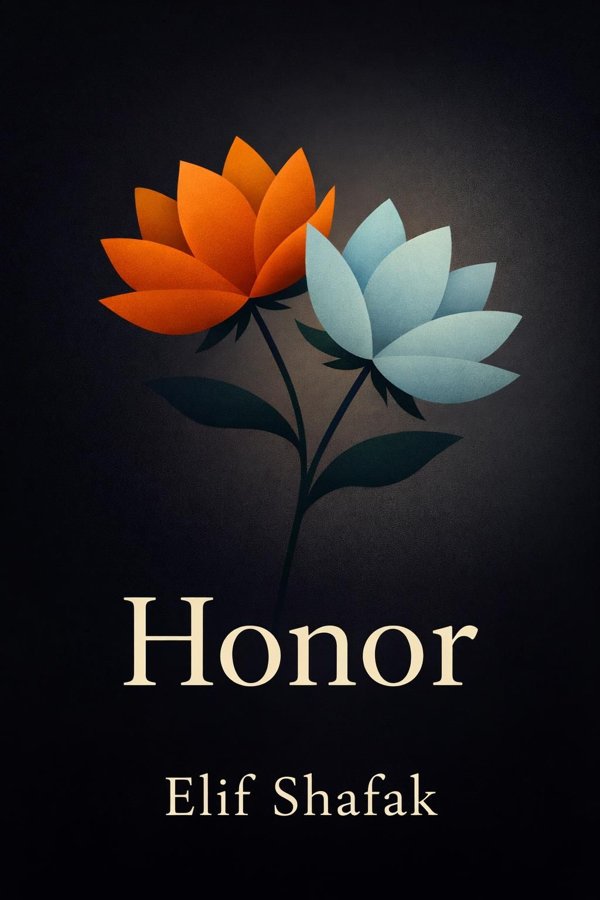
Honor: Summary & Key Insights
by Elif Shafak
 10 min9 chaptersAudio available
Key Takeaways from Honor
Some lives are shaped long before a person makes a single choice.
A change of country can transform circumstances, but it does not automatically transform the self.
The most dangerous ideas are often the ones mistaken for virtue.
Not all family tragedies begin with overt cruelty; some begin with weakness, disappointment, and emotional absence.
The most heartbreaking violence is often committed by those who believe they are doing the right thing.
What Is Honor About?
Honor by Elif Shafak is a bestsellers book spanning 4 pages. What destroys a family is not always hatred; sometimes it is love warped by fear, pride, and inherited rules. In Honor, Elif Shafak tells the story of a Kurdish-Turkish family split between a village by the Euphrates and immigrant life in London, where old codes of behavior collide with modern freedoms. At the center are twin sisters, Pembe and Jamila, and the children who must live inside the choices the adults make. What begins as a family saga slowly tightens into a tragedy shaped by patriarchy, migration, loneliness, and the crushing burden of “honor.” This novel matters because it refuses easy stereotypes. Shafak does not reduce honor killing to a sensational act or a simple clash between East and West. Instead, she reveals how violence grows from silence, insecurity, gender inequality, and the desperate need to belong. With empathy and psychological precision, she shows how men and women alike can become trapped in destructive cultural scripts. As a Turkish-British novelist known for exploring identity, memory, and cultural hybridity, Shafak brings rare authority and moral nuance to this story, making Honor both emotionally gripping and socially urgent.
This FizzRead summary covers all 9 key chapters of Honor in approximately 10 minutes, distilling the most important ideas, arguments, and takeaways from Elif Shafak's work. Also available as an audio summary and Key Quotes Podcast.
Honor
What destroys a family is not always hatred; sometimes it is love warped by fear, pride, and inherited rules. In Honor, Elif Shafak tells the story of a Kurdish-Turkish family split between a village by the Euphrates and immigrant life in London, where old codes of behavior collide with modern freedoms. At the center are twin sisters, Pembe and Jamila, and the children who must live inside the choices the adults make. What begins as a family saga slowly tightens into a tragedy shaped by patriarchy, migration, loneliness, and the crushing burden of “honor.”
This novel matters because it refuses easy stereotypes. Shafak does not reduce honor killing to a sensational act or a simple clash between East and West. Instead, she reveals how violence grows from silence, insecurity, gender inequality, and the desperate need to belong. With empathy and psychological precision, she shows how men and women alike can become trapped in destructive cultural scripts. As a Turkish-British novelist known for exploring identity, memory, and cultural hybridity, Shafak brings rare authority and moral nuance to this story, making Honor both emotionally gripping and socially urgent.
Who Should Read Honor?
This book is perfect for anyone interested in bestsellers and looking to gain actionable insights in a short read. Whether you're a student, professional, or lifelong learner, the key ideas from Honor by Elif Shafak will help you think differently.
- ✓Readers who enjoy bestsellers and want practical takeaways
- ✓Professionals looking to apply new ideas to their work and life
- ✓Anyone who wants the core insights of Honor in just 10 minutes
Want the full summary?
Get instant access to this book summary and 100K+ more with Fizz Moment.
Get Free SummaryAvailable on App Store • Free to download
Key Chapters
Some lives are shaped long before a person makes a single choice. In Honor, Shafak begins with the twin sisters Pembe and Jamila, born into a Kurdish village where gender roles, family reputation, and community judgment define the limits of life. Though they share the same origins, their paths reveal how two people can respond very differently to the same world. Pembe seeks love, movement, and possibility. Jamila becomes more rooted, observant, and spiritually grounded. Their bond is intimate, but it is also marked by contrast, and that contrast becomes one of the novel’s deepest engines.
Through the sisters, Shafak shows that tradition is never abstract. It enters the body, the home, and the imagination. The girls learn early what is expected of women: obedience, modesty, sacrifice, endurance. These lessons do not only come from men. They come from mothers, neighbors, family stories, and ritual. Honor is presented not as a private value but as a collective surveillance system. Every action can be judged, remembered, and punished.
This makes the sisters’ lives feel both personal and predetermined. One stays closer to the world she knows; the other leaves, hoping migration will mean freedom. Yet the novel insists that geography alone cannot erase inherited patterns. We may leave a place behind while still carrying its rules within us.
In practical terms, this idea applies to any family system shaped by rigid expectations. Many people inherit roles without questioning them: the dutiful daughter, the strong son, the silent parent. The first step toward freedom is recognizing that what feels “natural” may simply be deeply learned.
Actionable takeaway: Identify one belief you inherited from family or culture about gender, duty, or respect, and ask whether it truly reflects your values or merely your conditioning.
A change of country can transform circumstances, but it does not automatically transform the self. When Pembe marries Adem and moves to London, the family enters a space full of possibility and fracture. The city promises anonymity, work, and reinvention. Yet immigration also brings isolation, language barriers, economic insecurity, and the painful loss of social networks. Shafak captures this contradiction with great sensitivity: London offers freedom, but it also exposes weakness, loneliness, and instability.
For immigrant families, migration often intensifies rather than softens conflict. Parents cling more tightly to old customs because those customs feel like the last defense against disappearance. Children adapt faster, absorbing the values and rhythms of the new country. The result is not simply a “generation gap,” but a struggle over identity itself. What must be preserved? What can be abandoned? What counts as betrayal?
In Honor, Pembe and Adem respond differently to displacement. Their marriage weakens under pressure, and the family’s emotional center begins to unravel. The father’s failures, the mother’s longing, and the children’s confusion all grow sharper in exile. The home becomes a battleground where old-world expectations and new-world realities cannot be reconciled.
This is one of the novel’s most powerful insights: migration is not only movement across borders, but movement into uncertainty. Anyone who has relocated, changed class, or entered a new social world may recognize the feeling. Reinvention can be liberating, but it can also be destabilizing when inner habits have not caught up with outer change.
Actionable takeaway: If you are navigating a major transition, do not assume a new environment will solve old tensions. Name the emotional patterns you have carried with you, and address those directly.
The most dangerous ideas are often the ones mistaken for virtue. In Honor, Shafak strips away the noble language surrounding “honor” and reveals it as a system of control, especially over women’s bodies, sexuality, and public behavior. The novel shows that honor is less about ethical conduct than about reputation in the eyes of others. It is social theater backed by fear. Families become obsessed with appearances, and individuals are pressured to sacrifice truth, love, and even life itself to maintain collective esteem.
What makes this idea so devastating is that honor operates through shame. A woman’s choices are treated as the family’s burden. A man’s status seems dependent on policing her behavior. Gossip becomes a weapon; silence becomes survival. In this moral economy, compassion is often treated as weakness, while violence can be justified as duty. Shafak does not excuse anyone, but she carefully shows how people internalize destructive beliefs until they feel inevitable.
This theme reaches beyond the specific cultural setting of the novel. Many communities, not only traditional ones, enforce reputation-based rules. Families may pressure children to choose approved careers, hide divorce, conceal abuse, or maintain appearances despite private suffering. The language may differ, but the mechanism is familiar: conform, or risk exclusion.
Shafak’s achievement is to expose the emotional poverty of such systems. True dignity comes from integrity and care, not public compliance. When morality is reduced to image management, human beings are dehumanized.
A practical application is to examine where “what will people say?” shapes decisions more than conscience or wellbeing. This question can influence relationships, work, parenting, and mental health.
Actionable takeaway: The next time you feel pressured by reputation, ask yourself whether you are protecting a real value or merely performing respectability for others.
Not all family tragedies begin with overt cruelty; some begin with weakness, disappointment, and emotional absence. Adem, Pembe’s husband, is not written as a one-dimensional villain. Instead, Shafak presents him as a deeply flawed man unable to meet the demands of migration, work, fatherhood, and masculine expectation. His failures do not excuse the harm he causes, but they help us understand how fragile masculinity can become dangerous when it is built on pride rather than responsibility.
Adem struggles with humiliation and drift. In a new country, stripped of status and certainty, he cannot sustain the role he believes a man should play. Rather than adapting with humility, he retreats into self-pity, distance, and destructive choices. His emotional withdrawal leaves Pembe increasingly alone. The children grow up in the vacuum he creates. In this sense, absence becomes an active force in the novel. What a father refuses to confront does not disappear; it spreads through the entire household.
Shafak’s portrayal is important because it broadens the conversation about patriarchal harm. Violence is not only physical domination. It can also be abandonment, irresponsibility, and the refusal to mature. When men are taught that vulnerability is shameful, they may express pain as anger, escapism, or control. The damage is generational.
This insight has practical relevance in everyday life. Many people grow up in families shaped by unspoken male despair: fathers who are present but inaccessible, sons who inherit confusion about strength, partners who mistake silence for stoicism. Healing begins when masculinity is redefined around accountability, emotional literacy, and care.
Actionable takeaway: If you notice yourself or someone close to you equating manhood with control or silence, replace that model with one concrete practice of responsible openness, such as honest conversation, apology, or asking for help.
The most heartbreaking violence is often committed by those who believe they are doing the right thing. Iskender, Pembe’s son, becomes the novel’s tragic embodiment of how patriarchal codes reproduce themselves through the young. He is not born violent. He is shaped by insecurity, expectation, masculine pressure, and a desperate need for belonging. As his family destabilizes and his father’s authority weakens, Iskender becomes increasingly vulnerable to the idea that restoring honor is his duty.
Shafak carefully traces how this transformation happens. Iskender receives messages from family, community, and culture that a man must protect the household’s reputation. He is praised for strength but not taught moral independence. He is burdened with responsibility before he has the maturity to question it. In this vacuum, violence begins to look like purpose. The terrible act at the center of the novel is therefore not a sudden eruption, but the outcome of a system that trains boys to convert shame into aggression.
This is one of Honor’s boldest contributions. It asks readers not only to condemn the act, but to examine the social machinery behind it. How do communities manufacture moral obedience? How do boys learn that love can require punishment? How often do adults outsource their unresolved anxieties to the next generation?
In broader life, this theme applies wherever young people are pushed to defend family image, group identity, or ideology without space for independent thought. Whether in households, peer groups, or political cultures, belonging can become dangerous when questioning is treated as betrayal.
Actionable takeaway: Teach young people to distinguish loyalty from blind obedience by encouraging them to ask, before any major action, “Is this truly right, or am I doing it to earn approval and avoid shame?”
Oppressive systems survive not only because they are enforced, but because they are repeated through everyday life. In Honor, women are not portrayed simply as victims of patriarchy. They are also carriers, negotiators, protectors, and resisters of tradition. This complexity is one of Shafak’s greatest strengths. Mothers, sisters, neighbors, and elders can preserve the very codes that limit them, often because those codes are tied to survival, belonging, and moral meaning.
Pembe and Jamila illustrate different forms of female strength. One seeks a life beyond narrow roles; the other develops wisdom within constraint. Neither is simplistic. Their lives suggest that resistance can be visible or quiet, outward or interior. Even when women lack formal power, they influence emotional life, memory, and the transmission of values. This makes their position deeply complicated. They may challenge injustice in one moment and uphold it in another.
Shafak refuses the false comfort of dividing characters into enlightened rebels and backward traditionalists. Real families are messier. A woman may defend a harmful norm because she fears social collapse. She may advise silence because she knows the cost of speaking. She may also preserve tenderness, humor, and dignity inside harsh conditions. This layered portrait honors women’s intelligence without romanticizing their suffering.
In practical terms, the novel reminds us to examine how harmful beliefs persist through care-based relationships. People often accept limiting ideas not from enemies, but from those who love them. That makes change emotionally difficult.
Actionable takeaway: When confronting a harmful family norm, respond with both clarity and compassion. Challenge the belief directly, but also try to understand what fear or need keeps it alive.
Stories do more than preserve the past; they decide whether the past will imprison us or teach us. Esma, one of the most compelling presences in Honor, serves as a witness, interpreter, and moral bridge. Through her perspective, Shafak explores the healing potential of narration. Esma does not merely recount events. She assembles fragments, confronts silences, and tries to make emotional sense of a history shaped by violence and secrecy. In doing so, she becomes a counterforce to the culture of suppression that drove the family’s tragedy.
This matters because silence protects harmful systems. Families often avoid naming what has happened: betrayal, abuse, abandonment, humiliation, grief. The silence is meant to preserve dignity, but it usually preserves confusion instead. Esma’s storytelling interrupts that pattern. To tell the story is to refuse erasure. It is also to restore complexity to people who have been reduced to roles such as victim, offender, mother, son, or exile.
Shafak suggests that narration can be an ethical act. When we tell stories honestly, we make empathy possible. We connect cause to consequence. We see how pain travels across generations. Most importantly, we begin to imagine different endings. Esma cannot undo the past, but she can prevent it from remaining a sealed inheritance.
This idea applies widely. Journaling, therapy, family conversations, oral history, and reflective writing can all help transform unspoken pain into usable understanding. Narrative does not erase damage, but it can reduce its power.
Actionable takeaway: Choose one painful family or personal event that has remained vague or unspoken, and try to write or speak about it in full sentences. Clarity is often the first step toward breaking repetition.
Human beings need community, but the need to belong can make us betray our own conscience. Throughout Honor, characters are shaped by the gaze of others: relatives, neighbors, ethnic networks, and imagined audiences who judge what a proper man or woman should be. Shafak shows that belonging is never neutral. It can offer comfort, continuity, and identity, especially in exile. But it can also become coercive when acceptance depends on conformity.
This is especially visible in immigrant settings, where community ties often tighten under pressure. When people feel culturally threatened, they may become more protective of norms than they were in the homeland itself. This can create an atmosphere where deviation feels dangerous and personal choices are interpreted as communal insults. Under such conditions, even private relationships become public matters.
The novel’s emotional force comes from showing how individuals confuse love with compliance. They fear that if they reject the group’s demands, they will lose not only approval but identity. Yet belonging purchased through self-erasure is unstable. It breeds resentment, secrecy, and moral cowardice.
This pattern exists well beyond the novel’s cultural frame. Workplaces, religious groups, elite schools, activist circles, and online communities can all punish dissent while claiming shared values. The pressure may be subtle, but the logic is similar: stay loyal, or be cast out.
Shafak’s warning is not anti-community. It is anti-unquestioned conformity. Healthy belonging leaves room for disagreement, growth, and moral autonomy.
Actionable takeaway: Evaluate one group you belong to and ask whether it allows honest difference. If not, practice expressing one respectful disagreement to strengthen your independence without abandoning connection.
Cycles of harm continue when pain is inherited without understanding. One of the deepest messages of Honor is that judgment alone cannot stop violence; compassion, truth, and self-examination are also required. Shafak does not ask us to excuse destructive actions, but she insists on seeing the wounds, fears, and social pressures that produce them. This humane attention prevents the novel from becoming a moral lecture. Instead, it becomes an invitation to examine how cruelty is normalized and how it might be interrupted.
The family in Honor is damaged by patriarchy, migration, silence, and unmet emotional needs. Each character acts within a web of pressure. Some submit, some resist, some break, and some destroy. By portraying this web, Shafak helps readers move beyond simplistic blame. The point is not that everyone is equally responsible, but that unresolved trauma and rigid roles create conditions in which tragedy becomes more likely.
Compassion here is not softness. It is the courage to see clearly. It means asking what pain has gone unnamed, what expectations have gone unchallenged, and what forms of love have been confused with possession or duty. In families and communities, cycles are broken when someone dares to tell the truth differently: with accountability, but also with empathy.
This insight is practical in conflicts of all kinds. Whether in family disputes, organizational tensions, or personal relationships, people often repeat what they have never processed. Naming patterns can interrupt them.
Actionable takeaway: In your next conflict, pause before reacting and ask, “What fear, grief, or old script might be operating here?” Understanding the pattern will help you respond in a way that does not simply continue it.
All Chapters in Honor
About the Author
Elif Shafak is a Turkish-British novelist, essayist, and public intellectual renowned for fiction that explores identity, migration, memory, gender, and cultural coexistence. Writing in both Turkish and English, she has built an international readership through works that connect intimate human stories with larger political and social questions. Her novels often examine the tensions between tradition and modernity, East and West, and belonging and exile. Among her best-known books are The Bastard of Istanbul, Three Daughters of Eve, 10 Minutes 38 Seconds in This Strange World, and The Island of Missing Trees. Shafak is also an influential commentator on democracy, women’s rights, freedom of expression, and pluralism. Her work is admired for its empathy, lyrical style, and ability to illuminate difficult subjects with emotional and moral complexity.
Get This Summary in Your Preferred Format
Read or listen to the Honor summary by Elif Shafak anytime, anywhere. FizzRead offers multiple formats so you can learn on your terms — all free.
Available formats: App · Audio · PDF · EPUB — All included free with FizzRead
Download Honor PDF and EPUB Summary
Key Quotes from Honor
“Some lives are shaped long before a person makes a single choice.”
“A change of country can transform circumstances, but it does not automatically transform the self.”
“The most dangerous ideas are often the ones mistaken for virtue.”
“Not all family tragedies begin with overt cruelty; some begin with weakness, disappointment, and emotional absence.”
“The most heartbreaking violence is often committed by those who believe they are doing the right thing.”
Frequently Asked Questions about Honor
Honor by Elif Shafak is a bestsellers book that explores key ideas across 9 chapters. What destroys a family is not always hatred; sometimes it is love warped by fear, pride, and inherited rules. In Honor, Elif Shafak tells the story of a Kurdish-Turkish family split between a village by the Euphrates and immigrant life in London, where old codes of behavior collide with modern freedoms. At the center are twin sisters, Pembe and Jamila, and the children who must live inside the choices the adults make. What begins as a family saga slowly tightens into a tragedy shaped by patriarchy, migration, loneliness, and the crushing burden of “honor.” This novel matters because it refuses easy stereotypes. Shafak does not reduce honor killing to a sensational act or a simple clash between East and West. Instead, she reveals how violence grows from silence, insecurity, gender inequality, and the desperate need to belong. With empathy and psychological precision, she shows how men and women alike can become trapped in destructive cultural scripts. As a Turkish-British novelist known for exploring identity, memory, and cultural hybridity, Shafak brings rare authority and moral nuance to this story, making Honor both emotionally gripping and socially urgent.
More by Elif Shafak

You Might Also Like

The Godfather
Mario Puzo
10 min
The Handmaid's Tale
Margaret Atwood
10 min
The Hunger Games
Suzanne Collins
10 min
The Nightingale
Kristin Hannah
10 min
The Seven Husbands of Evelyn Hugo
Taylor Jenkins Reid
10 min
Backwater Justice
Fern Michaels
10 minBrowse by Category
Ready to read Honor?
Get the full summary and 100K+ more books with Fizz Moment.