
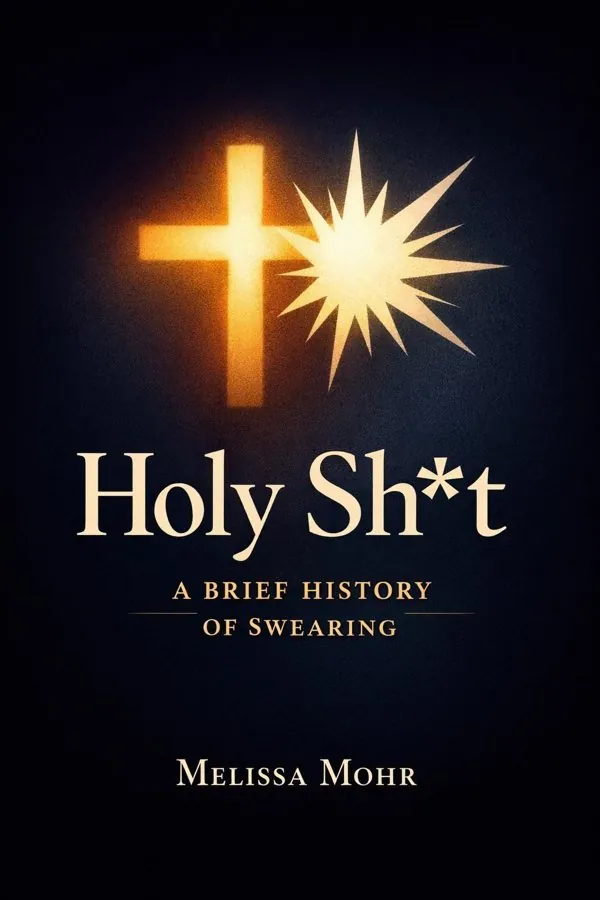
Holy Sh*t: A Brief History of Swearing: Summary & Key Insights
by Melissa Mohr
 10 min10 chaptersAudio available
What Is Holy Sh*t: A Brief History of Swearing About?
Holy Sh*t: A Brief History of Swearing by Melissa Mohr is a civilization book spanning 10 pages. Holy Sh*t: A Brief History of Swearing es un estudio histórico y lingüístico sobre el uso de las palabras malsonantes en inglés desde la antigüedad hasta la actualidad. Melissa Mohr explora cómo los tabúes sociales, religiosos y culturales han moldeado el lenguaje obsceno, mostrando su evolución desde términos sagrados y blasfemos hasta insultos y expresiones cotidianas. El libro combina erudición y humor para revelar cómo el lenguaje refleja las normas morales y las tensiones sociales de cada época.
This FizzRead summary covers all 10 key chapters of Holy Sh*t: A Brief History of Swearing in approximately 10 minutes, distilling the most important ideas, arguments, and takeaways from Melissa Mohr's work. Also available as an audio summary and Key Quotes Podcast.
Holy Sh*t: A Brief History of Swearing
Holy Sh*t: A Brief History of Swearing es un estudio histórico y lingüístico sobre el uso de las palabras malsonantes en inglés desde la antigüedad hasta la actualidad. Melissa Mohr explora cómo los tabúes sociales, religiosos y culturales han moldeado el lenguaje obsceno, mostrando su evolución desde términos sagrados y blasfemos hasta insultos y expresiones cotidianas. El libro combina erudición y humor para revelar cómo el lenguaje refleja las normas morales y las tensiones sociales de cada época.
Who Should Read Holy Sh*t: A Brief History of Swearing?
This book is perfect for anyone interested in civilization and looking to gain actionable insights in a short read. Whether you're a student, professional, or lifelong learner, the key ideas from Holy Sh*t: A Brief History of Swearing by Melissa Mohr will help you think differently.
- ✓Readers who enjoy civilization and want practical takeaways
- ✓Professionals looking to apply new ideas to their work and life
- ✓Anyone who wants the core insights of Holy Sh*t: A Brief History of Swearing in just 10 minutes
Want the full summary?
Get instant access to this book summary and 100K+ more with Fizz Moment.
Get Free SummaryAvailable on App Store • Free to download
Key Chapters
In the ancient world, language and religion were intertwined so intimately that to speak was an act of spiritual significance. Roman society, though robustly bawdy, retained a paradoxical reverence toward speech. Public graffiti from Pompeii reveals an abundant vulgarity—insults, boasting, erotic jokes—but when we turn to the public rituals of Rome, we see strict boundaries of language. Certain utterances were forbidden during solemn rites because they threatened divine favor. Profanity had both comic and catastrophic potential.
For early Christians, this dynamic took on new moral weight. The divine name itself became sacred territory. To misuse it was not mere speech misconduct but spiritual treason. The commandment against taking the Lord’s name in vain structured an entire theology of verbal purity. Early theologians like Augustine considered the care of the tongue a moral duty, equating verbal excess with sin. It marked the beginning of swearing’s alignment with ethics, a continuity that shaped medieval and modern ideas of civility.
This ancient divide—between permissible talk and the holy unspeakable—illustrates how taboo language originated within religion. Swearing was not yet centered around the body; it was centered around God. To curse was to blaspheme, to damage the divine-human relationship through sound itself. That foundational moral map allowed later societies to transfer sacred boundaries onto new arenas—first the soul, then the body, then status and propriety.
In the Middle Ages, language itself seemed charged with spiritual energy. The words one uttered were believed to carry real moral consequences, and the church guarded verbal conduct as fiercely as bodily sin. Swearing was largely a religious offense, often called oath-breaking or blasphemy. People swore “by God’s bones” or “by Christ’s blood,” invoking fragments of divinity as metaphors of power. These phrases—so shocking to pious ears—violated sacred boundaries, for they treated holy substance as rhetorical material.
The medieval world viewed the tongue as a mirror of the soul. The right word could bless; the wrong word could condemn. Confession manuals and sermons catalogued the sins of speech—idle chatter, gossip, oaths—and emphasized restraint. Yet paradoxically, this era loved exuberant language, and even holy texts brimmed with emotional force. In this tension lay the seeds of later linguistic conflict: how to balance expressive life with moral discipline.
Medieval swearing thus became a matter of theology. When one swore falsely, it wasn’t simply dishonest—it ruptured a divine promise. Every improperly uttered oath carried the shadow of perjury against God. Consequently, obscene speech clustered around religious imagery rather than sexual or bodily functions. Our modern curse words, now largely earthy or anatomical, bear little resemblance to medieval profanity, which was spiritual at its core.
+ 8 more chapters — available in the FizzRead app
All Chapters in Holy Sh*t: A Brief History of Swearing
About the Author
Melissa Mohr es una escritora e investigadora estadounidense especializada en historia del lenguaje y literatura inglesa. Obtuvo su doctorado en literatura inglesa en la Universidad de Stanford y ha trabajado como editora y autora de ensayos sobre temas lingüísticos y culturales.
Get This Summary in Your Preferred Format
Read or listen to the Holy Sh*t: A Brief History of Swearing summary by Melissa Mohr anytime, anywhere. FizzRead offers multiple formats so you can learn on your terms — all free.
Available formats: App · Audio · PDF · EPUB — All included free with FizzRead
Download Holy Sh*t: A Brief History of Swearing PDF and EPUB Summary
Key Quotes from Holy Sh*t: A Brief History of Swearing
“In the ancient world, language and religion were intertwined so intimately that to speak was an act of spiritual significance.”
“In the Middle Ages, language itself seemed charged with spiritual energy.”
Frequently Asked Questions about Holy Sh*t: A Brief History of Swearing
Holy Sh*t: A Brief History of Swearing by Melissa Mohr is a civilization book that explores key ideas across 10 chapters. Holy Sh*t: A Brief History of Swearing es un estudio histórico y lingüístico sobre el uso de las palabras malsonantes en inglés desde la antigüedad hasta la actualidad. Melissa Mohr explora cómo los tabúes sociales, religiosos y culturales han moldeado el lenguaje obsceno, mostrando su evolución desde términos sagrados y blasfemos hasta insultos y expresiones cotidianas. El libro combina erudición y humor para revelar cómo el lenguaje refleja las normas morales y las tensiones sociales de cada época.
You Might Also Like
The Structure of Scientific Revolutions
Thomas S. Kuhn
10 min
Genius
Harold Bloom
10 min
A Cultural History of the Medieval Age
Various Editors
10 min
A History of God: The 4,000-Year Quest of Judaism, Christianity and Islam
Karen Armstrong
10 min
A History of the World in 10½ Chapters
Julian Barnes
10 min
A Short History of Progress
Ronald Wright
10 minBrowse by Category
Ready to read Holy Sh*t: A Brief History of Swearing?
Get the full summary and 100K+ more books with Fizz Moment.