
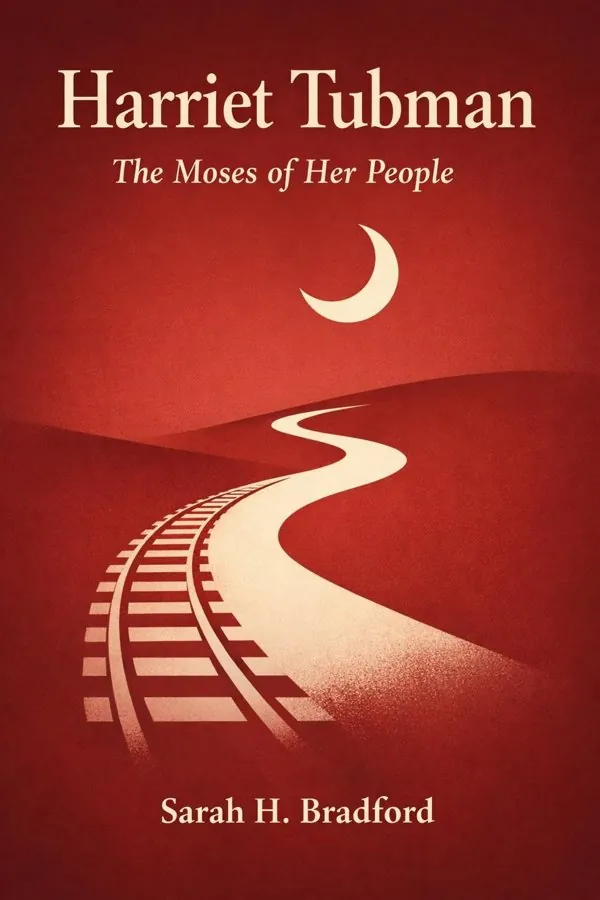
Harriet Tubman: The Moses of Her People: Summary & Key Insights
 10 min7 chaptersAudio available
What Is Harriet Tubman: The Moses of Her People About?
Harriet Tubman: The Moses of Her People by Sarah H. Bradford is a biographies book spanning 7 pages. This biography recounts the extraordinary life of Harriet Tubman, an African American woman who escaped slavery and became one of the most famous conductors on the Underground Railroad. Written by Sarah H. Bradford, the book portrays Tubman's courage, faith, and dedication to freeing enslaved people, as well as her later work during the Civil War and her advocacy for women's rights.
This FizzRead summary covers all 7 key chapters of Harriet Tubman: The Moses of Her People in approximately 10 minutes, distilling the most important ideas, arguments, and takeaways from Sarah H. Bradford's work. Also available as an audio summary and Key Quotes Podcast.
Harriet Tubman: The Moses of Her People
This biography recounts the extraordinary life of Harriet Tubman, an African American woman who escaped slavery and became one of the most famous conductors on the Underground Railroad. Written by Sarah H. Bradford, the book portrays Tubman's courage, faith, and dedication to freeing enslaved people, as well as her later work during the Civil War and her advocacy for women's rights.
Who Should Read Harriet Tubman: The Moses of Her People?
This book is perfect for anyone interested in biographies and looking to gain actionable insights in a short read. Whether you're a student, professional, or lifelong learner, the key ideas from Harriet Tubman: The Moses of Her People by Sarah H. Bradford will help you think differently.
- ✓Readers who enjoy biographies and want practical takeaways
- ✓Professionals looking to apply new ideas to their work and life
- ✓Anyone who wants the core insights of Harriet Tubman: The Moses of Her People in just 10 minutes
Want the full summary?
Get instant access to this book summary and 100K+ more with Fizz Moment.
Get Free SummaryAvailable on App Store • Free to download
Key Chapters
Harriet began life under the name Araminta Ross, an enslaved child on a Maryland plantation. Her earliest memories were of loss—of siblings sold into the Deep South and of constant separation that left her with the intuitive knowledge that to survive one must hold tightly to faith and one’s own sense of worth. Her mother’s fierce protection of her youngest children and her father’s quiet dignity formed Harriet’s moral foundation. Yet the daily reality was harsh. Labouring in fields and timber yards, she bore injuries that would scar her health forever, including a head wound from a blow meant for another. That wound caused her lifelong bouts of unconsciousness and visions, which she interpreted not as affliction but divine communication.
When Harriet resolved to escape, it was not from selfish yearning but from an inward awareness that bondage was an offense to God. Her first attempt failed, teaching her the price of freedom could be solitude and danger. The second, however, succeeded. With guidance from the Underground Railroad—a network of sympathetic homes, Quaker safe houses, and abolitionist allies—she crossed the Mason-Dixon Line. Standing on free soil, she later said, she looked to her hands and found herself astonished that they were still her own. Yet even in that moment, she felt no rest: 'I was free,' she said, 'but there was no one to welcome me to the land of freedom. I was a stranger in a strange land.' Thus began her lifelong mission to bring her people out of bondage.
After reaching Philadelphia, Harriet might have lived in quiet gratitude. Instead, true to her Biblical imagination, she turned back toward Egypt. She vowed to rescue her family, whatever the cost. That vow made her one of the most active conductors on the Underground Railroad. Each journey south was a season of peril. She learned to travel by night, trusting the North Star, whispering passwords at safe doors, and carrying a pistol—more to instill courage than to threaten. Her leadership was absolute: she never lost a single passenger.
I recall hearing from those she led about her calm amid danger. Once, when a man in her party faltered and spoke of returning, she raised her weapon—not to harm but to remind him that capture would doom them all. Her firmness, they said, was matched by tenderness; she would pray for their safe passage, lift their spirits with song, and recount visions that promised deliverance. Harriet moved across the Eastern Shore dozens of times, guiding parents, children, strangers—all drawn to her by faith. I came to see her as an instrument of Providence, a living Moses who continually risked her life to break Pharaoh’s chains. The rewards were no earthly riches; when she returned north after each expedition, she often had only the clothes upon her back and the satisfaction of another soul freed.
+ 5 more chapters — available in the FizzRead app
All Chapters in Harriet Tubman: The Moses of Her People
About the Author
Sarah Hopkins Bradford (1818–1912) was an American writer and biographer known for her works on historical and religious subjects. She is best remembered for her two biographies of Harriet Tubman, which helped bring Tubman's story to public attention in the late 19th century.
Get This Summary in Your Preferred Format
Read or listen to the Harriet Tubman: The Moses of Her People summary by Sarah H. Bradford anytime, anywhere. FizzRead offers multiple formats so you can learn on your terms — all free.
Available formats: App · Audio · PDF · EPUB — All included free with FizzRead
Download Harriet Tubman: The Moses of Her People PDF and EPUB Summary
Key Quotes from Harriet Tubman: The Moses of Her People
“Harriet began life under the name Araminta Ross, an enslaved child on a Maryland plantation.”
“After reaching Philadelphia, Harriet might have lived in quiet gratitude.”
Frequently Asked Questions about Harriet Tubman: The Moses of Her People
Harriet Tubman: The Moses of Her People by Sarah H. Bradford is a biographies book that explores key ideas across 7 chapters. This biography recounts the extraordinary life of Harriet Tubman, an African American woman who escaped slavery and became one of the most famous conductors on the Underground Railroad. Written by Sarah H. Bradford, the book portrays Tubman's courage, faith, and dedication to freeing enslaved people, as well as her later work during the Civil War and her advocacy for women's rights.
You Might Also Like

An American Marriage
Tayari Jones
10 min
Benjamin Franklin: An American Life
Walter Isaacson
10 min
I Know Why The Caged Bird Sings
Maya Angelou
10 min
Long Walk to Freedom
Nelson Mandela
10 min
Persepolis
Marjane Satrapi
10 min
Surely You're Joking, Mr. Feynman!
Richard P. Feynman
10 minBrowse by Category
Ready to read Harriet Tubman: The Moses of Her People?
Get the full summary and 100K+ more books with Fizz Moment.