
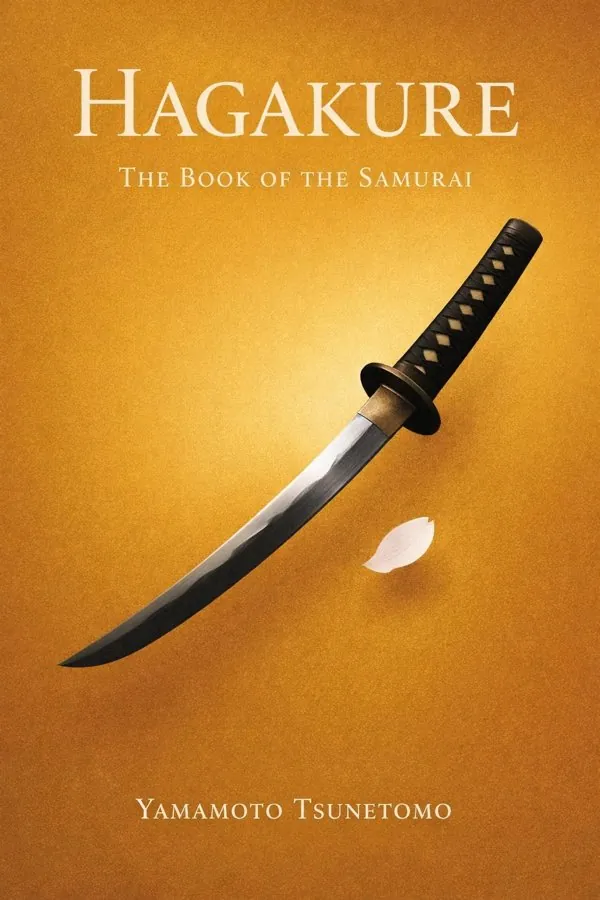
Hagakure: The Book of the Samurai: Summary & Key Insights
 10 min10 chaptersAudio available
What Is Hagakure: The Book of the Samurai About?
Hagakure: The Book of the Samurai by Yamamoto Tsunetomo is a eastern_wisdom book spanning 10 pages. Hagakure: The Book of the Samurai is a classic work on bushido, the way of the warrior, compiled from the teachings of Yamamoto Tsunetomo, a samurai of the Saga domain in early 18th-century Japan. The text explores themes of loyalty, honor, and the acceptance of death as central to the samurai ethos. It is best known for the phrase, 'The way of the samurai is found in death,' which encapsulates its philosophy of readiness and devotion.
This FizzRead summary covers all 10 key chapters of Hagakure: The Book of the Samurai in approximately 10 minutes, distilling the most important ideas, arguments, and takeaways from Yamamoto Tsunetomo's work. Also available as an audio summary and Key Quotes Podcast.
Hagakure: The Book of the Samurai
Hagakure: The Book of the Samurai is a classic work on bushido, the way of the warrior, compiled from the teachings of Yamamoto Tsunetomo, a samurai of the Saga domain in early 18th-century Japan. The text explores themes of loyalty, honor, and the acceptance of death as central to the samurai ethos. It is best known for the phrase, 'The way of the samurai is found in death,' which encapsulates its philosophy of readiness and devotion.
Who Should Read Hagakure: The Book of the Samurai?
This book is perfect for anyone interested in eastern_wisdom and looking to gain actionable insights in a short read. Whether you're a student, professional, or lifelong learner, the key ideas from Hagakure: The Book of the Samurai by Yamamoto Tsunetomo will help you think differently.
- ✓Readers who enjoy eastern_wisdom and want practical takeaways
- ✓Professionals looking to apply new ideas to their work and life
- ✓Anyone who wants the core insights of Hagakure: The Book of the Samurai in just 10 minutes
Want the full summary?
Get instant access to this book summary and 100K+ more with Fizz Moment.
Get Free SummaryAvailable on App Store • Free to download
Key Chapters
At the core of my reflections lies the phrase that has come to define Hagakure: 'The way of the samurai is found in death.' I wrote these words not out of morbid fixation, but out of reverence for life lived fearlessly. Death, in the samurai’s world, is not a tragedy—it is the ultimate test of devotion. When a warrior acts with readiness to die at any moment, he attains the highest purity of intention, for nothing clouds his judgment—neither ambition nor fear.
I observed how, in my time, many samurai calculated endlessly before acting. They sought wisdom, weighed consequences, and by the time they resolved to move, their spirit had already faltered. True courage, I learned from my lord and elders, is not the absence of error—it is the absence of hesitation. A man resolved to die when necessary is capable of decisive, unwavering action.
To live with the consciousness of death is to live fully. It sharpens all senses and deepens presence. In Hagakure, I often invoked the example of warriors who, even without orders, stepped forward in moments of peril. Their readiness to die revealed their sincerity. Through acceptance of mortality, the samurai becomes complete. This acceptance transforms obedience into communion—in service to the lord, one no longer serves for rewards or recognition, but from the purity of faith in duty itself.
What I sought to convey was a way of mind: that death is not something to wait for at the end, but something to hold as a constant companion. When a samurai begins the day prepared to die, he lives every moment without regret. That, I believed, was the true Way.
Loyalty is the soul of Bushido. I came from a time when this virtue was tested not on battlefields, but in daily service. The peace of the Edo era had made many samurai forget that their existence was bound not to their own prosperity, but to their lord’s glory. Service, therefore, must be absolute—it allows no room for calculation or pride.
In reflecting on my years under Lord Nabeshima Mitsushige, I saw that devotion thrives only when free of self-interest. A retainer must care not for his comfort, nor even his reputation. If one hesitates to sacrifice life for the lord’s cause, one's loyalty is incomplete. I told my disciple Tashiro Tsuramoto stories of vassals who died defending their lord’s honor, choosing death over disgrace. This was not recklessness—it was purity. Through their acts, they embodied the principle that true loyalty erases the boundary between self and master.
When subordinates gossip, seek favor, or weigh personal gain, the fabric of duty disintegrates. A samurai’s promise, once given, must be upheld even against impossible odds. To speak rashly or feign loyalty only to escape discomfort is to dishonor the Way.
Loyalty is dynamic, not passive. It calls for constant vigilance, compassion, and honor. Serving the lord demands an understanding of his needs, an intuition for his thoughts, and a readiness to act before being commanded. Such loyalty transforms the servant into a guardian spirit, protecting not only the lord’s life but his legacy, reputation, and peace. This kind of devotion cannot be learned through intellect alone—it must grow from the marrow of one’s own soul.
+ 8 more chapters — available in the FizzRead app
All Chapters in Hagakure: The Book of the Samurai
About the Author
Yamamoto Tsunetomo (1659–1719) was a samurai of the Saga domain during Japan’s Edo period. After serving his lord Nabeshima Mitsushige, he retired to a life of seclusion and dictated his reflections on samurai ethics to his disciple Tashiro Tsuramoto, which were later compiled as Hagakure.
Get This Summary in Your Preferred Format
Read or listen to the Hagakure: The Book of the Samurai summary by Yamamoto Tsunetomo anytime, anywhere. FizzRead offers multiple formats so you can learn on your terms — all free.
Available formats: App · Audio · PDF · EPUB — All included free with FizzRead
Download Hagakure: The Book of the Samurai PDF and EPUB Summary
Key Quotes from Hagakure: The Book of the Samurai
“At the core of my reflections lies the phrase that has come to define Hagakure: 'The way of the samurai is found in death.”
“I came from a time when this virtue was tested not on battlefields, but in daily service.”
Frequently Asked Questions about Hagakure: The Book of the Samurai
Hagakure: The Book of the Samurai by Yamamoto Tsunetomo is a eastern_wisdom book that explores key ideas across 10 chapters. Hagakure: The Book of the Samurai is a classic work on bushido, the way of the warrior, compiled from the teachings of Yamamoto Tsunetomo, a samurai of the Saga domain in early 18th-century Japan. The text explores themes of loyalty, honor, and the acceptance of death as central to the samurai ethos. It is best known for the phrase, 'The way of the samurai is found in death,' which encapsulates its philosophy of readiness and devotion.
You Might Also Like

A New Earth
Eckhart Tolle
10 min
The Daily Stoic
Ryan Holiday, Stephen Hanselman
10 min
Buddhism: Plain and Simple
Steve Hagen
10 min
Enchiridion
Epictetus
10 min
The Book of Tea
Kakuzō Okakura
10 min
The Light We Give: How Sikh Wisdom Can Transform Your Life
Simran Jeet Singh
10 minBrowse by Category
Ready to read Hagakure: The Book of the Samurai?
Get the full summary and 100K+ more books with Fizz Moment.