
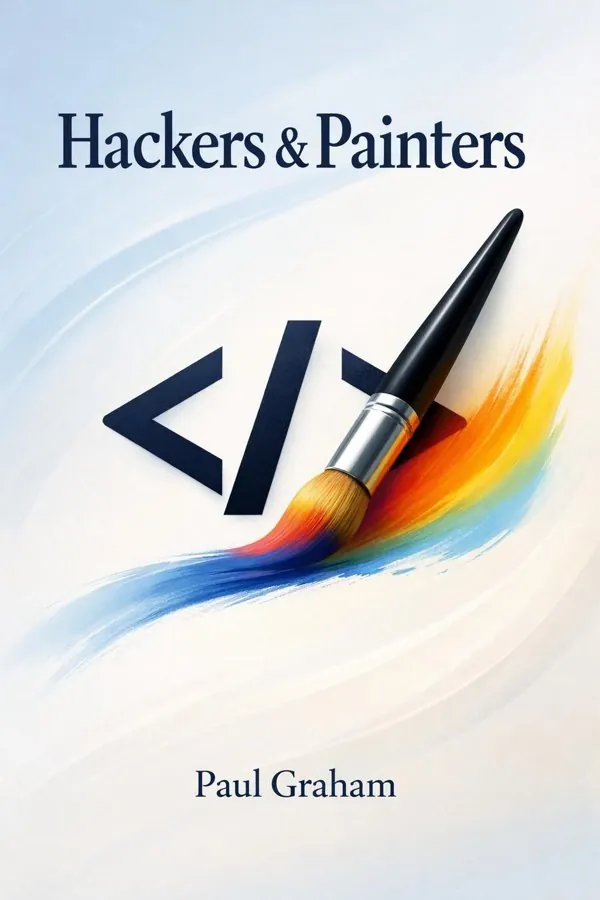
Hackers & Painters: Big Ideas from the Computer Age: Summary & Key Insights
by Paul Graham
 10 min12 chaptersAudio available
What Is Hackers & Painters: Big Ideas from the Computer Age About?
Hackers & Painters: Big Ideas from the Computer Age by Paul Graham is a entrepreneurship book spanning 12 pages. Hackers & Painters is a collection of essays by Paul Graham exploring the intersection of technology, creativity, and entrepreneurship. Drawing parallels between computer programmers and artists, Graham discusses how innovation arises from curiosity and craftsmanship rather than formal structure. The book covers topics such as startup culture, wealth creation, design philosophy, and the social implications of programming, offering insights into how creative thinking drives progress in the digital age.
This FizzRead summary covers all 12 key chapters of Hackers & Painters: Big Ideas from the Computer Age in approximately 10 minutes, distilling the most important ideas, arguments, and takeaways from Paul Graham's work. Also available as an audio summary and Key Quotes Podcast.
Hackers & Painters: Big Ideas from the Computer Age
Hackers & Painters is a collection of essays by Paul Graham exploring the intersection of technology, creativity, and entrepreneurship. Drawing parallels between computer programmers and artists, Graham discusses how innovation arises from curiosity and craftsmanship rather than formal structure. The book covers topics such as startup culture, wealth creation, design philosophy, and the social implications of programming, offering insights into how creative thinking drives progress in the digital age.
Who Should Read Hackers & Painters: Big Ideas from the Computer Age?
This book is perfect for anyone interested in entrepreneurship and looking to gain actionable insights in a short read. Whether you're a student, professional, or lifelong learner, the key ideas from Hackers & Painters: Big Ideas from the Computer Age by Paul Graham will help you think differently.
- ✓Readers who enjoy entrepreneurship and want practical takeaways
- ✓Professionals looking to apply new ideas to their work and life
- ✓Anyone who wants the core insights of Hackers & Painters: Big Ideas from the Computer Age in just 10 minutes
Want the full summary?
Get instant access to this book summary and 100K+ more with Fizz Moment.
Get Free SummaryAvailable on App Store • Free to download
Key Chapters
The heart of hacking lies in curiosity — the desire to know how things work and the impulse to make them better. Hackers thrive in environments where freedom and exploration are possible. What defines them isn’t formal training or credentials but the depth of their interest. Many great programmers began tinkering because they couldn’t resist the challenge. To them, a computer isn’t just a tool, it’s a medium — one where ideas can be turned into living, breathing systems. Hackers push boundaries not to defy authority for its own sake, but because boundaries often conceal lazy assumptions. Their ethos stands in contrast to corporate and academic bureaucracies that prize predictability over creativity. True hacking demands risk, and risk demands autonomy.
In this culture, expertise grows from doing, not from degrees. Hackers learn through experimentation, through hours of playful struggle. They are the modern craftsmen of the digital age. And like artisans, their reward isn’t only money but the thrill of making something elegant and useful. This ethic shapes not only software but startup culture itself, where small teams with strong creative freedom accomplish what large organizations can’t. The hacker ethos is a reminder: genuine innovation doesn’t come from committees — it comes from individuals driven by curiosity and taste.
Many misunderstand wealth as something static — a fixed pie you must fight over. But startups reveal something more profound: wealth can be created by solving problems that were previously unsolved. When you make something people want, you create value. Startups accelerate this process by making creation fast and focused. They’re the crucibles where ideas become reality, where small teams produce disproportionate impact. The myth that entrepreneurs exploit others misses the point — good startups succeed because they give others what they truly need.
Economic inequality, often criticized as unjust, is in part a reflection of differing creative output. It’s not the result of theft but of creation — of building things that didn’t exist before. Hackers know this because they live it: writing powerful software multiplies human capability. Real wealth is not extracted from others but generated through insight and effort. This distinction is essential to understanding modern economies: progress depends on those willing to build, those who translate ideas into products that expand collective potential.
To create wealth at scale, you must think independently. You must not only see inefficiencies but imagine solutions. The joy of hacking — of creating — is the same joy that drives innovation and economic progress. When you make things people love, wealth follows naturally. It’s a consequence, not the goal.
+ 10 more chapters — available in the FizzRead app
All Chapters in Hackers & Painters: Big Ideas from the Computer Age
About the Author
Paul Graham is a computer scientist, entrepreneur, and essayist known for co-founding Viaweb, one of the first web-based applications, which later became Yahoo! Store. He is also the co-founder of Y Combinator, a pioneering startup accelerator. Graham’s essays on technology, startups, and programming have influenced generations of developers and founders worldwide.
Get This Summary in Your Preferred Format
Read or listen to the Hackers & Painters: Big Ideas from the Computer Age summary by Paul Graham anytime, anywhere. FizzRead offers multiple formats so you can learn on your terms — all free.
Available formats: App · Audio · PDF · EPUB — All included free with FizzRead
Download Hackers & Painters: Big Ideas from the Computer Age PDF and EPUB Summary
Key Quotes from Hackers & Painters: Big Ideas from the Computer Age
“The heart of hacking lies in curiosity — the desire to know how things work and the impulse to make them better.”
“Many misunderstand wealth as something static — a fixed pie you must fight over.”
Frequently Asked Questions about Hackers & Painters: Big Ideas from the Computer Age
Hackers & Painters: Big Ideas from the Computer Age by Paul Graham is a entrepreneurship book that explores key ideas across 12 chapters. Hackers & Painters is a collection of essays by Paul Graham exploring the intersection of technology, creativity, and entrepreneurship. Drawing parallels between computer programmers and artists, Graham discusses how innovation arises from curiosity and craftsmanship rather than formal structure. The book covers topics such as startup culture, wealth creation, design philosophy, and the social implications of programming, offering insights into how creative thinking drives progress in the digital age.
More by Paul Graham
You Might Also Like
Lean Analytics
Alistair Croll, Benjamin Yoskovitz
10 min
21 Days To A Big Idea: Creating Breakthrough Business Concepts
Bryan Mattimore
10 min
Sam Walton: Made in America: My Story
Sam Walton
10 min
10x Is Easier Than 2x: How World-Class Entrepreneurs Achieve More by Doing Less
Dan Sullivan, Benjamin Hardy
10 min
12 Months to $1 Million: How to Pick a Winning Product, Build a Real Business, and Become a Seven-Figure Entrepreneur
Ryan Daniel Moran
10 min
24 Assets: Create a Digital, Scalable, Valuable Business
Daniel Priestley
10 minBrowse by Category
Ready to read Hackers & Painters: Big Ideas from the Computer Age?
Get the full summary and 100K+ more books with Fizz Moment.