
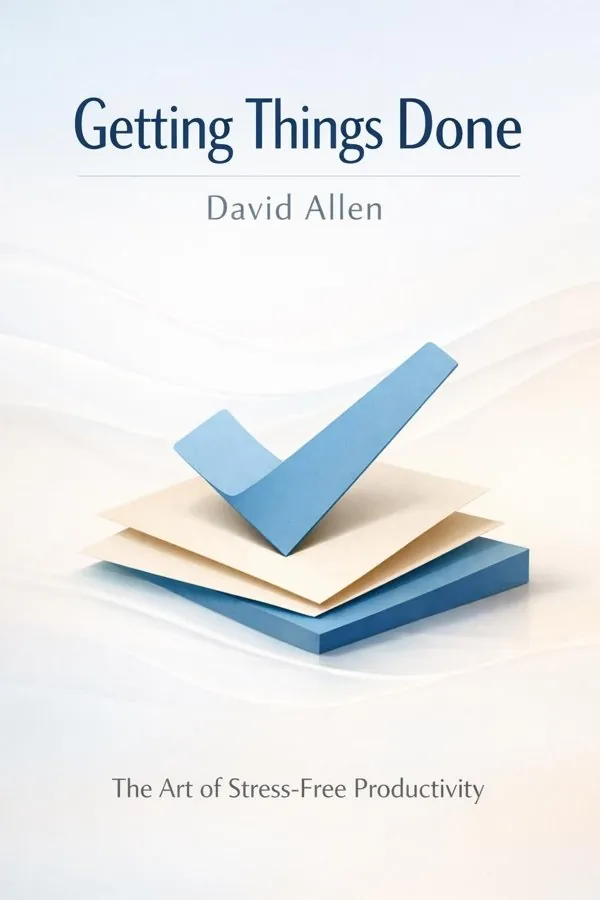
Getting Things Done: The Art of Stress-Free Productivity: Summary & Key Insights
by David Allen
 10 min5 chaptersAudio available
What Is Getting Things Done: The Art of Stress-Free Productivity About?
Getting Things Done: The Art of Stress-Free Productivity by David Allen is a productivity book spanning 5 pages. Getting Things Done es un libro de productividad personal que presenta un método práctico para organizar tareas, proyectos y compromisos. David Allen propone un sistema basado en capturar, aclarar, organizar, reflexionar y ejecutar, con el objetivo de liberar la mente del estrés y aumentar la eficiencia en el trabajo y la vida diaria.
This FizzRead summary covers all 5 key chapters of Getting Things Done: The Art of Stress-Free Productivity in approximately 10 minutes, distilling the most important ideas, arguments, and takeaways from David Allen's work. Also available as an audio summary and Key Quotes Podcast.
Getting Things Done: The Art of Stress-Free Productivity
Getting Things Done es un libro de productividad personal que presenta un método práctico para organizar tareas, proyectos y compromisos. David Allen propone un sistema basado en capturar, aclarar, organizar, reflexionar y ejecutar, con el objetivo de liberar la mente del estrés y aumentar la eficiencia en el trabajo y la vida diaria.
Who Should Read Getting Things Done: The Art of Stress-Free Productivity?
This book is perfect for anyone interested in productivity and looking to gain actionable insights in a short read. Whether you're a student, professional, or lifelong learner, the key ideas from Getting Things Done: The Art of Stress-Free Productivity by David Allen will help you think differently.
- ✓Readers who enjoy productivity and want practical takeaways
- ✓Professionals looking to apply new ideas to their work and life
- ✓Anyone who wants the core insights of Getting Things Done: The Art of Stress-Free Productivity in just 10 minutes
Want the full summary?
Get instant access to this book summary and 100K+ more with Fizz Moment.
Get Free SummaryAvailable on App Store • Free to download
Key Chapters
The essence of GTD lies in building an external system you can trust, freeing you from the burden of carrying everything in your head. Effort doesn’t make work easier; clarity does. Stress often comes from unfinished commitments—too many things to handle, too many decisions awaiting action. Your brain remains tense, constantly juggling open loops. Establishing a systematic process is the first step to regaining control.
The first step is *capture*. You need a safe inbox for everything—papers, emails, notes, even fleeting ideas. The brain is for thinking, not storage. A good capture system is the foundation for mental relief.
Second is *clarify*. Not everything you collect requires action. Some items are just information, others need follow-up, and some depend on someone else. For each item, you must decide: Is it actionable? If so, what’s the next step? If not, should it be discarded, stored, or deferred? Clear decisions keep your head clear.
Third is *organize*. Once action steps are defined, place them in lists: the “Next Actions” list for immediate tasks, “Waiting For” for dependent items, and “Projects” for multi-step outcomes. This structure is GTD’s backbone. It transforms chaos into an organized map of activity.
Fourth is *reflect*. True control comes from regular review. Weekly reviews reset the entire system, ensuring it’s current and aligned with your goals. When your lists reflect reality, you can trust them—and that trust produces calm.
Finally, *engage*. When you look at your lists, you don’t wonder what to do next; you simply choose based on context, time, energy, and priority. Action becomes fluid and natural, no longer reactive. Once this practice becomes habit, you experience genuine flow—the state I call “Mind Like Water”: still on the surface, perfectly responsive to any ripple.
For modern knowledge workers, most stress stems not from single tasks but from complex, layered projects. Projects come with shifting objectives, dependencies, meetings, deliverables, and feedback loops. If you can’t clearly define a project’s structure, it becomes a source of vague anxiety. GTD’s approach to project management doesn’t rely on sophisticated tools but on one principle: every open loop must have a clearly defined next action.
I often pose one decisive question: “What’s the next step for this project?” If you can’t answer, your thinking remains abstract instead of actionable. The heart of project management isn’t lofty vision—it’s turning vision into progress through concrete, doable steps. When every project has a defined next action, mental burden disappears.
I emphasize the Natural Planning Model, which includes five levels: purpose and principles, vision, brainstorming, organizing, and next actions. Humans instinctively use this model, but few apply it deliberately. When you do, even the most complex projects begin to unfold with clarity—from engineering challenges to family goals. A project becomes energizing, not stressful, only when its purpose is understood, direction precise, and actions specific.
+ 3 more chapters — available in the FizzRead app
All Chapters in Getting Things Done: The Art of Stress-Free Productivity
About the Author
David Allen es un consultor de productividad y autor estadounidense, reconocido por desarrollar el método GTD (Getting Things Done). Ha trabajado con empresas y profesionales de todo el mundo para mejorar la gestión del tiempo y la efectividad personal.
Get This Summary in Your Preferred Format
Read or listen to the Getting Things Done: The Art of Stress-Free Productivity summary by David Allen anytime, anywhere. FizzRead offers multiple formats so you can learn on your terms — all free.
Available formats: App · Audio · PDF · EPUB — All included free with FizzRead
Download Getting Things Done: The Art of Stress-Free Productivity PDF and EPUB Summary
Key Quotes from Getting Things Done: The Art of Stress-Free Productivity
“The essence of GTD lies in building an external system you can trust, freeing you from the burden of carrying everything in your head.”
“For modern knowledge workers, most stress stems not from single tasks but from complex, layered projects.”
Frequently Asked Questions about Getting Things Done: The Art of Stress-Free Productivity
Getting Things Done: The Art of Stress-Free Productivity by David Allen is a productivity book that explores key ideas across 5 chapters. Getting Things Done es un libro de productividad personal que presenta un método práctico para organizar tareas, proyectos y compromisos. David Allen propone un sistema basado en capturar, aclarar, organizar, reflexionar y ejecutar, con el objetivo de liberar la mente del estrés y aumentar la eficiencia en el trabajo y la vida diaria.
More by David Allen

You Might Also Like


Browse by Category
Ready to read Getting Things Done: The Art of Stress-Free Productivity?
Get the full summary and 100K+ more books with Fizz Moment.