
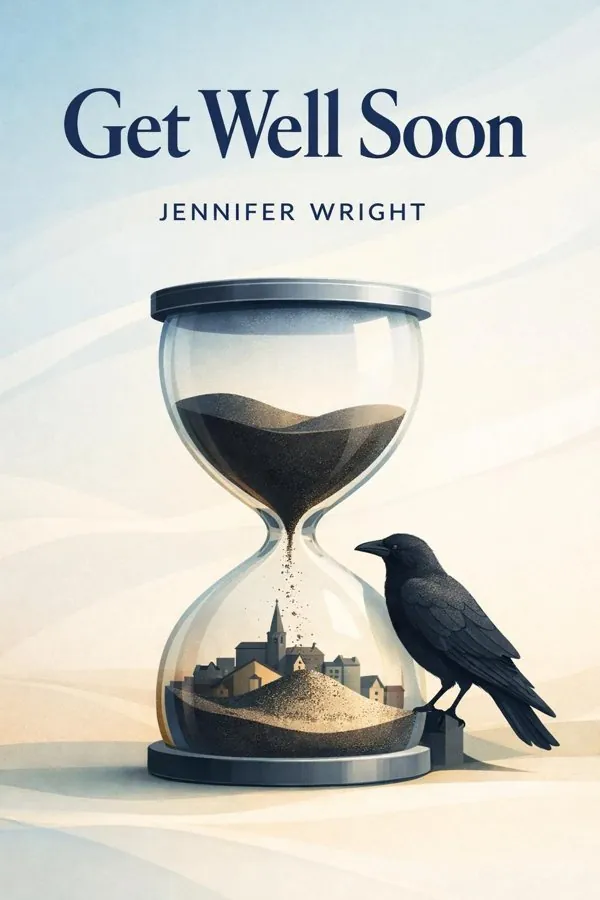
Get Well Soon: History's Worst Plagues and the Heroes Who Fought Them: Summary & Key Insights
 10 min7 chaptersAudio available
What Is Get Well Soon: History's Worst Plagues and the Heroes Who Fought Them About?
Get Well Soon: History's Worst Plagues and the Heroes Who Fought Them by Jennifer Wright is a world_history book spanning 7 pages. A witty and informative exploration of history’s most devastating epidemics and the courageous individuals who battled them. Jennifer Wright combines humor and historical insight to examine how societies have responded to disease outbreaks—from the bubonic plague to the Spanish flu—revealing both human folly and resilience.
This FizzRead summary covers all 7 key chapters of Get Well Soon: History's Worst Plagues and the Heroes Who Fought Them in approximately 10 minutes, distilling the most important ideas, arguments, and takeaways from Jennifer Wright's work. Also available as an audio summary and Key Quotes Podcast.
Get Well Soon: History's Worst Plagues and the Heroes Who Fought Them
A witty and informative exploration of history’s most devastating epidemics and the courageous individuals who battled them. Jennifer Wright combines humor and historical insight to examine how societies have responded to disease outbreaks—from the bubonic plague to the Spanish flu—revealing both human folly and resilience.
Who Should Read Get Well Soon: History's Worst Plagues and the Heroes Who Fought Them?
This book is perfect for anyone interested in world_history and looking to gain actionable insights in a short read. Whether you're a student, professional, or lifelong learner, the key ideas from Get Well Soon: History's Worst Plagues and the Heroes Who Fought Them by Jennifer Wright will help you think differently.
- ✓Readers who enjoy world_history and want practical takeaways
- ✓Professionals looking to apply new ideas to their work and life
- ✓Anyone who wants the core insights of Get Well Soon: History's Worst Plagues and the Heroes Who Fought Them in just 10 minutes
Want the full summary?
Get instant access to this book summary and 100K+ more with Fizz Moment.
Get Free SummaryAvailable on App Store • Free to download
Key Chapters
The Antonine Plague hit the Roman Empire like a storm of invisible arrows. Likely smallpox or measles, it swept through legions returning from campaigns in the East and decimated the population. From emperors to common citizens, no one was untouched. I start with this epidemic because it demonstrates one of humanity’s earliest encounters with the idea that illness could destroy empires. The Romans, organized as they were, had no concept of pathogens. They prayed, they sacrificed, and they waited for divine mercy. The result was despair—and a sign that even mighty civilizations could crumble before nature’s microscopic forces.
But hidden in this misery was the question that drives every innovation in medicine: what is sickness, and how do we stop it? Galen, the physician whose name became synonymous with early Western medicine, was alive during this time. His observations, though limited by the knowledge of the era, were daring; he began to separate superstition from physical reasoning. To treat fever, he devised experiments with temperature and diet—rudimentary efforts, but revolutionary for an age when plague seemed the gods’ punishment. The Antonine Plague marked not only the decline of Rome’s military might, but the beginning of a new mindset: the conviction that disease could be studied rationally.
This shift in thinking—the move from divine punishment to natural phenomenon—was the first spark of modern epidemiology. Out of terror grew curiosity. And curiosity, in every epidemic that followed, was the seed of salvation.
Centuries later, the Byzantine Empire faced its own apocalypse. The Plague of Justinian, anatomically identical to the later Black Death, erupted in the sixth century and killed tens of millions. Imagine Constantinople, once vibrant and prosperous, drowning in silence—markets closed, ships abandoned, the emperor himself isolated in fear. Justinian, ever ambitious, refused to yield. His response was sometimes misguided, imposing strict quarantines without understanding contagion, but his persistence mattered. He ordered documentation of the outbreak, an attempt at record-keeping that later generations could learn from. For the first time, disease was treated as a historical event, not a supernatural anomaly.
This plague underscored something strange and wonderful about human leadership in crisis: even when death is everywhere, someone tries to build order. Justinian wanted his empire to stand immortal, yet what he taught future rulers was humility before nature. His chroniclers captured vivid scenes—cartloads of corpses, mass burials in towers—a world ending, but being written down. In that act of writing, civilization refused to vanish. The Plague of Justinian thus became a lesson not only in mortality but in memory.
+ 5 more chapters — available in the FizzRead app
All Chapters in Get Well Soon: History's Worst Plagues and the Heroes Who Fought Them
About the Author
Jennifer Wright is an American author and journalist known for her engaging historical nonfiction. She has written for publications such as The New York Times, The Washington Post, and McSweeney’s, and is recognized for her humorous yet insightful approach to history and culture.
Get This Summary in Your Preferred Format
Read or listen to the Get Well Soon: History's Worst Plagues and the Heroes Who Fought Them summary by Jennifer Wright anytime, anywhere. FizzRead offers multiple formats so you can learn on your terms — all free.
Available formats: App · Audio · PDF · EPUB — All included free with FizzRead
Download Get Well Soon: History's Worst Plagues and the Heroes Who Fought Them PDF and EPUB Summary
Key Quotes from Get Well Soon: History's Worst Plagues and the Heroes Who Fought Them
“The Antonine Plague hit the Roman Empire like a storm of invisible arrows.”
“Centuries later, the Byzantine Empire faced its own apocalypse.”
Frequently Asked Questions about Get Well Soon: History's Worst Plagues and the Heroes Who Fought Them
Get Well Soon: History's Worst Plagues and the Heroes Who Fought Them by Jennifer Wright is a world_history book that explores key ideas across 7 chapters. A witty and informative exploration of history’s most devastating epidemics and the courageous individuals who battled them. Jennifer Wright combines humor and historical insight to examine how societies have responded to disease outbreaks—from the bubonic plague to the Spanish flu—revealing both human folly and resilience.
You Might Also Like
The Age of Capital
Eric Hobsbawm
10 min
The Gulag Archipelago
Aleksandr Solzhenitsyn
10 min
Jerusalem: The Biography
Simon Sebag Montefiore
10 min
The Anglo-Saxons
James Campbell
10 min
The Boer War
Thomas Pakenham
10 min
The Industrial Revolutionaries: The Making of the Modern World 1776–1914
Gavin Weightman
10 minBrowse by Category
Ready to read Get Well Soon: History's Worst Plagues and the Heroes Who Fought Them?
Get the full summary and 100K+ more books with Fizz Moment.