
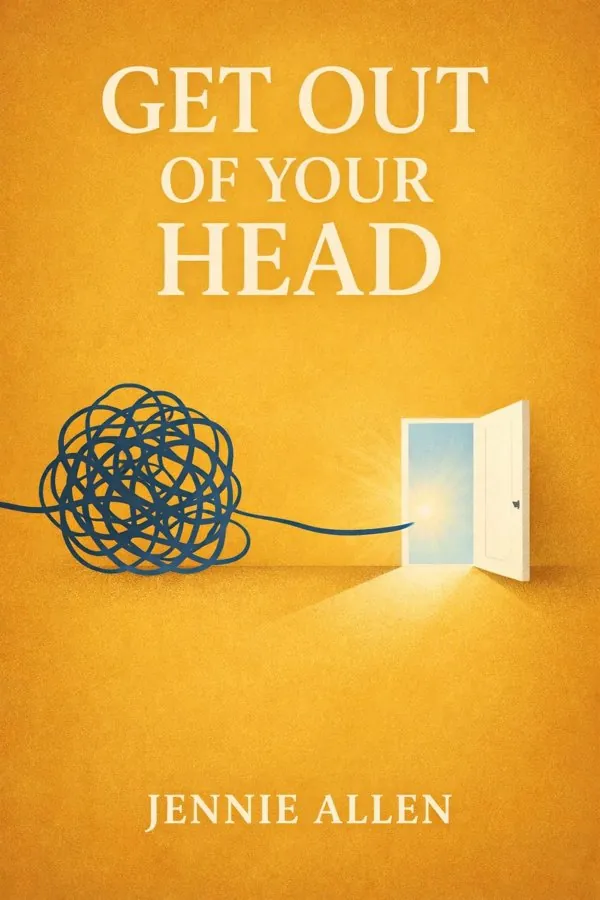
Get Out of Your Head: Stopping the Spiral of Toxic Thoughts: Summary & Key Insights
by Jennie Allen
 10 min8 chaptersAudio available
What Is Get Out of Your Head: Stopping the Spiral of Toxic Thoughts About?
Get Out of Your Head: Stopping the Spiral of Toxic Thoughts by Jennie Allen is a mindset book spanning 8 pages. In this book, Jennie Allen explores how to break free from toxic thought patterns through faith and biblical principles. Drawing from the book of Philippians, she guides readers to take control of their minds, overcome negative thinking, and experience spiritual freedom by submitting their thoughts to Christ.
This FizzRead summary covers all 8 key chapters of Get Out of Your Head: Stopping the Spiral of Toxic Thoughts in approximately 10 minutes, distilling the most important ideas, arguments, and takeaways from Jennie Allen's work. Also available as an audio summary and Key Quotes Podcast.
Get Out of Your Head: Stopping the Spiral of Toxic Thoughts
In this book, Jennie Allen explores how to break free from toxic thought patterns through faith and biblical principles. Drawing from the book of Philippians, she guides readers to take control of their minds, overcome negative thinking, and experience spiritual freedom by submitting their thoughts to Christ.
Who Should Read Get Out of Your Head: Stopping the Spiral of Toxic Thoughts?
This book is perfect for anyone interested in mindset and looking to gain actionable insights in a short read. Whether you're a student, professional, or lifelong learner, the key ideas from Get Out of Your Head: Stopping the Spiral of Toxic Thoughts by Jennie Allen will help you think differently.
- ✓Readers who enjoy mindset and want practical takeaways
- ✓Professionals looking to apply new ideas to their work and life
- ✓Anyone who wants the core insights of Get Out of Your Head: Stopping the Spiral of Toxic Thoughts in just 10 minutes
Want the full summary?
Get instant access to this book summary and 100K+ more with Fizz Moment.
Get Free SummaryAvailable on App Store • Free to download
Key Chapters
Before we can change what goes on inside our heads, we have to understand what we’re up against. The battle begins invisibly: a single anxious thought, a whisper of comparison, a fleeting assumption that turns into full-blown fear. For years, I underestimated the power of these thoughts, assuming that emotions just happened to me and that mental chaos was inevitable. But the truth is, every thought builds a narrative, and every narrative directs a life.
Paul reminds us that our struggle is not just with flesh and blood but with spiritual forces that seek to distort truth. That distortion often starts small—an exaggeration, a self-doubt, a worry recycled until it becomes identity. I remember moments sitting in my kitchen, paralyzed by fear that I was failing as a mother, or standing backstage before speaking, overwhelmed by the thought that I wasn’t worthy to lead anyone. In those moments, I realized that toxic thoughts are not neutral; they carry spiritual consequences. They can steal joy, block prayer, and silence purpose.
Recognizing the battle means admitting that what happens in your mind matters—and that there is an enemy invested in keeping you stuck. The enemy doesn’t have to destroy your faith outright; he only has to distract it. When your mind is scattered, fearful, and self-focused, you cannot live with clarity or courage. Knowing this changes the way we interpret our mental experience. Anxiety, shame, and negativity aren’t just emotions to be endured; they are signals that something deeper needs addressing. They show us where we have believed lies instead of truth.
When you begin to see your thought life as a battlefield, you stop accepting mental chaos as normal. You start listening for patterns and asking questions: What is fueling this thought? Where did I first believe it? Is this aligned with God’s voice, or is it the echo of my own insecurity? That awareness is the first step toward freedom. Once you name the battle, you can begin to fight it—not by trying harder but by obeying differently, by thinking spiritually instead of reactively.
Recognizing that we are in a mental and spiritual war doesn’t mean we live afraid; it means we live awake. It’s not about dwelling on darkness but about learning to bring light into it. Awareness isn’t paranoia—it’s preparation.
After recognizing the battle, the next step is learning to identify the lies that fuel it. Lies are subtle, persuasive, and often disguised as logic. They sound like: “I’ll never change.” “I’m not enough.” “If I don’t control everything, everything will fall apart.” These statements feel rational when we’re anxious or tired, but they are distortions of reality and distortions of God’s truth.
In my own journey, I discovered how deeply these lies had shaped my identity. They told me I was unqualified, unloved, unseen. They convinced me that if people really knew me, they would turn away. But when I started grounding my thoughts in Scripture, I saw that these internal messages contradicted everything God said about me: that I am chosen, redeemed, and equipped. Identifying lies is like turning on a light in a dark room—you start to see how much fear loses its grip when exposed.
Many of us believe that our thoughts are simply reflections of truth. But in reality, thoughts are lenses, and lenses can be warped. Lies deform our perception so subtly that we don’t realize we’re looking through a distorted frame. You’ll never win a fight against what you cannot name. That’s why we must speak the lie out loud—to recognize it, dismantle it, and replace it.
The Bible invites us to renew our minds by truth, and that truth must be actively practiced. It isn’t enough to quote a verse once and expect instant peace. The process is daily and deliberate. You replace the false belief that says, “I’m alone” with the truth that God promises, “I will never leave you.” You confront the pessimistic thought that says, “Things will never change,” with the truth that “In Christ, all things are made new.” Identifying lies turns faith from theory into therapy—it makes healing possible.
+ 6 more chapters — available in the FizzRead app
All Chapters in Get Out of Your Head: Stopping the Spiral of Toxic Thoughts
About the Author
Jennie Allen is an American author, speaker, and founder of IF:Gathering, a Christian organization that equips women to live out their faith. She holds a Master’s degree in Biblical Studies from Dallas Theological Seminary and is known for her works on spiritual growth and mindset transformation.
Get This Summary in Your Preferred Format
Read or listen to the Get Out of Your Head: Stopping the Spiral of Toxic Thoughts summary by Jennie Allen anytime, anywhere. FizzRead offers multiple formats so you can learn on your terms — all free.
Available formats: App · Audio · PDF · EPUB — All included free with FizzRead
Download Get Out of Your Head: Stopping the Spiral of Toxic Thoughts PDF and EPUB Summary
Key Quotes from Get Out of Your Head: Stopping the Spiral of Toxic Thoughts
“Before we can change what goes on inside our heads, we have to understand what we’re up against.”
“After recognizing the battle, the next step is learning to identify the lies that fuel it.”
Frequently Asked Questions about Get Out of Your Head: Stopping the Spiral of Toxic Thoughts
Get Out of Your Head: Stopping the Spiral of Toxic Thoughts by Jennie Allen is a mindset book that explores key ideas across 8 chapters. In this book, Jennie Allen explores how to break free from toxic thought patterns through faith and biblical principles. Drawing from the book of Philippians, she guides readers to take control of their minds, overcome negative thinking, and experience spiritual freedom by submitting their thoughts to Christ.
More by Jennie Allen


You Might Also Like



Browse by Category
Ready to read Get Out of Your Head: Stopping the Spiral of Toxic Thoughts?
Get the full summary and 100K+ more books with Fizz Moment.