
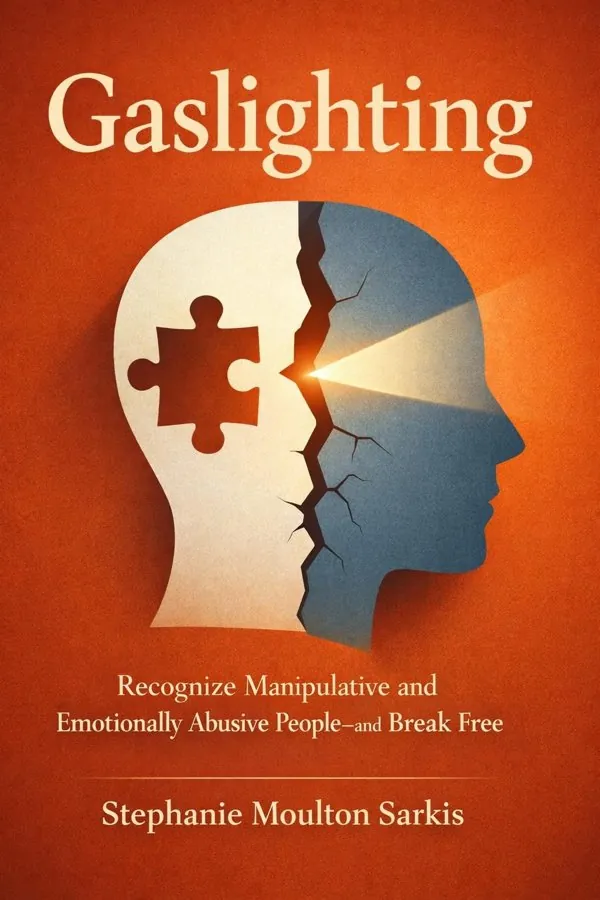
Gaslighting: Recognize Manipulative and Emotionally Abusive People—and Break Free: Summary & Key Insights
 10 min9 chaptersAudio available
Key Takeaways from Gaslighting: Recognize Manipulative and Emotionally Abusive People—and Break Free
The most dangerous abuse is often the kind that leaves no visible bruise.
Manipulators rarely gaslight by accident; they do it because it works.
Abuse often becomes clear only in retrospect because it unfolds in stages.
People often associate gaslighting with romantic relationships, but Sarkis makes clear that it can occur anywhere power and trust intersect.
Gaslighting succeeds because it uses tactics that are emotionally disorienting, not just intellectually dishonest.
What Is Gaslighting: Recognize Manipulative and Emotionally Abusive People—and Break Free About?
Gaslighting: Recognize Manipulative and Emotionally Abusive People—and Break Free by Stephanie Moulton Sarkis is a mental_health book spanning 6 pages. Gaslighting is one of the most damaging forms of emotional abuse because it attacks the very tools people use to protect themselves: memory, perception, judgment, and self-trust. In Gaslighting: Recognize Manipulative and Emotionally Abusive People—and Break Free, Stephanie Moulton Sarkis explains how manipulators gradually distort reality, deny obvious facts, rewrite conversations, and blame their targets until confusion becomes a way of life. What makes the book so powerful is that it does not treat gaslighting as a vague buzzword. Instead, it breaks the pattern down into recognizable behaviors, predictable stages, and specific contexts, from romantic relationships to families, workplaces, and public life. Sarkis writes with the authority of a psychotherapist who has worked extensively with anxiety, ADHD, trauma, and toxic relationships. She combines clinical insight with practical guidance, helping readers identify whether they are being manipulated, understand why gaslighters behave the way they do, and take concrete steps toward safety and recovery. This is an important book for anyone who has ever felt chronically confused, constantly blamed, or pressured to distrust their own reality.
This FizzRead summary covers all 9 key chapters of Gaslighting: Recognize Manipulative and Emotionally Abusive People—and Break Free in approximately 10 minutes, distilling the most important ideas, arguments, and takeaways from Stephanie Moulton Sarkis's work. Also available as an audio summary and Key Quotes Podcast.
Gaslighting: Recognize Manipulative and Emotionally Abusive People—and Break Free
Gaslighting is one of the most damaging forms of emotional abuse because it attacks the very tools people use to protect themselves: memory, perception, judgment, and self-trust. In Gaslighting: Recognize Manipulative and Emotionally Abusive People—and Break Free, Stephanie Moulton Sarkis explains how manipulators gradually distort reality, deny obvious facts, rewrite conversations, and blame their targets until confusion becomes a way of life. What makes the book so powerful is that it does not treat gaslighting as a vague buzzword. Instead, it breaks the pattern down into recognizable behaviors, predictable stages, and specific contexts, from romantic relationships to families, workplaces, and public life.
Sarkis writes with the authority of a psychotherapist who has worked extensively with anxiety, ADHD, trauma, and toxic relationships. She combines clinical insight with practical guidance, helping readers identify whether they are being manipulated, understand why gaslighters behave the way they do, and take concrete steps toward safety and recovery. This is an important book for anyone who has ever felt chronically confused, constantly blamed, or pressured to distrust their own reality.
Who Should Read Gaslighting: Recognize Manipulative and Emotionally Abusive People—and Break Free?
This book is perfect for anyone interested in mental_health and looking to gain actionable insights in a short read. Whether you're a student, professional, or lifelong learner, the key ideas from Gaslighting: Recognize Manipulative and Emotionally Abusive People—and Break Free by Stephanie Moulton Sarkis will help you think differently.
- ✓Readers who enjoy mental_health and want practical takeaways
- ✓Professionals looking to apply new ideas to their work and life
- ✓Anyone who wants the core insights of Gaslighting: Recognize Manipulative and Emotionally Abusive People—and Break Free in just 10 minutes
Want the full summary?
Get instant access to this book summary and 100K+ more with Fizz Moment.
Get Free SummaryAvailable on App Store • Free to download
Key Chapters
The most dangerous abuse is often the kind that leaves no visible bruise. Sarkis shows that gaslighting is not simply lying or arguing; it is a sustained effort to make another person doubt their own perception of reality. The term comes from the classic story in which a husband dims the gas lights and insists his wife is imagining it. That pattern captures the essence of gaslighting: something real happens, the victim notices it, and the manipulator denies it so confidently and repeatedly that the victim begins to question their own mind.
Gaslighting often starts subtly. A partner says, “I never said that,” after making a hurtful remark. A boss claims, “You’re being overly emotional,” when confronted about unfair treatment. A parent insists, “That never happened,” when an adult child brings up painful memories. Over time, these denials and reversals accumulate. The victim spends more energy trying to confirm reality than responding to the mistreatment itself.
Sarkis emphasizes that the damage comes not only from isolated incidents but from repetition. Gaslighters create confusion by mixing affection with cruelty, confidence with deception, and accusation with denial. Victims may begin keeping notes, replaying conversations, or asking others to confirm basic facts. They often feel anxious, foggy, and unusually dependent on the gaslighter’s version of events.
Recognizing gaslighting begins with naming the pattern. If you consistently leave interactions feeling disoriented, guilty, or unsure about what clearly happened, treat that confusion as data, not weakness. Actionable takeaway: start documenting troubling interactions in a private journal, including dates, words used, and how you felt, so you can compare patterns against reality rather than against the gaslighter’s claims.
Manipulators rarely gaslight by accident; they do it because it works. Sarkis explains that many gaslighters are driven by a deep need for control, admiration, and power. While not every gaslighter has a diagnosable personality disorder, many display traits associated with narcissism, entitlement, lack of empathy, and externalization of blame. They often cannot tolerate being wrong, criticized, or held accountable. Instead of reflecting on their behavior, they rewrite reality so that they remain superior and the other person becomes the problem.
This helps explain why logical arguments seldom stop gaslighting. The goal is not mutual understanding. The goal is dominance. A gaslighter may deny events, minimize harm, change the subject, attack the victim’s credibility, or play the victim themselves. For example, if confronted about flirting, they may respond, “You’re paranoid and jealous.” If asked about broken promises, they may say, “You expect too much from everyone.” The content matters less than the outcome: the focus shifts away from their conduct and onto your supposed instability.
Sarkis also notes that some gaslighters learned manipulative strategies in childhood or use them to protect a fragile self-image. But understanding the roots of the behavior should not become an excuse for tolerating abuse. Insight can be useful; rationalization can be dangerous.
One of the book’s most liberating lessons is that you do not need to fully solve the gaslighter’s psychology in order to protect yourself. You only need to recognize that the pattern is harmful and unlikely to change without serious accountability. Actionable takeaway: stop asking only “Why are they like this?” and start asking “What is this behavior costing me, and what boundaries do I need now?”
Abuse often becomes clear only in retrospect because it unfolds in stages. Sarkis outlines how gaslighting typically begins with charm, intensifies through confusion, and eventually creates dependency. In the early stage, the gaslighter may appear attentive, charismatic, or unusually persuasive. They gather information about your fears, values, and vulnerabilities while presenting themselves as the person who understands you best. This early bond can make later manipulation harder to detect.
The next stage involves contradiction and destabilization. The gaslighter starts denying previous statements, criticizing your reactions, and reframing obvious problems as evidence of your sensitivity or instability. You may hear phrases like “You’re remembering it wrong,” “You always overreact,” or “No one else would see it that way.” At this point, many victims try harder to communicate clearly, believing the issue is a misunderstanding.
As the pattern deepens, isolation and dependency often emerge. The gaslighter may undermine your relationships, suggest that friends or family are against you, or claim that only they know the truth. Victims may lose confidence, withdraw from support systems, and rely more heavily on the abuser’s interpretation of events. This is when gaslighting can become especially dangerous, because self-doubt begins to replace self-protection.
Sarkis highlights warning signs such as constant second-guessing, frequent apologizing, feeling confused after ordinary conversations, and noticing that your world has become smaller. These are not signs of personal failure; they are often signs of manipulation.
Seeing the stages helps readers understand that gaslighting is a process, not a single event. Actionable takeaway: identify where your relationship or workplace dynamic sits in this progression and treat escalation, especially increased isolation or dependence, as a signal to seek outside perspective immediately.
People often associate gaslighting with romantic relationships, but Sarkis makes clear that it can occur anywhere power and trust intersect. Families, workplaces, friendships, medical settings, and institutions can all become environments where reality is distorted. This broader view matters because many victims fail to recognize abuse when it does not fit the stereotype of a controlling partner.
In families, a parent may deny obvious favoritism, dismiss a child’s feelings, or rewrite painful events to protect the family image. In the workplace, a supervisor may give unclear instructions, later blame the employee for misunderstanding, and insist the employee is incompetent. In friendships, one person may repeatedly break boundaries and then accuse the other of being dramatic for objecting. In health contexts, people, especially women and marginalized individuals, may even experience forms of gaslighting when legitimate symptoms are dismissed as stress, exaggeration, or imagination.
Sarkis shows that the common thread is not the setting but the pattern: someone with more influence, confidence, or authority uses denial and distortion to gain advantage. The victim becomes preoccupied with proving what happened rather than addressing the harm. This can lead to emotional exhaustion, reduced performance, and growing self-doubt.
Recognizing context-specific forms of gaslighting allows readers to take more targeted action. In a workplace, that may mean saving emails and clarifying instructions in writing. In a family, it may mean reducing exposure to revisionist arguments. In friendships, it may mean noticing whether the relationship leaves you feeling small and perpetually at fault.
Actionable takeaway: review your major relationships and environments, and ask where you are consistently pressured to distrust your own experience. The answer may reveal that gaslighting is not isolated but systemic.
Gaslighting succeeds because it uses tactics that are emotionally disorienting, not just intellectually dishonest. Sarkis catalogues the recurring methods gaslighters use to destabilize others. These include blatant denial, trivializing feelings, withholding engagement, countering memory, projection, and shifting blame. A gaslighter may insist something never happened, mock your reaction, refuse to discuss the issue, accuse you of the very behavior they are displaying, or flood the conversation with unrelated complaints until you lose track of the original point.
One especially confusing tactic is intermittent reinforcement. The gaslighter is not cruel all the time. They may alternate manipulation with affection, apology, or generosity. This inconsistency keeps victims hopeful that things will improve if they just communicate better, become calmer, or avoid triggering the abuser. In reality, the unpredictability itself strengthens the bond by making the victim work harder for moments of approval or peace.
Another tactic is recruitment of allies. Gaslighters may charm outsiders, spread selective stories, or portray themselves as misunderstood. This can leave victims feeling doubly trapped: not only are they being manipulated, but others may not believe them. The result is shame and silence.
Sarkis encourages readers to pay attention to patterns rather than isolated excuses. Everyone forgets things or reacts defensively sometimes. The issue is repeated distortion that consistently serves one person’s control while eroding the other person’s confidence.
Understanding tactics turns vague discomfort into recognizable structure. Once you can identify the moves, you are less likely to internalize them. Actionable takeaway: make a personal checklist of phrases and behaviors you repeatedly encounter, such as denial, mockery, blame-shifting, or selective kindness, and use it to evaluate the pattern instead of debating each incident separately.
When your reality has been repeatedly challenged, clarity becomes a survival skill. Sarkis strongly recommends practical tools that help victims reconnect with facts and reduce exposure to manipulation. One of the most useful is documentation. Keeping records of conversations, saving messages, following up verbal discussions in writing, and noting dates and witnesses can help counter the fog gaslighting creates. Documentation is not only for legal or workplace protection; it is also a way of rebuilding trust in your own memory.
Boundaries are equally important, though Sarkis acknowledges they can be difficult to enforce with chronic manipulators. A healthy person may respect a limit once it is clearly stated. A gaslighter often treats boundaries as a challenge. That means the key is not only stating the boundary but deciding what you will do when it is violated. For example, instead of repeatedly saying, “Please don’t yell at me,” a stronger boundary is, “If you raise your voice, I will end the conversation and leave.” In a workplace, it might look like requesting that instructions be sent by email. In a family setting, it may mean refusing to revisit rewritten versions of the past.
Sarkis also points to the value of outside validation: therapists, trusted friends, support groups, attorneys, HR representatives, or advocates. Because gaslighting isolates, reality-checking with grounded people is part of recovery and protection.
The book does not promise that clear evidence will magically transform the gaslighter. Often it will not. But evidence and boundaries help victims stop arguing inside the abuser’s distorted frame.
Actionable takeaway: choose one recurring gaslighting situation this week and create a concrete protection plan, including written documentation, a boundary statement, and one trusted person you can consult afterward.
One of Sarkis’s most important contributions is her realism: recognizing gaslighting is vital, but breaking free often requires preparation. Many victims assume that once they confront the manipulator or explain the abuse clearly, the situation will improve. In severe cases, the opposite may happen. Gaslighters may intensify control when they sense they are losing power. That is why exit planning matters, especially in romantic, family, financial, or workplace situations where the abuser has access to resources, children, housing, reputation, or legal leverage.
Strategic planning can include securing important documents, separating finances, changing passwords, documenting incidents, consulting legal or domestic abuse resources, and informing trusted allies. Emotional planning matters too. Victims frequently feel grief, guilt, fear, and longing even when leaving harmful relationships. This does not mean the decision is wrong; it means trauma bonds and dependency can make freedom emotionally complicated.
Sarkis cautions against announcing every step to a manipulative person. Transparency is healthy in safe relationships, but with an abuser it can be risky. Sometimes the safest path is quiet preparation. For someone leaving a gaslighting partner, that may involve arranging transportation, temporary housing, and communication support. For someone exiting a toxic workplace, it may mean collecting records, lining up references, and consulting an employment expert before filing a complaint or resigning.
The broader lesson is that freedom is not only a feeling; it is a structure. Safety, support, information, and timing all matter. Actionable takeaway: if you believe you may need to leave a gaslighting environment, begin a private exit checklist now, covering finances, communication, documents, transportation, and support contacts rather than waiting for a crisis.
Escaping a gaslighter is not the end of the story, because the abuse often lingers internally. Sarkis explains that recovery involves more than physical distance; it requires rebuilding self-trust after prolonged confusion. Victims may continue to question their memory, apologize reflexively, fear conflict, or assume they are overreacting. Some struggle with anxiety, depression, trauma symptoms, sleep problems, and difficulty making decisions. These aftereffects are common because gaslighting trains people to override their own instincts.
Healing begins with validation. Survivors need language for what happened and permission to treat their experience as real. Therapy can help, especially approaches that address trauma, boundaries, and cognitive distortions left by abuse. Supportive friends and peer groups can also be powerful because they interrupt the isolation that gaslighting creates. Simple practices matter too: journaling, mindfulness, rest, body-based self-care, and making small decisions independently to strengthen confidence.
Sarkis also encourages survivors to examine the beliefs installed by manipulation. Do you assume every disagreement is your fault? Do you distrust your emotions? Do you feel compelled to explain yourself excessively? Recovery means noticing these habits without shame and gradually replacing them with healthier patterns. Self-trust is rebuilt through repeated experiences of listening to yourself, checking facts, and seeing that your perceptions are often accurate.
Importantly, healing is not linear. Missing the abuser, doubting your decision, or feeling emotionally triggered does not erase progress. It reflects the depth of the conditioning.
Actionable takeaway: create a self-trust practice by writing down one feeling, one observation, and one decision each day, then review them weekly to strengthen confidence in your own inner evidence.
One of the book’s broader insights is that gaslighting does not only happen between two people; it can also operate on a cultural level. Sarkis argues that institutions, media narratives, and social systems can deny people’s lived experiences, minimize harm, or portray legitimate reactions as irrational. When entire groups are told that discrimination is imaginary, that abuse is exaggerated, or that their memories of events are unreliable, the same core mechanism is at work: reality is being distorted to preserve power.
This idea expands the conversation in an important way. It helps explain why some victims have an especially hard time being believed. If a person already belongs to a group whose experiences are routinely dismissed, personal gaslighting may be reinforced by cultural messages that teach them to doubt themselves. In that sense, gaslighting is not only interpersonal manipulation but also a social practice of delegitimizing inconvenient truths.
Examples include workplaces that deny patterns of harassment while framing complainants as unstable, communities that pressure families to protect appearances over truth, or public discourse that labels justified outrage as oversensitivity. The result is collective confusion and silence. People begin to question whether what they know and feel is valid, even when evidence supports them.
Sarkis’s point is not to turn every disagreement into gaslighting, but to notice how power affects whose version of reality is treated as credible. This awareness helps readers place personal experiences in a larger context and seek communities that affirm rather than erase them.
Actionable takeaway: when evaluating your experience, ask not only “What happened between us?” but also “What larger messages might be teaching me not to trust what I know?”
All Chapters in Gaslighting: Recognize Manipulative and Emotionally Abusive People—and Break Free
About the Author
Stephanie Moulton Sarkis, PhD, is a psychotherapist, author, and mental health specialist known for her work on anxiety disorders, ADHD, emotional abuse, and toxic relationships. She has written multiple books that translate complex psychological issues into practical guidance for everyday readers. Sarkis is especially recognized for helping people understand manipulative relationship dynamics, including gaslighting, narcissistic behavior, and coercive control. Her work draws on both clinical experience and research, giving her writing a balance of professional authority and accessibility. In addition to her books, she has contributed to public conversations about mental health through articles, interviews, and media appearances. Her approach is direct, compassionate, and action-oriented, with a strong focus on helping readers identify harmful patterns, protect themselves, and rebuild trust in their own perceptions.
Get This Summary in Your Preferred Format
Read or listen to the Gaslighting: Recognize Manipulative and Emotionally Abusive People—and Break Free summary by Stephanie Moulton Sarkis anytime, anywhere. FizzRead offers multiple formats so you can learn on your terms — all free.
Available formats: App · Audio · PDF · EPUB — All included free with FizzRead
Download Gaslighting: Recognize Manipulative and Emotionally Abusive People—and Break Free PDF and EPUB Summary
Key Quotes from Gaslighting: Recognize Manipulative and Emotionally Abusive People—and Break Free
“The most dangerous abuse is often the kind that leaves no visible bruise.”
“Manipulators rarely gaslight by accident; they do it because it works.”
“Abuse often becomes clear only in retrospect because it unfolds in stages.”
“People often associate gaslighting with romantic relationships, but Sarkis makes clear that it can occur anywhere power and trust intersect.”
“Gaslighting succeeds because it uses tactics that are emotionally disorienting, not just intellectually dishonest.”
Frequently Asked Questions about Gaslighting: Recognize Manipulative and Emotionally Abusive People—and Break Free
Gaslighting: Recognize Manipulative and Emotionally Abusive People—and Break Free by Stephanie Moulton Sarkis is a mental_health book that explores key ideas across 9 chapters. Gaslighting is one of the most damaging forms of emotional abuse because it attacks the very tools people use to protect themselves: memory, perception, judgment, and self-trust. In Gaslighting: Recognize Manipulative and Emotionally Abusive People—and Break Free, Stephanie Moulton Sarkis explains how manipulators gradually distort reality, deny obvious facts, rewrite conversations, and blame their targets until confusion becomes a way of life. What makes the book so powerful is that it does not treat gaslighting as a vague buzzword. Instead, it breaks the pattern down into recognizable behaviors, predictable stages, and specific contexts, from romantic relationships to families, workplaces, and public life. Sarkis writes with the authority of a psychotherapist who has worked extensively with anxiety, ADHD, trauma, and toxic relationships. She combines clinical insight with practical guidance, helping readers identify whether they are being manipulated, understand why gaslighters behave the way they do, and take concrete steps toward safety and recovery. This is an important book for anyone who has ever felt chronically confused, constantly blamed, or pressured to distrust their own reality.
You Might Also Like

Big Feelings: How to Be Okay When Things Are Not Okay
Liz Fosslien, Mollie West Duffy
10 min
Creative Arts Therapies Handbook: Art, Music and Dance Therapy Practices for Wellbeing
Susan I. Buchalter
10 min
Emotional First Aid: Healing Rejection, Guilt, Failure, and Other Everyday Hurts
Guy Winch
10 min
Lost Connections: Why You're Depressed and How to Find Hope
Johann Hari
10 min
No Time to Panic: How to Stop Worrying and Embrace Life
Matt Gutman
10 min
Overcoming Mobbing: A Recovery Guide for Workplace Aggression and Bullying
Maureen Duffy, Len Sperry
10 minBrowse by Category
Ready to read Gaslighting: Recognize Manipulative and Emotionally Abusive People—and Break Free?
Get the full summary and 100K+ more books with Fizz Moment.