
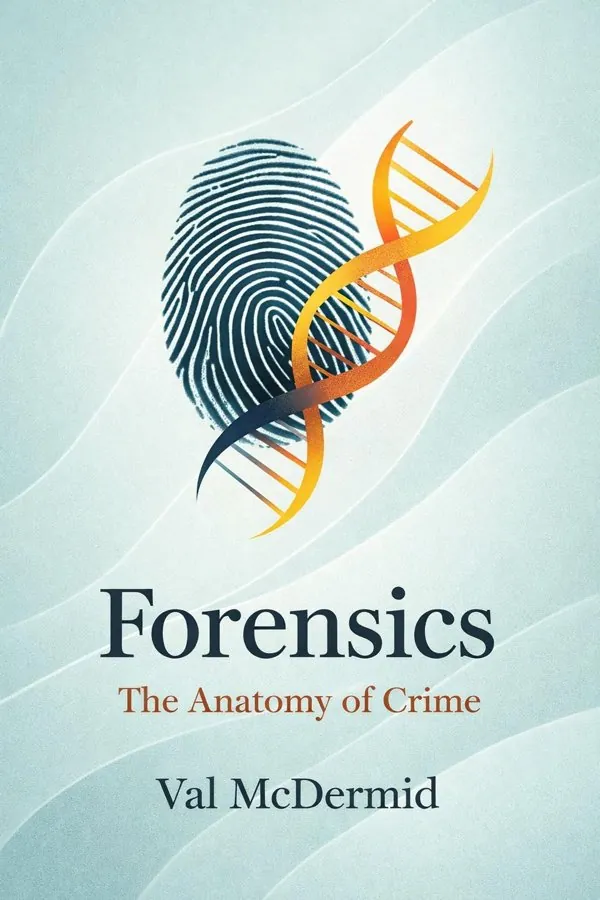
Forensics: The Anatomy of Crime: Summary & Key Insights
by Val McDermid
 10 min7 chaptersAudio available
What Is Forensics: The Anatomy of Crime About?
Forensics: The Anatomy of Crime by Val McDermid is a law_crime book spanning 7 pages. Forensics: The Anatomy of Crime explores the history, science, and human stories behind forensic investigation. Val McDermid examines how forensic science has evolved—from early autopsies and fingerprinting to DNA analysis and digital forensics—through real cases and interviews with experts. The book reveals how science helps uncover truth in criminal investigations and how it has shaped modern justice.
This FizzRead summary covers all 7 key chapters of Forensics: The Anatomy of Crime in approximately 10 minutes, distilling the most important ideas, arguments, and takeaways from Val McDermid's work. Also available as an audio summary and Key Quotes Podcast.
Forensics: The Anatomy of Crime
Forensics: The Anatomy of Crime explores the history, science, and human stories behind forensic investigation. Val McDermid examines how forensic science has evolved—from early autopsies and fingerprinting to DNA analysis and digital forensics—through real cases and interviews with experts. The book reveals how science helps uncover truth in criminal investigations and how it has shaped modern justice.
Who Should Read Forensics: The Anatomy of Crime?
This book is perfect for anyone interested in law_crime and looking to gain actionable insights in a short read. Whether you're a student, professional, or lifelong learner, the key ideas from Forensics: The Anatomy of Crime by Val McDermid will help you think differently.
- ✓Readers who enjoy law_crime and want practical takeaways
- ✓Professionals looking to apply new ideas to their work and life
- ✓Anyone who wants the core insights of Forensics: The Anatomy of Crime in just 10 minutes
Want the full summary?
Get instant access to this book summary and 100K+ more with Fizz Moment.
Get Free SummaryAvailable on App Store • Free to download
Key Chapters
Forensic science did not begin with gleaming laboratories or sophisticated instruments; it began with curiosity — and courage. In the early days, physicians and anatomists forged the bridge between the living and the dead by asking the difficult question: why did this person die? The first autopsies were acts of both science and defiance, searching for clues in the human body at a time when the idea of dissecting the dead was met with fear or disgust.
In this section, I explore how medical men of history — from Renaissance anatomists to 19th-century coroners — laid the foundation for the modern forensic method. They began noting the difference between accidental injuries and deliberate wounds. They discovered how certain signs, like water in the lungs or hemorrhaging around wounds, could separate murder from misfortune. We owe these discoveries to those who dared to treat the body as a text — one where every mark can be read and interpreted.
Forensic medicine was born from necessity. Wars, epidemics, and rapidly urbanizing societies forced us to develop better means to understand and record death. The post-mortem became not just medical practice but a judicial tool. If evidence could be extracted from the body, it could be used in a court of law to speak for those who could no longer speak for themselves. That is the earliest whisper of forensic truth — that the dead, through science, can testify.
The human fingerprint is one of science’s most poetic symbols of individuality — and its power lies in simplicity. When I examined the story of fingerprinting, I was struck by how an idea born in anthropology found its way into the courtroom. Pioneers like Francis Galton and Edward Henry recognized that the unique ridges on our fingers could be cataloged and classified, giving rise to a system that could identify a person across continents.
Fingerprinting transformed justice. No longer was identification based solely on confession or witness memory — science now offered certainty. Through real cases, I recount how fingerprints on a bottle or a windowpane unraveled lies and proved guilt, and how early forensic controversies tested the limits of belief in scientific authority. The elegance of fingerprinting comes from its permanence: a lifetime guarantee written on one’s skin. It is both intimate and universal.
In the human drama of forensics, fingerprints represent our duality — individuality and connection. Each print tells who we are, yet also binds us to the world where we leave traces everywhere we go. In the hands of skilled practitioners, those traces become stories of truth and justice.
+ 5 more chapters — available in the FizzRead app
All Chapters in Forensics: The Anatomy of Crime
About the Author
Val McDermid is a Scottish crime writer known for her psychological thrillers and detective novels. Born in 1955 in Kirkcaldy, Scotland, she studied English at St Hilda’s College, Oxford, and worked as a journalist before becoming a full-time author. Her works have been translated into more than 40 languages and have won numerous awards for crime fiction.
Get This Summary in Your Preferred Format
Read or listen to the Forensics: The Anatomy of Crime summary by Val McDermid anytime, anywhere. FizzRead offers multiple formats so you can learn on your terms — all free.
Available formats: App · Audio · PDF · EPUB — All included free with FizzRead
Download Forensics: The Anatomy of Crime PDF and EPUB Summary
Key Quotes from Forensics: The Anatomy of Crime
“Forensic science did not begin with gleaming laboratories or sophisticated instruments; it began with curiosity — and courage.”
“The human fingerprint is one of science’s most poetic symbols of individuality — and its power lies in simplicity.”
Frequently Asked Questions about Forensics: The Anatomy of Crime
Forensics: The Anatomy of Crime by Val McDermid is a law_crime book that explores key ideas across 7 chapters. Forensics: The Anatomy of Crime explores the history, science, and human stories behind forensic investigation. Val McDermid examines how forensic science has evolved—from early autopsies and fingerprinting to DNA analysis and digital forensics—through real cases and interviews with experts. The book reveals how science helps uncover truth in criminal investigations and how it has shaped modern justice.
You Might Also Like

Abortion and the Law in America: Roe v. Wade to the Present
Mary Ziegler
10 min
Black Edge: Inside Information, Dirty Money, and the Quest to Bring Down the Most Wanted Man on Wall Street
Sheelah Kolhatkar
10 min
Blood Feud: The Man Who Blew the Whistle on One of the Deadliest Prescription Drugs Ever
Kathleen Sharp
10 min
Catch and Kill: Lies, Spies, and a Conspiracy to Protect Predators
Ronan Farrow
10 min
Chaos: Charles Manson, the CIA, and the Secret History of the Sixties
Tom O'Neill with Dan Piepenbring
10 min
Code and Other Laws of Cyberspace
Lawrence Lessig
10 minBrowse by Category
Ready to read Forensics: The Anatomy of Crime?
Get the full summary and 100K+ more books with Fizz Moment.