
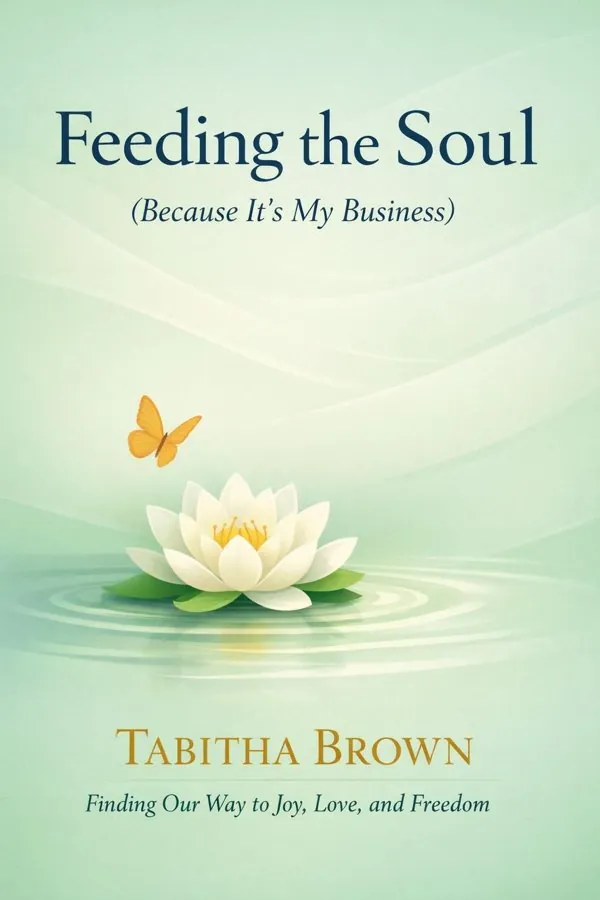
Feeding the Soul (Because It's My Business): Finding Our Way to Joy, Love, and Freedom: Summary & Key Insights
 10 min10 chaptersAudio available
Key Takeaways from Feeding the Soul (Because It's My Business): Finding Our Way to Joy, Love, and Freedom
A person’s beginning does not determine their ending, but it often explains the values they carry into every hard season.
Sometimes the body says what the soul has been trying to whisper for years.
A change in what we eat can become a change in how we live.
When certainty disappears, faith becomes less about easy belief and more about steady orientation.
Many people suffer not because they do not know who they are, but because they have learned to perform versions of themselves that feel more acceptable.
What Is Feeding the Soul (Because It's My Business): Finding Our Way to Joy, Love, and Freedom About?
Feeding the Soul (Because It's My Business): Finding Our Way to Joy, Love, and Freedom by Tabitha Brown is a biographies book spanning 10 pages. Feeding the Soul (Because It's My Business) is part memoir, part spiritual encouragement, and part practical guide to living with more honesty, peace, and delight. In this warm and conversational book, Tabitha Brown tells the story of how she moved from financial struggle, physical pain, and emotional exhaustion toward healing, purpose, and a life rooted in faith and self-trust. Her journey includes childhood lessons from North Carolina, years of disappointment in Los Angeles, a debilitating health crisis, and the unexpected discovery that veganism, rest, and inner alignment could transform her life. What makes this book matter is not just Brown’s inspiring success story, but her ability to translate hardship into wisdom that feels usable. She does not preach perfection or present joy as something easy. Instead, she argues that joy grows when people listen to themselves, honor their bodies, trust divine timing, and treat others with compassion. Brown writes with the authority of lived experience: as an actress, entrepreneur, mother, and beloved voice of encouragement whose personal healing became the foundation of a larger mission to help others feel seen, nourished, and free.
This FizzRead summary covers all 10 key chapters of Feeding the Soul (Because It's My Business): Finding Our Way to Joy, Love, and Freedom in approximately 10 minutes, distilling the most important ideas, arguments, and takeaways from Tabitha Brown's work. Also available as an audio summary and Key Quotes Podcast.
Feeding the Soul (Because It's My Business): Finding Our Way to Joy, Love, and Freedom
Feeding the Soul (Because It's My Business) is part memoir, part spiritual encouragement, and part practical guide to living with more honesty, peace, and delight. In this warm and conversational book, Tabitha Brown tells the story of how she moved from financial struggle, physical pain, and emotional exhaustion toward healing, purpose, and a life rooted in faith and self-trust. Her journey includes childhood lessons from North Carolina, years of disappointment in Los Angeles, a debilitating health crisis, and the unexpected discovery that veganism, rest, and inner alignment could transform her life.
What makes this book matter is not just Brown’s inspiring success story, but her ability to translate hardship into wisdom that feels usable. She does not preach perfection or present joy as something easy. Instead, she argues that joy grows when people listen to themselves, honor their bodies, trust divine timing, and treat others with compassion. Brown writes with the authority of lived experience: as an actress, entrepreneur, mother, and beloved voice of encouragement whose personal healing became the foundation of a larger mission to help others feel seen, nourished, and free.
Who Should Read Feeding the Soul (Because It's My Business): Finding Our Way to Joy, Love, and Freedom?
This book is perfect for anyone interested in biographies and looking to gain actionable insights in a short read. Whether you're a student, professional, or lifelong learner, the key ideas from Feeding the Soul (Because It's My Business): Finding Our Way to Joy, Love, and Freedom by Tabitha Brown will help you think differently.
- ✓Readers who enjoy biographies and want practical takeaways
- ✓Professionals looking to apply new ideas to their work and life
- ✓Anyone who wants the core insights of Feeding the Soul (Because It's My Business): Finding Our Way to Joy, Love, and Freedom in just 10 minutes
Want the full summary?
Get instant access to this book summary and 100K+ more with Fizz Moment.
Get Free SummaryAvailable on App Store • Free to download
Key Chapters
A person’s beginning does not determine their ending, but it often explains the values they carry into every hard season. Tabitha Brown opens her story by returning to Eden, North Carolina, where she was raised in a family with limited money but deep love, humor, and faith. Those early years taught her that emotional richness can exist even when material resources are scarce. Her parents gave her something more durable than comfort: the belief that she mattered, that God was present, and that dreams were worth pursuing even when the path looked uncertain.
This foundation becomes essential later in life. When Brown faces rejection, instability, and illness, she does not suddenly invent resilience; she draws on lessons planted long before success arrived. The warmth of home, the example of hardworking parents, and the habit of believing in something beyond present circumstances all shaped the way she interpreted adversity. Instead of seeing hardship as proof that life had failed her, she gradually learned to see it as part of a larger unfolding.
For readers, this idea is deeply practical. We often underestimate how much our earliest values influence our choices under pressure. Brown invites us to look back and ask: What strengths did my upbringing give me, even if life was imperfect? Maybe it was perseverance, hospitality, humor, prayer, or resourcefulness. Those gifts still matter.
Her story also reminds us that identity should not be built on external approval. Long before the internet knew her name, Brown’s worth existed. Success did not create her value; it revealed what had already been there.
Actionable takeaway: Write down three strengths your early life gave you, then choose one to rely on more intentionally during your current season.
Sometimes the body says what the soul has been trying to whisper for years. One of the most powerful parts of Brown’s memoir is her description of living with chronic pain, fatigue, and debilitating headaches after years of stress and struggle. In Los Angeles, she was pursuing a career, supporting her family, and pushing herself forward despite disappointment. Outwardly, she was trying to make life work. Inwardly, her body was collapsing under the weight of pressure, uncertainty, and imbalance.
Rather than treat illness only as an interruption, Brown eventually comes to understand it as a turning point. Her physical suffering forces her to slow down and pay attention. It challenges her to ask questions she had no longer been able to avoid: What is nourishing me? What is draining me? What habits, environments, and expectations are harming me? This shift is central to the book. Healing begins not merely with a treatment plan, but with honesty.
Brown’s experience speaks to readers who have normalized exhaustion. Many people live in survival mode, dismissing headaches, anxiety, irritability, digestive trouble, and burnout as ordinary. Her story suggests that these symptoms may be messages, not inconveniences. They may point toward the need for rest, different boundaries, new food choices, emotional healing, or a re-evaluation of priorities.
Importantly, Brown does not promise simplistic cures. Instead, she models openness to change and respect for the body’s signals. Pain can break us open to a different way of living if we stop fighting its message long enough to listen.
Actionable takeaway: Identify one recurring sign of stress in your body and respond to it this week with care rather than dismissal.
A change in what we eat can become a change in how we live. Brown’s discovery of veganism is one of the defining moments in the book, not simply because it alters her health, but because it teaches her that transformation can begin with one brave experiment. After years of severe pain and limited answers, she tries a vegan challenge and experiences meaningful relief. The improvement is not only physical. It awakens a deeper trust in her ability to listen to her body and make choices that align with well-being rather than habit.
In Brown’s telling, veganism is not framed as moral superiority or rigid ideology. It becomes a tool of healing, curiosity, and empowerment. She shows how food is never just fuel; it is also culture, memory, comfort, and sometimes medicine. By learning how to prepare plant-based meals with flavor and joy, she rejects the false idea that healthy living must feel punishing. Nourishment, in her world, should feel generous.
This idea is useful even for readers who never become vegan. Brown’s larger point is that awareness matters. People often continue consuming what hurts them because change feels inconvenient or unfamiliar. Her story encourages experimentation: try a different approach, notice what improves, and let your own experience teach you. It also highlights the emotional side of food. What we eat can reflect self-love, self-neglect, creativity, tradition, or healing.
Her practical spirit matters here. She offers recipes and everyday encouragement because transformation becomes sustainable only when it fits real life. Grand resolutions fail; small, loving adjustments last.
Actionable takeaway: Choose one meal or food habit this week to change in support of your energy, digestion, or peace, and pay attention to how your body responds.
When certainty disappears, faith becomes less about easy belief and more about steady orientation. Throughout the memoir, Brown returns again and again to her relationship with God as the anchor that carried her through disappointment, illness, career delays, and unexpected opportunities. Her faith is not presented as a guarantee that life will be smooth. Instead, it is a way of staying grounded when outcomes are unclear.
Brown’s spiritual perspective helps her reinterpret timing. What looked like delay may have been preparation. What felt like rejection may have been protection. What seemed random may have been direction. This does not erase pain, but it changes the meaning of pain. Rather than seeing herself as abandoned in difficult seasons, she chooses to believe that she is being led, even when she cannot yet understand where the road is going.
This idea has wide relevance, even for readers from different religious backgrounds. Brown is ultimately describing trust: trust that life is larger than the current moment, trust that intuition and prayer deserve attention, and trust that forcing outcomes often creates more suffering than waiting with openness. In a culture obsessed with control, her message is a corrective. Not every answer arrives through strategy. Some come through stillness.
Practically, faith in Brown’s sense also shapes behavior. It encourages gratitude, patience, forgiveness, and courage. It helps people continue when they would otherwise give up. It keeps them from mistaking a closed door for the end of the story.
Actionable takeaway: When facing a frustrating delay, ask not only, “Why is this happening?” but also, “What might this season be preparing me to become?”
Many people suffer not because they do not know who they are, but because they have learned to perform versions of themselves that feel more acceptable. Brown’s rise to public recognition is closely tied to her decision to stop hiding her natural voice, warmth, humor, and spiritual honesty. Instead of fitting into a polished image of what a successful public figure should look or sound like, she leaned into the very qualities that made her unmistakably herself. In doing so, she discovered that authenticity is not just attractive; it is liberating.
A major insight of the book is that pretending is exhausting. When people edit themselves constantly to gain approval, they drain energy that could have gone toward creativity, healing, and meaningful relationships. Brown’s story shows that authenticity may feel risky at first, especially in environments that reward conformity, but it creates stronger opportunities because it builds trust. Audiences responded to her because she felt real. She was not selling a persona; she was offering presence.
For everyday readers, this lesson applies far beyond fame. Authenticity can mean admitting you are tired instead of saying you are fine, choosing work that matches your values, dressing in a way that feels like you, or refusing to shrink your personality to keep others comfortable. It also requires self-acceptance. You cannot live honestly if you are still apologizing for your core self.
Brown does not suggest selfishness or thoughtless self-expression. Rather, she encourages alignment: letting your outer life reflect your inner truth. That is where peace begins.
Actionable takeaway: Notice one place where you are performing for approval, and replace that performance with one small act of honest self-expression this week.
Kindness is not a soft extra in Brown’s worldview; it is a serious life practice that changes the emotional climate around us. One reason her message resonates so widely is that she treats love as something active and daily, not abstract. Whether she is speaking to family, strangers, or followers online, Brown emphasizes gentleness, empathy, and the refusal to harden in response to a hard world. In her eyes, feeding the soul means offering nourishment through words, presence, and intention as much as through food.
This principle matters because many people know how to achieve, defend, and endure, but they do not know how to soften without feeling unsafe. Brown offers another model. Compassion can coexist with boundaries. Tenderness can coexist with strength. Speaking kindly does not mean ignoring harm; it means refusing to let bitterness define your way of being.
Her example is practical. She built community by making people feel welcome rather than judged. She speaks in a way that lowers anxiety and invites participation. Even her recipes and stories carry an emotional message: there is room for you here. That inclusive energy is one of her greatest contributions.
Readers can apply this lesson in simple but meaningful ways. A compassionate pause during conflict can stop escalation. A thoughtful text can make someone feel remembered. A nonjudgmental response can create safety for honesty. Love becomes powerful when it is embodied in ordinary moments.
At the same time, Brown’s compassion includes the self. Many people extend grace to others while speaking harshly to themselves. Her message insists that self-talk should nourish, too.
Actionable takeaway: Offer one deliberate act of compassion today, and make sure one of those acts is directed toward yourself.
Fear becomes most powerful when it convinces us that staying the same is safer than becoming ourselves. Brown’s life offers repeated examples of moving forward despite uncertainty: leaving familiar environments, enduring professional rejection, trying a new way of eating, sharing herself publicly, and trusting opportunities that did not come with guarantees. She does not portray courage as the absence of doubt. Instead, courage is choosing movement even while doubt is still in the room.
A key lesson here is that fear often disguises itself as practicality. It says, be realistic, stay quiet, do not try, avoid embarrassment, keep the dream small. Brown recognizes these voices but refuses to let them rule her decisions. What helps her most is a growing sense of purpose. Once she understands that her life and story may serve others, fear loses some authority. Service makes bravery easier because the focus shifts from ego to impact.
This idea is especially relevant for people who feel stuck between desire and hesitation. Waiting to feel fearless is a losing strategy. Brown shows that action itself builds confidence. The first video, the first recipe, the first honest conversation, the first boundary, the first audition, the first health change: these are the moments that create a new future.
Her story also reminds us that mistakes are survivable. Fear magnifies the cost of failure, but growth usually requires awkward beginnings. If the direction is aligned, imperfection is acceptable.
Actionable takeaway: Name one step you have been postponing out of fear, then make it smaller and do it within the next 48 hours.
Success means little if it disconnects us from the people and values that give life meaning. Brown’s memoir repeatedly returns to family, not as a decorative part of her story, but as a central source of motivation, grounding, and love. Her roles as daughter, wife, and mother are woven into the way she understands ambition and healing. Family is where sacrifice becomes visible, where support is tested, and where joy is often most real.
Brown’s journey shows that relationships can sustain people through seasons when external recognition has not yet arrived. The encouragement of loved ones can keep dreams alive when evidence is thin. At the same time, family life also demands practical wisdom. Pursuing purpose while caring for others requires compromise, communication, and the ability to redefine success beyond public achievement. Brown does not glamorize the balancing act. She acknowledges the strain of trying to build a future while meeting immediate responsibilities.
This makes her message particularly relatable. Many readers are not choosing between comfort and dreams; they are choosing while bills, caregiving, and emotional obligations continue. Brown’s story validates that complexity. It also suggests that love can be a source of strength rather than just pressure when relationships are nurtured with honesty and appreciation.
There is another important layer here: family is not only inherited, but cultivated. The communities we build through friendship, encouragement, and shared values can also feed the soul.
Actionable takeaway: Reach out to one person who has supported your journey, thank them specifically, and tell them how their presence has strengthened your life.
A meaningful life is rarely built by asking only, “What do I want?” Brown’s story becomes especially powerful when her personal healing turns outward. The things that helped her most, faith, nourishment, honesty, humor, encouragement, become the very things she offers others. This is where purpose takes shape. It is not merely private fulfillment; it is the discovery that your story, gifts, and even your wounds can become useful to someone else.
Brown’s public success did not emerge from branding alone. It grew because she shared what was real and helpful. She cooked in a way that made vegan food approachable. She spoke in a way that made people feel calmer and more accepted. She told the truth about struggle without losing hope. In doing so, she served before she scaled. That sequence matters. Purpose tends to expand when it meets genuine need.
For readers, this lesson breaks the myth that purpose must begin with a dramatic revelation. Often it starts with paying attention to what comes naturally, what has healed you, and what others consistently receive from you. Maybe your gift is listening, organizing, teaching, cooking, encouraging, or creating beauty. Brown suggests that fulfillment often lies where joy and usefulness meet.
Service also protects against emptiness. Achievement pursued only for status can feel hollow. Contribution creates deeper satisfaction because it connects personal growth with collective good.
Actionable takeaway: Ask yourself, “What has life taught me that could help someone else?” Then share one small piece of that wisdom with a person, group, or community this week.
Joy is not only a breakthrough feeling; it is something built through daily care. Brown’s book is filled with a practical spirit that keeps its uplifting message from becoming vague. She connects freedom and love to real habits: eating in ways that support health, resting when the body is tired, praying, speaking kindly, setting boundaries, cooking with intention, and making space for delight. This final lesson ties the whole memoir together. Soul nourishment is not a single event. It is a pattern of choosing what gives life instead of what depletes it.
What makes this idea compelling is its accessibility. Brown does not reserve transformation for people with perfect schedules, abundant money, or ideal circumstances. She recognizes that healing often happens through repeatable actions that slowly change how life feels. A calm morning ritual, a better lunch, a moment of gratitude, less people-pleasing, more honest conversation, an evening walk, a recipe that makes you feel cared for, these are small things, but they create emotional and physical momentum.
She also reframes freedom. Freedom is not doing whatever you want in every moment. It is living in enough alignment that your habits support your peace rather than sabotage it. That requires discernment. Not everything that is familiar is nourishing. Not everything that is popular is good for you.
Readers who want immediate reinvention may overlook the power of ordinary practice. Brown invites them to slow down and build a life that tastes good, feels true, and leaves room for joy.
Actionable takeaway: Create a short “soul-feeding” routine of three daily actions, one for your body, one for your mind, and one for your spirit, and follow it for seven days.
All Chapters in Feeding the Soul (Because It's My Business): Finding Our Way to Joy, Love, and Freedom
About the Author
Tabitha Brown is an American actress, author, entrepreneur, and vegan food influencer whose uplifting style has made her one of the most beloved voices in wellness and personal encouragement. Born in Eden, North Carolina, she spent years pursuing acting while balancing family responsibilities and financial hardship. Her life changed after a serious health struggle led her to experiment with vegan eating, an experience that improved her well-being and inspired her to share plant-based recipes and motivational messages online. Brown became widely known for her warm humor, distinctive voice, and compassionate way of making people feel seen and comforted. Through books, videos, business ventures, and public speaking, she encourages audiences to embrace authenticity, kindness, faith, and joyful self-care.
Get This Summary in Your Preferred Format
Read or listen to the Feeding the Soul (Because It's My Business): Finding Our Way to Joy, Love, and Freedom summary by Tabitha Brown anytime, anywhere. FizzRead offers multiple formats so you can learn on your terms — all free.
Available formats: App · Audio · PDF · EPUB — All included free with FizzRead
Download Feeding the Soul (Because It's My Business): Finding Our Way to Joy, Love, and Freedom PDF and EPUB Summary
Key Quotes from Feeding the Soul (Because It's My Business): Finding Our Way to Joy, Love, and Freedom
“A person’s beginning does not determine their ending, but it often explains the values they carry into every hard season.”
“Sometimes the body says what the soul has been trying to whisper for years.”
“A change in what we eat can become a change in how we live.”
“When certainty disappears, faith becomes less about easy belief and more about steady orientation.”
“Many people suffer not because they do not know who they are, but because they have learned to perform versions of themselves that feel more acceptable.”
Frequently Asked Questions about Feeding the Soul (Because It's My Business): Finding Our Way to Joy, Love, and Freedom
Feeding the Soul (Because It's My Business): Finding Our Way to Joy, Love, and Freedom by Tabitha Brown is a biographies book that explores key ideas across 10 chapters. Feeding the Soul (Because It's My Business) is part memoir, part spiritual encouragement, and part practical guide to living with more honesty, peace, and delight. In this warm and conversational book, Tabitha Brown tells the story of how she moved from financial struggle, physical pain, and emotional exhaustion toward healing, purpose, and a life rooted in faith and self-trust. Her journey includes childhood lessons from North Carolina, years of disappointment in Los Angeles, a debilitating health crisis, and the unexpected discovery that veganism, rest, and inner alignment could transform her life. What makes this book matter is not just Brown’s inspiring success story, but her ability to translate hardship into wisdom that feels usable. She does not preach perfection or present joy as something easy. Instead, she argues that joy grows when people listen to themselves, honor their bodies, trust divine timing, and treat others with compassion. Brown writes with the authority of lived experience: as an actress, entrepreneur, mother, and beloved voice of encouragement whose personal healing became the foundation of a larger mission to help others feel seen, nourished, and free.
More by Tabitha Brown

You Might Also Like

An American Marriage
Tayari Jones
10 min
Benjamin Franklin: An American Life
Walter Isaacson
10 min
I Know Why The Caged Bird Sings
Maya Angelou
10 min
Long Walk to Freedom
Nelson Mandela
10 min
Persepolis
Marjane Satrapi
10 min
Surely You're Joking, Mr. Feynman!
Richard P. Feynman
10 minBrowse by Category
Ready to read Feeding the Soul (Because It's My Business): Finding Our Way to Joy, Love, and Freedom?
Get the full summary and 100K+ more books with Fizz Moment.