
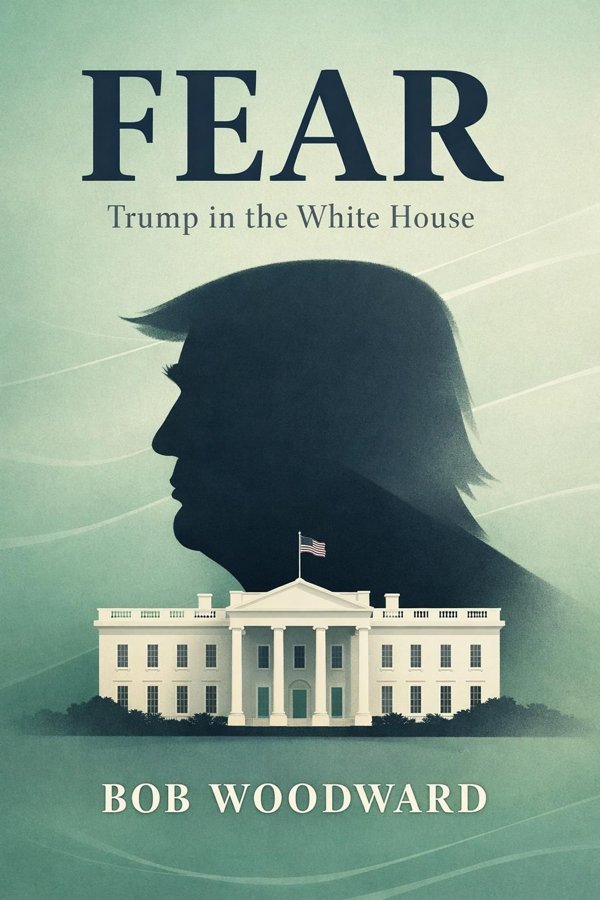
Fear: Trump in the White House: Summary & Key Insights
by Bob Woodward
 10 min6 chaptersAudio available
What Is Fear: Trump in the White House About?
Fear: Trump in the White House by Bob Woodward is a politics book spanning 6 pages. Fear: Trump in the White House es un libro de no ficción del periodista estadounidense Bob Woodward, publicado en 2018. Basado en cientos de horas de entrevistas y documentos internos, el libro ofrece un retrato detallado del funcionamiento interno de la administración de Donald Trump, destacando las tensiones, decisiones y conflictos dentro de la Casa Blanca durante los primeros años de su presidencia.
This FizzRead summary covers all 6 key chapters of Fear: Trump in the White House in approximately 10 minutes, distilling the most important ideas, arguments, and takeaways from Bob Woodward's work. Also available as an audio summary and Key Quotes Podcast.
Fear: Trump in the White House
Fear: Trump in the White House es un libro de no ficción del periodista estadounidense Bob Woodward, publicado en 2018. Basado en cientos de horas de entrevistas y documentos internos, el libro ofrece un retrato detallado del funcionamiento interno de la administración de Donald Trump, destacando las tensiones, decisiones y conflictos dentro de la Casa Blanca durante los primeros años de su presidencia.
Who Should Read Fear: Trump in the White House?
This book is perfect for anyone interested in politics and looking to gain actionable insights in a short read. Whether you're a student, professional, or lifelong learner, the key ideas from Fear: Trump in the White House by Bob Woodward will help you think differently.
- ✓Readers who enjoy politics and want practical takeaways
- ✓Professionals looking to apply new ideas to their work and life
- ✓Anyone who wants the core insights of Fear: Trump in the White House in just 10 minutes
Want the full summary?
Get instant access to this book summary and 100K+ more with Fizz Moment.
Get Free SummaryAvailable on App Store • Free to download
Key Chapters
My investigation began not with speculation but with a corpus of testimony. Over the span of many months, I conducted over a hundred deep interviews with senior officials, staffers, and associates of the president, always under conditions meant to elicit honesty rather than performance. Each conversation was cross-referenced with documentary evidence—notes, confidential memos, transcripts, and letters. What emerged was an intimate map of a presidency seen from within.
The story opens with Donald Trump’s improbable rise, a political outsider who demolished conventional expectations on his way to the White House. His transition from campaign to governance, however, revealed the absence of structure behind the spectacle. The team assembling around him was marked by rivalry from the start: Steve Bannon’s nationalist zeal colliding with Jared Kushner’s pragmatic centrism, and Reince Priebus attempting to impose procedural order over an administration resistant to any. These contradictions were not minor irritations—they became the architecture of how the Trump White House functioned, or failed to.
From the first days, fear spread through the ranks. Staffers discovered that briefing the president required distilling complex matters into the language of television headlines. Policy memos were rewritten as sales pitches. Serious deliberation struggled to take root; meetings would begin with purpose and end with impulsive decrees. The traditional rhythm of governance—research, compromise, execution—was replaced by a cycle of reaction, justification, and reversal. I realized early that to explain this system, one must write not about policy in the abstract, but about character—Trump’s reliance on instinct over expertise, dramatization over regular process.
One of the most dramatic arenas where impulse met resistance was national security. The administration’s handling of crises such as North Korea’s nuclear ambitions and Afghanistan strategy exposed the gulf between the president’s gut instincts and the sober assessments of his military advisers. In meetings, Defense Secretary James Mattis and others frequently tried to translate complex intelligence into frameworks that would engage Trump’s attention. Yet his impatience with briefing material was legendary. He preferred intuitive judgments—often drawn from cable news commentators or personal conversations with outsiders.
Behind closed doors, aides told me that their greatest fear was not external enemies but the president’s unpredictability. At one point, an order to withdraw from key military partnerships was quietly removed from his desk by a staff member who deemed it dangerous. In another instance, economic adviser Gary Cohn physically took a draft trade withdrawal memorandum, understanding that a single signature could upend global markets overnight. These acts of quiet defiance were not acts of rebellion in their own minds; they were acts of protection against harm.
In the handling of North Korea, the mood alternated between bombast and restraint. While Trump issued public threats of “fire and fury,” his top generals coordinated channels of backdoor diplomacy to avert escalation. Similar internal wars unfolded over Afghanistan, where Trump bristled at prolonged engagement, demanding a total pullout, while the Pentagon argued that such a move would embolden adversaries. These debates exposed a core truth: many within the administration did not trust the commander-in-chief to distinguish between strategy and spectacle.
That environment bred perpetual anxiety—a constant vigilance against mistakes that could spiral into catastrophe. The pattern was one of containment rather than collaboration, a government working to manage its own leader.
+ 4 more chapters — available in the FizzRead app
All Chapters in Fear: Trump in the White House
About the Author
Bob Woodward es un periodista de investigación estadounidense, conocido por su trabajo en The Washington Post y por haber destapado junto a Carl Bernstein el escándalo de Watergate. Ha escrito numerosos libros sobre política estadounidense y presidencias, siendo uno de los cronistas más influyentes de la vida política de Estados Unidos.
Get This Summary in Your Preferred Format
Read or listen to the Fear: Trump in the White House summary by Bob Woodward anytime, anywhere. FizzRead offers multiple formats so you can learn on your terms — all free.
Available formats: App · Audio · PDF · EPUB — All included free with FizzRead
Download Fear: Trump in the White House PDF and EPUB Summary
Key Quotes from Fear: Trump in the White House
“My investigation began not with speculation but with a corpus of testimony.”
“One of the most dramatic arenas where impulse met resistance was national security.”
Frequently Asked Questions about Fear: Trump in the White House
Fear: Trump in the White House by Bob Woodward is a politics book that explores key ideas across 6 chapters. Fear: Trump in the White House es un libro de no ficción del periodista estadounidense Bob Woodward, publicado en 2018. Basado en cientos de horas de entrevistas y documentos internos, el libro ofrece un retrato detallado del funcionamiento interno de la administración de Donald Trump, destacando las tensiones, decisiones y conflictos dentro de la Casa Blanca durante los primeros años de su presidencia.
More by Bob Woodward

You Might Also Like
Antifa: The Anti-Fascist Handbook
Mark Bray
10 min
Attack from Within: How Disinformation Is Sabotaging America
Barbara McQuade
10 min
Coercion, Capital, and European States, AD 990–1992
Charles Tilly
10 min
Digital Democracy: Concepts, Methodologies, Tools, and Applications
Various Authors
10 min
Fascism
Stanley G. Payne
10 min
Fire And Fury: Inside The Trump White House
Michael Wolff
10 minBrowse by Category
Ready to read Fear: Trump in the White House?
Get the full summary and 100K+ more books with Fizz Moment.