
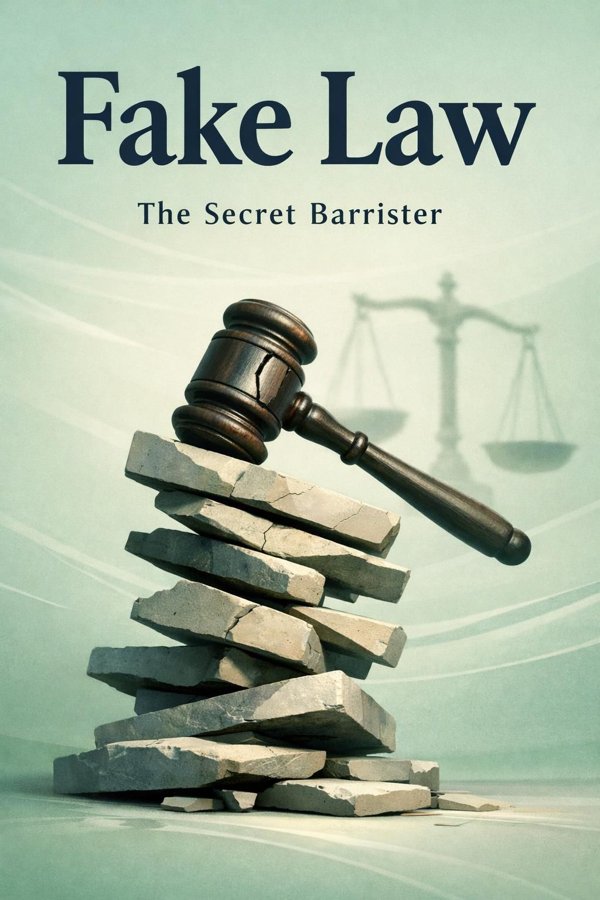
Fake Law: The Truth About Justice in an Age of Lies: Summary & Key Insights
 10 min10 chaptersAudio available
What Is Fake Law: The Truth About Justice in an Age of Lies About?
Fake Law: The Truth About Justice in an Age of Lies by The Secret Barrister is a law_crime book spanning 10 pages. Fake Law: The Truth About Justice in an Age of Lies is a nonfiction book by the anonymous British author known as The Secret Barrister. It explores how misconceptions about the legal system are spread by politicians and the media, and how these distortions undermine public trust in justice. The book uses real cases and legal principles to explain how the law actually works, aiming to correct myths and promote informed debate about justice in the United Kingdom.
This FizzRead summary covers all 10 key chapters of Fake Law: The Truth About Justice in an Age of Lies in approximately 10 minutes, distilling the most important ideas, arguments, and takeaways from The Secret Barrister's work. Also available as an audio summary and Key Quotes Podcast.
Fake Law: The Truth About Justice in an Age of Lies
Fake Law: The Truth About Justice in an Age of Lies is a nonfiction book by the anonymous British author known as The Secret Barrister. It explores how misconceptions about the legal system are spread by politicians and the media, and how these distortions undermine public trust in justice. The book uses real cases and legal principles to explain how the law actually works, aiming to correct myths and promote informed debate about justice in the United Kingdom.
Who Should Read Fake Law: The Truth About Justice in an Age of Lies?
This book is perfect for anyone interested in law_crime and looking to gain actionable insights in a short read. Whether you're a student, professional, or lifelong learner, the key ideas from Fake Law: The Truth About Justice in an Age of Lies by The Secret Barrister will help you think differently.
- ✓Readers who enjoy law_crime and want practical takeaways
- ✓Professionals looking to apply new ideas to their work and life
- ✓Anyone who wants the core insights of Fake Law: The Truth About Justice in an Age of Lies in just 10 minutes
Want the full summary?
Get instant access to this book summary and 100K+ more with Fizz Moment.
Get Free SummaryAvailable on App Store • Free to download
Key Chapters
If there is one myth that refuses to die, it is the notion that judges are spineless liberals who let criminals walk free with nothing more than a slap on the wrist. I wish I could say that myth is harmless, but it is poison—a kind that seeps into the bloodstream of public trust and makes reasoned debate about sentencing nearly impossible.
In court, sentencing is nothing like what tabloids portray. The judge operates within a structured framework known as the Sentencing Guidelines Council. Every factor—aggravating or mitigating—is meticulously analyzed: the harm caused, the intent demonstrated, the defendant’s record, the circumstances of the crime. When The Daily Mail shouts that a burglar was given only six months, it omits that he was 18, pleaded guilty early, had no prior convictions, and that the victim supported rehabilitation over incarceration. Likewise, the accused who receives a suspended sentence often faces stringent conditions, intensive supervision, and the promise of prison should they falter once.
When I challenge the 'soft judge' narrative, I do not claim perfection in sentencing; judges can err, and appeals exist for that reason. But the crude portrayal of judges as enemies of victims is both false and destructive. It erodes confidence in fair process. Worse, it pressures decision-makers to respond not to justice but to noise—to sentence by headline. Every time the press uses an outlier case to demand 'tougher' justice, real people’s lives are caught in the spectacle. A judiciary that fears the public’s wrath becomes no longer independent but performative—and that, ultimately, is tyranny in judicial robes.
Imagine being accused of a crime you didn’t commit, or facing eviction because your landlord refuses to repair your home, and discovering you cannot afford a lawyer. That crisis is no longer hypothetical. For many, it is daily reality. The destruction of the legal aid system is perhaps the most underreported tragedy in our modern justice landscape.
When legal aid was first imagined, it embodied a profoundly democratic idea: that justice should not depend on the thickness of your wallet. Yet, over the past decade, politicians—often appealing to populist anger about 'fat cat lawyers'—have gutted it. Entire areas of law, including family, housing, immigration, and welfare, are now effectively abandoned. Many who need representation simply go without. I have seen frightened mothers cross-examined by their abusers because they could not secure counsel, and confused defendants plead guilty to crimes they might not have committed because fighting seemed impossible.
The narrative that legal aid is a taxpayer burden is one of the most successful fictions of our time. The truth is, its cost is minuscule compared to the price of injustice that results when ordinary people lose the ability to challenge power. Legal aid sustains the rule of law. Without it, the promise engraved above every courthouse—'Equal Justice Under Law'—becomes a hollow slogan. In *Fake Law*, I expose how that dismantling was sold through deceit and what it means for you, even if you never set foot in a courtroom. Because when the poorest are denied access to justice, it is only a matter of time before the rest of us are too.
+ 8 more chapters — available in the FizzRead app
All Chapters in Fake Law: The Truth About Justice in an Age of Lies
About the Author
The Secret Barrister is the pseudonym of a practicing criminal barrister in England and Wales. The author writes anonymously to provide candid insights into the British legal system, highlighting its flaws and the challenges faced by those working within it. Their works have become bestsellers and have influenced public discussions about legal reform.
Get This Summary in Your Preferred Format
Read or listen to the Fake Law: The Truth About Justice in an Age of Lies summary by The Secret Barrister anytime, anywhere. FizzRead offers multiple formats so you can learn on your terms — all free.
Available formats: App · Audio · PDF · EPUB — All included free with FizzRead
Download Fake Law: The Truth About Justice in an Age of Lies PDF and EPUB Summary
Key Quotes from Fake Law: The Truth About Justice in an Age of Lies
“If there is one myth that refuses to die, it is the notion that judges are spineless liberals who let criminals walk free with nothing more than a slap on the wrist.”
“Imagine being accused of a crime you didn’t commit, or facing eviction because your landlord refuses to repair your home, and discovering you cannot afford a lawyer.”
Frequently Asked Questions about Fake Law: The Truth About Justice in an Age of Lies
Fake Law: The Truth About Justice in an Age of Lies by The Secret Barrister is a law_crime book that explores key ideas across 10 chapters. Fake Law: The Truth About Justice in an Age of Lies is a nonfiction book by the anonymous British author known as The Secret Barrister. It explores how misconceptions about the legal system are spread by politicians and the media, and how these distortions undermine public trust in justice. The book uses real cases and legal principles to explain how the law actually works, aiming to correct myths and promote informed debate about justice in the United Kingdom.
You Might Also Like
Abortion and the Law in America: Roe v. Wade to the Present
Mary Ziegler
10 min
Black Edge: Inside Information, Dirty Money, and the Quest to Bring Down the Most Wanted Man on Wall Street
Sheelah Kolhatkar
10 min
Blood Feud: The Man Who Blew the Whistle on One of the Deadliest Prescription Drugs Ever
Kathleen Sharp
10 min
Catch and Kill: Lies, Spies, and a Conspiracy to Protect Predators
Ronan Farrow
10 min
Chaos: Charles Manson, the CIA, and the Secret History of the Sixties
Tom O'Neill with Dan Piepenbring
10 min
Code and Other Laws of Cyberspace
Lawrence Lessig
10 minBrowse by Category
Ready to read Fake Law: The Truth About Justice in an Age of Lies?
Get the full summary and 100K+ more books with Fizz Moment.