
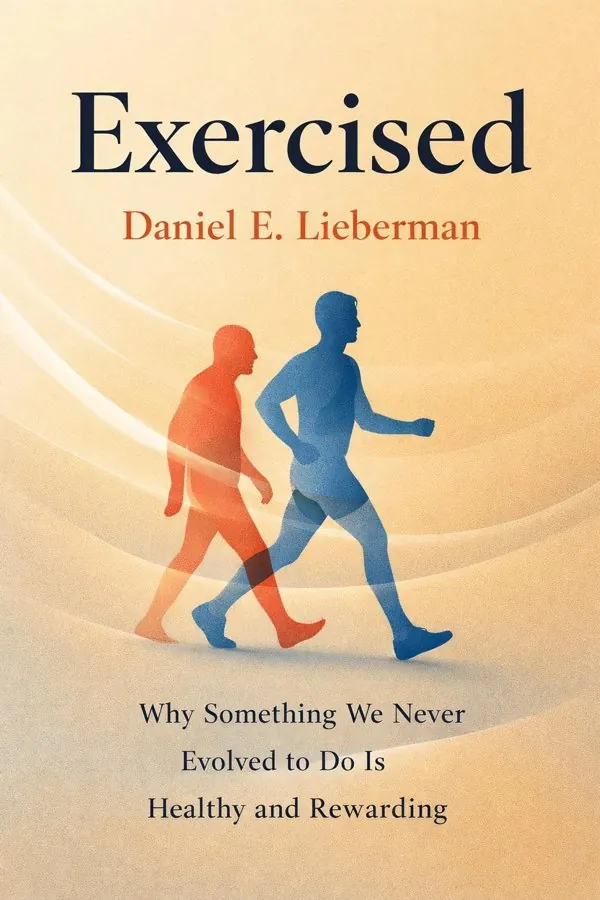
Exercised: Why Something We Never Evolved to Do Is Healthy and Rewarding: Summary & Key Insights
 10 min10 chaptersAudio available
What Is Exercised: Why Something We Never Evolved to Do Is Healthy and Rewarding About?
Exercised: Why Something We Never Evolved to Do Is Healthy and Rewarding by Daniel E. Lieberman is a life_science book spanning 10 pages. In this groundbreaking work, Harvard evolutionary biologist Daniel E. Lieberman explores the paradox of exercise through the lens of human evolution. He explains why humans never evolved to exercise voluntarily, how physical activity affects health and longevity, and what modern lifestyles reveal about our biological design. Drawing on anthropology, physiology, and evolutionary science, Lieberman debunks myths about fitness and offers insights into how we can align our habits with our evolutionary heritage.
This FizzRead summary covers all 10 key chapters of Exercised: Why Something We Never Evolved to Do Is Healthy and Rewarding in approximately 10 minutes, distilling the most important ideas, arguments, and takeaways from Daniel E. Lieberman's work. Also available as an audio summary and Key Quotes Podcast.
Exercised: Why Something We Never Evolved to Do Is Healthy and Rewarding
In this groundbreaking work, Harvard evolutionary biologist Daniel E. Lieberman explores the paradox of exercise through the lens of human evolution. He explains why humans never evolved to exercise voluntarily, how physical activity affects health and longevity, and what modern lifestyles reveal about our biological design. Drawing on anthropology, physiology, and evolutionary science, Lieberman debunks myths about fitness and offers insights into how we can align our habits with our evolutionary heritage.
Who Should Read Exercised: Why Something We Never Evolved to Do Is Healthy and Rewarding?
This book is perfect for anyone interested in life_science and looking to gain actionable insights in a short read. Whether you're a student, professional, or lifelong learner, the key ideas from Exercised: Why Something We Never Evolved to Do Is Healthy and Rewarding by Daniel E. Lieberman will help you think differently.
- ✓Readers who enjoy life_science and want practical takeaways
- ✓Professionals looking to apply new ideas to their work and life
- ✓Anyone who wants the core insights of Exercised: Why Something We Never Evolved to Do Is Healthy and Rewarding in just 10 minutes
Want the full summary?
Get instant access to this book summary and 100K+ more with Fizz Moment.
Get Free SummaryAvailable on App Store • Free to download
Key Chapters
Our ancestors didn’t have gyms. They had survival. To understand the modern concept of exercise, we must look at the life of hunter-gatherers—people whose days were filled with walking, climbing, digging, and carrying. Early humans weren’t marathoners by choice; they were persistence hunters, chasing prey for hours not because they sought fitness but because food waited at the end of the chase. Anthropological studies of groups like the Hadza in Tanzania show that daily life meant varied, moderate activity interspersed with rest—a rhythm that kept the body lean, strong, and adaptable.
Physical activity wasn’t continuous. It was cyclical, governed by necessity and opportunity. Energy was precious, and conserving it when possible was as crucial as expending it when required. Natural selection favored bodies that balanced motion and recovery. The concept of intentionally burning calories for the sake of health would have seemed absurd to them. Yet, their lifestyle protected them from ailments that plague sedentary societies today. Understanding this foundation lifts the veil of guilt around modern exercise. We don’t struggle with movement because we’re broken—we struggle because we evolved to move only when the payoff was immediate and survival-related.
Evolution designed us for a world that no longer exists. This is the essence of mismatch theory. The same traits that once ensured survival—energy conservation, appetite for calorie-rich foods, preference for rest—are now liabilities in a world of abundance and comfort. In ancestral environments, inactivity was a way to save energy when food was scarce. Today, inactivity is constant, yet food flows freely. The mismatch between our ancient physiology and our modern setting triggers chronic disease.
When I describe mismatch, I’m not lamenting progress but urging awareness. Our bodies are still adapted to move long distances, lift natural loads, and climb irregular surfaces. Instead we spend hours seated, our muscles idle, hearts underworked. The evolutionary programming that made us efficient now slowly undermines us. By recognizing the mismatch, we can harness evolutionary insight instead of fighting against it. Movement should feel natural, integrated, and meaningful—not a chore imposed by guilt or culture.
+ 8 more chapters — available in the FizzRead app
All Chapters in Exercised: Why Something We Never Evolved to Do Is Healthy and Rewarding
About the Author
Daniel E. Lieberman is a professor of human evolutionary biology at Harvard University. His research focuses on the evolution of the human body, particularly in relation to physical activity and health. He is also known for his work on the evolution of running and the human head, and has authored several influential books in evolutionary biology.
Get This Summary in Your Preferred Format
Read or listen to the Exercised: Why Something We Never Evolved to Do Is Healthy and Rewarding summary by Daniel E. Lieberman anytime, anywhere. FizzRead offers multiple formats so you can learn on your terms — all free.
Available formats: App · Audio · PDF · EPUB — All included free with FizzRead
Download Exercised: Why Something We Never Evolved to Do Is Healthy and Rewarding PDF and EPUB Summary
Key Quotes from Exercised: Why Something We Never Evolved to Do Is Healthy and Rewarding
“Evolution designed us for a world that no longer exists.”
Frequently Asked Questions about Exercised: Why Something We Never Evolved to Do Is Healthy and Rewarding
Exercised: Why Something We Never Evolved to Do Is Healthy and Rewarding by Daniel E. Lieberman is a life_science book that explores key ideas across 10 chapters. In this groundbreaking work, Harvard evolutionary biologist Daniel E. Lieberman explores the paradox of exercise through the lens of human evolution. He explains why humans never evolved to exercise voluntarily, how physical activity affects health and longevity, and what modern lifestyles reveal about our biological design. Drawing on anthropology, physiology, and evolutionary science, Lieberman debunks myths about fitness and offers insights into how we can align our habits with our evolutionary heritage.
More by Daniel E. Lieberman
You Might Also Like
The Selfish Gene
Richard Dawkins
10 min
Awakenings
Oliver Sacks
10 min
Parasite Rex: Inside the Bizarre World of Nature's Most Dangerous Creatures
Carl Zimmer
10 min
The Atlas of Life on Earth
Various
10 min
The Book of Humans: The Story of How We Became Us
Adam Rutherford
10 min
The Horse
Wendy Williams
10 minBrowse by Category
Ready to read Exercised: Why Something We Never Evolved to Do Is Healthy and Rewarding?
Get the full summary and 100K+ more books with Fizz Moment.