
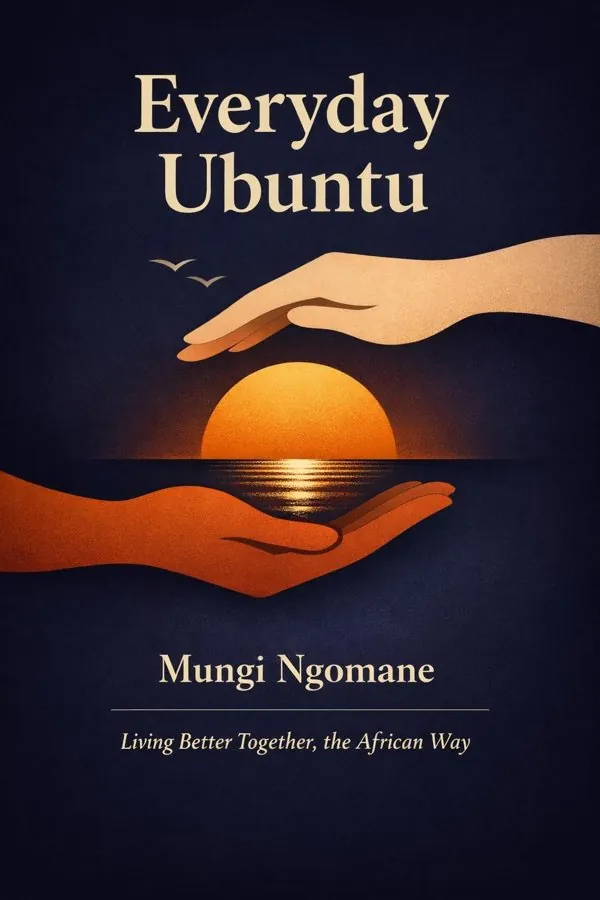
Everyday Ubuntu: Living Better Together, the African Way: Summary & Key Insights
 10 min6 chaptersAudio available
What Is Everyday Ubuntu: Living Better Together, the African Way About?
Everyday Ubuntu: Living Better Together, the African Way by Mungi Ngomane is a eastern_wisdom book spanning 6 pages. Everyday Ubuntu is a book that explores the African philosophy of Ubuntu, meaning 'I am because we are.' Mungi Ngomane, granddaughter of Archbishop Desmond Tutu, offers a practical guide to applying the principles of compassion, empathy, and community in everyday life. Through personal stories and reflections, the book invites readers to live with greater connection and humanity.
This FizzRead summary covers all 6 key chapters of Everyday Ubuntu: Living Better Together, the African Way in approximately 10 minutes, distilling the most important ideas, arguments, and takeaways from Mungi Ngomane's work. Also available as an audio summary and Key Quotes Podcast.
Everyday Ubuntu: Living Better Together, the African Way
Everyday Ubuntu is a book that explores the African philosophy of Ubuntu, meaning 'I am because we are.' Mungi Ngomane, granddaughter of Archbishop Desmond Tutu, offers a practical guide to applying the principles of compassion, empathy, and community in everyday life. Through personal stories and reflections, the book invites readers to live with greater connection and humanity.
Who Should Read Everyday Ubuntu: Living Better Together, the African Way?
This book is perfect for anyone interested in eastern_wisdom and looking to gain actionable insights in a short read. Whether you're a student, professional, or lifelong learner, the key ideas from Everyday Ubuntu: Living Better Together, the African Way by Mungi Ngomane will help you think differently.
- ✓Readers who enjoy eastern_wisdom and want practical takeaways
- ✓Professionals looking to apply new ideas to their work and life
- ✓Anyone who wants the core insights of Everyday Ubuntu: Living Better Together, the African Way in just 10 minutes
Want the full summary?
Get instant access to this book summary and 100K+ more with Fizz Moment.
Get Free SummaryAvailable on App Store • Free to download
Key Chapters
Ubuntu’s power lies in its simplicity. It is a philosophy born from African communal life, where survival and happiness depended on collaboration rather than competition. Its root languages—Nguni, Sotho, Xhosa, and others—carry subtle variations of meaning: humanity toward others, kindness, compassion, and connection. At its heart is recognition that 'a person is a person through other people.' This was not a metaphor but a lived truth. Villages thrived because each individual saw the community’s wellbeing as inseparable from their own.
When I first began exploring Ubuntu’s history, I discovered how ancient wisdom can counter modern fragmentation. In African societies, Ubuntu dictated ethical behavior. It meant sharing food, caring for orphans, resolving conflict through dialogue, and valuing elders’ wisdom. It taught that wealth meant nothing without generosity, that success was for lifting others up. These customs were not imposed but embodied. They shaped rituals, justice, and everyday life.
Many people today mistake independence for freedom. Ubuntu turns that idea upside down: real freedom is found in interdependence. It teaches that the strongest person is not the one who conquers others but the one who understands them. This mindset became crucial during apartheid’s aftermath in South Africa, when leaders looked to Ubuntu to rebuild unity. The Truth and Reconciliation Commission, guided by Ubuntu principles, healed wounds through truth-telling and forgiveness rather than vengeance. That period showed how Ubuntu could transform systemic pain into the possibility of collective renewal.
For me, Ubuntu’s roots are personal. I grew up in its presence—hearing stories of shared bread, open doors, and resilient hope. It taught me that I thrive only when others thrive; that empathy is as essential as air. To live Ubuntu is to awaken the consciousness that your neighbor’s sorrow diminishes you, and their joy enriches you. In reclaiming this philosophy, we reclaim our human center.
Compassion and empathy are Ubuntu’s beating heart. Without them, the philosophy becomes hollow words. Compassion means seeing another’s pain and choosing to act; empathy means feeling with them, not merely for them. Ubuntu teaches that these are not moral luxuries but the foundation of human connection.
I remember my grandfather saying, 'When you see suffering and turn away, you are denying a part of yourself.' Those words stayed with me through years of activism and scholarship. They remind me that empathy demands courage—to look, to listen, and to respond. In every community, there are opportunities to embody this courage: to ask, 'How can I help?' rather than, 'What’s in it for me?'
Empathy in Ubuntu is practiced in small encounters. A mother who shares the last portion of mealie porridge with her hungry neighbor embodies Ubuntu more powerfully than grand speeches about morality. A colleague who listens patiently to another’s grief is practicing Ubuntu at work. These moments matter because they reweave the social fabric. They remind us that every interaction carries the possibility of healing.
In modern societies obsessed with efficiency and self-interest, empathy can feel scarce. Yet Ubuntu insists that compassion is not a finite resource—it grows by being used. When you care for others, you expand your own humanity. When you ignore them, you diminish it. Living Ubuntu means training the heart to see beyond difference, status, and fear. It means realizing that empathy is not something you give; it is something you share.
Through compassion, Ubuntu transforms communities from collections of individuals into living networks of care. This relational empathy turns diversity into strength. It replaces intolerance with understanding and division with belonging. And in those moments of shared experience, you rediscover the joy of being human, together.
+ 4 more chapters — available in the FizzRead app
All Chapters in Everyday Ubuntu: Living Better Together, the African Way
About the Author
Mungi Ngomane is a South African activist and writer, granddaughter of Archbishop Desmond Tutu. Her work focuses on promoting human rights and equality, inspired by the Ubuntu philosophy to foster empathy and global solidarity.
Get This Summary in Your Preferred Format
Read or listen to the Everyday Ubuntu: Living Better Together, the African Way summary by Mungi Ngomane anytime, anywhere. FizzRead offers multiple formats so you can learn on your terms — all free.
Available formats: App · Audio · PDF · EPUB — All included free with FizzRead
Download Everyday Ubuntu: Living Better Together, the African Way PDF and EPUB Summary
Key Quotes from Everyday Ubuntu: Living Better Together, the African Way
“It is a philosophy born from African communal life, where survival and happiness depended on collaboration rather than competition.”
“Compassion and empathy are Ubuntu’s beating heart.”
Frequently Asked Questions about Everyday Ubuntu: Living Better Together, the African Way
Everyday Ubuntu: Living Better Together, the African Way by Mungi Ngomane is a eastern_wisdom book that explores key ideas across 6 chapters. Everyday Ubuntu is a book that explores the African philosophy of Ubuntu, meaning 'I am because we are.' Mungi Ngomane, granddaughter of Archbishop Desmond Tutu, offers a practical guide to applying the principles of compassion, empathy, and community in everyday life. Through personal stories and reflections, the book invites readers to live with greater connection and humanity.
You Might Also Like

A New Earth
Eckhart Tolle
10 min
The Daily Stoic
Ryan Holiday, Stephen Hanselman
10 min
Buddhism: Plain and Simple
Steve Hagen
10 min
Enchiridion
Epictetus
10 min
The Book of Tea
Kakuzō Okakura
10 min
The Light We Give: How Sikh Wisdom Can Transform Your Life
Simran Jeet Singh
10 minBrowse by Category
Ready to read Everyday Ubuntu: Living Better Together, the African Way?
Get the full summary and 100K+ more books with Fizz Moment.