
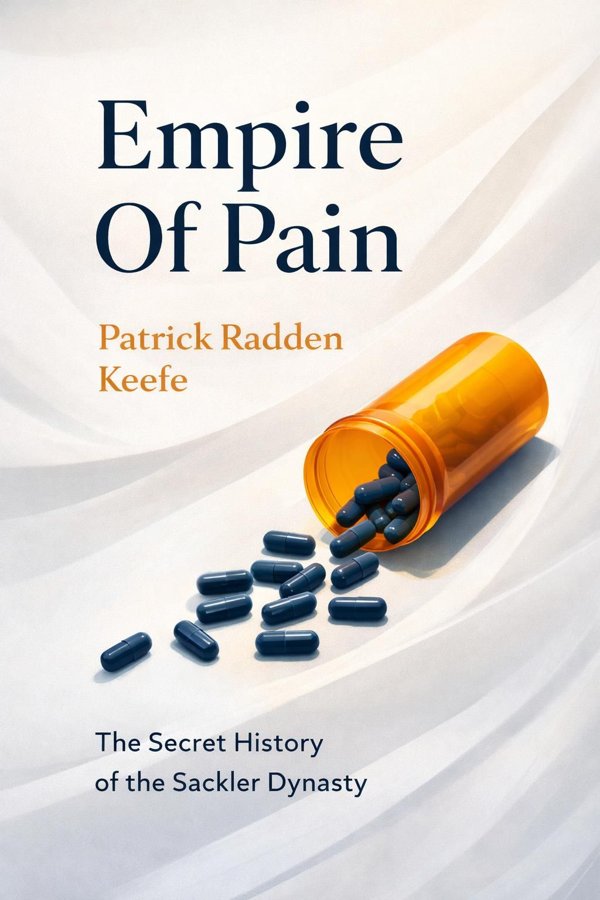
Empire Of Pain: The Secret History of the Sackler Dynasty: Summary & Key Insights
 10 min6 chaptersAudio available
What Is Empire Of Pain: The Secret History of the Sackler Dynasty About?
Empire Of Pain: The Secret History of the Sackler Dynasty by Patrick Radden Keefe is a law_crime book spanning 6 pages. Empire of Pain is a meticulously researched nonfiction work that chronicles the rise and fall of the Sackler family, whose pharmaceutical empire played a central role in the opioid crisis. Patrick Radden Keefe traces the family's history from its early success in medical marketing to the creation and aggressive promotion of OxyContin, exposing how wealth, influence, and secrecy shaped one of the most devastating public health disasters in modern America.
This FizzRead summary covers all 6 key chapters of Empire Of Pain: The Secret History of the Sackler Dynasty in approximately 10 minutes, distilling the most important ideas, arguments, and takeaways from Patrick Radden Keefe's work. Also available as an audio summary and Key Quotes Podcast.
Empire Of Pain: The Secret History of the Sackler Dynasty
Empire of Pain is a meticulously researched nonfiction work that chronicles the rise and fall of the Sackler family, whose pharmaceutical empire played a central role in the opioid crisis. Patrick Radden Keefe traces the family's history from its early success in medical marketing to the creation and aggressive promotion of OxyContin, exposing how wealth, influence, and secrecy shaped one of the most devastating public health disasters in modern America.
Who Should Read Empire Of Pain: The Secret History of the Sackler Dynasty?
This book is perfect for anyone interested in law_crime and looking to gain actionable insights in a short read. Whether you're a student, professional, or lifelong learner, the key ideas from Empire Of Pain: The Secret History of the Sackler Dynasty by Patrick Radden Keefe will help you think differently.
- ✓Readers who enjoy law_crime and want practical takeaways
- ✓Professionals looking to apply new ideas to their work and life
- ✓Anyone who wants the core insights of Empire Of Pain: The Secret History of the Sackler Dynasty in just 10 minutes
Want the full summary?
Get instant access to this book summary and 100K+ more with Fizz Moment.
Get Free SummaryAvailable on App Store • Free to download
Key Chapters
To understand the Sacklers, one must begin with the mythology they built around themselves. Long before their name was associated with scandal, it stood as a symbol of cultivated generosity. Arthur, Raymond, and Mortimer Sackler believed in the power of legacy—art, science, and education were their chosen realms of reputation. Museums like the Met and universities across the globe displayed the Sackler name, which became synonymous with cultural enlightenment. That image, carefully maintained through philanthropy, was the first pillar of their dynasty: an identity that hid its industrial origins behind marble facades and engraved plaques.
From my research, I found that the Sacklers pursued image as diligently as other men pursue power. Arthur, the eldest, understood publicity better than anyone; he treated reputation as an asset to be managed. The family’s wealth had roots in pharmaceuticals, a field they never advertised openly but which furnished the millions they donated. The irony, which later history would sharpen, is that the same principles of persuasion Arthur mastered for selling medicines were deployed for building esteem. Their charitable works were not spontaneous acts of kindness but extensions of a lifelong campaign to control perception. That duality—public benevolence and private aggression—frames everything that follows.
Arthur Sackler’s genius reshaped medicine forever. In the years following World War II, he pioneered a new kind of advertising targeted at physicians rather than patients. His work with Pfizer and Roche showed that drugs could be sold through psychology as much as through chemistry. When Valium emerged, Arthur seized the opportunity to transform a tranquilizer into a cultural phenomenon. He created glossy brochures, celebrity endorsements, and scientific-sounding campaigns that made doctors feel not like customers but like collaborators in progress.
I traced how Arthur’s success hinged on understanding vulnerability. In postwar America, anxiety was the national ailment, and Valium became its cure-all. Yet the sales tactics that Arthur perfected also blurred boundaries between medical judgment and market manipulation. He accustomed doctors to the idea that pharmaceutical companies were partners in patient care; that what served the bottom line also served public health. It was a subtle shift, but a transformative one. The ethos of persuasion he developed would later underpin OxyContin’s ascent—a direct lineage from tranquilizing nerves to numbing pain. What’s crucial is that Arthur himself viewed marketing as science. He believed influence could be quantified, tested, and optimized, and he applied those principles with evangelical zeal. His achievements made the Sacklers rich, but they also altered the structure of trust between the public and the medical profession.
+ 4 more chapters — available in the FizzRead app
All Chapters in Empire Of Pain: The Secret History of the Sackler Dynasty
About the Author
Patrick Radden Keefe is an American journalist and author known for his investigative reporting and narrative nonfiction. A staff writer at The New Yorker, he has written extensively on crime, corruption, and power, earning acclaim for works such as 'Say Nothing' and 'Empire of Pain'.
Get This Summary in Your Preferred Format
Read or listen to the Empire Of Pain: The Secret History of the Sackler Dynasty summary by Patrick Radden Keefe anytime, anywhere. FizzRead offers multiple formats so you can learn on your terms — all free.
Available formats: App · Audio · PDF · EPUB — All included free with FizzRead
Download Empire Of Pain: The Secret History of the Sackler Dynasty PDF and EPUB Summary
Key Quotes from Empire Of Pain: The Secret History of the Sackler Dynasty
“To understand the Sacklers, one must begin with the mythology they built around themselves.”
“Arthur Sackler’s genius reshaped medicine forever.”
Frequently Asked Questions about Empire Of Pain: The Secret History of the Sackler Dynasty
Empire Of Pain: The Secret History of the Sackler Dynasty by Patrick Radden Keefe is a law_crime book that explores key ideas across 6 chapters. Empire of Pain is a meticulously researched nonfiction work that chronicles the rise and fall of the Sackler family, whose pharmaceutical empire played a central role in the opioid crisis. Patrick Radden Keefe traces the family's history from its early success in medical marketing to the creation and aggressive promotion of OxyContin, exposing how wealth, influence, and secrecy shaped one of the most devastating public health disasters in modern America.
More by Patrick Radden Keefe

You Might Also Like
Abortion and the Law in America: Roe v. Wade to the Present
Mary Ziegler
10 min
Black Edge: Inside Information, Dirty Money, and the Quest to Bring Down the Most Wanted Man on Wall Street
Sheelah Kolhatkar
10 min
Blood Feud: The Man Who Blew the Whistle on One of the Deadliest Prescription Drugs Ever
Kathleen Sharp
10 min
Catch and Kill: Lies, Spies, and a Conspiracy to Protect Predators
Ronan Farrow
10 min
Chaos: Charles Manson, the CIA, and the Secret History of the Sixties
Tom O'Neill with Dan Piepenbring
10 min
Code and Other Laws of Cyberspace
Lawrence Lessig
10 minBrowse by Category
Ready to read Empire Of Pain: The Secret History of the Sackler Dynasty?
Get the full summary and 100K+ more books with Fizz Moment.