
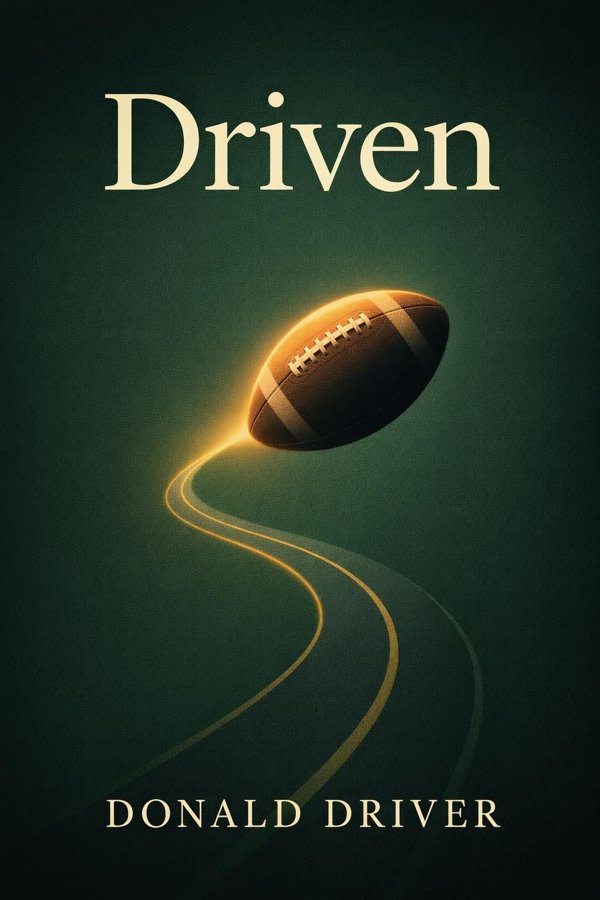
Driven: Summary & Key Insights
 10 min8 chaptersAudio available
Key Takeaways from Driven
Some of the strongest people are built in the hardest places.
Before the world knows your name, your home life is already writing your story.
A breakthrough matters only if you are ready for it.
Talent may get attention, but effort builds a career.
What you achieve may impress people, but who you become is what endures.
What Is Driven About?
Driven by Donald Driver is a biographies book. Success often looks effortless from the outside, but Donald Driver’s memoir shows how much pain, sacrifice, and persistence usually stand behind it. Driven tells the story of Driver’s rise from a childhood marked by poverty, instability, and homelessness to becoming one of the most beloved wide receivers in Green Bay Packers history. More than a sports memoir, the book is a deeply personal account of survival, identity, family loyalty, faith, and determination. Driver does not simply recount football highlights; he reveals the emotional and practical struggles that shaped him long before the NFL ever noticed his talent. What makes this memoir matter is its honesty. Driver writes from lived experience, showing how hardship can either break a person or build uncommon resilience. His story speaks to athletes, parents, students, and anyone trying to rise above difficult beginnings. As a Super Bowl champion, former NFL star, and public figure admired for both performance and character, Driver has the authority to reflect on success with unusual depth. Driven is ultimately about what it takes to keep moving forward when life gives you every reason to stop.
This FizzRead summary covers all 8 key chapters of Driven in approximately 10 minutes, distilling the most important ideas, arguments, and takeaways from Donald Driver's work. Also available as an audio summary and Key Quotes Podcast.
Driven
Success often looks effortless from the outside, but Donald Driver’s memoir shows how much pain, sacrifice, and persistence usually stand behind it. Driven tells the story of Driver’s rise from a childhood marked by poverty, instability, and homelessness to becoming one of the most beloved wide receivers in Green Bay Packers history. More than a sports memoir, the book is a deeply personal account of survival, identity, family loyalty, faith, and determination. Driver does not simply recount football highlights; he reveals the emotional and practical struggles that shaped him long before the NFL ever noticed his talent.
What makes this memoir matter is its honesty. Driver writes from lived experience, showing how hardship can either break a person or build uncommon resilience. His story speaks to athletes, parents, students, and anyone trying to rise above difficult beginnings. As a Super Bowl champion, former NFL star, and public figure admired for both performance and character, Driver has the authority to reflect on success with unusual depth. Driven is ultimately about what it takes to keep moving forward when life gives you every reason to stop.
Who Should Read Driven?
This book is perfect for anyone interested in biographies and looking to gain actionable insights in a short read. Whether you're a student, professional, or lifelong learner, the key ideas from Driven by Donald Driver will help you think differently.
- ✓Readers who enjoy biographies and want practical takeaways
- ✓Professionals looking to apply new ideas to their work and life
- ✓Anyone who wants the core insights of Driven in just 10 minutes
Want the full summary?
Get instant access to this book summary and 100K+ more with Fizz Moment.
Get Free SummaryAvailable on App Store • Free to download
Key Chapters
Some of the strongest people are built in the hardest places. One of the central lessons in Driven is that adversity, while painful, can become the very force that shapes endurance, courage, and purpose. Donald Driver grew up in conditions many readers can barely imagine: poverty, instability, unsafe environments, and periods of homelessness. Instead of presenting these experiences as background details, he shows how they formed the emotional core of who he became.
Driver’s childhood taught him lessons that no coach could have given him. He learned how to adapt quickly, how to remain alert, how to value every opportunity, and how to keep going when comfort was not available. These early experiences developed the mental toughness that later served him in sports, relationships, and public life. His story reminds readers that resilience is not an abstract personality trait; it is often forged through repeated moments of surviving what feels unbearable.
Importantly, the book does not romanticize suffering. Driver does not suggest hardship is good in itself. Rather, he shows that people can choose what to do with hardship. Some let it define their limits. Others use it to sharpen their focus and deepen their gratitude. This distinction matters in everyday life. A student facing financial stress, a worker rebuilding after a setback, or a parent carrying old wounds can still convert struggle into discipline and determination.
The practical application is powerful: instead of asking only, “Why did this happen to me?” ask, “What has this taught me that easier circumstances never could?” That shift does not erase pain, but it gives pain direction. Driver’s life demonstrates that difficult beginnings do not have to dictate a disappointing future.
Actionable takeaway: Write down one major hardship from your past and identify three strengths it forced you to develop, then consciously use those strengths in your current goals.
Before the world knows your name, your home life is already writing your story. In Driven, Donald Driver makes clear that family, in all its complexity, played a defining role in his development. His memoir explores not only hardship outside the home but the emotional impact of the people closest to him. Love, instability, sacrifice, and conflict all contributed to his sense of self.
Driver’s relationship with his mother is especially important to the book’s emotional force. He portrays her as a source of both struggle and inspiration, capturing how deeply children are affected by the adults who raise them. Even when family life is imperfect, it leaves lasting values, habits, fears, and motivations. For Driver, the desire to create a better life was not formed in isolation. It came from witnessing real pain and wanting something different for himself and those he loved.
One of the memoir’s most compelling ideas is that people do not need perfect family histories to build meaningful futures. Driver acknowledges brokenness without allowing it to become a permanent excuse. He carries his past with honesty but not surrender. That balance is useful for readers. Many people spend years either blaming their family for everything or pretending family wounds never mattered. Driver’s life offers a healthier model: face the truth, honor the sacrifices, learn from the mistakes, and decide what kind of person you want to become next.
This idea has practical value in parenting, leadership, and personal growth. If you understand how your upbringing influenced your responses, your confidence, and your fears, you gain more control over your future choices. You can keep what strengthened you and change what harmed you. That is one of the book’s quiet but profound themes.
Actionable takeaway: Reflect on one lesson your family taught you that you want to keep and one pattern you want to break, then act on both intentionally this week.
A breakthrough matters only if you are ready for it. Donald Driver’s rise was not the result of talent alone, and Driven makes this point repeatedly. His success came from treating every chance, however small, as something that had to be earned and maximized. In his life, opportunity rarely arrived in ideal form. It came in fragments: a chance to keep playing, a chance to be noticed, a chance to stay on a roster, a chance to prove he belonged.
This is what makes his story especially relevant. Many people imagine success as one dramatic opening that changes everything. Driver’s memoir suggests something more realistic: life often gives people narrow windows, and those windows reward preparation. Because he knew what it felt like to have so little, he did not assume another opportunity would always come. That urgency sharpened his work ethic.
His football career illustrates this clearly. A player does not become a reliable professional athlete simply by wanting it. Driver had to prepare physically, mentally, and emotionally. He needed to perform under pressure, respond to criticism, and keep improving even after making progress. Preparation turned possibility into credibility. That lesson extends well beyond sports. A job interview, business presentation, scholarship application, or creative project can all become life-changing moments, but only if the person stepping into them has done the hidden work first.
The memoir encourages readers to rethink luck. Luck can open a door, but discipline determines whether you can walk through it. Driver’s life underscores that readiness is a form of respect for your own dreams. If you claim to want something, your habits should reflect that desire.
Actionable takeaway: Identify one opportunity you hope to receive in the next six months and build a specific preparation plan now, including skills, habits, and deadlines.
Talent may get attention, but effort builds a career. One of the strongest ideas in Driven is that sustained success belongs less to the gifted than to the relentlessly committed. Donald Driver’s story is not framed as the journey of a flawless prodigy. Instead, it is the journey of someone who kept working long after others might have settled for survival or small wins.
This theme is especially important in sports, where spectators often see only the visible performance. Driver helps readers understand the invisible labor behind excellence: training, repetition, discipline, recovery, emotional control, and consistency. The glamour of professional football can distract from the reality that every season demands fresh effort. Past achievements do not protect a player from future competition. To stay relevant, Driver had to continue proving himself.
The idea translates easily to ordinary life. In school, business, creative work, and leadership, talented people often stall because they rely too heavily on potential. Hardworking people, by contrast, accumulate skill. They improve through repetition, accept coaching, and handle setbacks without losing direction. Driver’s life shows that effort compounds over time. What starts as determination becomes competence, then trust, then leadership.
Another valuable insight is that work ethic is often built in response to insecurity. Driver knew what it meant to have little stability. That awareness gave him a practical seriousness about effort. He did not assume anything was guaranteed. This mindset can be useful if held in a healthy way: instead of fearing that you are not enough, let that uncertainty motivate preparation and humility.
Actionable takeaway: Choose one area where you have relied too much on raw ability and commit to a daily practice routine for the next 30 days to build dependable skill.
What you achieve may impress people, but who you become is what endures. Driven is inspiring not only because Donald Driver became an NFL standout, but because he presents success as something larger than fame, statistics, or trophies. The memoir repeatedly points back to character: integrity, loyalty, humility, gratitude, and responsibility.
Driver’s public success could easily have become the whole story. Instead, he emphasizes the values that made success meaningful. He understands that recognition without character is unstable. A person may gain applause and still lose trust, relationships, or peace. This is especially significant in professional sports, where celebrity can distort priorities. Driver’s perspective suggests that achievement is only worth celebrating when it rests on a strong moral foundation.
Readers can apply this idea in many settings. Career advancement, social visibility, and financial progress are not bad goals, but they can become empty if pursued without principle. Driver’s memoir asks a deeper question: if your title disappeared tomorrow, what kind of person would remain? That question cuts through image management and forces reflection on the habits and values that define a life.
Character also influences impact. People often remember how they were treated more than what someone accomplished. Driver’s reputation as a beloved player was tied not just to performance but to the way he carried himself. Respect, perseverance, and connection made him matter beyond the field. This is a useful reminder for leaders, parents, and professionals. Influence grows when others trust your character, not just your talent.
Actionable takeaway: Define the three character traits you want people closest to you to experience from you consistently, then choose one concrete behavior that reinforces each trait this week.
Escaping hardship is powerful, but learning to appreciate the journey changes everything. In Driven, Donald Driver’s gratitude gives emotional depth to his story. He does not write as someone entitled to success or disconnected from where he came from. He writes as someone who remembers. That memory creates gratitude, and gratitude gives his achievements meaning.
Gratitude in this memoir is not superficial positivity. It is rooted in contrast. Driver knows what instability feels like, so stability means more. He knows what scarcity feels like, so opportunity carries weight. He knows what it means to be overlooked, so recognition is not something he takes lightly. This perspective keeps success from becoming ordinary or self-centered.
The book suggests that gratitude is not merely a feeling but a discipline of attention. It changes how people interpret both their past and present. Instead of seeing his difficult beginnings only as sources of pain, Driver also sees them as sources of perspective. That perspective helps prevent resentment from becoming his dominant emotional language.
In practical life, gratitude strengthens resilience because it widens what we notice. A person rebuilding after a setback can still recognize support, progress, lessons, and second chances. Gratitude does not deny struggle; it refuses to let struggle be the only truth. It also keeps ambition healthy. When people appreciate what they have, they are less likely to chase success in desperate or destructive ways.
Driver’s example shows that gratitude can coexist with hunger. You can want more while honoring what has already carried you this far. That combination is especially powerful because it fuels progress without erasing humility.
Actionable takeaway: Start a daily practice of listing three specific things you are grateful for, including one challenge that taught you something valuable.
When outcomes are uncertain, hope becomes a form of strength. A recurring force in Driven is the role of faith, belief, and inner conviction in helping Donald Driver endure the long road from hardship to achievement. His journey was not linear, and it certainly was not easy. What helped him keep moving was not only physical ability or determination, but the belief that his life could become more than its early circumstances suggested.
Faith in this memoir functions on several levels. It includes spiritual grounding, trust in possibility, and confidence that present suffering does not have to be the final chapter. For someone coming from poverty and instability, this kind of hope is not naïve. It is necessary. Without it, hardship can narrow vision until survival is all a person can imagine.
This idea has broad application. People facing prolonged uncertainty often need something deeper than short-term motivation. Whether someone is caring for a struggling family, pursuing a degree while working, recovering from a professional setback, or healing emotionally, progress can feel painfully slow. In those periods, faith helps sustain effort before results appear. It provides endurance when evidence is limited.
Driver’s life shows that hope is not passive waiting. It works best when paired with action. Believing your life can improve should lead to disciplined choices, not wishful thinking. Hope can inspire preparation, courage, and persistence because it gives those efforts a reason.
For modern readers, this lesson is especially relevant in a culture that expects quick transformation. Driven reminds us that meaningful change often unfolds over years. Hope keeps the future open long enough for hard work to matter.
Actionable takeaway: Identify one area of your life where you feel discouraged and pair a hopeful belief about it with one concrete action you can take this week.
All Chapters in Driven
About the Author
Donald Driver is a former NFL wide receiver, author, and public speaker best known for his long and successful career with the Green Bay Packers. Born in Houston, Texas, he overcame a childhood marked by poverty and homelessness to become one of the most respected players in franchise history. Driver played 14 seasons in the NFL, earned multiple Pro Bowl selections, and won Super Bowl XLV with the Packers. Beyond football, he has been widely admired for his perseverance, optimism, charitable work, and connection with fans. As a memoirist, Driver brings credibility not only from athletic achievement but from lived experience. His writing reflects the resilience, gratitude, and determination that defined both his life and career.
Get This Summary in Your Preferred Format
Read or listen to the Driven summary by Donald Driver anytime, anywhere. FizzRead offers multiple formats so you can learn on your terms — all free.
Available formats: App · Audio · PDF · EPUB — All included free with FizzRead
Download Driven PDF and EPUB Summary
Key Quotes from Driven
“Some of the strongest people are built in the hardest places.”
“Before the world knows your name, your home life is already writing your story.”
“A breakthrough matters only if you are ready for it.”
“Talent may get attention, but effort builds a career.”
“What you achieve may impress people, but who you become is what endures.”
Frequently Asked Questions about Driven
Driven by Donald Driver is a biographies book that explores key ideas across 8 chapters. Success often looks effortless from the outside, but Donald Driver’s memoir shows how much pain, sacrifice, and persistence usually stand behind it. Driven tells the story of Driver’s rise from a childhood marked by poverty, instability, and homelessness to becoming one of the most beloved wide receivers in Green Bay Packers history. More than a sports memoir, the book is a deeply personal account of survival, identity, family loyalty, faith, and determination. Driver does not simply recount football highlights; he reveals the emotional and practical struggles that shaped him long before the NFL ever noticed his talent. What makes this memoir matter is its honesty. Driver writes from lived experience, showing how hardship can either break a person or build uncommon resilience. His story speaks to athletes, parents, students, and anyone trying to rise above difficult beginnings. As a Super Bowl champion, former NFL star, and public figure admired for both performance and character, Driver has the authority to reflect on success with unusual depth. Driven is ultimately about what it takes to keep moving forward when life gives you every reason to stop.
You Might Also Like

An American Marriage
Tayari Jones
10 min
Benjamin Franklin: An American Life
Walter Isaacson
10 min
I Know Why The Caged Bird Sings
Maya Angelou
10 min
Long Walk to Freedom
Nelson Mandela
10 min
Persepolis
Marjane Satrapi
10 min
Surely You're Joking, Mr. Feynman!
Richard P. Feynman
10 minBrowse by Category
Ready to read Driven?
Get the full summary and 100K+ more books with Fizz Moment.