
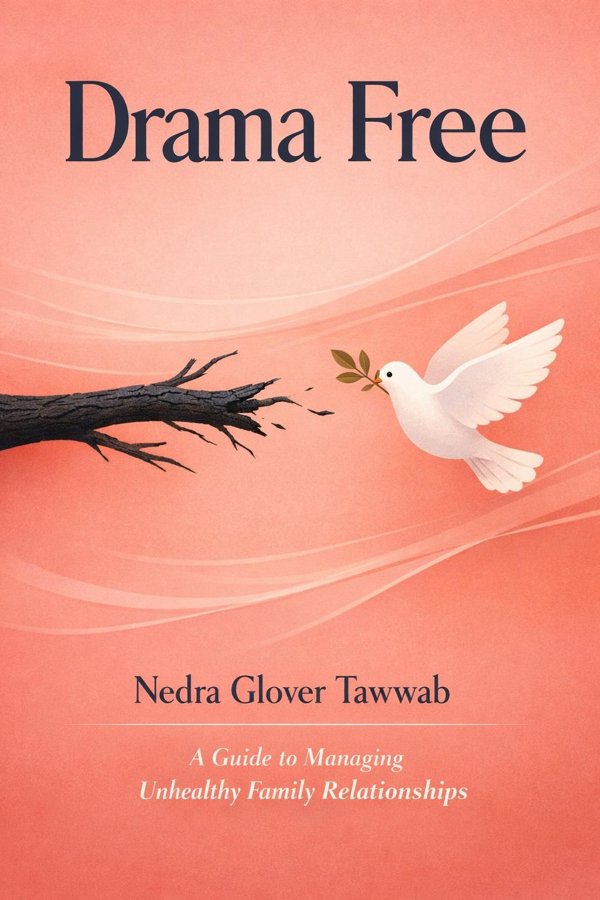
Drama Free: A Guide to Managing Unhealthy Family Relationships: Summary & Key Insights
 10 min9 chaptersAudio available
Key Takeaways from Drama Free: A Guide to Managing Unhealthy Family Relationships
One of the most liberating truths in family healing is this: the dysfunction did not start with you.
Not all harmful family behavior is explosive; sometimes it arrives in soft, familiar language.
A boundary is not a punishment; it is a condition for healthy participation.
Many family systems train certain members to become emotional managers.
Adult family conflict often reactivates old pain.
What Is Drama Free: A Guide to Managing Unhealthy Family Relationships About?
Drama Free: A Guide to Managing Unhealthy Family Relationships by Nedra Glover Tawwab is a mental_health book spanning 5 pages. Family relationships shape our earliest ideas about love, loyalty, conflict, and belonging. But for many people, family is also the source of guilt, anxiety, resentment, and repeated emotional turmoil. In Drama Free, licensed therapist Nedra Glover Tawwab tackles one of the most difficult realities of adult life: how to deal with unhealthy family dynamics without losing yourself in the process. Rather than offering simplistic advice to “just forgive” or “keep the peace,” she gives readers a practical framework for recognizing dysfunction, setting limits, and making choices that protect their well-being. The book matters because family pain is often normalized. Manipulation gets called concern, control gets labeled love, and self-sacrifice is treated like virtue. Tawwab helps readers see these patterns clearly and respond with greater confidence. Drawing on her clinical experience and her well-known work on boundaries, she explains why family drama persists across generations and how people can stop participating in it. Drama Free is both validating and useful: it reassures readers that they are not alone, and it equips them with concrete tools to create healthier, calmer, and more honest relationships.
This FizzRead summary covers all 9 key chapters of Drama Free: A Guide to Managing Unhealthy Family Relationships in approximately 10 minutes, distilling the most important ideas, arguments, and takeaways from Nedra Glover Tawwab's work. Also available as an audio summary and Key Quotes Podcast.
Drama Free: A Guide to Managing Unhealthy Family Relationships
Family relationships shape our earliest ideas about love, loyalty, conflict, and belonging. But for many people, family is also the source of guilt, anxiety, resentment, and repeated emotional turmoil. In Drama Free, licensed therapist Nedra Glover Tawwab tackles one of the most difficult realities of adult life: how to deal with unhealthy family dynamics without losing yourself in the process. Rather than offering simplistic advice to “just forgive” or “keep the peace,” she gives readers a practical framework for recognizing dysfunction, setting limits, and making choices that protect their well-being.
The book matters because family pain is often normalized. Manipulation gets called concern, control gets labeled love, and self-sacrifice is treated like virtue. Tawwab helps readers see these patterns clearly and respond with greater confidence. Drawing on her clinical experience and her well-known work on boundaries, she explains why family drama persists across generations and how people can stop participating in it. Drama Free is both validating and useful: it reassures readers that they are not alone, and it equips them with concrete tools to create healthier, calmer, and more honest relationships.
Who Should Read Drama Free: A Guide to Managing Unhealthy Family Relationships?
This book is perfect for anyone interested in mental_health and looking to gain actionable insights in a short read. Whether you're a student, professional, or lifelong learner, the key ideas from Drama Free: A Guide to Managing Unhealthy Family Relationships by Nedra Glover Tawwab will help you think differently.
- ✓Readers who enjoy mental_health and want practical takeaways
- ✓Professionals looking to apply new ideas to their work and life
- ✓Anyone who wants the core insights of Drama Free: A Guide to Managing Unhealthy Family Relationships in just 10 minutes
Want the full summary?
Get instant access to this book summary and 100K+ more with Fizz Moment.
Get Free SummaryAvailable on App Store • Free to download
Key Chapters
One of the most liberating truths in family healing is this: the dysfunction did not start with you. Tawwab emphasizes that unhealthy family dynamics are often inherited patterns rather than isolated incidents. Silence, emotional reactivity, favoritism, people-pleasing, enmeshment, and avoidance are frequently passed down from one generation to the next until someone finally notices the pattern and questions it. What feels “normal” in a family may actually be long-standing dysfunction disguised as tradition, loyalty, or duty.
This matters because many adults assume they are overreacting when they feel drained, dismissed, or controlled by relatives. In reality, they may be responding to systems that trained them to suppress needs, overfunction for others, or tolerate poor treatment. A parent who never learned emotional regulation may raise children who walk on eggshells. A family that avoids conflict may produce adults who fear direct communication. A culture of guilt can make boundary-setting feel cruel even when it is necessary.
Tawwab encourages readers to look beyond single arguments and identify recurring themes: Who is expected to fix problems? Who is never held accountable? What emotions are welcomed, and which are punished? Seeing the larger pattern reduces shame and increases clarity. Instead of asking, “What is wrong with me?” readers can ask, “What system have I been participating in?”
A practical way to apply this idea is to map repeated family roles and reactions. Notice who becomes the peacemaker, the scapegoat, the rescuer, or the avoider in stressful moments. The actionable takeaway: stop personalizing every family conflict and start identifying the inherited patterns that keep the drama alive.
Not all harmful family behavior is explosive; sometimes it arrives in soft, familiar language. Tawwab shows that toxic dynamics are often subtle enough to be confused with care. A relative may frame criticism as honesty, intrusion as closeness, guilt as love, or control as protection. Because these behaviors are common in families, they can be difficult to identify, especially when they are wrapped in affectionate language or long-standing expectations.
The book highlights several recurring patterns: chronic criticism, boundary violations, manipulation, triangulation, passive-aggression, emotional dumping, and guilt-based communication. For example, a mother may say, “I just worry about you,” while repeatedly undermining her adult child’s decisions. A sibling may recruit others into a conflict instead of addressing it directly. A parent may use silent treatment to punish disagreement. These behaviors create confusion because they obscure the actual issue: a lack of respect, emotional maturity, or accountability.
Tawwab encourages readers to focus less on labels and more on impact. The key question is not whether a family member intended harm, but whether the pattern consistently leaves you anxious, resentful, small, or obligated. If every conversation turns into self-defense, if your “no” triggers punishment, or if someone repeatedly ignores your stated limits, that is important information.
A practical application is to track interactions after they happen. What was said? How did you feel in your body? Did the conversation allow mutual respect, or did it pressure you into compliance? Naming the behavior is often the first step toward changing your response. The actionable takeaway: pay attention to patterns of impact, not just family intentions, and learn to recognize toxicity even when it is disguised as love.
A boundary is not a punishment; it is a condition for healthy participation. This is one of Tawwab’s core messages. Many people raised in unhealthy families think boundaries are selfish, disrespectful, or likely to cause abandonment. But without boundaries, relationships become governed by fear, guilt, resentment, and blurred responsibility. Boundaries clarify what you will accept, what you will do, and what access others have to your time, energy, and emotional space.
Tawwab explains that boundaries are especially difficult in families because history creates entitlement. Relatives may believe they deserve unlimited access to your personal life, your children, your money, your attention, or your emotional labor simply because they are family. But connection does not cancel autonomy. An adult child can love a parent and still refuse daily criticism. A sibling can care deeply and still decline to mediate every family conflict.
Effective boundaries are clear, specific, and followed by action. Instead of long justifications, Tawwab recommends direct statements such as, “I’m not discussing my dating life,” “If you raise your voice, I’ll end the call,” or “I can visit for two hours, not the entire weekend.” The goal is not to control the other person’s behavior but to define your response when the line is crossed.
In practice, boundaries may involve limiting phone calls, declining invasive questions, refusing financial entanglement, or ending conversations that become abusive. They often feel uncomfortable at first because they disrupt old patterns. That discomfort does not mean the boundary is wrong; it may mean the relationship has relied on your lack of one. The actionable takeaway: choose one recurring family stressor and create a short, specific boundary that protects your peace.
Many family systems train certain members to become emotional managers. They soothe conflict, absorb tension, anticipate others’ needs, and try to prevent disappointment before it happens. Tawwab challenges this exhausting role by reminding readers that caring about people is not the same as being responsible for their feelings, choices, or healing. Overfunctioning often looks loving from the outside, but internally it breeds resentment, burnout, and a distorted sense of self-worth.
This dynamic frequently develops in childhood. A child may learn to become the “easy one,” the helper, the translator, or the parentified caretaker in order to preserve stability. As an adult, that person may feel compelled to answer every late-night call, rescue relatives from consequences, mediate disputes, or tolerate disrespect to keep the family intact. The cost is high: chronic anxiety, emotional depletion, and relationships built on obligation rather than mutuality.
Tawwab makes an important distinction between support and self-sacrifice. Healthy support is voluntary, limited, and respectful of your capacity. Self-sacrifice becomes unhealthy when it is expected, one-sided, or rooted in fear. If saying no fills you with panic, or if others only seem close to you when you are useful, it may be time to reevaluate your role.
A practical shift is to pause before helping and ask: Did they ask for support? Am I truly able to give it? What will this cost me emotionally, financially, or mentally? You can care without fixing. You can empathize without taking over. You can love someone and allow them to face their own consequences. The actionable takeaway: identify one family responsibility you have assumed but do not actually own, and begin stepping back from it.
Adult family conflict often reactivates old pain. Tawwab explains that present-day reactions can be intensified by unresolved childhood wounds such as neglect, favoritism, invalidation, abandonment, or unpredictable caregiving. When a parent dismisses your feelings today, it may not just be about this moment; it may awaken years of not being seen. When a sibling excludes you, the hurt may echo older family roles that made you feel invisible or less valued.
Understanding this connection helps readers respond with more compassion and less confusion. You are not “too sensitive” simply because current events touch old injuries. Healing begins when you recognize how the past shaped your triggers, attachment patterns, and expectations. Someone raised in chaos may mistake intensity for intimacy. Someone taught to earn love through compliance may struggle to disappoint relatives, even when necessary.
Tawwab does not suggest blaming everything on childhood. Instead, she invites readers to take their history seriously without being defined by it. Reflection, therapy, journaling, and self-observation can help uncover the beliefs formed in early family life: “My needs are burdensome,” “Peace is my responsibility,” or “Love must be earned.” Once named, these beliefs can be challenged and replaced.
A practical exercise is to notice when a family interaction feels emotionally bigger than the situation itself. Ask what earlier experience it resembles and what younger part of you feels activated. Then respond from your adult self rather than your wounded child self. The actionable takeaway: identify one painful family trigger and trace it back to the belief or childhood experience that may be amplifying it today.
In unhealthy families, communication is often indirect, reactive, or loaded with unspoken expectations. Tawwab argues that clearer communication is one of the fastest ways to reduce drama, even if it does not immediately change the other person. Instead of hinting, venting to third parties, or hoping others will “just know,” healthy relating requires saying what is true in language that is simple, respectful, and specific.
This can feel unnatural if your family relies on avoidance, sarcasm, guilt, or mind-reading. For example, rather than complaining to a sibling about your mother’s behavior and hoping they intervene, direct communication means addressing the issue yourself: “When you comment on my parenting choices, I feel undermined. Please stop.” Instead of accepting repeated last-minute demands and then exploding, you might say, “I need more notice to help. If plans are made at the last minute, I may not be available.”
Tawwab also notes that effective communication includes limits. Honesty without boundaries can become overexposure, while boundaries without communication can feel confusing. The healthiest approach combines the two: state what is happening, what you need, and what you will do if the pattern continues. This reduces ambiguity and gives you a script to rely on in emotionally charged moments.
Not everyone will respond well. Some relatives may dismiss, argue, or escalate when old patterns are challenged. But their discomfort does not invalidate your clarity. The goal is not perfect mutual understanding; it is self-respect and consistency. The actionable takeaway: replace one indirect family habit this week with a direct, concise statement of what you mean and what you need.
One of the book’s most important contributions is its refusal to treat family closeness as an unquestioned good. Tawwab acknowledges that in some relationships, distance is not avoidance but wisdom. When repeated conversations, boundaries, and attempts at repair fail to create safety or respect, reducing contact may be the healthiest option available. This can include emotional distance, shorter visits, less frequent communication, structured contact, or in some cases complete estrangement.
Many people resist this idea because culture often treats family access as sacred. Readers may fear being judged as ungrateful, cold, or unforgiving. Tawwab pushes back against that pressure by centering well-being. If a relative repeatedly lies, manipulates, threatens, humiliates, or destabilizes you, maintaining unrestricted access does not make you noble; it may keep you stuck in harm.
Distance is especially useful when contact consistently dysregulates you. For example, if every call with a parent leaves you shaking or replaying the conversation for hours, limiting calls to once a week may be protective. If holidays become arenas for cruelty, shortening visits or celebrating separately may bring peace. Distance can also create room to observe the relationship more clearly instead of being constantly pulled into reaction.
Tawwab does not romanticize separation. It can be painful, complicated, and full of grief. But she frames it as a valid choice, not a moral failure. The right amount of contact is the amount that allows you to remain grounded and self-respecting. The actionable takeaway: assess which family relationships require more structure or distance and choose one concrete adjustment that would make contact feel safer.
Few ideas create more confusion in family healing than forgiveness. Tawwab offers a grounded perspective: forgiveness is not a requirement for boundaries, reconciliation, or healing. Many people have been taught that being a good person means excusing harm, resuming contact, or pretending the past no longer matters. But forced forgiveness can become another form of self-betrayal when it is used to silence pain or bypass accountability.
In Tawwab’s framework, forgiveness is optional and deeply personal. Some readers may eventually release bitterness for their own peace. Others may decide that acceptance, grief, or indifference is a more honest goal. What matters most is not adopting the correct moral posture but engaging reality clearly. If someone continues harmful behavior, you do not need to forgive them in order to protect yourself. If trust has been broken repeatedly, reconciliation may be unwise even if you no longer feel active anger.
This distinction is powerful because it separates internal healing from external access. You can let go of the fantasy that a parent will become who you needed without inviting them back into intimate parts of your life. You can mourn what happened without minimizing it. You can stop centering revenge while still maintaining strong boundaries.
A practical application is to ask yourself what you are truly seeking. Is it peace? Validation? Repair? Safety? Once you know the goal, you can choose responses that align with it rather than defaulting to social pressure. Healing does not always look like reunion. The actionable takeaway: define what healing means to you personally instead of letting forgiveness language dictate what you owe others.
A healthy life is not built only by managing difficult relatives; it is also built by expanding your understanding of family. Tawwab encourages readers to redefine family beyond biology and obligation. Chosen family, trustworthy friendships, mentors, partners, and community relationships can offer the care, reciprocity, and emotional safety that may be lacking in one’s family of origin. This shift does not erase grief, but it widens the sources of belonging.
For people raised in dysfunctional systems, this redefinition can feel radical. They may have internalized the belief that family must come first no matter the cost, or that unmet needs should simply be endured. Tawwab invites a more empowering view: supportive relationships are not luxuries; they are part of healing. When people experience consistent respect, listening, accountability, and warmth elsewhere, they begin to recalibrate what healthy connection feels like.
This also changes how readers approach family obligations. Instead of organizing life around endless crisis management, they can invest in relationships that nourish them. A person who limits contact with a critical parent may find stability in a close friend group. Someone estranged from siblings may build meaningful rituals with a partner, neighbors, or spiritual community. Family becomes less about automatic access and more about mutual care.
Practically, redefining family means paying attention to who brings steadiness into your life and intentionally strengthening those bonds. Celebrate holidays differently, create new traditions, and allow supportive people to matter. The actionable takeaway: make a list of the relationships that feel safe, reciprocal, and life-giving, and begin treating them as an essential part of your emotional home.
All Chapters in Drama Free: A Guide to Managing Unhealthy Family Relationships
About the Author
Nedra Glover Tawwab is a licensed therapist, relationship expert, and New York Times bestselling author whose work focuses on boundaries, mental health, and interpersonal well-being. She is widely known for translating therapeutic concepts into practical guidance that readers can apply in everyday life, especially in areas such as family conflict, people-pleasing, and emotional regulation. Tawwab has built a large audience through her books, media appearances, and influential social media presence, where she shares accessible advice on healthier communication and self-respect. Her writing stands out for its clarity, compassion, and directness, helping readers understand complex relational patterns without jargon. In Drama Free, she draws on her clinical experience to help people navigate unhealthy family relationships with greater awareness, stronger boundaries, and a clearer sense of what healthy connection looks like.
Get This Summary in Your Preferred Format
Read or listen to the Drama Free: A Guide to Managing Unhealthy Family Relationships summary by Nedra Glover Tawwab anytime, anywhere. FizzRead offers multiple formats so you can learn on your terms — all free.
Available formats: App · Audio · PDF · EPUB — All included free with FizzRead
Download Drama Free: A Guide to Managing Unhealthy Family Relationships PDF and EPUB Summary
Key Quotes from Drama Free: A Guide to Managing Unhealthy Family Relationships
“One of the most liberating truths in family healing is this: the dysfunction did not start with you.”
“Not all harmful family behavior is explosive; sometimes it arrives in soft, familiar language.”
“A boundary is not a punishment; it is a condition for healthy participation.”
“Many family systems train certain members to become emotional managers.”
“Adult family conflict often reactivates old pain.”
Frequently Asked Questions about Drama Free: A Guide to Managing Unhealthy Family Relationships
Drama Free: A Guide to Managing Unhealthy Family Relationships by Nedra Glover Tawwab is a mental_health book that explores key ideas across 9 chapters. Family relationships shape our earliest ideas about love, loyalty, conflict, and belonging. But for many people, family is also the source of guilt, anxiety, resentment, and repeated emotional turmoil. In Drama Free, licensed therapist Nedra Glover Tawwab tackles one of the most difficult realities of adult life: how to deal with unhealthy family dynamics without losing yourself in the process. Rather than offering simplistic advice to “just forgive” or “keep the peace,” she gives readers a practical framework for recognizing dysfunction, setting limits, and making choices that protect their well-being. The book matters because family pain is often normalized. Manipulation gets called concern, control gets labeled love, and self-sacrifice is treated like virtue. Tawwab helps readers see these patterns clearly and respond with greater confidence. Drawing on her clinical experience and her well-known work on boundaries, she explains why family drama persists across generations and how people can stop participating in it. Drama Free is both validating and useful: it reassures readers that they are not alone, and it equips them with concrete tools to create healthier, calmer, and more honest relationships.
More by Nedra Glover Tawwab
You Might Also Like
Big Feelings: How to Be Okay When Things Are Not Okay
Liz Fosslien, Mollie West Duffy
10 min
Creative Arts Therapies Handbook: Art, Music and Dance Therapy Practices for Wellbeing
Susan I. Buchalter
10 min
Emotional First Aid: Healing Rejection, Guilt, Failure, and Other Everyday Hurts
Guy Winch
10 min
Lost Connections: Why You're Depressed and How to Find Hope
Johann Hari
10 min
No Time to Panic: How to Stop Worrying and Embrace Life
Matt Gutman
10 min
Overcoming Mobbing: A Recovery Guide for Workplace Aggression and Bullying
Maureen Duffy, Len Sperry
10 minBrowse by Category
Ready to read Drama Free: A Guide to Managing Unhealthy Family Relationships?
Get the full summary and 100K+ more books with Fizz Moment.