
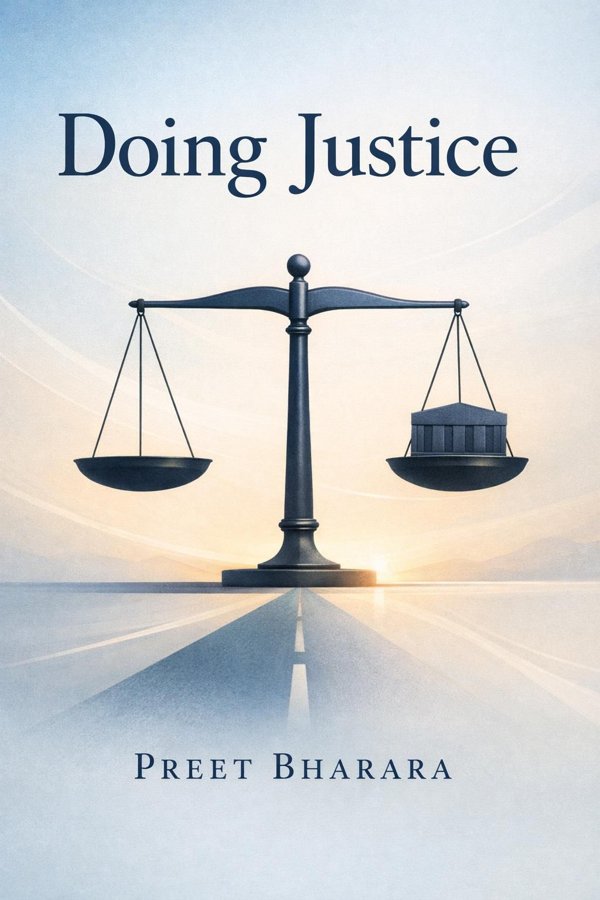
Doing Justice: A Prosecutor’s Thoughts on Crime and the Rule of Law: Summary & Key Insights
 10 min9 chaptersAudio available
What Is Doing Justice: A Prosecutor’s Thoughts on Crime and the Rule of Law About?
Doing Justice: A Prosecutor’s Thoughts on Crime and the Rule of Law by Preet Bharara is a law_crime book spanning 9 pages. In this book, former U.S. Attorney for the Southern District of New York Preet Bharara offers an insider’s view of the American justice system. Drawing on his years of experience prosecuting cases involving corruption, terrorism, and financial crime, Bharara explores how justice is pursued, the ethical dilemmas faced by prosecutors, and the importance of fairness and integrity in upholding the rule of law.
This FizzRead summary covers all 9 key chapters of Doing Justice: A Prosecutor’s Thoughts on Crime and the Rule of Law in approximately 10 minutes, distilling the most important ideas, arguments, and takeaways from Preet Bharara's work. Also available as an audio summary and Key Quotes Podcast.
Doing Justice: A Prosecutor’s Thoughts on Crime and the Rule of Law
In this book, former U.S. Attorney for the Southern District of New York Preet Bharara offers an insider’s view of the American justice system. Drawing on his years of experience prosecuting cases involving corruption, terrorism, and financial crime, Bharara explores how justice is pursued, the ethical dilemmas faced by prosecutors, and the importance of fairness and integrity in upholding the rule of law.
Who Should Read Doing Justice: A Prosecutor’s Thoughts on Crime and the Rule of Law?
This book is perfect for anyone interested in law_crime and looking to gain actionable insights in a short read. Whether you're a student, professional, or lifelong learner, the key ideas from Doing Justice: A Prosecutor’s Thoughts on Crime and the Rule of Law by Preet Bharara will help you think differently.
- ✓Readers who enjoy law_crime and want practical takeaways
- ✓Professionals looking to apply new ideas to their work and life
- ✓Anyone who wants the core insights of Doing Justice: A Prosecutor’s Thoughts on Crime and the Rule of Law in just 10 minutes
Want the full summary?
Get instant access to this book summary and 100K+ more with Fizz Moment.
Get Free SummaryAvailable on App Store • Free to download
Key Chapters
In public life, prosecutors often appear as forces of retribution — the people who secure convictions, bring down criminals, and deliver the dramatic courtroom finale. But that image misses the deeper truth. The prosecutor’s job is not to convict; it is to seek justice. That means acknowledging doubt, admitting mistakes, and sometimes declining to charge even when you can.
When I first became a prosecutor, I learned quickly that power can distort judgment if not tempered by humility. Every decision to indict affects a human life, a family, a community. The phrase 'doing justice' sounds noble, but in practice, it requires moral restraint. To wield prosecutorial power wisely means to remember that our oath is to fairness, not to victory. In my office, I often told young assistants that we are not just lawyers for the government; we are guardians of the rule of law, entrusted with the public’s faith.
Seeking justice also means knowing how fragile that faith is. The people must believe that the system belongs to them — that whether rich or poor, connected or powerless, they will be treated fairly. That belief is what sustains democracy. And every time a prosecutor abuses discretion, hides evidence, or acts for career rather than conscience, that trust erodes a little more. I wrote these chapters to remind readers — and myself — that justice carries a moral dimension that transcends legal codes.
Fairness sounds simple until you try to live by it. I’ve seen defendants break down under the weight of evidence, victims who crave vengeance more than truth, and jurors who struggle to separate emotion from reason. In these moments, fairness is both our compass and our test.
In one case from my office, a young man faced prison for a relatively small crime. By the letter of the law, conviction was easy — but his background, circumstances, and remorse demanded more thoughtful justice. It was there I realized that fairness is often about seeing the whole person, not just the act.
For prosecutors, fairness demands transparency and honesty. In evidence gathering, it means turning over material that might weaken your own case, simply because that is what justice requires. Fairness also demands patience — the ability to pause before judgment, to question one’s own assumptions. Too many miscarriages of justice occur not from malice, but from haste.
I often told my team: fairness is not weakness. It’s the hardest form of strength, because it requires us to balance empathy with responsibility. The greatest satisfaction a prosecutor can feel is not when a sentence is handed down, but when the outcome — whether conviction or acquittal — feels right, measured, and true.
+ 7 more chapters — available in the FizzRead app
All Chapters in Doing Justice: A Prosecutor’s Thoughts on Crime and the Rule of Law
About the Author
Preet Bharara is an American lawyer, author, and former U.S. Attorney for the Southern District of New York. Known for his high-profile prosecutions of Wall Street executives and public officials, he has become a prominent voice on issues of justice, ethics, and governance.
Get This Summary in Your Preferred Format
Read or listen to the Doing Justice: A Prosecutor’s Thoughts on Crime and the Rule of Law summary by Preet Bharara anytime, anywhere. FizzRead offers multiple formats so you can learn on your terms — all free.
Available formats: App · Audio · PDF · EPUB — All included free with FizzRead
Download Doing Justice: A Prosecutor’s Thoughts on Crime and the Rule of Law PDF and EPUB Summary
Key Quotes from Doing Justice: A Prosecutor’s Thoughts on Crime and the Rule of Law
“In public life, prosecutors often appear as forces of retribution — the people who secure convictions, bring down criminals, and deliver the dramatic courtroom finale.”
“Fairness sounds simple until you try to live by it.”
Frequently Asked Questions about Doing Justice: A Prosecutor’s Thoughts on Crime and the Rule of Law
Doing Justice: A Prosecutor’s Thoughts on Crime and the Rule of Law by Preet Bharara is a law_crime book that explores key ideas across 9 chapters. In this book, former U.S. Attorney for the Southern District of New York Preet Bharara offers an insider’s view of the American justice system. Drawing on his years of experience prosecuting cases involving corruption, terrorism, and financial crime, Bharara explores how justice is pursued, the ethical dilemmas faced by prosecutors, and the importance of fairness and integrity in upholding the rule of law.
You Might Also Like
Abortion and the Law in America: Roe v. Wade to the Present
Mary Ziegler
10 min
Black Edge: Inside Information, Dirty Money, and the Quest to Bring Down the Most Wanted Man on Wall Street
Sheelah Kolhatkar
10 min
Blood Feud: The Man Who Blew the Whistle on One of the Deadliest Prescription Drugs Ever
Kathleen Sharp
10 min
Catch and Kill: Lies, Spies, and a Conspiracy to Protect Predators
Ronan Farrow
10 min
Chaos: Charles Manson, the CIA, and the Secret History of the Sixties
Tom O'Neill with Dan Piepenbring
10 min
Code and Other Laws of Cyberspace
Lawrence Lessig
10 minBrowse by Category
Ready to read Doing Justice: A Prosecutor’s Thoughts on Crime and the Rule of Law?
Get the full summary and 100K+ more books with Fizz Moment.