
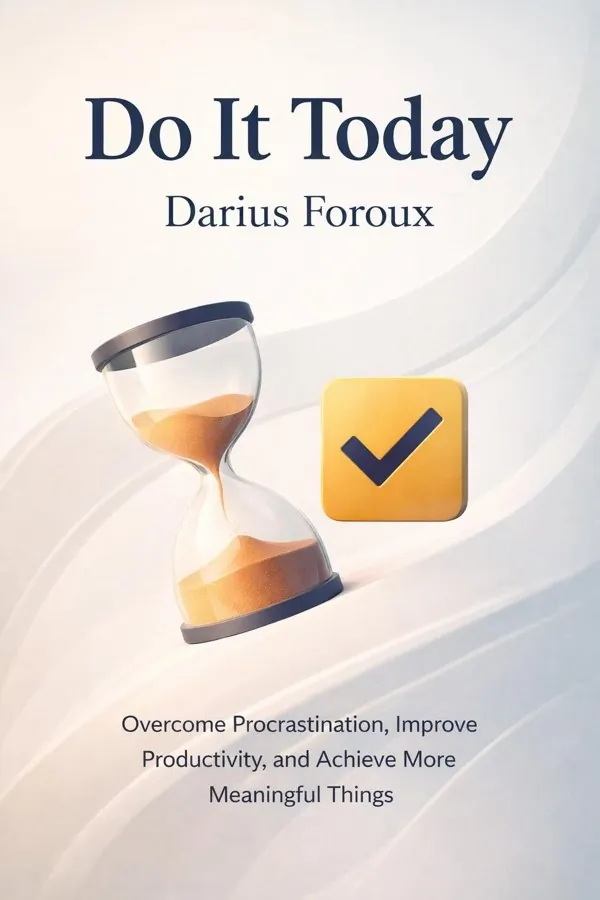
Do It Today: Overcome Procrastination, Improve Productivity, and Achieve More Meaningful Things: Summary & Key Insights
 10 min9 chaptersAudio available
Key Takeaways from Do It Today: Overcome Procrastination, Improve Productivity, and Achieve More Meaningful Things
Most procrastination does not begin with laziness; it begins with ambiguity.
A common myth says you must feel inspired before you can do meaningful work.
Busyness can look like ambition, but it often hides avoidance.
People often see discipline as harsh, restrictive, or joyless.
Complexity is seductive because it feels sophisticated, but it often weakens execution.
What Is Do It Today: Overcome Procrastination, Improve Productivity, and Achieve More Meaningful Things About?
Do It Today: Overcome Procrastination, Improve Productivity, and Achieve More Meaningful Things by Darius Foroux is a productivity book. Why do we postpone the work that matters most, even when we know delay makes life harder? In Do It Today, Darius Foroux tackles that familiar struggle with a direct, practical message: procrastination is not a personality trait or a permanent flaw, but a habit that can be replaced by better thinking, clearer priorities, and consistent action. Rather than offering flashy hacks or unrealistic promises, Foroux focuses on everyday discipline, intentional living, and the small behaviors that create long-term results. The book matters because modern life rewards busyness while quietly draining attention. Notifications, endless options, and low-value obligations make it easy to feel productive without actually making progress. Foroux argues that meaningful work requires simplicity, self-awareness, and the courage to act before we feel perfectly ready. His advice is grounded in personal experience, years of writing about productivity, and a no-nonsense philosophy that values action over theory. For readers who feel stuck, distracted, or overwhelmed, Do It Today offers a useful reset. It is a practical guide to doing less, focusing more, and building a life shaped by deliberate effort instead of delay.
This FizzRead summary covers all 9 key chapters of Do It Today: Overcome Procrastination, Improve Productivity, and Achieve More Meaningful Things in approximately 10 minutes, distilling the most important ideas, arguments, and takeaways from Darius Foroux's work. Also available as an audio summary and Key Quotes Podcast.
Do It Today: Overcome Procrastination, Improve Productivity, and Achieve More Meaningful Things
Why do we postpone the work that matters most, even when we know delay makes life harder? In Do It Today, Darius Foroux tackles that familiar struggle with a direct, practical message: procrastination is not a personality trait or a permanent flaw, but a habit that can be replaced by better thinking, clearer priorities, and consistent action. Rather than offering flashy hacks or unrealistic promises, Foroux focuses on everyday discipline, intentional living, and the small behaviors that create long-term results.
The book matters because modern life rewards busyness while quietly draining attention. Notifications, endless options, and low-value obligations make it easy to feel productive without actually making progress. Foroux argues that meaningful work requires simplicity, self-awareness, and the courage to act before we feel perfectly ready. His advice is grounded in personal experience, years of writing about productivity, and a no-nonsense philosophy that values action over theory.
For readers who feel stuck, distracted, or overwhelmed, Do It Today offers a useful reset. It is a practical guide to doing less, focusing more, and building a life shaped by deliberate effort instead of delay.
Who Should Read Do It Today: Overcome Procrastination, Improve Productivity, and Achieve More Meaningful Things?
This book is perfect for anyone interested in productivity and looking to gain actionable insights in a short read. Whether you're a student, professional, or lifelong learner, the key ideas from Do It Today: Overcome Procrastination, Improve Productivity, and Achieve More Meaningful Things by Darius Foroux will help you think differently.
- ✓Readers who enjoy productivity and want practical takeaways
- ✓Professionals looking to apply new ideas to their work and life
- ✓Anyone who wants the core insights of Do It Today: Overcome Procrastination, Improve Productivity, and Achieve More Meaningful Things in just 10 minutes
Want the full summary?
Get instant access to this book summary and 100K+ more with Fizz Moment.
Get Free SummaryAvailable on App Store • Free to download
Key Chapters
Most procrastination does not begin with laziness; it begins with ambiguity. When a task feels vague, emotionally uncomfortable, or too large to define, the mind looks for an escape. That escape often appears in harmless forms: checking email, reorganizing notes, reading one more article, or waiting for the “right mood.” Darius Foroux’s core insight is that delay is often a decision problem before it becomes a discipline problem.
The book emphasizes that people postpone work not only because it is difficult, but because they have not clearly decided what must be done, why it matters, and when it will happen. A task like “write report” feels heavy and abstract. A task like “draft the introduction from 9:00 to 9:30” is concrete and easier to start. This shift matters because action usually follows clarity. The brain resists uncertainty, but it handles defined steps much better.
Foroux encourages readers to stop negotiating endlessly with themselves. If something is worth doing, set a time, make the task smaller, and begin before your emotions start arguing. This applies to fitness, studying, creative work, and even difficult conversations. Instead of saying, “I should exercise more,” decide, “I will walk for 20 minutes after lunch.” Instead of “I need to work on my business,” decide, “I will contact three potential clients before noon.”
The practical power of this idea lies in reducing friction. Clarity lowers resistance, and lower resistance increases the chances of follow-through. You do not need perfect motivation to begin; you need a specific next step.
Actionable takeaway: Turn every important task into a visible, scheduled, first step you can start in under five minutes.
A common myth says you must feel inspired before you can do meaningful work. Foroux turns that idea upside down. Motivation often arrives after you begin, not before. Waiting to feel ready is one of the most expensive habits in a person’s life because it gives your emotions authority over your future.
The book repeatedly suggests that movement creates momentum. Once you start a task, your mind adjusts. Resistance drops, focus increases, and the work becomes less intimidating than it appeared from a distance. This is why beginning is often the hardest part. Not because the entire task is impossible, but because the first few minutes require crossing the threshold from intention to action.
Consider someone who wants to write but keeps saying they are not in the right mindset. If they commit to writing one paragraph, they often end up writing a page. The same pattern applies to studying, exercise, and administrative work. A person who dreads cleaning can tell themselves they will organize one shelf. A student avoiding revision can begin with five practice questions. Progress builds belief, and belief builds consistency.
Foroux’s broader message is that discipline is more reliable than mood. Motivation is useful, but it is unstable. Discipline is quieter, less exciting, and far more dependable. People who make progress in the long run are not necessarily the most inspired; they are often the ones who learned to act despite fluctuating emotions.
This idea can be especially liberating for people who think their lack of motivation means something is wrong with them. Often, nothing is wrong. They simply need to stop treating emotion as a prerequisite.
Actionable takeaway: When you feel unmotivated, commit to just five minutes of focused work and let momentum do the rest.
Busyness can look like ambition, but it often hides avoidance. One of the strongest ideas in Do It Today is that productivity is not about squeezing more into a day; it is about identifying what truly matters and protecting it. If everything feels urgent, nothing receives meaningful attention. Foroux argues that a productive life starts with honest prioritization.
Many people fill their schedules with low-value tasks because these tasks are easier, socially rewarded, or immediately measurable. Answering messages, attending unnecessary meetings, and handling minor requests can create the illusion of progress. Yet deep work, health, relationships, and long-term goals are often the first things sacrificed. The tragedy is that people often realize too late that they were efficient at the wrong things.
Foroux invites readers to ask harder questions: What actually deserves my time? Which activities move my life forward? What am I saying yes to that quietly pulls me away from what matters? This way of thinking requires courage because prioritizing means excluding. You cannot give full attention to every opportunity, obligation, and distraction.
In practical terms, this may mean limiting meetings, saying no to projects that do not align with your goals, or scheduling your most important work before reactive tasks begin. A professional might reserve the first two hours of the day for strategy instead of email. A student might protect study blocks before social commitments. A parent might choose fewer optional activities to create space for health and family presence.
Priorities are not real until they appear in your calendar and behavior. What you repeatedly make time for becomes your life.
Actionable takeaway: Choose your top three priorities for this season of life and structure your week so those come first, not last.
People often see discipline as harsh, restrictive, or joyless. Foroux presents it differently: discipline is a form of self-respect. It means keeping promises to yourself, acting in line with your values, and refusing to let temporary impulses decide the direction of your life. In that sense, discipline is not punishment. It is personal leadership.
The book suggests that every small act of follow-through strengthens identity. When you wake up on time, finish what you started, train when you said you would, or stop wasting hours on trivial distractions, you send yourself a message: I can trust myself. That trust compounds. Conversely, repeated self-betrayal weakens confidence. If you constantly delay, quit, or avoid, your goals begin to feel less believable.
This is why discipline matters beyond productivity. It affects self-image. A disciplined person is not someone who never struggles; it is someone who acts despite struggle. Foroux does not recommend extreme routines for the sake of appearances. Instead, he argues for consistent standards. Go to bed at a reasonable time. Show up when you said you would. Finish essential tasks. Limit habits that drain your mind and body.
For example, someone trying to improve their health does not need a perfect program. They need a repeatable plan: exercise three times a week, prepare basic meals, and stop making excuses every evening. Someone building a side business may need to work one focused hour every morning, even when progress feels slow.
Discipline becomes easier when it is tied to identity rather than force. You are not merely doing tasks. You are becoming the kind of person who can be counted on.
Actionable takeaway: Pick one daily promise to keep for the next 30 days and treat it as proof that you are building self-trust.
Complexity is seductive because it feels sophisticated, but it often weakens execution. In Do It Today, Foroux repeatedly favors simplicity over cluttered systems, endless planning, and overcomplicated routines. The more moving parts you create, the easier it becomes to stall, forget, or give up. Simplicity is not lack of ambition; it is a strategy for sustainable progress.
Many people respond to procrastination by adding more tools: new apps, better notebooks, longer to-do lists, color-coded calendars, and detailed frameworks. But if the underlying issue is avoidance, these systems can become a distraction in themselves. Organizing work is not the same as doing work. Foroux’s message is refreshing because it returns the reader to basics: know what matters, define the next action, and execute consistently.
Simplicity also reduces decision fatigue. If you know your morning starts with reading, planning, and one important task, you spend less energy choosing what to do. If you have a small number of priorities, saying no becomes easier. If your environment contains fewer distractions, focus improves naturally.
A simple approach might include a short daily plan with three essential tasks, a fixed work block without notifications, and a weekly review to correct course. A simple health routine might be walking, strength training, and basic meals rather than chasing the perfect diet. A simple writing habit might be 500 words every morning rather than waiting for weekend inspiration.
The point is not to make life rigid. It is to remove needless friction. Simple systems are easier to remember, easier to repeat, and easier to trust when life becomes busy.
Actionable takeaway: Remove one unnecessary tool, habit, or commitment this week so your most important work becomes easier to start and sustain.
People love breakthroughs, but life is usually changed by repetition. Foroux stresses that meaningful results rarely come from rare bursts of intensity. They come from ordinary actions performed consistently over long periods. This idea is powerful because it shifts attention away from perfection and toward durability.
Many readers procrastinate because they imagine success requires huge effort, ideal conditions, or total life transformation. That belief makes starting harder. If progress only counts when it is dramatic, most days feel inadequate. Foroux rejects that mindset. Writing a page, saving a small amount of money, reading ten pages, walking daily, or making one sales call may seem modest, but over time these actions reshape outcomes.
This principle works because habits compound. A person who studies one hour every day will often outperform someone who crams unpredictably. A writer who produces 300 words daily can finish substantial work in months. Someone who invests small amounts regularly builds financial strength more effectively than someone waiting for the perfect moment. Daily consistency also lowers emotional pressure. You no longer need heroic effort to feel productive; you simply need to show up.
Importantly, small gains are not an excuse for mediocrity. They are the foundation of mastery. Great results often look impressive in public but are built privately through repetition. The challenge is staying committed when progress is not yet visible.
Foroux reminds readers that consistency is a competitive advantage because most people stop when results are slow. The person who keeps going gains momentum others never reach.
Actionable takeaway: Choose one meaningful habit and make it so small and repeatable that you can maintain it even on busy, imperfect days.
Short-term comfort is often the enemy of long-term satisfaction. One of Foroux’s most important themes is that procrastination is not just delaying a task; it is repeatedly choosing present ease over future benefit. A meaningful life requires the ability to think beyond immediate feelings and make decisions that serve the person you want to become.
This long-term mindset changes how you interpret daily choices. Skipping exercise may feel insignificant today, but repeated often it affects health, energy, and confidence. Avoiding difficult work may create temporary relief, but it slows career growth and deepens stress. Spending impulsively may feel rewarding in the moment, but it limits future freedom. The reverse is also true: studying, saving, building skills, and maintaining health can feel inconvenient now while creating profound rewards later.
Foroux encourages readers to see discipline as an investment. You are not just doing unpleasant tasks; you are building a better future. This perspective makes sacrifice easier because it connects effort to identity and purpose. It also brings perspective to setbacks. Missing one workout or having one unproductive day does not define you. What matters is the long pattern.
A practical application is asking a simple question before a decision: Will this help or hurt me a year from now? That question can clarify choices about work, habits, spending, relationships, and learning. It pulls you out of emotional immediacy and into strategic living.
People who think long term make calmer choices because they are less controlled by urgency and impulse. They understand that today is shaping tomorrow whether they act intentionally or not.
Actionable takeaway: Before making a major daily choice, ask which option your future self will thank you for, then act on that answer.
It is possible to become highly efficient and still feel empty. Foroux does not treat productivity as an end in itself. His deeper argument is that productivity should support a meaningful life, not create a faster treadmill. Doing more only matters if what you do is aligned with your values, growth, and contribution.
This distinction is crucial because many people chase productivity to gain control, approval, or status, only to discover they are organized around goals they do not truly care about. A full calendar can hide a hollow direction. Foroux’s message invites readers to connect output with purpose. Why are you working so hard? What kind of life are you building? Which efforts feel significant rather than merely urgent?
Meaning can come from many sources: creating something useful, supporting a family, building mastery, serving others, improving health, or living with integrity. The exact answer differs by person, but the principle remains the same. Productivity is valuable when it helps you live deliberately. It becomes harmful when it turns you into a machine for endless tasks.
In practical terms, this may mean reducing work that pays well but drains your spirit, spending more time on projects with long-term significance, or protecting time for reflection so you do not drift into achievement without fulfillment. A manager may choose to develop people rather than obsess only over metrics. A freelancer may focus on meaningful clients instead of chasing every opportunity. A student may study not just for grades, but to build competence for a future contribution.
When meaning leads, discipline becomes easier because effort serves something larger than obligation.
Actionable takeaway: Write down why your current goals matter to you personally, and remove at least one recurring task that adds busyness without meaning.
All Chapters in Do It Today: Overcome Procrastination, Improve Productivity, and Achieve More Meaningful Things
About the Author
Darius Foroux is a Dutch author, entrepreneur, and productivity writer known for his practical ideas on self-improvement, habits, wealth, and meaningful living. He has built an international audience through his books, essays, and newsletter, where he shares concise lessons on discipline, decision-making, focus, and long-term thinking. His work stands out for its direct style and emphasis on simple principles that can be applied immediately in daily life. Rather than relying on hype or complicated systems, Foroux encourages readers to live intentionally, act consistently, and take responsibility for their time and choices. Through titles on productivity and personal growth, he has become a trusted voice for readers seeking clear, actionable guidance in a distracted world.
Get This Summary in Your Preferred Format
Read or listen to the Do It Today: Overcome Procrastination, Improve Productivity, and Achieve More Meaningful Things summary by Darius Foroux anytime, anywhere. FizzRead offers multiple formats so you can learn on your terms — all free.
Available formats: App · Audio · PDF · EPUB — All included free with FizzRead
Download Do It Today: Overcome Procrastination, Improve Productivity, and Achieve More Meaningful Things PDF and EPUB Summary
Key Quotes from Do It Today: Overcome Procrastination, Improve Productivity, and Achieve More Meaningful Things
“Most procrastination does not begin with laziness; it begins with ambiguity.”
“A common myth says you must feel inspired before you can do meaningful work.”
“Busyness can look like ambition, but it often hides avoidance.”
“People often see discipline as harsh, restrictive, or joyless.”
“Complexity is seductive because it feels sophisticated, but it often weakens execution.”
Frequently Asked Questions about Do It Today: Overcome Procrastination, Improve Productivity, and Achieve More Meaningful Things
Do It Today: Overcome Procrastination, Improve Productivity, and Achieve More Meaningful Things by Darius Foroux is a productivity book that explores key ideas across 9 chapters. Why do we postpone the work that matters most, even when we know delay makes life harder? In Do It Today, Darius Foroux tackles that familiar struggle with a direct, practical message: procrastination is not a personality trait or a permanent flaw, but a habit that can be replaced by better thinking, clearer priorities, and consistent action. Rather than offering flashy hacks or unrealistic promises, Foroux focuses on everyday discipline, intentional living, and the small behaviors that create long-term results. The book matters because modern life rewards busyness while quietly draining attention. Notifications, endless options, and low-value obligations make it easy to feel productive without actually making progress. Foroux argues that meaningful work requires simplicity, self-awareness, and the courage to act before we feel perfectly ready. His advice is grounded in personal experience, years of writing about productivity, and a no-nonsense philosophy that values action over theory. For readers who feel stuck, distracted, or overwhelmed, Do It Today offers a useful reset. It is a practical guide to doing less, focusing more, and building a life shaped by deliberate effort instead of delay.
More by Darius Foroux

You Might Also Like


Browse by Category
Ready to read Do It Today: Overcome Procrastination, Improve Productivity, and Achieve More Meaningful Things?
Get the full summary and 100K+ more books with Fizz Moment.