
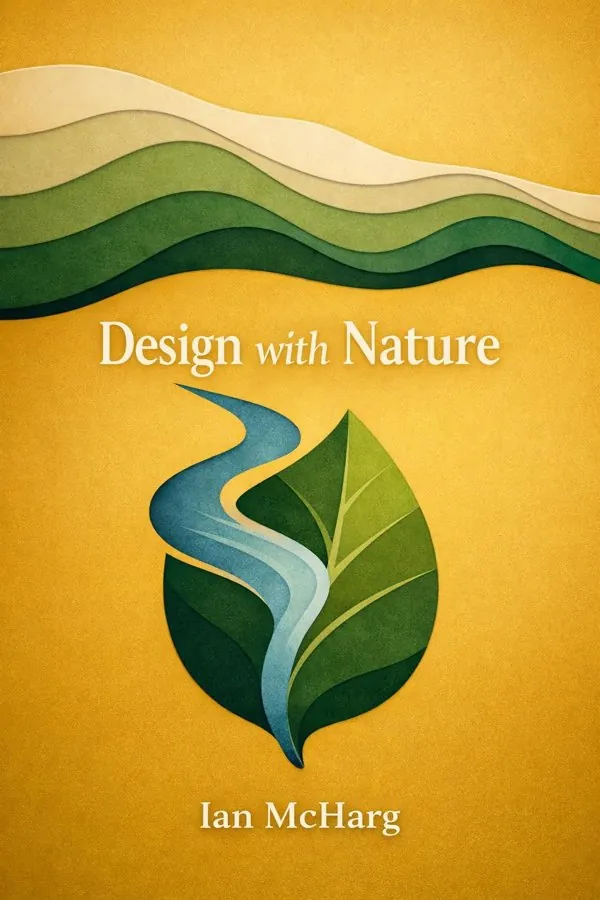
Design with Nature: Summary & Key Insights
by Ian McHarg
 10 min10 chaptersAudio available
What Is Design with Nature About?
Design with Nature by Ian McHarg is a environment book spanning 10 pages. Design with Nature es una obra fundamental en el campo de la planificación ambiental y el diseño del paisaje. Ian McHarg propone un enfoque ecológico para el desarrollo urbano y rural, integrando los procesos naturales en la toma de decisiones de diseño. El libro introduce métodos de análisis de capas y mapas que permiten evaluar el impacto ambiental y guiar la planificación sostenible.
This FizzRead summary covers all 10 key chapters of Design with Nature in approximately 10 minutes, distilling the most important ideas, arguments, and takeaways from Ian McHarg's work. Also available as an audio summary and Key Quotes Podcast.
Design with Nature
Design with Nature es una obra fundamental en el campo de la planificación ambiental y el diseño del paisaje. Ian McHarg propone un enfoque ecológico para el desarrollo urbano y rural, integrando los procesos naturales en la toma de decisiones de diseño. El libro introduce métodos de análisis de capas y mapas que permiten evaluar el impacto ambiental y guiar la planificación sostenible.
Who Should Read Design with Nature?
This book is perfect for anyone interested in environment and looking to gain actionable insights in a short read. Whether you're a student, professional, or lifelong learner, the key ideas from Design with Nature by Ian McHarg will help you think differently.
- ✓Readers who enjoy environment and want practical takeaways
- ✓Professionals looking to apply new ideas to their work and life
- ✓Anyone who wants the core insights of Design with Nature in just 10 minutes
Want the full summary?
Get instant access to this book summary and 100K+ more with Fizz Moment.
Get Free SummaryAvailable on App Store • Free to download
Key Chapters
Throughout human history, our relationship with nature has oscillated between reverence and exploitation. In the earliest societies—agricultural, pastoral, and tribal—humans perceived themselves as part of a living system. They worshiped rivers, trees, and mountains, seeing in them the pulse of life itself. Their settlements and rituals were expressions of harmony with natural rhythms, respecting seasonal cycles and geographic constraints.
The industrial revolution disrupted this reverent balance. Mechanization transformed land into mere resource, and the notion of dominion over nature replaced mutual dependence. Cities sprawled over fertile valleys and wetlands, industries polluted air and streams, and the landscape was reshaped for short-term convenience rather than long-term vitality. The result was not progress but imbalance. The modern world, in its technological triumph, paradoxically began to destroy the very environments that made its prosperity possible.
In recounting this history, I do not seek nostalgia but clarity. The industrial age’s separation of man from nature led to degraded soils, vanishing habitats, and lifeless cities. The earlier harmony between humanity and the biosphere was not primitive—it was sustainable. My aim is to recover that sense of belonging while applying the intelligence and tools of modern science. We must reawaken our ecological awareness and integrate it into every decision we make about design and development.
Understanding this historical context is essential because it reminds us that the path forward is not an invention but a restoration—a rediscovery of principles we once understood intuitively. We should neither reject industry nor retreat into idealized pasts. Instead, the challenge is to marry art, technology, and ecology into a new synthesis—one that acknowledges history but transcends its mistakes. Only by learning from our past can we design our future in harmony with nature.
At the heart of ecological design lies a moral imperative: the recognition that we are part of nature, not outside of it. This insight carries ethical weight because design decisions are not neutral—they shape the destiny of landscapes, species, and future generations. In *Design with Nature*, I propose an ecological ethic that stems from stewardship—a deliberate, responsible participation in the life processes of the Earth.
Humanity has always sought meaning in its relationship to the world. Ancient philosophers, from Aristotle to Laozi, spoke of balance, of a cosmos where order arises from harmony among diverse forces. Modern society, however, has fractured this unity, placing humans above or beyond nature. Such arrogance blinds us to the truth that our civilization depends on natural systems for air, water, food, and climate regulation. The philosophical foundation of ecological planning is the humility to acknowledge this dependence and the wisdom to honor it.
Ecological design, then, is not merely technical—it is ethical and aesthetic. The designer is not just an engineer but a moral agent who must ask, "What is the right way to live with this place?" This question leads inevitably to the principle of fitting design to the ecological character of land. In practice, this means that each site, each watershed, each region has intrinsic qualities that suggest appropriate forms of human use. To ignore these is to invite disaster; to respect them is to foster diversity, resilience, and beauty.
I find that the philosophical grounding of this work transforms the designer’s role. We cease to be manipulators of fixed resources and become participants in evolving ecosystems. We act out of reverence, not utility. In design conducted with nature, ethics and aesthetics converge—what is morally sound is often beautiful, because beauty arises from harmony among living things.
+ 8 more chapters — available in the FizzRead app
All Chapters in Design with Nature
About the Author
Ian McHarg (1920–2001) fue un arquitecto paisajista y urbanista escocés-estadounidense, reconocido por su trabajo pionero en planificación ecológica. Fundó el Departamento de Arquitectura del Paisaje en la Universidad de Pensilvania y fue una figura clave en el movimiento de diseño ambiental.
Get This Summary in Your Preferred Format
Read or listen to the Design with Nature summary by Ian McHarg anytime, anywhere. FizzRead offers multiple formats so you can learn on your terms — all free.
Available formats: App · Audio · PDF · EPUB — All included free with FizzRead
Download Design with Nature PDF and EPUB Summary
Key Quotes from Design with Nature
“Throughout human history, our relationship with nature has oscillated between reverence and exploitation.”
“At the heart of ecological design lies a moral imperative: the recognition that we are part of nature, not outside of it.”
Frequently Asked Questions about Design with Nature
Design with Nature by Ian McHarg is a environment book that explores key ideas across 10 chapters. Design with Nature es una obra fundamental en el campo de la planificación ambiental y el diseño del paisaje. Ian McHarg propone un enfoque ecológico para el desarrollo urbano y rural, integrando los procesos naturales en la toma de decisiones de diseño. El libro introduce métodos de análisis de capas y mapas que permiten evaluar el impacto ambiental y guiar la planificación sostenible.
You Might Also Like
A Life on Our Planet: My Witness Statement and a Vision for the Future
David Attenborough
10 min
A Sky Full Of Birds
Matt Merritt
10 min
Carbon Zero: Imagining Cities That Can Save the Planet
Alex Steffen
10 min
Eaarth: Making a Life on a Tough New Planet
Bill McKibben
10 min
The Social Contract and Environmental Governance
Various Editors
10 min
The Wild Places
Robert Macfarlane
10 minBrowse by Category
Ready to read Design with Nature?
Get the full summary and 100K+ more books with Fizz Moment.