
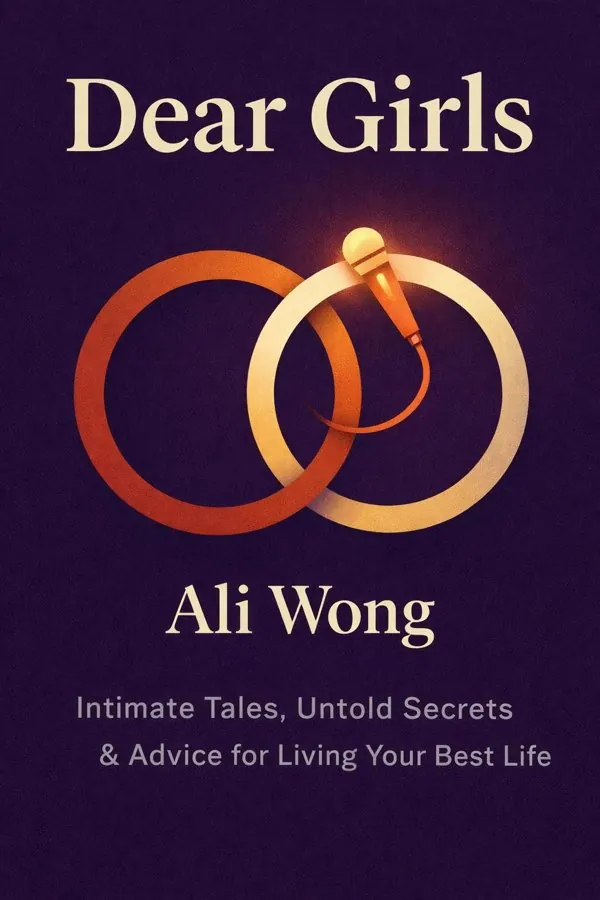
Dear Girls: Intimate Tales, Untold Secrets & Advice for Living Your Best Life: Summary & Key Insights
by Ali Wong
 10 min9 chaptersAudio available
Key Takeaways from Dear Girls: Intimate Tales, Untold Secrets & Advice for Living Your Best Life
Much of who we become is formed long before we think we are making independent choices.
A successful life rarely follows the respectable script people write for you.
Humor is not just entertainment; it is a strategy for surviving discomfort without becoming consumed by it.
Romantic relationships are often judged by appearances, but Wong argues through experience that real partnership depends on candor, negotiation, and mutual respect.
Becoming a mother can transform your life without erasing the person you were before children.
What Is Dear Girls: Intimate Tales, Untold Secrets & Advice for Living Your Best Life About?
Dear Girls: Intimate Tales, Untold Secrets & Advice for Living Your Best Life by Ali Wong is a biographies book spanning 12 pages. Dear Girls is part memoir, part advice book, and part long-form stand-up set addressed to Ali Wong’s daughters. Written as a series of candid letters, it moves beyond celebrity storytelling to reveal the messy, ambitious, and often contradictory life behind Wong’s public persona. She writes about growing up in San Francisco in an immigrant family, struggling through the early years of comedy, dating, marriage, pregnancy, money, identity, and the strange pressures of modern success. What makes the book compelling is not just that Wong is funny, but that she is willing to be embarrassingly honest about desire, insecurity, family expectations, and the trade-offs required to build a life on her own terms. Her authority comes from lived experience: she is not offering polished inspiration from a distance, but hard-won perspective from someone who fought for a place in an unforgiving industry while navigating motherhood and cultural expectations. The result is a memoir that entertains while also asking serious questions about ambition, gender, race, and what it means to tell the truth about your life.
This FizzRead summary covers all 9 key chapters of Dear Girls: Intimate Tales, Untold Secrets & Advice for Living Your Best Life in approximately 10 minutes, distilling the most important ideas, arguments, and takeaways from Ali Wong's work. Also available as an audio summary and Key Quotes Podcast.
Dear Girls: Intimate Tales, Untold Secrets & Advice for Living Your Best Life
Dear Girls is part memoir, part advice book, and part long-form stand-up set addressed to Ali Wong’s daughters. Written as a series of candid letters, it moves beyond celebrity storytelling to reveal the messy, ambitious, and often contradictory life behind Wong’s public persona. She writes about growing up in San Francisco in an immigrant family, struggling through the early years of comedy, dating, marriage, pregnancy, money, identity, and the strange pressures of modern success. What makes the book compelling is not just that Wong is funny, but that she is willing to be embarrassingly honest about desire, insecurity, family expectations, and the trade-offs required to build a life on her own terms. Her authority comes from lived experience: she is not offering polished inspiration from a distance, but hard-won perspective from someone who fought for a place in an unforgiving industry while navigating motherhood and cultural expectations. The result is a memoir that entertains while also asking serious questions about ambition, gender, race, and what it means to tell the truth about your life.
Who Should Read Dear Girls: Intimate Tales, Untold Secrets & Advice for Living Your Best Life?
This book is perfect for anyone interested in biographies and looking to gain actionable insights in a short read. Whether you're a student, professional, or lifelong learner, the key ideas from Dear Girls: Intimate Tales, Untold Secrets & Advice for Living Your Best Life by Ali Wong will help you think differently.
- ✓Readers who enjoy biographies and want practical takeaways
- ✓Professionals looking to apply new ideas to their work and life
- ✓Anyone who wants the core insights of Dear Girls: Intimate Tales, Untold Secrets & Advice for Living Your Best Life in just 10 minutes
Want the full summary?
Get instant access to this book summary and 100K+ more with Fizz Moment.
Get Free SummaryAvailable on App Store • Free to download
Key Chapters
Much of who we become is formed long before we think we are making independent choices. In Dear Girls, Ali Wong shows how her upbringing in a Vietnamese-Chinese-American family in San Francisco shaped her sense of humor, discipline, and ambition. As the youngest of four children, she grew up surrounded by strong personalities, high expectations, and a family culture that valued achievement. Her father, a successful anesthesiologist, represented stability and professional prestige, while her mother’s immigrant journey added another layer of sacrifice, resilience, and practicality.
Wong does not present family as a simple source of comfort. Instead, she shows how family can be both a foundation and a pressure system. The expectations placed on children of immigrants are often unspoken but intense: do well, work hard, make the sacrifices worth it, and do not embarrass the family. Those forces can create guilt, but they can also produce remarkable inner drive. Wong’s comedy emerges partly from this tension. She learned to observe people closely, endure discomfort, and turn contradiction into material.
Her story illustrates a practical truth: understanding your roots helps you understand your habits. If you chase approval, fear failure, or constantly try to prove yourself, those patterns likely have a history. Rather than rejecting that history, Wong mines it for insight and even gratitude. She recognizes that her family gave her both the conflicts and the tools that later powered her career.
Actionable takeaway: Spend time identifying three family messages you absorbed about success, identity, and self-worth, then decide which ones still serve the life you want to build.
A successful life rarely follows the respectable script people write for you. Wong’s path from UCLA student to stand-up comic shows that reinvention often begins when you stop confusing obedience with purpose. Like many children raised in achievement-focused households, she initially followed a conventional route. Education mattered. Respectability mattered. The appearance of having a sensible future mattered. But over time, she realized that external approval could not replace inner conviction.
Her move into comedy was not a neat act of destiny. It was risky, socially confusing, and professionally uncertain. Stand-up offered no guarantees, especially for an Asian American woman entering a field historically dominated by men. Yet Wong’s story makes clear that talent is often discovered through action rather than certainty. She did not wait until she felt fully ready or universally supported. She started, learned, bombed, adjusted, and kept going.
This idea has broad application. Many people remain stuck because they think passion must arrive as a perfect revelation. Wong demonstrates the opposite. Clarity can emerge through experimentation. A person may begin with curiosity, tolerate awkwardness, and slowly build a life that once seemed unrealistic. Reinvention is not always dramatic; sometimes it is simply the repeated choice to take your own desires seriously.
The lesson is especially powerful for readers trapped between duty and authenticity. Wong does not glamorize rebellion for its own sake. She shows that choosing an unconventional path requires stamina, humility, and a willingness to look foolish for a long time.
Actionable takeaway: Choose one area of your life where you are following a script out of habit, and take one concrete step this week toward the version of work or identity you actually want.
Humor is not just entertainment; it is a strategy for surviving discomfort without becoming consumed by it. Throughout Dear Girls, Wong reveals how comedy helped her process rejection, family absurdity, cultural confusion, and the humiliation built into ambitious careers. Stand-up forced her to convert private embarrassment into shared recognition. A joke works when something painful becomes speakable.
Her early years in comedy were not glamorous. She faced unstable gigs, low pay, relentless competition, and the exhausting requirement to prove herself repeatedly. Those struggles were intensified by racial and gender stereotypes. Instead of pretending those obstacles did not exist, she incorporated them into her comedic worldview. She learned that honesty, when sharpened by timing and perspective, could become power. This is one reason her voice feels distinct: she does not sanitize life before turning it into material.
The practical insight here extends beyond performance. Most people carry experiences they try to hide because they seem awkward, unfair, or too personal. Wong’s example suggests that reframing those experiences can restore agency. You may not become a comedian, but you can learn to narrate your life differently. A failed job interview can become a lesson in self-knowledge. A family conflict can reveal old patterns. A humiliating mistake can become a story you own instead of a shame you bury.
Humor also creates connection. People trust those who can speak frankly about imperfection. Wong’s comedy works because it allows audiences to laugh at realities they often feel pressured to conceal.
Actionable takeaway: Take one frustrating or embarrassing experience from your past month and rewrite it as a story with a lesson, a punchline, or a clearer meaning.
Romantic relationships are often judged by appearances, but Wong argues through experience that real partnership depends on candor, negotiation, and mutual respect. In Dear Girls, her reflections on dating and marriage are funny, unfiltered, and often deliberately provocative, yet beneath the jokes is a serious idea: intimacy becomes stronger when people stop performing ideal versions of themselves.
Wong writes about attraction, commitment, money, and ambition with unusual bluntness. She refuses the fantasy that love erases practical concerns. Instead, she highlights how relationships are shaped by class background, career timing, emotional maturity, and each partner’s willingness to see the other clearly. Her marriage is not presented as a fairy tale but as a human arrangement between flawed adults making choices together.
One of the book’s more valuable contributions is its treatment of marriage as an evolving partnership rather than a fixed achievement. Success in love is not simply finding the right person; it is continuing to tell the truth as circumstances change. Career breakthroughs, pregnancy, exhaustion, and public attention all test a relationship differently than courtship does. Wong’s humor makes these realities easier to face, but she does not soften them.
Readers can apply this lesson by examining where they confuse peace with avoidance. Many couples try to preserve harmony by hiding needs, resentment, or ambition. Wong suggests that this strategy fails over time. Better to be respectfully direct than quietly dishonest. A relationship can survive discomfort more easily than it can survive pretense.
Actionable takeaway: Identify one important topic you have been softening or avoiding in a close relationship, and start an honest conversation about it with clarity instead of performance.
Becoming a mother can transform your life without erasing the person you were before children. That tension lies at the heart of Dear Girls. Wong writes to her daughters not as a saintly maternal figure but as a full human being with appetites, fears, ambitions, and contradictions. Her honesty challenges the sentimental narratives often imposed on motherhood.
Pregnancy, childbirth, and parenting are described with both tenderness and raw comedy. Wong discusses the physical demands, career complications, and emotional adjustments that come with motherhood, especially for women trying to remain professionally ambitious. Rather than pretending that maternal fulfillment solves every inner conflict, she shows how parenting can intensify questions about identity. Who are you when your body, schedule, and priorities are no longer fully your own? How do you care for children without disappearing into duty?
What makes her perspective especially useful is that she resists the false choice between devotion and selfhood. She clearly loves her daughters, yet she also wants them to know that their mother had a whole life before and beyond them. That message matters because many women are conditioned to feel selfish for protecting ambition, pleasure, or creative work after becoming parents. Wong reframes that instinct. Children benefit from seeing adults who are loving and fully alive, not merely sacrificial.
This lesson applies to anyone navigating a major life role, whether parenthood, marriage, or caregiving. New responsibilities should deepen identity, not flatten it. Preserving some continuity with your earlier self is not a failure to adapt; it is part of remaining whole.
Actionable takeaway: If a major role has consumed your identity, reclaim one meaningful practice, goal, or interest that reminds you who you are outside that role.
People often speak about representation in broad, abstract terms, but Wong’s memoir shows that it becomes powerful when it remains personal and specific. As an Asian American woman in comedy, she entered a space where few people with her background had been given full permission to be loud, sexual, angry, ambitious, and messy in public. Rather than trying to become universally acceptable, she built a voice from the details of her own experience.
This specificity is exactly why her work resonates so widely. She writes about immigrant parents, interracial and intra-Asian dynamics, body politics, money anxieties, and the subtle negotiations of belonging. These experiences are culturally grounded, yet the emotions inside them are recognizable to many readers: wanting approval, resisting stereotypes, feeling split between worlds, and trying to define yourself rather than be defined.
Wong’s example challenges a common misconception that underrepresented voices must make themselves more neutral to reach mainstream audiences. In fact, authenticity often travels farther than generic messaging. The more clearly she names the tensions in her life, the more readers and viewers can locate themselves in them. Representation, then, is not about acting as a flawless symbol for a group. It is about expanding what kinds of stories and personalities are allowed to exist publicly.
For readers, this means your perspective has value even if it does not match dominant norms. You do not have to flatten your history to be relatable. Whether in art, leadership, or everyday conversation, precision can create connection.
Actionable takeaway: Tell one story from your background in a more detailed and unfiltered way than usual, and notice how specificity makes your voice stronger rather than narrower.
Public success is often mistaken for sudden success, but Wong makes clear that breakthroughs are usually the visible tip of a very long private effort. By the time audiences saw her become widely known through Netflix specials and larger acting opportunities, she had already spent years writing, performing, traveling, failing, refining, and building resilience. Dear Girls reminds readers that the glamorous moment usually arrives after the unglamorous season most people never witness.
This matters because modern culture encourages distorted timelines. We see a person become famous, publish a hit book, or launch a successful company and assume their rise was quick. Wong’s account restores the missing middle: the grind of small clubs, the compromises of early career work, the uncertainty of being talented without yet being established. These years are not dead time. They are the training ground where voice, discipline, and stamina are formed.
Her story also highlights the role of mentors, peers, and professional relationships. Careers are not built in isolation. Encouragement, collaboration, and strategic opportunities can accelerate growth, but only when someone has put in enough effort to be ready for them. Wong’s rise was not accidental luck; it was preparation meeting visibility.
For readers pursuing any ambitious goal, the lesson is both sobering and hopeful. Slow progress does not mean you are on the wrong path. It may mean you are still in the apprenticeship stage. The key is to keep producing, improving, and staying in motion long enough for your work to compound.
Actionable takeaway: Measure your progress by consistency instead of immediate recognition, and commit to a repeatable practice that strengthens your craft each week.
Many people assume the solution to burnout is wanting less, but Wong’s memoir suggests a more realistic answer: protect your energy without apologizing for ambition. Throughout Dear Girls, she writes openly about the collision between work, marriage, parenting, and public life. She does not pretend balance is a stable achievement. It is an ongoing series of negotiations shaped by timing, support, money, and priorities.
What stands out is her refusal to frame ambition as a moral flaw in women. Society often praises women for competence but punishes them for visible hunger. Wong pushes against that by owning her drive. At the same time, she acknowledges that drive alone is not enough. Without boundaries, ambition can become depletion. Success brings opportunity, but it also creates new demands: travel, publicity, expectations, and the pressure to remain relevant. Managing those demands requires choices about what to accept, what to delegate, and what season of life you are currently in.
This idea applies far beyond entertainment. Anyone trying to build a meaningful career while sustaining relationships faces similar tensions. The goal is not perfect equilibrium every day. It is intentional trade-offs. Some periods will be work-heavy; others will require stepping back. Problems arise when decisions are made passively, through guilt or default, instead of consciously.
Wong’s example encourages readers to reject the fantasy that they must choose between success and humanity. You can be deeply ambitious and still need rest, support, and limits. Boundaries do not weaken desire; they make it sustainable.
Actionable takeaway: List the three biggest drains on your energy right now and set one practical boundary around time, communication, or responsibility to protect what matters most.
One reason Dear Girls stands out from many memoirs is that Wong refuses to separate feminism from the realities of sex, money, status, and personal desire. She writes in a way that can feel shocking, but the provocation serves a purpose: it exposes how often women are expected to sound enlightened while hiding their actual motives, fantasies, and frustrations. Her honesty creates a more complicated and therefore more useful picture of female adulthood.
Wong’s discussions of sexuality, marriage, and gender roles are rarely neat or ideological. She is interested in what people actually do, want, resent, and negotiate. That does not mean every confession should be treated as universal truth, but it does mean lived experience deserves space alongside moral theory. Feminism, in her telling, is not about performing correctness. It is about securing the freedom to speak frankly and live with greater agency.
This perspective has practical value because many people are disconnected from their own desires. They know what they should want according to family, culture, or politics, but not what they truly value. Wong demonstrates that self-knowledge can be uncomfortable. You may discover ambitions that seem unfeminine, vulnerabilities that seem embarrassing, or contradictions that do not fit a clean identity. Still, honesty is better than self-deception.
The larger message is that maturity requires a direct relationship with power: who has it, who wants it, and how it influences intimacy and work. Avoiding these questions does not make them disappear.
Actionable takeaway: Write down one desire, ambition, or resentment you usually edit out of your self-image, and examine what becomes possible when you acknowledge it without shame.
All Chapters in Dear Girls: Intimate Tales, Untold Secrets & Advice for Living Your Best Life
About the Author
Ali Wong is an American stand-up comedian, actress, writer, and producer known for her fearless, sharply observed comedy about race, gender, sex, marriage, and motherhood. Born in San Francisco, she grew up in a Vietnamese-Chinese-American family, an experience that has deeply shaped both her humor and storytelling. Wong gained widespread recognition through her Netflix stand-up specials Baby Cobra and Hard Knock Wife, which established her as one of the most distinctive comic voices of her generation. She has also worked in television and film as both a performer and writer. In Dear Girls, Wong brings the same honesty and boldness that define her comedy to a memoir that is intimate, outrageous, and unexpectedly reflective, offering readers a vivid look at the life behind her public success.
Get This Summary in Your Preferred Format
Read or listen to the Dear Girls: Intimate Tales, Untold Secrets & Advice for Living Your Best Life summary by Ali Wong anytime, anywhere. FizzRead offers multiple formats so you can learn on your terms — all free.
Available formats: App · Audio · PDF · EPUB — All included free with FizzRead
Download Dear Girls: Intimate Tales, Untold Secrets & Advice for Living Your Best Life PDF and EPUB Summary
Key Quotes from Dear Girls: Intimate Tales, Untold Secrets & Advice for Living Your Best Life
“Much of who we become is formed long before we think we are making independent choices.”
“A successful life rarely follows the respectable script people write for you.”
“Humor is not just entertainment; it is a strategy for surviving discomfort without becoming consumed by it.”
“Romantic relationships are often judged by appearances, but Wong argues through experience that real partnership depends on candor, negotiation, and mutual respect.”
“Becoming a mother can transform your life without erasing the person you were before children.”
Frequently Asked Questions about Dear Girls: Intimate Tales, Untold Secrets & Advice for Living Your Best Life
Dear Girls: Intimate Tales, Untold Secrets & Advice for Living Your Best Life by Ali Wong is a biographies book that explores key ideas across 9 chapters. Dear Girls is part memoir, part advice book, and part long-form stand-up set addressed to Ali Wong’s daughters. Written as a series of candid letters, it moves beyond celebrity storytelling to reveal the messy, ambitious, and often contradictory life behind Wong’s public persona. She writes about growing up in San Francisco in an immigrant family, struggling through the early years of comedy, dating, marriage, pregnancy, money, identity, and the strange pressures of modern success. What makes the book compelling is not just that Wong is funny, but that she is willing to be embarrassingly honest about desire, insecurity, family expectations, and the trade-offs required to build a life on her own terms. Her authority comes from lived experience: she is not offering polished inspiration from a distance, but hard-won perspective from someone who fought for a place in an unforgiving industry while navigating motherhood and cultural expectations. The result is a memoir that entertains while also asking serious questions about ambition, gender, race, and what it means to tell the truth about your life.
You Might Also Like

An American Marriage
Tayari Jones
10 min
Benjamin Franklin: An American Life
Walter Isaacson
10 min
I Know Why The Caged Bird Sings
Maya Angelou
10 min
Long Walk to Freedom
Nelson Mandela
10 min
Persepolis
Marjane Satrapi
10 min
Surely You're Joking, Mr. Feynman!
Richard P. Feynman
10 minBrowse by Category
Ready to read Dear Girls: Intimate Tales, Untold Secrets & Advice for Living Your Best Life?
Get the full summary and 100K+ more books with Fizz Moment.