
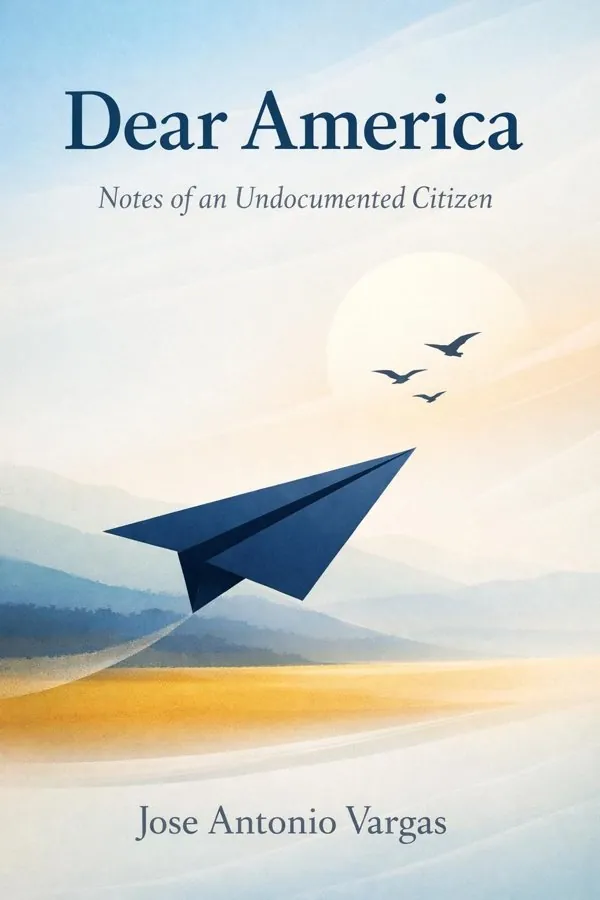
Dear America: Notes of an Undocumented Citizen: Summary & Key Insights
 10 min8 chaptersAudio available
Key Takeaways from Dear America: Notes of an Undocumented Citizen
A country can label you illegal, but that label can never contain a whole human life.
The burden of a secret is not limited to the moments when you speak or hide it; it reorganizes your entire way of living.
You can belong to a place emotionally, culturally, and socially without being granted legal membership in it.
Success can look inspiring from the outside while masking fear, exhaustion, and impossible tradeoffs underneath.
The stories a nation tells determine which lives it sees clearly and which lives it keeps at a distance.
What Is Dear America: Notes of an Undocumented Citizen About?
Dear America: Notes of an Undocumented Citizen by Jose Antonio Vargas is a biographies book. Dear America: Notes of an Undocumented Citizen is Jose Antonio Vargas’s deeply personal and politically urgent memoir about living in the United States without legal immigration status. More than a memoir, it is a meditation on identity, belonging, race, work, language, secrecy, and the emotional cost of being told that the country you love does not fully recognize you. Vargas recounts his journey from the Philippines to America as a child, the shock of discovering he was undocumented as a teenager, and the years he spent building a successful career as a journalist while carrying a life-defining secret. The book matters because it humanizes a debate that is often reduced to slogans, laws, and statistics. Vargas does not argue from abstraction; he writes from lived experience, showing how immigration policy shapes education, family life, mental health, and the everyday choices people make simply to survive. As a Pulitzer Prize-winning journalist and founder of Define American, Vargas brings both investigative rigor and emotional honesty to the page, making this an essential read for anyone who wants to understand immigration in America beyond headlines and politics.
This FizzRead summary covers all 8 key chapters of Dear America: Notes of an Undocumented Citizen in approximately 10 minutes, distilling the most important ideas, arguments, and takeaways from Jose Antonio Vargas's work. Also available as an audio summary and Key Quotes Podcast.
Dear America: Notes of an Undocumented Citizen
Dear America: Notes of an Undocumented Citizen is Jose Antonio Vargas’s deeply personal and politically urgent memoir about living in the United States without legal immigration status. More than a memoir, it is a meditation on identity, belonging, race, work, language, secrecy, and the emotional cost of being told that the country you love does not fully recognize you. Vargas recounts his journey from the Philippines to America as a child, the shock of discovering he was undocumented as a teenager, and the years he spent building a successful career as a journalist while carrying a life-defining secret. The book matters because it humanizes a debate that is often reduced to slogans, laws, and statistics. Vargas does not argue from abstraction; he writes from lived experience, showing how immigration policy shapes education, family life, mental health, and the everyday choices people make simply to survive. As a Pulitzer Prize-winning journalist and founder of Define American, Vargas brings both investigative rigor and emotional honesty to the page, making this an essential read for anyone who wants to understand immigration in America beyond headlines and politics.
Who Should Read Dear America: Notes of an Undocumented Citizen?
This book is perfect for anyone interested in biographies and looking to gain actionable insights in a short read. Whether you're a student, professional, or lifelong learner, the key ideas from Dear America: Notes of an Undocumented Citizen by Jose Antonio Vargas will help you think differently.
- ✓Readers who enjoy biographies and want practical takeaways
- ✓Professionals looking to apply new ideas to their work and life
- ✓Anyone who wants the core insights of Dear America: Notes of an Undocumented Citizen in just 10 minutes
Want the full summary?
Get instant access to this book summary and 100K+ more with Fizz Moment.
Get Free SummaryAvailable on App Store • Free to download
Key Chapters
A country can label you illegal, but that label can never contain a whole human life. One of the most powerful ideas in Dear America is that legal status is only one part of identity, even when it becomes the part the world fixates on. Vargas shows how he was a student, a son, a friend, a journalist, and an ambitious young man long before he fully understood what being undocumented meant. Yet once he discovered the truth, the word undocumented began to overshadow every other part of his life. The book asks readers to notice how society flattens people into categories and how damaging that simplification can be.
Vargas explains that identity is layered: he is Filipino, American in culture, undocumented in law, gay, and a public storyteller. These layers do not neatly fit into standard political narratives. That complexity is exactly the point. Immigration debates often demand easy labels, but real lives are untidy and emotionally complicated. By describing how he felt American in every practical sense while being denied legal recognition, Vargas reveals the gap between lived belonging and official belonging.
This idea applies far beyond immigration. In schools, workplaces, and communities, people are often reduced to a single trait: job title, income level, race, nationality, or diagnosis. Vargas’s story encourages a broader, more humane way of seeing others. A teacher might view a struggling student not as a problem but as a person carrying hidden pressures. An employer might understand that paperwork does not capture talent, loyalty, or character.
Actionable takeaway: When you meet someone, resist defining them by the most visible label. Ask what experiences, loyalties, and struggles make up the rest of their story.
The burden of a secret is not limited to the moments when you speak or hide it; it reorganizes your entire way of living. Vargas demonstrates this with striking clarity as he describes the years he spent concealing his undocumented status. Secrecy affected where he could go, what jobs he could take, whom he trusted, how he interpreted danger, and how much of himself he allowed others to know. It was not merely a fact he withheld. It became a system of self-protection that touched every decision.
The memoir shows secrecy as both survival strategy and emotional prison. Vargas had to become hyperaware, always calculating risk. A routine form, a driver’s license request, an airport checkpoint, or a question about family could suddenly become threatening. This constant vigilance produced anxiety and isolation. Even while succeeding professionally, he was never fully free. The hidden truth kept him from experiencing ordinary security.
Vargas also reveals how secrecy can distort relationships. When people must hide a core part of themselves, intimacy becomes difficult. Friends may know fragments but not the whole. Family bonds become strained by guilt, sacrifice, and silence. The undocumented experience is therefore not only legal or economic; it is psychological and relational.
Many readers will recognize a broader version of this pattern. People hide debt, illness, trauma, sexuality, addiction, or family history because they fear stigma. The lesson is not that disclosure is always simple or safe, but that chronic hiding carries real costs. Institutions that punish vulnerability often create cultures of fear.
Actionable takeaway: Notice where secrecy may be shaping your choices or someone else’s. If you are in a position of trust, create conditions where honesty feels safer than concealment.
You can belong to a place emotionally, culturally, and socially without being granted legal membership in it. Vargas returns repeatedly to this painful contradiction. He grew up in the United States, absorbed its language and values, worked in its institutions, and invested his talents in its public life. In every everyday sense, he was American. But legally, he remained excluded. Dear America asks readers to sit with the unsettling truth that citizenship and belonging do not always align.
This distinction matters because political debates often treat citizenship as the sole test of whether someone deserves concern, voice, or dignity. Vargas challenges that assumption. He describes classrooms, neighborhoods, newsrooms, and social rituals through which people build attachment to a country. Those attachments are real. They are formed through memory, contribution, and participation, not just documents. His life shows that belonging can be earned socially long before it is recognized legally.
At the same time, Vargas does not romanticize belonging. Feeling American did not shield him from vulnerability. It made the exclusion hurt more. To love a country that does not fully accept you creates a special kind of heartbreak. That is why the book resonates so strongly: it reveals the emotional stakes of policy decisions often discussed in detached terms.
This idea can reshape how communities respond to newcomers. Schools can treat immigrant students as members from day one rather than temporary outsiders. Employers can acknowledge cultural contribution alongside compliance concerns. Neighbors can ask not only who has papers, but who shows up, participates, and cares.
Actionable takeaway: In your own community, define belonging by participation, relationship, and shared responsibility, not only by official status.
The stories a nation tells determine which lives it sees clearly and which lives it keeps at a distance. As a journalist, Vargas is uniquely positioned to examine not only immigration itself but also how immigration is framed in the media. He understands that public opinion is shaped by language, images, and storytelling choices. Are immigrants portrayed as threats, statistics, victims, workers, neighbors, or fellow citizens-in-waiting? Each frame invites a different moral response.
In Dear America, Vargas pushes back against reductive coverage that turns undocumented people into abstractions. Policy language can sound neutral while hiding human consequences. News cycles often focus on border drama, elections, or legal battles while neglecting the lived reality of growing up undocumented: school forms, financial barriers, family separation, anxiety, and the longing to live openly. By telling his own story, Vargas reclaims narrative power. He insists that undocumented people should not merely be discussed; they should be heard.
This insight has broad relevance in the digital age. Whether the subject is immigration, poverty, policing, or health care, framing affects empathy. A headline can narrow understanding before a reader reaches the first paragraph. That means audiences carry responsibility too. We are not passive consumers of narrative. We can question language, seek firsthand accounts, and notice when complex people are being flattened into symbols.
Practically, this can change how we read and share information. Before reposting a story, ask whose perspective is included and whose is missing. In classrooms or organizations, pair policy analysis with personal testimony. Better narratives do not replace facts; they make the meaning of facts visible.
Actionable takeaway: Become a more critical reader by paying attention to how people are framed, and seek stories that restore complexity and humanity.
Love does not always arrive in clean, comforting forms; sometimes it is bound up with distance, sacrifice, abandonment, and impossible choices. Vargas’s story is inseparable from his family history, particularly his relationship with his mother and the relatives who helped bring him to the United States. Dear America refuses sentimental simplicity. It shows how migration can fracture families even when it is motivated by hope. The very act meant to create opportunity can also produce longing, resentment, confusion, and grief.
Vargas writes about being sent from the Philippines to America as a child, a decision rooted in love and ambition but experienced by him as separation and dislocation. The book captures how children often bear the emotional cost of adult decisions they do not understand. As he grows older, his feelings toward his mother become layered: devotion, hurt, admiration, anger, and need. This complexity is one of the memoir’s emotional strengths. It reminds readers that immigrant family stories are not only about aspiration; they are also about rupture.
The lesson extends beyond immigration. Families frequently carry contradictions. Parents may make harmful decisions while trying to provide. Children may feel gratitude and pain at the same time. Honest storytelling makes room for both realities. Vargas shows that maturity involves resisting easy heroes and villains, especially in family life.
For readers, this can offer a practical model for empathy. Instead of forcing your family history into a neat narrative, you can acknowledge mixed emotions without treating them as betrayal. In conversations, this means allowing others to describe their families in layered terms rather than demanding a single moral conclusion.
Actionable takeaway: If your family story is complicated, practice naming both the love and the hurt. Complexity is not disloyalty; it is honesty.
Telling the truth about your life can be personally risky, but it can also transform private pain into public action. A central turning point in Vargas’s life was his decision to publicly reveal that he was undocumented. Dear America explores the fear behind that choice and the freedom that followed. By becoming visible, he moved from silent survival to active advocacy. His story illustrates how personal disclosure can challenge stigma, shift public debate, and create space for others to speak.
Visibility, however, is not presented as simple bravery. Vargas is careful to show that not everyone can safely come forward. Public openness can bring backlash, surveillance, employment consequences, and emotional strain. That nuance matters. The book does not romanticize vulnerability. Instead, it argues that when visibility is possible, it can expose the gap between stereotypes and reality. A Pulitzer Prize-winning journalist did not fit the caricatures many people held about undocumented immigrants. His life forced the public to confront its assumptions.
This insight applies to many movements for social change. Whether involving mental health, disability, sexuality, race, or immigration, visibility often shifts issues from abstract policy to human recognition. One person’s honest testimony can make denial harder. It can also help isolated people realize they are not alone.
In practical terms, organizations can learn from this by creating platforms for lived experience rather than speaking only through experts. Individuals can support visibility without demanding disclosure from others. Allyship means protecting people’s agency, not pressuring them into exposure.
Actionable takeaway: Use personal stories ethically and strategically. If you have the safety to speak, your honesty may widen public understanding; if you do not, support others’ visibility without forcing your own.
A nation reveals itself not by the ideals it proclaims, but by whom it excludes while proclaiming them. Throughout Dear America, Vargas frames his memoir as a direct address to the country itself. This choice turns the book into more than autobiography. It becomes an ethical challenge to America’s self-image. The United States celebrates freedom, opportunity, diversity, and merit, yet it depends on and benefits from millions of people whose lives remain insecure and unrecognized. Vargas asks what it means for a democracy to rely on people it refuses to fully welcome.
The memoir argues that immigration is not a side issue separate from American identity; it is central to it. Vargas’s life exposes contradictions around race, labor, legality, and national belonging. He notes that many undocumented people are deeply embedded in American institutions, economies, and communities. They are here not in theory but in practice, shaping the country every day. The refusal to acknowledge this reality creates hypocrisy and harm.
Importantly, Vargas does not write simply to accuse. He writes to provoke reflection. What kind of country does America want to be? One governed by fear and exclusion, or one capable of aligning its policies with its professed values? That question remains urgent for lawmakers, voters, educators, and employers alike.
Readers can apply this framework in their own civic lives. Instead of treating national values as slogans, test them against actual practices. If you believe in equality, ask where systems deny it. If you believe in opportunity, ask who is blocked from accessing it. Democracy improves when ideals are measured by outcomes.
Actionable takeaway: Evaluate institutions by how well they treat the vulnerable, and let that standard guide your politics, leadership, and everyday choices.
All Chapters in Dear America: Notes of an Undocumented Citizen
About the Author
Jose Antonio Vargas is a Pulitzer Prize-winning journalist, Emmy-nominated filmmaker, and leading voice in the conversation about immigration and identity in America. Born in the Philippines, he moved to the United States as a child and later discovered that he was living in the country without legal immigration status. After building a successful journalism career, including work for The Washington Post, he publicly revealed that he was undocumented in a groundbreaking essay that reshaped national debate. Vargas later founded Define American, a nonprofit organization dedicated to changing the way immigrants are represented in media and culture. Through his writing, advocacy, and public speaking, he has become one of the most influential storytellers addressing citizenship, belonging, and what it means to be American.
Get This Summary in Your Preferred Format
Read or listen to the Dear America: Notes of an Undocumented Citizen summary by Jose Antonio Vargas anytime, anywhere. FizzRead offers multiple formats so you can learn on your terms — all free.
Available formats: App · Audio · PDF · EPUB — All included free with FizzRead
Download Dear America: Notes of an Undocumented Citizen PDF and EPUB Summary
Key Quotes from Dear America: Notes of an Undocumented Citizen
“A country can label you illegal, but that label can never contain a whole human life.”
“The burden of a secret is not limited to the moments when you speak or hide it; it reorganizes your entire way of living.”
“You can belong to a place emotionally, culturally, and socially without being granted legal membership in it.”
“Success can look inspiring from the outside while masking fear, exhaustion, and impossible tradeoffs underneath.”
“The stories a nation tells determine which lives it sees clearly and which lives it keeps at a distance.”
Frequently Asked Questions about Dear America: Notes of an Undocumented Citizen
Dear America: Notes of an Undocumented Citizen by Jose Antonio Vargas is a biographies book that explores key ideas across 8 chapters. Dear America: Notes of an Undocumented Citizen is Jose Antonio Vargas’s deeply personal and politically urgent memoir about living in the United States without legal immigration status. More than a memoir, it is a meditation on identity, belonging, race, work, language, secrecy, and the emotional cost of being told that the country you love does not fully recognize you. Vargas recounts his journey from the Philippines to America as a child, the shock of discovering he was undocumented as a teenager, and the years he spent building a successful career as a journalist while carrying a life-defining secret. The book matters because it humanizes a debate that is often reduced to slogans, laws, and statistics. Vargas does not argue from abstraction; he writes from lived experience, showing how immigration policy shapes education, family life, mental health, and the everyday choices people make simply to survive. As a Pulitzer Prize-winning journalist and founder of Define American, Vargas brings both investigative rigor and emotional honesty to the page, making this an essential read for anyone who wants to understand immigration in America beyond headlines and politics.
You Might Also Like

An American Marriage
Tayari Jones
10 min
Benjamin Franklin: An American Life
Walter Isaacson
10 min
I Know Why The Caged Bird Sings
Maya Angelou
10 min
Long Walk to Freedom
Nelson Mandela
10 min
Persepolis
Marjane Satrapi
10 min
Surely You're Joking, Mr. Feynman!
Richard P. Feynman
10 minBrowse by Category
Ready to read Dear America: Notes of an Undocumented Citizen?
Get the full summary and 100K+ more books with Fizz Moment.