
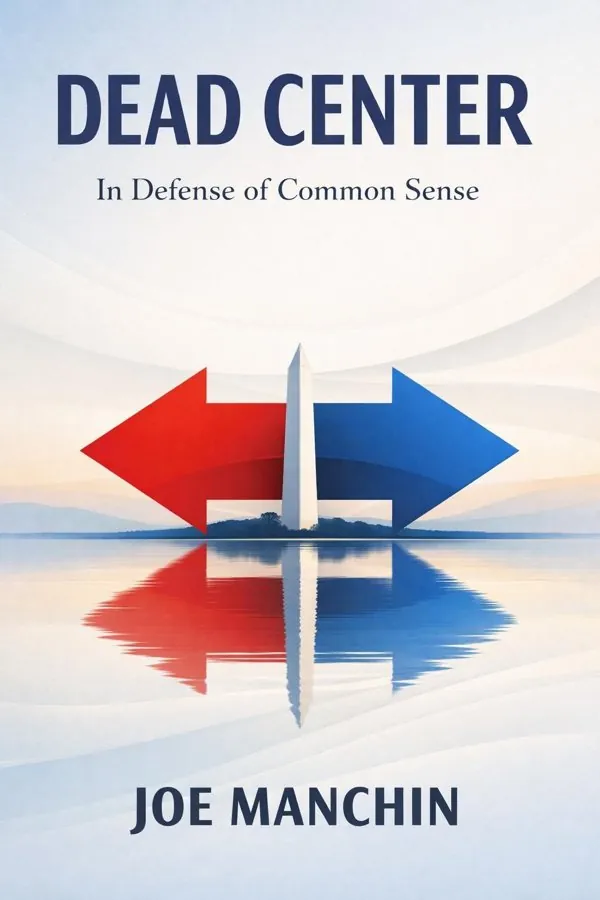
Dead Center: In Defense of Common Sense: Summary & Key Insights
by Joe Manchin
 10 min12 chaptersAudio available
What Is Dead Center: In Defense of Common Sense About?
Dead Center: In Defense of Common Sense by Joe Manchin is a biographies book spanning 12 pages. In this candid memoir, Senator Joe Manchin shares personal stories from his time in the U.S. Senate and the White House, offering insights into American politics and his philosophy of pragmatic governance. The book advocates for bipartisanship and common sense as a way to overcome political polarization and restore effective leadership in Washington.
This FizzRead summary covers all 12 key chapters of Dead Center: In Defense of Common Sense in approximately 10 minutes, distilling the most important ideas, arguments, and takeaways from Joe Manchin's work. Also available as an audio summary and Key Quotes Podcast.
Dead Center: In Defense of Common Sense
In this candid memoir, Senator Joe Manchin shares personal stories from his time in the U.S. Senate and the White House, offering insights into American politics and his philosophy of pragmatic governance. The book advocates for bipartisanship and common sense as a way to overcome political polarization and restore effective leadership in Washington.
Who Should Read Dead Center: In Defense of Common Sense?
This book is perfect for anyone interested in biographies and looking to gain actionable insights in a short read. Whether you're a student, professional, or lifelong learner, the key ideas from Dead Center: In Defense of Common Sense by Joe Manchin will help you think differently.
- ✓Readers who enjoy biographies and want practical takeaways
- ✓Professionals looking to apply new ideas to their work and life
- ✓Anyone who wants the core insights of Dead Center: In Defense of Common Sense in just 10 minutes
Want the full summary?
Get instant access to this book summary and 100K+ more with Fizz Moment.
Get Free SummaryAvailable on App Store • Free to download
Key Chapters
I was raised in a small coal town in West Virginia, where life was hard but honest. My family ran a little furniture store, and I learned early that service came before profit. When neighbors were in need, we didn’t ask about their politics; we asked how we could help. That’s where my notion of common sense governance was born.
There’s something deeply grounding about coming from a place where community ties run deeper than party lines. The people who raised me valued faith, hard work, and fairness. My parents and grandparents, immigrants who had known both struggle and success, taught me that being self-reliant didn’t mean you turned your back on others. Those values shaped my political philosophy long before I knew what the word meant. Even in moments when Washington seems like a different planet, I carry West Virginia with me—its grit, its decency, and its realism.
Every political decision I’ve made can be traced back to those earliest lessons. You learn empathy when you watch a community rally around a family whose mine has shut down. You learn to be practical when your neighbors’ livelihoods depend on industries that policymakers in Washington barely understand. For me, politics was never about ideology; it was about outcomes. That instinct to get things done started in that little corner of Appalachia—and it’s guided me every day since.
When I first ran for the West Virginia House of Delegates, I wasn’t thinking about power or prestige. I was thinking about potholes, teachers’ pay, and jobs. The people who sent me to Charleston weren’t interested in partisan warfare; they wanted potholes fixed and schools funded. That told me everything I needed to know about what real representation meant.
Serving as a state legislator and later as secretary of state and governor taught me one powerful truth: good governance requires listening. Too many leaders talk at people instead of with them. When I became governor, I didn’t stay behind a desk; I went to flood sites, classrooms, and coal plants. Leadership, I discovered, wasn’t about speeches—it was about showing up.
My years in Charleston gave me my deepest education in compromise. West Virginians didn’t want excuses; they wanted results. And results come only when you check your ego at the door and work with whoever’s willing. That approach worked in a state that swung politically between parties but maintained a deep commitment to community. It convinced me that if it could work there, it could work in Washington—though I had no idea how hard that lesson would be tested.
+ 10 more chapters — available in the FizzRead app
All Chapters in Dead Center: In Defense of Common Sense
About the Author
Joe Manchin is an American politician who served as a United States Senator from West Virginia. Known for his centrist views and efforts to bridge partisan divides, Manchin has been a prominent figure in U.S. politics, emphasizing practical solutions and cooperation across party lines.
Get This Summary in Your Preferred Format
Read or listen to the Dead Center: In Defense of Common Sense summary by Joe Manchin anytime, anywhere. FizzRead offers multiple formats so you can learn on your terms — all free.
Available formats: App · Audio · PDF · EPUB — All included free with FizzRead
Download Dead Center: In Defense of Common Sense PDF and EPUB Summary
Key Quotes from Dead Center: In Defense of Common Sense
“I was raised in a small coal town in West Virginia, where life was hard but honest.”
“When I first ran for the West Virginia House of Delegates, I wasn’t thinking about power or prestige.”
Frequently Asked Questions about Dead Center: In Defense of Common Sense
Dead Center: In Defense of Common Sense by Joe Manchin is a biographies book that explores key ideas across 12 chapters. In this candid memoir, Senator Joe Manchin shares personal stories from his time in the U.S. Senate and the White House, offering insights into American politics and his philosophy of pragmatic governance. The book advocates for bipartisanship and common sense as a way to overcome political polarization and restore effective leadership in Washington.
You Might Also Like

An American Marriage
Tayari Jones
10 min
Benjamin Franklin: An American Life
Walter Isaacson
10 min
I Know Why The Caged Bird Sings
Maya Angelou
10 min
Long Walk to Freedom
Nelson Mandela
10 min
Persepolis
Marjane Satrapi
10 min
Surely You're Joking, Mr. Feynman!
Richard P. Feynman
10 minBrowse by Category
Ready to read Dead Center: In Defense of Common Sense?
Get the full summary and 100K+ more books with Fizz Moment.