
The Mountain Is You vs The Way of the Superior Man: Which Should You Read?
A detailed comparison of The Mountain Is You by Brianna Wiest and The Way of the Superior Man by David Deida. Discover the key differences, strengths, and which book is right for you.
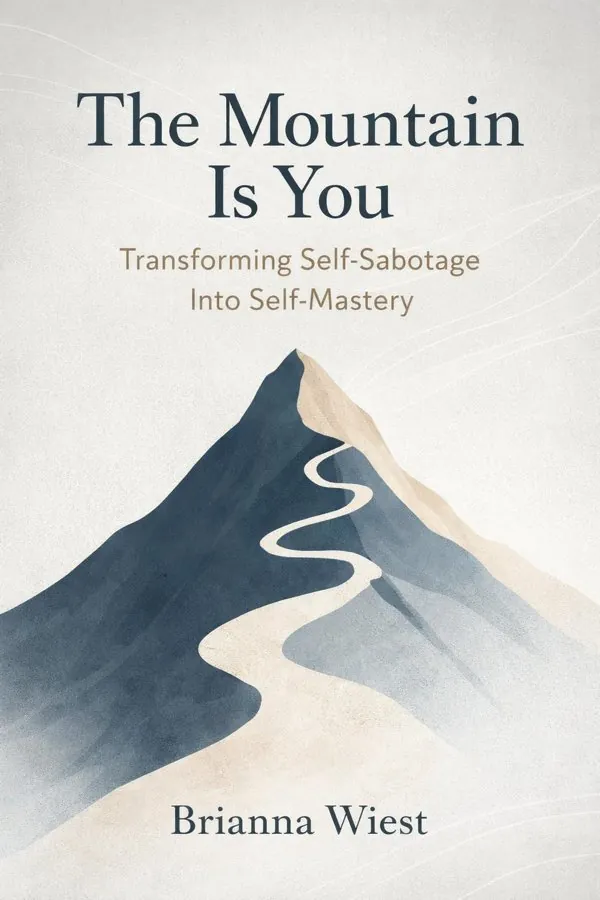
The Mountain Is You
The Way of the Superior Man
In-Depth Analysis
At a high level, The Mountain Is You by Brianna Wiest and The Way of the Superior Man by David Deida are both books about overcoming inner resistance. But they diagnose that resistance differently, speak to different readers, and imagine transformation through very different emotional tones. Wiest asks why people sabotage what they want and answers with a psychologically sympathetic model: the behaviors that block us often began as strategies of protection. Deida asks why men drift away from purpose and depth and answers with a spiritual-energetic challenge: they are choosing comfort over truth, presence, and mission.
The clearest distinction is in how each book explains the obstacle. In The Mountain Is You, self-sabotage is not mere weakness. Wiest repeatedly frames it as a learned adaptation. What looks like procrastination, inconsistency, perfectionism, or emotional volatility may actually be a nervous system trying to avoid pain, uncertainty, or exposure. This is why her emphasis on self-awareness matters so much: if the reader sees the behavior only as failure, nothing changes; if they see it as protection, they can begin to negotiate with it. The book’s insight about inner conflict—that one part of the self wants growth while another clings to familiar pain because it feels safer—is one of its strongest and most psychologically plausible ideas.
Deida, by contrast, is less interested in developmental explanation than in existential demand. In The Way of the Superior Man, fear and hesitation are not primarily analyzed as trauma responses to be decoded; they are treated as tests of whether a man will live aligned with his deepest purpose. His discussions of anxiety, thought, and mental habits all point back to the same standard: stop hiding, stop numbing, and stop waiting to act until you feel secure. That makes the book feel sharper and more urgent. For some readers, this is exactly the medicine they need. For others, it may bypass the real complexity of why avoidance develops in the first place.
Their writing styles reinforce these philosophies. Wiest writes with a therapeutic cadence. Even when she names hard truths, she does so in a language of healing and integration. Her sections on pain avoidance and emotional reactivity are meant to slow readers down and help them notice what they do when discomfort appears. She often suggests that change begins by staying present long enough to understand the pattern. Deida writes almost in commands. His style is distilled into provocations and principles: live your purpose now, tell the truth now, bring your full presence now. The short, aphoristic structure gives the book intensity, but it also means that nuance is often compressed or implied rather than carefully argued.
In practical terms, The Mountain Is You is better at helping a reader map their internal process. If someone keeps undermining relationships, abandoning goals, or cycling between motivation and collapse, Wiest offers a framework for identifying the hidden payoff of the behavior. For example, perfectionism may protect against shame, avoidance may protect against exposure, and emotional overreaction may protect against vulnerability. The practical move is not just “stop doing that,” but “understand what need the pattern has been serving, then build a healthier way to meet it.” That is slower but often more sustainable.
The Way of the Superior Man is more immediately behavior-shaping. Deida’s recurring message is that meaningful action should not be postponed until fear disappears. His sections on purpose, solitude, and reflection are especially strong because they identify a modern problem: many people remain confused not because they lack intelligence, but because they live amid too much noise and distraction to hear what actually matters to them. His prescription is less analytical and more devotional—create space, feel truth directly, and then act from it. In career terms, that may mean choosing mission over comfort. In relationship terms, it may mean refusing emotional evasiveness and showing up with steadiness and honesty.
The books also differ sharply on audience and worldview. Wiest’s framework is broad and largely universal. Anyone struggling with internal resistance can enter the book without first accepting a larger ideology. Deida, however, is inseparable from his language around masculinity, femininity, and sexual polarity. For receptive readers, this gives the book force and distinctiveness. It speaks to a hunger for direction that many generic self-help books blur away. But this same feature limits its reach. Some readers will find the gendered assumptions clarifying; others will find them dated, essentialist, or too narrow for modern relationship realities.
Neither book is especially rigorous in a scientific sense. Wiest sounds more psychologically grounded because she discusses defense patterns, emotional conditioning, and self-awareness in familiar therapeutic language, but the book is still more interpretive than research-driven. Deida is even more openly philosophical and spiritual. So the better question is not which is more evidence-based, but which lens is more useful for a given reader. If a reader needs self-compassion without self-excuse, Wiest is stronger. If a reader needs challenge without prolonged introspective looping, Deida is stronger.
Ultimately, these books are not opposites so much as they are different interventions. The Mountain Is You helps readers understand why they keep abandoning themselves. The Way of the Superior Man demands that readers stop abandoning themselves. Wiest is strongest on mechanism, emotional healing, and internal integration. Deida is strongest on conviction, immediacy, and purpose. One teaches readers how to make peace with the part of themselves that is afraid; the other teaches them to act from the part that already knows. The better book depends on whether the reader’s main problem is unprocessed inner conflict or chronic avoidance of decisive living.
Side-by-Side Comparison
| Aspect | The Mountain Is You | The Way of the Superior Man |
|---|---|---|
| Core Philosophy | The Mountain Is You argues that the main barriers to growth are internal patterns of self-sabotage rooted in old emotional adaptations. Brianna Wiest frames healing as a process of increasing self-awareness, feeling pain directly, and transforming protective behaviors into healthier responses. | The Way of the Superior Man centers on purposeful living, masculine integrity, and the disciplined practice of presence in work, love, and sex. David Deida’s philosophy pushes readers to stop waiting for comfort and instead align action with mission, truth, and polarity. |
| Writing Style | Wiest writes in a reflective, therapeutic, and reassuring voice that often sounds like an emotionally intelligent coach guiding readers through inner conflict. The prose is accessible and contemplative, with ideas organized around psychological reframing and healing. | Deida writes in a terse, aphoristic, and deliberately provocative style. His short chapters read like spiritual maxims or challenges, often prioritizing forceful impact over nuance, which can feel energizing to some readers and reductive to others. |
| Practical Application | The Mountain Is You is practical in the sense that it helps readers identify recurring patterns such as perfectionism, avoidance, emotional reactivity, and limiting beliefs. Its application tends to be inward-facing: observe triggers, reinterpret emotions, and build self-regulation over time. | The Way of the Superior Man offers practical guidance around decisive action, truth-telling, purpose, sexual energy, and relationship dynamics. Its advice is more behavioral and situational, urging readers to act immediately in career and intimacy rather than endlessly process. |
| Target Audience | Wiest’s book has broad appeal across gender, age, and life stage because self-sabotage and emotional avoidance are universal experiences. It especially suits readers who want a self-help book that feels emotionally validating rather than confrontational. | Deida explicitly addresses men, particularly men thinking about masculine purpose, romantic polarity, and spiritual discipline. It most strongly resonates with readers open to gender-essential language and less concerned with modern therapeutic framing. |
| Scientific Rigor | The Mountain Is You borrows from recognizable psychological ideas such as defense mechanisms, trauma-informed pattern recognition, and emotional conditioning, but it is not a research-heavy book. Its authority comes more from synthesis and emotional resonance than from formal evidence. | The Way of the Superior Man is even less anchored in empirical psychology, leaning instead on spiritual philosophy, embodied wisdom, and archetypal claims about masculinity and femininity. Readers looking for citations or evidence-based frameworks may find it conceptually stimulating but methodologically loose. |
| Emotional Impact | Wiest often creates the feeling of being deeply understood, especially when she explains that self-sabotage is a protective strategy rather than proof of failure. The emotional effect is compassionate and stabilizing, making painful patterns feel workable. | Deida’s emotional effect is more catalytic than comforting. He often confronts readers with the idea that fear, hesitation, and emotional drift are forms of avoidance, which can feel liberating, intense, or even abrasive depending on temperament. |
| Actionability | Its advice becomes actionable through introspection: noticing emotional patterns, reframing beliefs, and tolerating discomfort instead of escaping it. The steps are real, but they require patience and self-observation rather than quick wins. | Deida is highly actionable for readers who respond to imperative guidance: choose your mission, stop bargaining with fear, tell the truth, and bring full presence to relationships. The downside is that some instructions are philosophically bold but not always operationally detailed. |
| Depth of Analysis | The Mountain Is You offers depth in its explanation of why people repeat harmful patterns despite wanting change. Its strongest analytical contribution is showing how inner conflict forms when a familiar wound feels safer than an unfamiliar possibility. | The Way of the Superior Man goes deeper on existential stance than on psychological mechanism. It analyzes how a person can live in alignment with purpose, sexual polarity, and presence, but spends less time unpacking developmental causes of those struggles. |
| Readability | Wiest is easy to read for most self-help audiences because her language is clear, emotionally intuitive, and conceptually familiar. Even dense ideas like self-sabotage and pain avoidance are broken into digestible reflections. | Deida is quick to read because of his short-chapter format, but not always easy to absorb. His style is compact and memorable, yet the ideas can feel abstract, polarizing, or dependent on the reader accepting his framing of masculine and feminine energy. |
| Long-term Value | This book has strong long-term value as a re-readable guide during periods of emotional healing, transition, or relapse into old habits. Its framework for self-awareness remains useful because internal resistance tends to recur in new forms. | Deida’s book has long-term value for readers committed to purpose-driven living and relationship intensity, especially as a periodic reset rather than a one-time read. Its memorable principles can stay with readers for years, though some may outgrow or reject parts of its gender model over time. |
Key Differences
Psychological Healing vs Existential Challenge
The Mountain Is You explains harmful behavior as a protective adaptation, asking readers to understand why they avoid, delay, or overreact. The Way of the Superior Man is less focused on origin stories and more focused on whether the reader will act with courage now, even while fear is present.
Universal Inner Work vs Gendered Development
Wiest’s framework applies broadly to anyone dealing with self-sabotage, emotional pain, or limiting beliefs. Deida writes specifically toward masculine development and relationship polarity, so the book feels more targeted but also more ideologically specific.
Reflective Tone vs Provocative Tone
The Mountain Is You often sounds like a compassionate guide helping the reader interpret difficult feelings. The Way of the Superior Man uses compressed, confrontational advice that can feel like a call-out, especially when discussing comfort, passivity, and avoidance.
Understanding Patterns vs Commanding Action
Wiest helps readers identify the internal logic behind recurring habits such as perfectionism, fear of change, and pain avoidance. Deida is more likely to say that insight is not enough and that your life changes when you choose purpose, tell the truth, and stop stalling.
Emotional Regulation vs Presence and Polarity
A major thread in The Mountain Is You is learning to tolerate discomfort and regulate emotional responses instead of being controlled by them. In Deida’s book, the emphasis shifts toward presence in the moment, especially in work and intimate relationships, where he links depth to energetic polarity and mission.
Broad Accessibility vs Selective Resonance
Most self-help readers can find an entry point into Wiest because her examples map onto common struggles across demographics. Deida tends to produce stronger reactions: some readers consider him life-changing, while others reject the framing entirely because of his assumptions about masculinity and femininity.
Slow Integration vs Immediate Reorientation
The Mountain Is You supports gradual change through self-observation, reframing, and emotional healing over time. The Way of the Superior Man often aims for immediate reorientation, asking the reader to make a sharper decision about how they will live today.
Who Should Read Which?
The reflective reader who overthinks, procrastinates, and wants to understand emotional patterns
→ The Mountain Is You
This reader will benefit from Wiest’s focus on self-sabotage as a form of protection rather than simple failure. Her framework helps make sense of why insight and intention often fail without emotional healing and self-awareness.
The purpose-driven male reader who feels stuck, passive, or disconnected from conviction in work and love
→ The Way of the Superior Man
Deida’s book is designed to challenge drifting and comfort-seeking directly. Its strongest appeal is to readers who want a forceful philosophy of masculine purpose, truth-telling, and presence rather than a therapeutic unpacking of their past.
The growth-oriented reader navigating both inner healing and the need for stronger action
→ The Mountain Is You
Although this reader may eventually gain from both books, Wiest is the better first recommendation because it builds a stable base for change. Once the reader understands their internal resistance, they can approach Deida’s calls to decisive action with more clarity and less self-rejection.
Which Should You Read First?
For most readers, the best reading order is to start with The Mountain Is You and then move to The Way of the Superior Man. Wiest provides the emotional and psychological groundwork: she helps you understand why you resist change, how self-sabotage works as a protective pattern, and why pain avoidance quietly shapes your behavior. That foundation is useful because it reduces the chance that you will read Deida’s confrontational advice as mere pressure or shame. Once you have that self-awareness, The Way of the Superior Man can function as a second-stage book. After Wiest helps you identify your inner conflict, Deida pushes you to stop circling it and live with more mission, honesty, and presence. In that sequence, the books complement each other well: first insight, then embodiment; first healing, then disciplined expression. The exception is if you already know your patterns very well and are tired of introspection without action. In that case, start with Deida for momentum, then return to Wiest if you realize your resistance runs deeper than motivation alone.
Want the full summary?
Get instant access to this book summary and 100K+ more with Fizz Moment.
Get Free SummaryAvailable on App Store • Free to download
Frequently Asked Questions
Is The Mountain Is You better than The Way of the Superior Man for beginners?
For most beginners, yes. The Mountain Is You is generally easier to enter because Brianna Wiest explains self-sabotage in a broad, emotionally accessible way. She addresses common experiences like perfectionism, avoidance, emotional reactivity, and limiting beliefs without requiring readers to buy into a specialized worldview first. By contrast, The Way of the Superior Man is more confrontational and built around David Deida’s specific ideas about masculine purpose and polarity. If you are new to self-help and want a gentler framework for understanding why you get in your own way, Wiest is usually the better starting point. If you already want a challenge-centered book on mission, presence, and relationships, Deida may hit harder.
Which book is more useful for self-sabotage: The Mountain Is You or The Way of the Superior Man?
The Mountain Is You is more directly useful for self-sabotage because self-sabotage is its explicit subject. Wiest treats destructive patterns as protective strategies and helps readers see the emotional logic behind behaviors like procrastination, inconsistency, and fear of success. That makes the book especially effective for readers who need to understand the root of their resistance. The Way of the Superior Man addresses avoidance too, but in a different language: it frames hesitation as a failure to live from purpose and presence. That can be powerful, especially if your self-sabotage looks like chronic drifting, passivity, or hiding from necessary action, but it is less psychologically diagnostic than Wiest’s approach.
Is The Way of the Superior Man too outdated compared with The Mountain Is You?
That depends on what you mean by outdated. In tone and worldview, The Way of the Superior Man can feel less contemporary because it relies heavily on masculine-feminine polarity and speaks in broad archetypal terms that some readers now find restrictive. The Mountain Is You feels more modern because its language aligns with current interests in emotional healing, nervous-system awareness, and compassionate self-inquiry. However, Deida’s core points about purpose, truth, fear, and presence can still feel timeless to the right reader. So the issue is not simply age; it is whether you find his gendered framing clarifying or limiting. If you prefer universal, psychologically oriented self-help, Wiest will likely feel more current.
Which book is better for relationships: The Mountain Is You vs The Way of the Superior Man?
If your relationship problems come from emotional triggers, fear of vulnerability, or repeating unhealthy internal patterns, The Mountain Is You offers the stronger foundation. It helps readers understand how unresolved inner conflict spills into communication, attachment, and emotional reactions. If, however, you want a book specifically focused on romantic polarity, sexual energy, truth-telling, and masculine presence in intimacy, The Way of the Superior Man is more directly aimed at that territory. Deida is more distinctive but also more controversial. In short: Wiest is better for healing the internal patterns you bring into relationships; Deida is better for readers who want a philosophy of how to show up in relationships with conviction and polarity.
Should I read The Mountain Is You or The Way of the Superior Man if I want purpose and discipline?
If your main goal is purpose and discipline in a direct, urgent sense, The Way of the Superior Man is the stronger choice. Deida repeatedly insists that meaningful action should not wait for comfort or certainty, and his chapters on solitude, presence, and purpose are designed to cut through drift. That said, some readers discover that they cannot sustain discipline because deeper fears or self-protective patterns keep interfering. In that case, The Mountain Is You may actually be the more useful first step because it explains why you unconsciously resist the very structure and growth you consciously say you want. Choose Deida for fire; choose Wiest if you need to clear the inner blockage first.
Are The Mountain Is You and The Way of the Superior Man evidence-based self-help books?
Neither book is strongly evidence-based in the academic sense. The Mountain Is You sounds more psychologically grounded because it uses concepts that overlap with therapy language—self-sabotage, emotional regulation, thought patterns, inner conflict—but it is still not a research-driven manual full of studies and citations. The Way of the Superior Man is even less empirical, relying more on spiritual philosophy, embodied wisdom, and archetypal claims about masculinity and intimacy. That does not make either book useless; it just means readers should approach them as interpretive frameworks rather than scientific programs. If you want validated techniques, you may need to pair either book with more explicitly psychology-based reading.
The Verdict
These two books serve different emotional and developmental needs, and the better choice depends less on literary quality than on the kind of resistance you are trying to overcome. If you are caught in cycles of procrastination, perfectionism, emotional volatility, confusion, or repeated self-defeating choices, The Mountain Is You is the stronger and more universally useful book. Brianna Wiest gives readers a humane but not indulgent framework for understanding that self-sabotage often begins as self-protection. Her book is especially valuable for readers who need insight, self-awareness, and emotional integration before they can change behavior consistently. If, however, your problem is not lack of insight but lack of decisive living, The Way of the Superior Man may be more transformative. David Deida is less interested in explaining your patterns than in demanding that you stop organizing your life around comfort. For readers receptive to his masculine-purpose framework, the book can be electrifying, particularly around work, truth-telling, intimacy, and presence. But it is narrower in audience and more likely to alienate readers who dislike essentialist language or want more nuance. Overall, The Mountain Is You is the safer recommendation for most people because it is broader, more emotionally intelligent, and easier to apply across life situations. The Way of the Superior Man is the riskier but potentially more catalytic choice for the specific reader who wants challenge, urgency, and a strong philosophy of purpose.
Related Comparisons


Want to read both books?
Get AI-powered summaries of both The Mountain Is You and The Way of the Superior Man in just 20 minutes total.