
The Four Agreements vs The Way of the Superior Man: Which Should You Read?
A detailed comparison of The Four Agreements by Don Miguel Ruiz and The Way of the Superior Man by David Deida. Discover the key differences, strengths, and which book is right for you.
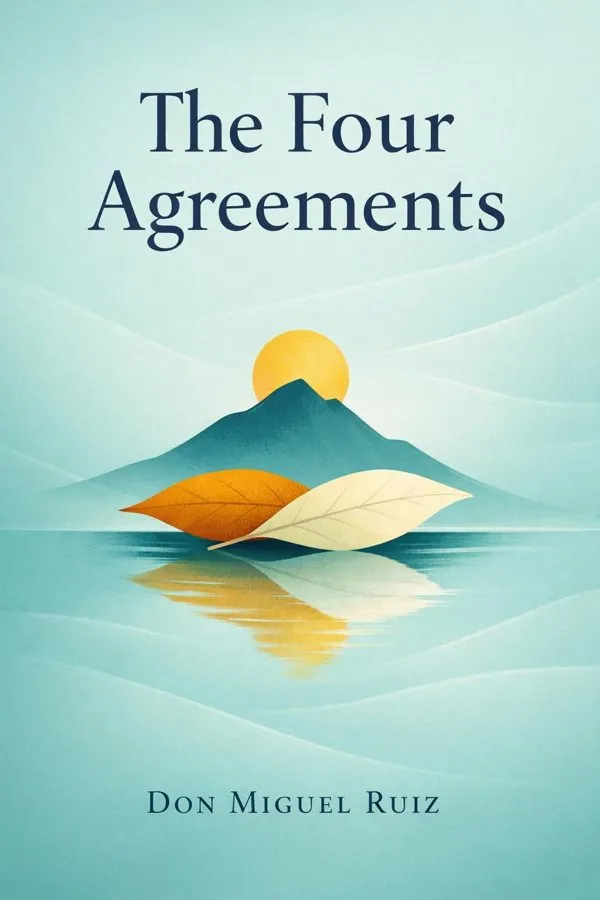
The Four Agreements
The Way of the Superior Man
In-Depth Analysis
Don Miguel Ruiz's The Four Agreements and David Deida's The Way of the Superior Man both belong to the self-help tradition, but they are trying to solve different human problems with very different tones, frameworks, and assumptions. Ruiz is primarily concerned with psychological suffering created by internalized beliefs. Deida is concerned with the erosion of purpose, presence, and erotic integrity in modern life. One book asks, 'What false rules are governing your mind?' The other asks, 'What are you waiting to give your life to fully?' That distinction shapes nearly every difference between them.
The Four Agreements begins with one of its strongest ideas: people are 'domesticated' into a system of rewards, punishments, shame, and approval that becomes an internal 'Book of Law.' This metaphor gives the book its explanatory engine. When Ruiz says we have learned to use our word against ourselves, or that we live under the tyranny of self-rejection, he is naming a common self-help insight in memorable language. The agreements then function as a practical response. 'Be impeccable with your word' addresses both speech toward others and self-talk. 'Don't take anything personally' reframes insult, praise, and rejection as expressions of the other person's world rather than objective verdicts about you. 'Don't make assumptions' attacks the stories we create in silence. 'Always do your best' removes perfectionism by making effort situational rather than absolute.
What makes Ruiz effective is not conceptual novelty so much as moral compression. He condenses a wide range of interpersonal and intrapsychic problems into four portable principles. For example, if a coworker sends a curt message, Ruiz gives you a full interpretive reset: do not assume hostility, do not take the tone personally, respond with clarity, and measure yourself by honest effort rather than anxiety. That simplicity is exactly why the book has endured.
Deida's book is less interested in reducing suffering than in intensifying aliveness. The Way of the Superior Man repeatedly challenges readers to stop organizing life around comfort, delay, and emotional weather. The core claim is that meaningful action does not wait for fear to disappear. If anything, fear is evidence that something important is at stake. This is where Deida differs sharply from Ruiz. Ruiz aims to reduce unnecessary emotional pain generated by misperception; Deida often asks the reader to move through discomfort in service of purpose. Ruiz says, in effect, 'Much of your suffering is optional.' Deida says, 'Your deepest life requires courage that comfort will never give you.'
The difference is especially visible in how they treat relationships. Ruiz addresses conflict through perception and communication. If your partner seems distant, the danger lies in personalization and assumption: you imagine rejection, generate resentment, and then speak from a wound that may be based on fiction. Deida, by contrast, frames relationships as a field in which presence, truthfulness, and polarity are tested. His concern is not only whether you are misreading your partner but whether you are showing up with grounded direction, sexual honesty, and emotional steadiness. For some readers, this is more galvanizing because it feels like a challenge to character rather than a lesson in emotional hygiene. For others, it is limiting because Deida's gendered vocabulary can seem essentialist, especially when he speaks of masculine and feminine energies in ways that not all readers will accept.
In terms of style, Ruiz is soothing where Deida is provocative. The Four Agreements reads almost like a spiritual primer: repetitive, gentle, and deliberately accessible. Its repetitions can frustrate readers looking for nuance, but they also make the book memorable. Deida writes in short bursts, often sounding like a teacher trying to break through denial by force of directness. That gives his book more electricity but also less universality. A reader can disagree with Ruiz's metaphysics and still use the agreements productively. A reader who rejects Deida's framing of masculinity, sexual polarity, or gendered purpose may find the entire architecture unstable.
Neither book is scientifically rigorous. Both rely on spiritual insight, anecdotal resonance, and intuitive recognition. But the implications of that limitation are different. Ruiz makes broad claims about conditioning and personal freedom, yet his advice is largely low-risk and adaptable. Deida's guidance can be transformational, but because it speaks more specifically to gender, sexuality, and relational roles, the lack of empirical grounding matters more. A reader should approach Deida as a philosophical and spiritual provocation, not as settled psychological truth.
For beginners, The Four Agreements is usually the better entry point because its lessons are immediately usable and broadly humane. It can improve communication, reduce self-inflicted suffering, and create a basic discipline of awareness. The Way of the Superior Man is better for readers who already want challenge rather than comfort, especially men asking larger questions about mission, intimacy, and disciplined presence. Its best insights concern the cost of drift: the habit of postponing real life until fear subsides, clarity becomes perfect, or relationships stop being demanding.
Ultimately, these books are not rivals so much as complementary tools. Ruiz helps clear the internal noise created by shame, projection, and assumption. Deida asks what you will do once that noise is quieter. If Ruiz teaches freedom from false inner laws, Deida asks for devotion to a chosen path. One heals the interpretive habits that make life smaller; the other presses you to live in a way that is larger, riskier, and more fully claimed.
Side-by-Side Comparison
| Aspect | The Four Agreements | The Way of the Superior Man |
|---|---|---|
| Core Philosophy | The Four Agreements argues that suffering is largely maintained by internalized social conditioning, or the 'Book of Law,' and that freedom comes from replacing fear-based habits with four disciplined agreements. Its philosophy is universalist, inward, and centered on personal responsibility for perception, speech, and interpretation. | The Way of the Superior Man is built around the idea that a man should align his life with purpose, presence, and sexual-spiritual polarity rather than comfort or indecision. Its philosophy is more directional and role-based, emphasizing masculine development, intimate polarity, and devotion to a life mission. |
| Writing Style | Ruiz writes in a simple, aphoristic, almost parable-like style that makes complex emotional patterns feel accessible. The prose is repetitive by design, reinforcing the four agreements as meditative principles rather than analytical arguments. | Deida uses a blunt, urgent, and often confrontational style, delivering short chapters like provocations or challenges. His language is more intense and polarizing, especially when discussing masculinity, femininity, and relationships. |
| Practical Application | The book offers four clear behavioral filters: watch your language, stop personalizing others' behavior, clarify instead of assuming, and do your best relative to your circumstances. These can be applied immediately in conversations, self-talk, conflict, and daily emotional regulation. | Deida's advice is practical in a different way: act on your deepest purpose now, stay present under emotional pressure, stop using work or relationships as avoidance, and cultivate solitude to hear your direction. Its exercises are less formalized but more existential, often requiring major shifts in lifestyle and relational behavior. |
| Target Audience | The Four Agreements is broad in appeal and works well for readers new to self-help, mindfulness, or emotional healing. Its principles are framed as human rather than gender-specific, making it easier to adapt across ages, backgrounds, and life stages. | The Way of the Superior Man is written primarily for men wrestling with purpose, intimacy, discipline, and masculine identity, though others may still find value in it. Readers uncomfortable with essentialist gender framing may find its target audience narrower than Ruiz's. |
| Scientific Rigor | Ruiz relies on spiritual framing and experiential truth rather than research, psychology studies, or empirical evidence. Concepts like domestication and emotional poison are compelling metaphors, but they are not developed through scientific methodology. | Deida is similarly non-academic, grounding his claims in spiritual insight, relationship dynamics, and lived observation rather than evidence-based psychology. Because he makes stronger claims about gendered energy and polarity, some readers may find the lack of empirical support more consequential here. |
| Emotional Impact | Ruiz often produces relief: readers may feel seen when he explains how shame, guilt, and self-judgment are inherited rather than intrinsic. The emotional effect is often calming and liberating, especially around interpersonal hurt and self-criticism. | Deida tends to provoke discomfort before inspiration, pushing readers to confront compromise, passivity, and hidden fear. Its emotional impact can be electrifying for some and alienating for others because the book intentionally presses on identity and desire. |
| Actionability | Its advice is easy to remember because the structure is compact and the agreements are concrete enough to revisit throughout the day. Readers can quickly ask, for example, whether they are making assumptions in a conflict or taking criticism personally. | Its actions are vivid but less checklist-driven: tell the truth in intimacy, stop waiting for perfect emotional conditions, and commit to your highest purpose even when afraid. This makes the book powerful for motivated readers but harder to operationalize consistently without reflection. |
| Depth of Analysis | The Four Agreements is deep in moral and emotional simplicity rather than theoretical complexity; it returns repeatedly to a small set of principles and explores their implications. Its strength lies in distillation, not in nuanced treatment of edge cases or social complexity. | The Way of the Superior Man ranges more widely across purpose, sexuality, career, meditation, fear, and relationship polarity. It can feel deeper in existential scope, though sometimes less precise because its insights are delivered as intense assertions rather than sustained argument. |
| Readability | Ruiz is highly readable, with straightforward language and a clean conceptual spine that makes the book approachable even for infrequent readers. The repetition may feel simplistic to some, but it also aids retention. | Deida is also readable in the sense that chapters are short and punchy, but the ideas are more controversial and less universally digestible. Readers may move quickly through it while pausing often to question or resist the claims. |
| Long-term Value | The Four Agreements works well as a lifelong reset text because its principles can be reapplied in almost any season of stress, conflict, or self-doubt. Many readers return to it as a compact code of conduct for inner peace. | The Way of the Superior Man often has strongest long-term value for readers in periods of transition around vocation, commitment, sexuality, or masculine identity. It can remain influential for years, but only if the reader continues to find its framework compelling rather than outgrowing it. |
Key Differences
Universal Inner Freedom vs Gendered Purpose
The Four Agreements presents a largely universal psychology of suffering and freedom: everyone is shaped by conditioning, self-judgment, and harmful interpretation. The Way of the Superior Man is more explicitly focused on masculine purpose and polarity, so its guidance is narrower but also more targeted for readers wrestling with male identity and intimate roles.
Reducing Suffering vs Embracing Challenge
Ruiz concentrates on dissolving unnecessary pain caused by assumptions, personalization, and toxic self-talk. Deida is less concerned with comfort and more concerned with whether you are willing to act in alignment with your deepest purpose even while afraid, uncertain, or emotionally unsettled.
Communication Hygiene vs Existential Demand
A major strength of The Four Agreements is interpersonal clarity: ask questions, do not invent stories, and do not poison relationships with projection. Deida certainly addresses relationships too, but he treats them as a test of presence and direction, asking whether you are showing up with grounded truth rather than merely communicating more cleanly.
Gentle Simplicity vs Provocative Intensity
Ruiz uses calm, repetitive language that reinforces habit change through memorability. Deida writes in a sharper, more confrontational register, making readers feel challenged or exposed; for example, he repeatedly criticizes waiting for perfect conditions before living fully.
Portable Rules vs Situational Provocations
The Four Agreements gives readers four portable mental checks they can use in real time during conflict or self-doubt. The Way of the Superior Man offers more situational provocations, such as prioritizing mission, staying present in intimacy, and using solitude to hear purpose, which can be powerful but harder to convert into a daily checklist.
Broad Accessibility vs Selective Resonance
Because Ruiz's framework is less tied to a particular identity category, it tends to travel well across diverse readers and contexts. Deida's book inspires intense loyalty among readers who resonate with its masculine-feminine framework, but others may reject its assumptions and therefore gain much less from it.
Who Should Read Which?
The emotionally overwhelmed reader who wants calmer relationships and less self-criticism
→ The Four Agreements
This reader will benefit from Ruiz's direct treatment of shame, reactive interpretation, and destructive self-talk. The four agreements provide immediate tools for reducing conflict, questioning inner narratives, and replacing perfectionism with more sustainable effort.
The purpose-driven man who feels stuck, passive, or split between comfort and calling
→ The Way of the Superior Man
Deida speaks directly to readers who sense they are delaying real life, hiding in indecision, or showing up weakly in love and work. His emphasis on purpose, presence, and acting despite fear can be catalytic when a reader needs challenge more than reassurance.
The thoughtful self-help reader who wants enduring principles without dense theory
→ The Four Agreements
Ruiz offers a cleaner and more portable framework that can be revisited for years without requiring buy-in to a controversial social philosophy. It is especially good for readers who value simplicity, memorability, and broad applicability across daily life.
Which Should You Read First?
Read The Four Agreements first, then The Way of the Superior Man. Ruiz provides a foundational mental cleanup that makes almost any later self-development work more effective. If you still habitually take criticism personally, invent motives for others, or attack yourself with your own inner language, Deida's more demanding calls to purpose and presence may get filtered through defensiveness, shame, or confusion. Ruiz helps quiet that noise. Starting with The Four Agreements also gives you a compact framework you can actively practice while reading anything else. As you move to Deida, you can notice where his provocations trigger assumptions or personal reactions and return to Ruiz's agreements as stabilizers. That makes the second book easier to engage critically rather than reactively. The exception is if you are specifically seeking a book about masculine direction, sexual polarity, and purpose right now. In that case, you can start with Deida for urgency and then read Ruiz afterward to refine communication and reduce ego-driven misinterpretation. But for most readers, Ruiz is the stronger first step.
Want the full summary?
Get instant access to this book summary and 100K+ more with Fizz Moment.
Get Free SummaryAvailable on App Store • Free to download
Frequently Asked Questions
Is The Four Agreements better than The Way of the Superior Man for beginners?
Yes, for most beginners The Four Agreements is the easier starting point. Its structure is simple, the four principles are easy to remember, and the advice applies to almost any situation: conflict, self-criticism, anxiety about others' opinions, or miscommunication. The Way of the Superior Man can be powerful, but it assumes a reader willing to engage provocative claims about masculinity, sexual polarity, and life purpose. If you are new to self-help and want practical emotional tools first, Ruiz offers a gentler, more universal entry. If you specifically want a challenging book about masculine development and purpose, Deida may still be the right beginner choice for that niche.
Which book is more practical for relationships: The Four Agreements or The Way of the Superior Man?
They are practical in different ways. The Four Agreements is better for improving communication habits: not taking criticism personally, not making assumptions about a partner's motives, and speaking with integrity rather than emotional poison. Those ideas can immediately reduce unnecessary conflict. The Way of the Superior Man is more practical if your relationship issues revolve around presence, purpose, sexual tension, emotional honesty, or passivity. Deida asks whether you are truly showing up with grounded direction rather than seeking comfort or approval. If your main problem is miscommunication, choose Ruiz; if it is lack of polarity, drift, or avoidance, Deida may hit deeper.
Is The Way of the Superior Man too controversial compared with The Four Agreements?
For many readers, yes. The Four Agreements is controversial mainly in its spiritual framing, but its core advice is broadly acceptable and adaptable: speak carefully, avoid personalization, clarify assumptions, and do your best. The Way of the Superior Man is more controversial because it makes stronger claims about masculinity, femininity, desire, and relational polarity. Some readers find those ideas illuminating and deeply accurate to lived experience; others see them as overly essentialist or reductive. In that sense, Deida's book is less universally safe but potentially more catalytic for readers who resonate with its worldview.
Which book has more long-term value: The Four Agreements or The Way of the Superior Man?
The Four Agreements usually has broader long-term re-read value because its principles remain useful across many phases of life. You can revisit it during workplace stress, family conflict, breakup recovery, or periods of self-doubt and still find the same four agreements relevant. The Way of the Superior Man often has intense long-term value for a narrower kind of reader, especially men navigating vocation, commitment, masculinity, or sexual-relational growth. If its framework matches your life questions, it can shape you for years; if not, its relevance may fade more quickly than Ruiz's.
What should men read first: The Four Agreements or The Way of the Superior Man?
Most men will benefit from reading The Four Agreements first, then The Way of the Superior Man. Ruiz helps you clean up distortions that sabotage any growth path: reactive speech, self-judgment, personalization, and assumption-making. Once those habits are more visible, Deida's demands around purpose, courage, and presence become easier to evaluate without defensiveness. However, men in a crisis of direction who already know they want a book about masculine purpose and intimacy may prefer to start with Deida for immediate urgency, then use Ruiz afterward to soften ego reactions and improve communication.
Are The Four Agreements and The Way of the Superior Man evidence-based self-help books?
No, neither book is strongly evidence-based in the academic sense. The Four Agreements is rooted in Toltec wisdom and spiritual metaphor, not psychology research or controlled studies. The Way of the Superior Man is even more dependent on philosophical, spiritual, and experiential claims, especially regarding gender polarity and masculine development. That does not mean they lack value, but readers should approach them as interpretive frameworks rather than scientific manuals. Their usefulness comes from resonance, self-observation, and application, not from rigorous empirical validation.
The Verdict
If you want the more universally useful, beginner-friendly, and consistently re-readable book, The Four Agreements is the stronger recommendation. Its four principles are concise but far-reaching, and they address everyday sources of suffering with unusual clarity: careless language, overpersonalizing, mind-reading, and perfectionism. Even readers who do not share Ruiz's spiritual vocabulary can usually extract immediate value. Choose The Way of the Superior Man if you want a more demanding and more polarizing book about purpose, masculine presence, intimacy, and courage. Deida is not trying to soothe you; he is trying to confront drift, passivity, and compromise. For the right reader, especially a man wrestling with vocation or relationship intensity, it can feel like a wake-up call rather than a self-help manual. In direct comparison, Ruiz offers cleaner principles and broader applicability; Deida offers sharper challenge and more existential urgency. Ruiz is the safer recommendation for most readers. Deida is the higher-risk, higher-reward recommendation for readers who specifically want his framework of masculine development and sexual-spiritual polarity. If you can read only one, start with The Four Agreements. If it resonates and you later want something more provocative about purpose and intimacy, move to The Way of the Superior Man.
Related Comparisons

Want to read both books?
Get AI-powered summaries of both The Four Agreements and The Way of the Superior Man in just 20 minutes total.