
The Four Agreements vs The Mountain Is You: Which Should You Read?
A detailed comparison of The Four Agreements by Don Miguel Ruiz and The Mountain Is You by Brianna Wiest. Discover the key differences, strengths, and which book is right for you.

The Four Agreements
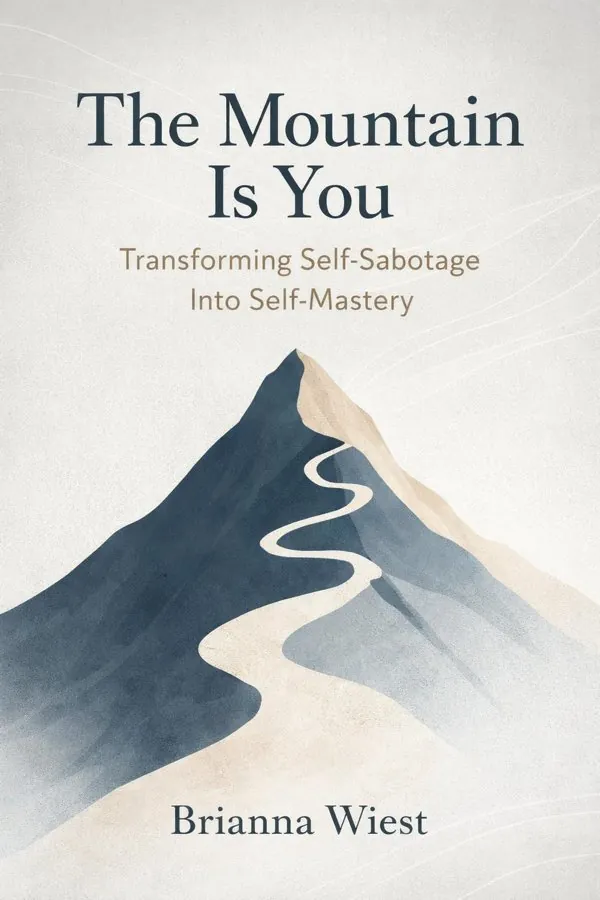
The Mountain Is You
In-Depth Analysis
Don Miguel Ruiz’s The Four Agreements and Brianna Wiest’s The Mountain Is You belong to the same broad self-help territory, but they operate from strikingly different assumptions about why people suffer and how change happens. Ruiz offers a compact spiritual code for personal freedom; Wiest offers a psychologically flavored exploration of self-sabotage and emotional transformation. Both books argue that many of our struggles are self-generated rather than purely caused by external circumstances, but they differ in structure, tone, and the kind of work they ask the reader to do.
The Four Agreements begins with a foundational idea: people are 'domesticated' into belief systems through reward, punishment, shame, and social expectation. Ruiz’s 'Book of Law' is the internal script that tells us what we must be in order to deserve love or avoid rejection. From there, the book proposes four corrective practices: be impeccable with your word, don’t take anything personally, don’t make assumptions, and always do your best. These are intentionally broad, nearly universal principles. Their power lies in compression. For example, 'Don’t Take Anything Personally' reframes criticism, gossip, and even praise as expressions of the speaker’s world, not definitive judgments of the self. 'Don’t Make Assumptions' targets the stories people invent in relationships when they fail to communicate directly.
By contrast, The Mountain Is You is less about replacing one belief system with four new agreements and more about understanding the hidden function of destructive patterns. Wiest argues that self-sabotage is usually not irrational in origin; it often emerges from a part of the self that is trying to maintain safety, familiarity, or emotional predictability. What looks like laziness may be fear of failure. What looks like avoidance may be a nervous system trained to associate visibility with danger. This makes Wiest’s approach more interpretive and therapeutic in tone. Rather than saying, in effect, 'here are the four practices that free you,' she asks, 'what if the part of you resisting change is trying to protect you from pain?'
That difference in diagnosis affects each book’s practical use. Ruiz is immediately actionable. A reader in conflict with a partner can apply his framework right away: stop assuming motives, avoid taking emotional reactions as personal attacks, speak carefully, and do one’s best in the moment. His book shines in interpersonal settings because it addresses gossip, projection, miscommunication, and self-judgment with unusual economy. The agreements function almost like pocket rules for emotional sobriety.
Wiest is often more useful when the issue is recurring internal sabotage rather than a specific conversation or conflict. If a reader keeps procrastinating, abandoning goals, choosing emotionally unavailable partners, or oscillating between ambition and paralysis, The Mountain Is You provides a richer lens. Its sections on inner conflict and pain avoidance help explain why people cling to behaviors they consciously dislike. Growth, in Wiest’s account, is not just a matter of choosing better thoughts; it requires tolerating unfamiliar emotional states. This is one of the book’s strongest insights: many people say they want change, but what they actually want is change without uncertainty, grief, discomfort, or identity loss.
Stylistically, Ruiz and Wiest feel very different. Ruiz writes like a spiritual teacher delivering timeless truths. His prose is repetitive, but intentionally so; he wants the principles to imprint. Some readers find this clarifying and profound, while others may find it overly absolute. The book leaves little room for ambivalence. Wiest, on the other hand, writes in a modern self-help voice shaped by emotional nuance. She often lingers in the gray areas of healing, examining contradictions and layered motives. This makes her book feel more intimate and psychologically realistic, though also less streamlined.
Another major difference is explanatory depth. The Four Agreements is elegant precisely because it simplifies. But that simplicity can also be a limitation. A reader with a trauma history, severe anxiety, or entrenched relational patterns may feel that 'don’t take anything personally' is true but not always easy or sufficient. Ruiz gives wisdom, not treatment logic. The Mountain Is You, while still not a clinical psychology text, at least spends more time inside the mechanics of inner resistance. It acknowledges that dysfunctional patterns often persist because they solve emotional problems in the short term, even while damaging life in the long term.
In terms of emotional impact, The Four Agreements tends to liberate by subtraction. It tells you that much of your suffering comes from false rules, needless interpretation, and careless language. The effect can be cleansing. The Mountain Is You tends to transform by confrontation. It asks readers to stop seeing themselves only as victims of circumstance and begin examining how fear, familiarity, and identity maintenance shape their choices. The effect can be more destabilizing, but also more personally revelatory.
For beginners, The Four Agreements is often the better starting point because its framework is memorable and immediately usable. It provides a foundational discipline of thought and speech. For readers who have already absorbed basic self-help ideas and want to understand why they still repeat old patterns, The Mountain Is You may feel more advanced and more relevant. Ideally, the books can complement each other: Ruiz helps clean up the daily habits that create emotional suffering, while Wiest helps uncover the deeper internal conflicts that keep those habits in place.
Ultimately, these books are trying to answer related but distinct questions. Ruiz asks: what agreements have you made that keep you trapped? Wiest asks: what pain are you avoiding by staying trapped? The first offers a code. The second offers a mirror. Which one matters more will depend on whether the reader most needs simple principles for freedom or a deeper understanding of why freedom can feel so difficult to choose.
Side-by-Side Comparison
| Aspect | The Four Agreements | The Mountain Is You |
|---|---|---|
| Core Philosophy | The Four Agreements argues that suffering is largely created by internalized social conditioning, what Ruiz calls the 'domestication' of humans and the 'Book of Law' we carry within. Freedom comes through practicing four concise agreements that replace fear-based habits with personal integrity and awareness. | The Mountain Is You frames suffering less as social conditioning and more as self-sabotage rooted in unresolved emotional needs and inner conflict. Wiest’s central philosophy is that transformation requires understanding why destructive patterns once felt protective and then building new emotional capacities. |
| Writing Style | Ruiz writes in a spare, aphoristic, almost spiritual-teaching style, using repetition and maxims to make the ideas memorable. The prose is simple and declarative, often prioritizing clarity and moral force over nuance or psychological detail. | Wiest writes in a more contemporary, reflective, and emotionally interpretive style, often unpacking feelings, patterns, and contradictions in a more layered way. Her language is more expansive and therapeutic, resembling guided insight more than distilled doctrine. |
| Practical Application | Its practical structure is immediate: readers can apply the four agreements to speech, conflict, interpretation, communication, and effort on the same day they begin reading. For example, 'Don’t Make Assumptions' directly translates into asking clarifying questions instead of inventing stories. | Its application is more diagnostic and developmental, asking readers to identify recurring self-sabotaging behaviors, emotional triggers, and avoidance strategies. Rather than four rules, it offers a process of tracing behavior back to fear, pain avoidance, and unmet internal needs. |
| Target Audience | The Four Agreements is especially suited to readers who want a concise, spiritually inflected framework for reducing interpersonal stress and self-judgment. It works well for people overwhelmed by negativity, conflict, or shame who benefit from memorable principles. | The Mountain Is You is aimed at readers who already recognize patterns like procrastination, perfectionism, inconsistency, or emotional reactivity and want to understand them more deeply. It will especially resonate with readers drawn to emotional healing and inner-work language. |
| Scientific Rigor | Ruiz relies primarily on spiritual wisdom and philosophical assertion rather than psychological research, empirical studies, or clinical frameworks. The book’s authority comes from insight and tradition, not evidence-based methodology. | Wiest also writes largely outside a strict research framework, but her vocabulary overlaps more with modern psychology, trauma-informed discourse, and behavioral self-observation. Even so, the book is interpretive and inspirational rather than academically rigorous. |
| Emotional Impact | The book can feel liberating because it reduces many emotional burdens to a few recurring habits, especially taking things personally and misusing language. Readers often experience relief from the realization that other people’s behavior reflects their own dream, not objective truth about us. | Wiest tends to create a more inward, emotionally intense experience because she asks readers to confront the possibility that their biggest obstacle is themselves. The book can feel validating and uncomfortable at once, especially when discussing fear, identity, and attachment to familiar pain. |
| Actionability | Actionability is one of its greatest strengths because each agreement functions like a behavioral filter: before speaking, assuming, reacting, or judging effort, the reader has a concrete standard. The simplicity increases recall and daily use. | The Mountain Is You is actionable in a slower, more reflective sense: it helps readers name patterns, sit with discomfort, and reframe thought loops. Its tools are less slogan-like and more dependent on journaling, self-observation, and emotional processing. |
| Depth of Analysis | Ruiz intentionally simplifies human suffering into a compact moral-spiritual system, which gives the book elegance but can leave some readers wanting more complexity about trauma, systems, or personality differences. Its depth comes from distilled wisdom rather than layered analysis. | Wiest offers more psychological granularity by examining how fear, avoidance, competing desires, and familiar pain reinforce self-defeating behavior. The analysis is broader and more exploratory, though sometimes less structurally tight than Ruiz’s four-part framework. |
| Readability | The Four Agreements is highly readable because it is short, repetitive in a useful way, and organized around four memorable commitments. It is easy to revisit and easy to summarize after one reading. | The Mountain Is You is accessible but denser, since it relies on cumulative reflection rather than a single compact framework. Readers may need to pause more often to process its emotional and conceptual material. |
| Long-term Value | Its long-term value lies in its portability: the agreements become mental shorthand in moments of conflict, insecurity, gossip, or burnout. Many readers return to it as a reset text because the principles remain easy to recall under stress. | Its long-term value lies in pattern recognition over time; readers may understand different chapters differently as they uncover new layers of self-sabotage. It is often more useful as a revisited growth companion than as a one-time motivational read. |
Key Differences
Spiritual Code vs Emotional Excavation
The Four Agreements presents a code of conduct rooted in Toltec wisdom: four agreements that reorient perception and behavior. The Mountain Is You is less a code than an investigation into why harmful behaviors persist, especially when they serve hidden emotional needs.
External Triggers vs Internal Patterns
Ruiz often focuses on how we react to speech, judgment, assumptions, and social conditioning in everyday interactions. Wiest focuses more on recurring internal loops such as procrastination, perfectionism, fear of success, and attachment to familiar pain.
Memorable Rules vs Gradual Process
Ruiz gives readers four concise rules that can be recalled in seconds during a hard conversation or stressful moment. Wiest offers a slower process of self-awareness, reframing, and emotional tolerance that unfolds over reflection rather than instant recall.
Minimalist Framing vs Psychological Layering
The Four Agreements intentionally reduces complexity to increase clarity, which is part of its appeal. The Mountain Is You spends more time on contradictions and subtext, such as wanting change while also fearing what change would demand emotionally.
Communication Fixes vs Self-Sabotage Diagnosis
Ruiz is especially strong on common communication failures: gossip, projection, taking offense, and assumption-making. Wiest is stronger on diagnosing why someone repeatedly derails their own progress, even when they consciously want better outcomes.
Aphoristic Wisdom vs Therapeutic Reflection
Ruiz writes in short, declarative teachings designed to sound timeless and universal. Wiest writes in a more modern introspective voice, often sounding like a guide through emotional healing rather than a sage offering distilled laws.
Immediate Behavior Change vs Deeper Identity Work
Applying 'Be Impeccable with Your Word' can change behavior today by reducing self-criticism or reactive speech. Wiest’s work often asks for identity-level change, such as releasing a self-concept built around struggle, avoidance, or emotional chaos.
Who Should Read Which?
The overwhelmed people-pleaser who is hurt by criticism, conflict, and overthinking
→ The Four Agreements
This reader will benefit from Ruiz’s emphasis on not taking things personally and not making assumptions. The book offers immediate relief from hyper-reactivity and helps build healthier boundaries around other people’s moods, opinions, and projections.
The introspective reader who keeps procrastinating, repeating patterns, or sabotaging growth
→ The Mountain Is You
Wiest directly addresses the hidden logic of self-sabotage and explains why destructive habits often function as emotional protection. This reader is likely to gain more from her analysis of fear, inner conflict, and attachment to familiarity.
The reader who wants a complete personal-growth progression rather than a single quick fix
→ The Four Agreements
Start with Ruiz because it establishes durable daily practices that improve communication and self-regulation. After that, the reader can move into The Mountain Is You with greater self-awareness and use it to explore deeper emotional patterns.
Which Should You Read First?
Read The Four Agreements first, then The Mountain Is You. Ruiz provides a clean foundation for self-observation because his framework is so simple and memorable. Before trying to untangle deep self-sabotage, it helps to learn basic disciplines like not assuming, not personalizing, speaking carefully, and understanding that your 'best' changes from day to day. These ideas reduce noise and emotional reactivity. Once that foundation is in place, The Mountain Is You becomes more powerful. Wiest can then take you beyond surface habits into the hidden motives behind them. For example, after noticing through Ruiz that you often assume rejection or speak harshly to yourself, Wiest helps you ask why those patterns feel familiar or protective. Her book is best absorbed when you are already willing to examine uncomfortable truths about fear, pain avoidance, and identity. In short: Ruiz first for clarity and behavioral grounding; Wiest second for depth and transformation.
Want the full summary?
Get instant access to this book summary and 100K+ more with Fizz Moment.
Get Free SummaryAvailable on App Store • Free to download
Frequently Asked Questions
Is The Four Agreements better than The Mountain Is You for beginners?
Yes, for many beginners The Four Agreements is the easier starting point. Its structure is extremely clear: four principles, each easy to remember and apply in daily life. A new self-help reader can quickly understand ideas like not taking criticism personally or avoiding assumptions in communication. The Mountain Is You is also accessible, but it requires more introspection and tolerance for emotional complexity. If you are just beginning personal development and want a simple framework you can use immediately, The Four Agreements is usually better. If you already know the basics and want to explore why you keep repeating harmful patterns, The Mountain Is You may be more useful.
Which book is better for healing self-sabotage: The Four Agreements or The Mountain Is You?
The Mountain Is You is more directly focused on self-sabotage. Brianna Wiest treats self-sabotage not as random failure but as a protective mechanism tied to fear, inner conflict, and pain avoidance. That makes the book especially helpful for readers dealing with procrastination, inconsistency, perfectionism, or repeatedly undermining their own goals. The Four Agreements can still help indirectly, especially through reducing negative self-talk and assumption-driven conflict, but self-sabotage is not its main subject. If your core question is 'Why do I keep getting in my own way?' then The Mountain Is You is the more targeted and insightful choice.
Which is more practical in everyday life, The Four Agreements or The Mountain Is You?
The Four Agreements is generally more practical in a day-to-day behavioral sense. Each agreement functions like a quick mental checkpoint: Am I speaking carefully? Am I assuming? Am I personalizing someone else’s mood? Am I doing my best given today’s energy? That makes it easy to apply at work, in relationships, and during moments of stress. The Mountain Is You is practical too, but in a slower, reflective way. Its usefulness often comes through journaling, identifying recurring patterns, and unpacking emotional habits over time. For instant daily use, Ruiz is stronger; for deeper behavioral change, Wiest often goes further.
Is The Mountain Is You more psychological than The Four Agreements?
Yes, The Mountain Is You is more psychological in tone and framework, even though it is still a popular self-help book rather than a clinical psychology text. Wiest discusses emotional triggers, inner conflict, self-protective behavior, and the way unresolved pain can shape habits. The Four Agreements uses a spiritual-philosophical model instead, centered on domestication, personal freedom, and the ethical use of language and perception. Ruiz’s approach is more universal and principle-based; Wiest’s is more interpretive and inward. Readers looking for emotional pattern analysis usually find Wiest more psychologically satisfying.
Which book should I read if I struggle with overthinking and taking things personally?
The Four Agreements is probably the stronger choice for overthinking rooted in interpretation, social anxiety, or hypersensitivity to other people’s judgments. Ruiz directly addresses two of the biggest drivers of overthinking: taking things personally and making assumptions. His framework helps readers notice how quickly they create painful stories from incomplete information. The Mountain Is You can help if your overthinking is part of a larger cycle of self-sabotage or emotional avoidance, but Ruiz is more precise on this specific issue. If your mind spirals because of what others might think or mean, start with The Four Agreements.
Can The Four Agreements and The Mountain Is You be read together?
Absolutely, and they actually complement each other well. The Four Agreements gives you a disciplined external practice for speech, interpretation, communication, and effort. The Mountain Is You adds internal depth by helping you understand why you resist change, repeat painful patterns, or sabotage your own growth. One useful way to combine them is this: use Ruiz for daily conduct and Wiest for deeper self-inquiry. For example, Ruiz may teach you not to assume what a partner means, while Wiest may help you understand why uncertainty in relationships triggers fear in the first place.
The Verdict
If you want the clearest, most immediately usable book, The Four Agreements is the stronger recommendation. Its four principles are compact enough to remember under pressure and broad enough to improve communication, self-talk, and emotional resilience almost immediately. Ruiz excels at giving readers a portable philosophy: when you feel hurt, reactive, ashamed, or confused, his framework quickly reveals how language, interpretation, and expectation are intensifying the pain. If, however, you have already read foundational self-help and still find yourself repeating the same destructive patterns, The Mountain Is You may be more valuable. Brianna Wiest is better at exploring internal contradiction: why people cling to what hurts them, why growth feels threatening, and how self-sabotage can function as self-protection. Her book reaches places Ruiz only gestures toward. So the verdict depends on your need. For simplicity, habit correction, and relational clarity, choose The Four Agreements. For emotional pattern recognition, inner conflict, and deeper self-understanding, choose The Mountain Is You. If forced to recommend one for the widest range of readers, The Four Agreements wins because it is more concise, more memorable, and easier to apply consistently. But for readers in a season of serious emotional excavation, The Mountain Is You may ultimately produce the more transformative insights.
Related Comparisons

Want to read both books?
Get AI-powered summaries of both The Four Agreements and The Mountain Is You in just 20 minutes total.