
Extreme Ownership vs Start With Why: Which Should You Read?
A detailed comparison of Extreme Ownership by Jocko Willink and Start With Why by Simon Sinek. Discover the key differences, strengths, and which book is right for you.
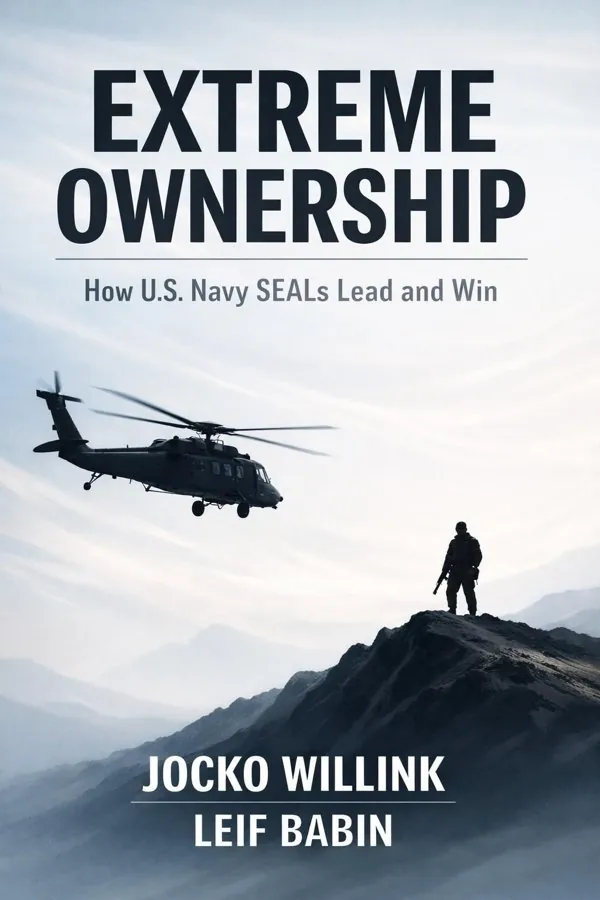
Extreme Ownership
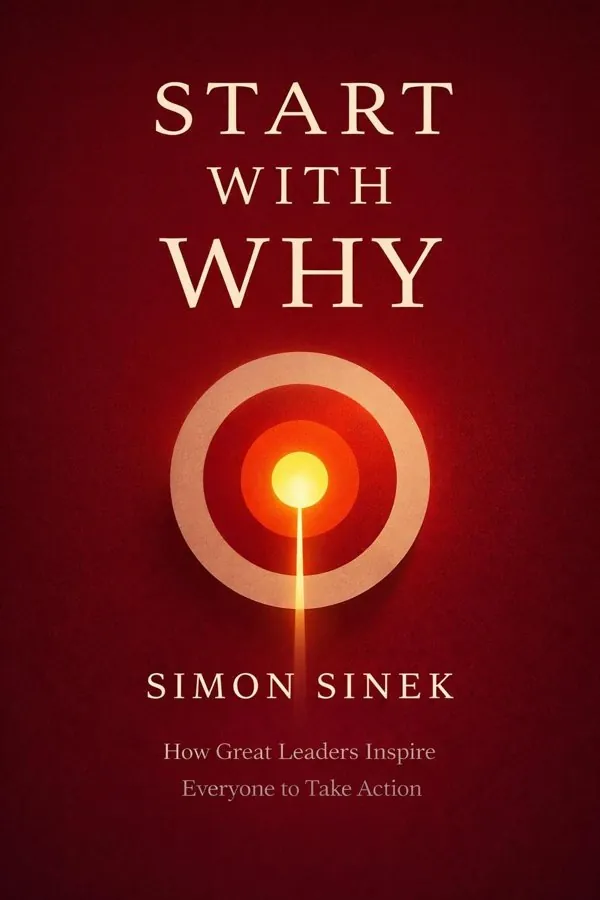
Start With Why
In-Depth Analysis
Extreme Ownership and Start With Why are both leadership books, but they operate on different levels of the leadership problem. Jocko Willink and Leif Babin ask, in effect, 'How should a leader behave when results are on the line?' Simon Sinek asks, 'What makes people care enough to follow in the first place?' The difference matters. One book is built around responsibility and execution; the other is built around purpose and inspiration. Read together, they reveal that leadership requires both operational discipline and emotional coherence, but each book privileges one side of that equation.
Extreme Ownership is rooted in combat, specifically the authors’ service as Navy SEAL officers in Ramadi in 2006. That setting gives the book unusual force. When Willink and Babin write about poor communication, unclear priorities, or ego, they are not describing abstract office dysfunction; they are describing failures that can cost lives. This context sharpens the central principle: a leader must take full ownership of everything within his or her sphere of influence. The famous line 'No Bad Teams, Only Bad Leaders' is intentionally provocative. It does not deny differences in talent or motivation; rather, it insists that leaders are responsible for setting standards, building trust, and creating the conditions for performance. In practice, that means asking, before blaming the team, whether expectations were clear, whether priorities were simple, and whether the leader genuinely enabled success.
Start With Why begins elsewhere. Sinek’s Golden Circle—Why at the center, then How, then What—argues that most organizations communicate from the outside in, describing what they do and how they do it, while exceptional leaders begin with the deeper purpose behind their actions. His most famous examples, such as Apple, are used to show that people do not merely buy products or services; they buy beliefs and identities. A company that clearly expresses its 'why' can create loyalty, trust, and advocacy that go beyond price or features. Where Extreme Ownership asks leaders to look inward for accountability, Start With Why asks organizations to look inward for meaning.
This leads to one of the clearest contrasts: Extreme Ownership is strongest in moments of friction, while Start With Why is strongest in moments of alignment. If a project is failing, a team is confused, or departments are working at cross purposes, Willink’s advice is more immediately useful. Principles like 'Prioritize and Execute,' 'Decentralized Command,' and 'Check the Ego' are practical mechanisms for restoring clarity. For example, the idea of decentralized command requires leaders to ensure subordinates understand the mission well enough to act independently when conditions change. That is an operational answer to complexity.
Sinek’s framework is less useful for emergency triage but more useful upstream, before execution begins. If a company is struggling to differentiate itself, if employees are disengaged, or if customers do not feel any emotional connection to the brand, Start With Why offers a strategic diagnosis. Sinek’s distinction between manipulation and inspiration is central here. Discounts, urgency, and fear-based messaging may drive short-term behavior, but they do not create loyalty. Organizations that communicate purpose can attract people who identify with the mission, not just the offering.
The books also diverge in tone and authority. Extreme Ownership derives credibility from lived experience. Each chapter typically pairs a battlefield story with a business application, creating a rhythm of drama, interpretation, and transfer. This structure makes the lessons memorable and concrete, though it can occasionally feel formulaic. Still, the book’s severity is part of its appeal: it treats leadership as a moral and practical burden, not a branding exercise.
Start With Why uses a more TED-style mode of persuasion: broad examples, a simple visual model, and a repeated central insight. Its greatest strength is conceptual elegance. The Golden Circle is easy to remember and easy to explain to others. But that elegance is also a limitation. Compared with Extreme Ownership, Sinek’s book offers fewer detailed tools for handling failure, accountability, or team execution. It can leave readers convinced of the importance of purpose without fully showing how to operationalize purpose under pressure.
Another major difference is how each book handles the individual ego. In Extreme Ownership, ego is a direct threat to learning and mission success. A leader who needs to be right, admired, or blameless becomes dangerous. This is one of the book’s most durable insights because it applies across industries: ego distorts communication and prevents adaptation. In Start With Why, the challenge is less ego than drift. Organizations lose trust when they stop acting from their core purpose and start relying on manipulation. If Willink warns against self-protection, Sinek warns against mission dilution.
Neither book is strongly academic. Both rely far more on anecdote and interpretation than on rigorous research. That does not make them useless, but it affects how they should be read. Extreme Ownership should be taken as a field manual in mindset and behavior, not a balanced scholarly treatment of leadership. Start With Why should be taken as a strategic lens, not a scientifically settled theory of motivation.
Ultimately, the books complement one another better than they compete. Start With Why explains why people commit; Extreme Ownership explains what leaders must do once commitment is required. Sinek helps leaders generate meaning. Willink helps them carry responsibility. If you only read Start With Why, you may become eloquent about purpose without becoming effective under pressure. If you only read Extreme Ownership, you may build a disciplined team that executes well but lacks a deeply shared sense of mission. The strongest leaders can do both: articulate a compelling why and then take full ownership of turning that why into disciplined action.
Side-by-Side Comparison
| Aspect | Extreme Ownership | Start With Why |
|---|---|---|
| Core Philosophy | Extreme Ownership argues that leadership begins with radical personal accountability: leaders must own failures, clarify priorities, and remove excuses. Its core claim is that team outcomes are primarily a reflection of leadership quality, captured in ideas like 'No Bad Teams, Only Bad Leaders.' | Start With Why argues that enduring leadership starts with purpose rather than tactics. Sinek’s Golden Circle places 'Why' at the center, claiming that people are inspired by the cause behind an action more than by the action itself. |
| Writing Style | Willink writes in a blunt, disciplined, highly direct style shaped by military debrief culture. Chapters often move from a combat story in Ramadi to a business case study, then to a distilled leadership principle. | Sinek’s style is more motivational, conceptual, and keynote-like. He relies on repetition, broad business examples, and memorable frameworks to make his central idea feel intuitive and contagious. |
| Practical Application | Extreme Ownership is built for immediate use: prioritize and execute, decentralize command, keep plans simple, and brief people clearly. A manager can take its principles into a difficult meeting or operational crisis the same day. | Start With Why is more useful for brand positioning, culture building, and organizational alignment than for day-to-day execution. Its application tends to be strongest when a company is defining mission, messaging, or strategic direction. |
| Target Audience | This book fits managers, founders, military-minded operators, and leaders responsible for performance under pressure. It especially resonates with readers facing ambiguity, conflict, or accountability-heavy environments. | This book fits entrepreneurs, marketers, executives, and mission-driven leaders trying to inspire loyalty or articulate vision. It is especially attractive to readers working on culture, communication, and organizational identity. |
| Scientific Rigor | Extreme Ownership is evidence-light in a formal academic sense; it draws authority from battlefield experience and anecdotal business applications rather than controlled research. Its persuasiveness comes from lived credibility, not empirical testing. | Start With Why references biology and decision-making language, but its arguments are also more rhetorical than rigorously scientific. The Golden Circle is memorable and useful, yet critics often note that it is a persuasive model rather than a deeply validated theory. |
| Emotional Impact | The emotional force comes from high-stakes combat narratives where confusion or ego can get people killed. That intensity gives the lessons moral seriousness and makes accountability feel urgent rather than optional. | The emotional force comes from aspiration and identity: readers are encouraged to connect work to meaning and belonging. It often leaves readers feeling energized about purpose, trust, and the possibility of leading through inspiration instead of pressure. |
| Actionability | Its ideas are procedural and concrete: check the ego, cover and move, keep communication simple, and take ownership before blaming others. Many chapters naturally translate into behaviors, meeting norms, and management practices. | Its advice is more directional than procedural: define your why, communicate from the inside out, and avoid manipulation. Powerful as a framing tool, it often requires the reader to build their own implementation process. |
| Depth of Analysis | Extreme Ownership explores leadership at the level of execution, trust, hierarchy, and decision rights. It is strongest when showing how leadership failures emerge from unclear priorities, ego, and weak communication. | Start With Why goes deeper on meaning, influence, and organizational belief systems than on operational leadership mechanics. Its analysis is strongest when explaining why some organizations attract loyalty beyond rational product comparisons. |
| Readability | The book is highly readable because of its narrative structure and forceful prose, though some readers may find the military framing repetitive or intense. Its chapter-by-chapter format makes it easy to digest in pieces. | Start With Why is easy to read because the central model is simple and repeated often. Some readers will appreciate its accessibility, while others may feel the core point is reiterated more than expanded. |
| Long-term Value | Its long-term value lies in its repeat usefulness during crises, performance reviews, and moments when blame is tempting. Leaders often revisit it as a behavioral standard for accountability and execution. | Its long-term value lies in shaping organizational identity and messaging over time. It is especially valuable when revisited during rebranding, strategic pivots, hiring, and culture design. |
Key Differences
Accountability vs Purpose
Extreme Ownership is built on the idea that leaders must own outcomes, especially failures. Start With Why is built on the idea that leaders must communicate a compelling cause; for example, Sinek’s Apple example shows loyalty through belief, while Willink’s examples show performance through accountability.
Operational Tactics vs Strategic Framing
Willink and Babin provide execution tools such as 'Prioritize and Execute' and 'Decentralized Command,' which are directly useful in crisis or fast-moving projects. Sinek offers a strategic framing model—the Golden Circle—that helps organizations clarify identity and messaging rather than manage tactical breakdowns.
Combat Narrative vs Business Inspiration
Extreme Ownership uses battlefield stories from Ramadi to illustrate leadership failures and recoveries under life-or-death conditions. Start With Why relies more on business and innovation examples to show how organizations inspire trust and loyalty.
Behavior Change vs Communication Change
The main effect of reading Extreme Ownership is usually behavioral: readers become more careful about blame, clarity, and standards. The main effect of reading Start With Why is communicative: readers rethink how they present their mission to teams, customers, and stakeholders.
Pressure-Tested Leadership vs Identity-Driven Leadership
Extreme Ownership shines when stakes are high and decisions must be made with incomplete information. Start With Why shines when a leader needs to unify people around identity, especially during growth, repositioning, or cultural drift.
Concrete Management Principles vs Memorable Conceptual Model
Extreme Ownership gives a toolbox of principles that can structure meetings, debriefs, delegation, and team accountability. Start With Why gives one highly memorable model that is easier to explain and spread, but less complete as a management system.
Who Should Read Which?
First-time manager overseeing a team with performance or accountability issues
→ Extreme Ownership
This reader needs practical tools more than abstract inspiration. The book’s lessons on ownership, ego control, prioritization, and clear communication directly address the most common mistakes new managers make.
Founder, marketer, or executive trying to define mission and inspire loyalty
→ Start With Why
This reader benefits most from clarifying organizational purpose and learning to communicate from the inside out. Sinek’s framework is especially useful for branding, culture formation, and attracting people who identify with the company’s beliefs.
Experienced leader building both culture and execution discipline
→ Extreme Ownership
Although this reader should ultimately read both, Extreme Ownership offers the stronger edge in mature leadership because it pressures the leader to act, not just articulate. It complements existing strategic vision with sharper accountability and operational rigor.
Which Should You Read First?
For most readers, Start With Why should come first and Extreme Ownership second. Sinek’s book gives you the broad strategic question: what do you stand for, and why should anyone care? That foundation matters because leadership is not only about enforcing standards; it is also about creating meaning. If you begin with purpose, you are less likely to apply accountability in a purely mechanical way. Then read Extreme Ownership to translate that purpose into disciplined execution. Once you know your why, Willink and Babin show what leadership requires when reality becomes messy: clear priorities, simple communication, humility, and total responsibility. This order works especially well for founders, executives, and new managers building both culture and performance. The exception is readers in crisis. If you are currently managing conflict, missed deadlines, low trust, or team confusion, start with Extreme Ownership immediately. It is the faster intervention. In short: for reflection and alignment, read Start With Why first; for urgent leadership improvement, begin with Extreme Ownership.
Want the full summary?
Get instant access to this book summary and 100K+ more with Fizz Moment.
Get Free SummaryAvailable on App Store • Free to download
Frequently Asked Questions
Is Extreme Ownership better than Start With Why for beginners?
For most beginners in people management, Extreme Ownership is the more immediately useful starting point because it turns leadership into concrete habits: take responsibility, simplify plans, prioritize, and communicate clearly. A first-time manager can apply those ideas in one-on-ones, team meetings, and project reviews right away. Start With Why is also beginner-friendly, but it is more conceptual. It helps readers think about mission, identity, and influence, which are important but often less urgent than the everyday mechanics of accountability. If you are new to leadership and need practical behavior changes, Extreme Ownership usually delivers faster results.
Which book is more practical for managers: Extreme Ownership or Start With Why?
Extreme Ownership is more practical for line managers, team leads, and operators because it is built around execution problems: what to do when teams miss goals, communication breaks down, or responsibility becomes fuzzy. Ideas like 'Decentralized Command' and 'Prioritize and Execute' map directly onto daily management. Start With Why is practical in a different sense: it helps managers explain vision, build buy-in, and connect tasks to a larger purpose. If your challenge is underperformance or confusion, choose Extreme Ownership. If your challenge is disengagement or lack of meaning, Start With Why may be the better tool.
Should entrepreneurs read Start With Why before Extreme Ownership?
Often, yes—especially if the entrepreneur is still shaping a company’s identity, value proposition, or culture story. Start With Why can clarify what the company fundamentally stands for and how to communicate that to employees, customers, and investors. But once the venture begins scaling, hiring, and operating under pressure, Extreme Ownership becomes indispensable. Startups fail not only because their mission is unclear, but also because leaders avoid hard accountability, tolerate confusion, or fail to prioritize. A founder who reads both gets a strong sequence: define the mission first, then build the discipline to execute it.
What are the main differences between Extreme Ownership and Start With Why in leadership philosophy?
The main difference is that Extreme Ownership defines leadership as responsibility, while Start With Why defines leadership as inspiration rooted in purpose. Willink and Babin focus on the leader’s behavior when things go wrong: owning mistakes, checking ego, simplifying commands, and aligning teams around execution. Sinek focuses on the leader’s ability to articulate a compelling cause that people want to join. In simple terms, Extreme Ownership answers, 'How do I lead effectively under pressure?' Start With Why answers, 'How do I get people to believe in what we are doing?' They overlap, but their center of gravity is very different.
Is Start With Why better than Extreme Ownership for company culture and brand positioning?
Yes, in most cases Start With Why is stronger for company culture, employer branding, customer loyalty, and mission communication. Its Golden Circle framework is designed to help organizations express why they exist, which can unify teams internally and differentiate them externally. Extreme Ownership contributes to culture too, but in a more behavioral way: it shapes a culture of accountability, humility, and disciplined execution. If you are writing a brand narrative, revisiting your mission statement, or trying to inspire long-term loyalty, Start With Why is usually the better fit. If you are trying to build a no-excuses operating culture, choose Extreme Ownership.
Which book has more lasting value: Extreme Ownership or Start With Why?
That depends on the kind of leadership challenges you face repeatedly. Extreme Ownership has lasting value for leaders who constantly deal with complexity, performance pressure, and team coordination because its lessons are reusable in every tough situation. You can return to it whenever blame, ego, or confusion starts creeping in. Start With Why has lasting value when your role repeatedly involves vision-setting, messaging, recruiting, or cultural alignment. Many leaders ultimately keep both in rotation: Start With Why for identity and direction, Extreme Ownership for execution and accountability.
The Verdict
If you want one book that will change how you behave as a leader tomorrow morning, choose Extreme Ownership. It is more concrete, more demanding, and more operationally useful. Willink and Babin give readers a disciplined framework for handling mistakes, pressure, unclear priorities, and team underperformance. The book’s military origin is not just branding; it gives the lessons unusual urgency and clarity. If you want one book that will change how you explain your leadership and your organization’s mission, choose Start With Why. Sinek is especially strong on the emotional architecture of leadership: trust, belief, loyalty, and identity. His central idea—that people are moved more by purpose than by product—is simple but powerful, particularly for founders, marketers, and executives shaping culture. Overall, Extreme Ownership is the better all-around leadership manual because it translates more directly into daily management behavior. Start With Why is the better complementary book because it fills a gap that Extreme Ownership leaves open: why people should care deeply in the first place. The ideal recommendation is not either/or but sequence-based. Read Start With Why if you need to clarify mission; read Extreme Ownership if you need to improve execution. If forced to pick only one for most leaders, Extreme Ownership is the stronger and more durable choice.
Related Comparisons

Want to read both books?
Get AI-powered summaries of both Extreme Ownership and Start With Why in just 20 minutes total.