
Educated vs A Promised Land: Which Should You Read?
A detailed comparison of Educated by Tara Westover and A Promised Land by Barack Obama. Discover the key differences, strengths, and which book is right for you.
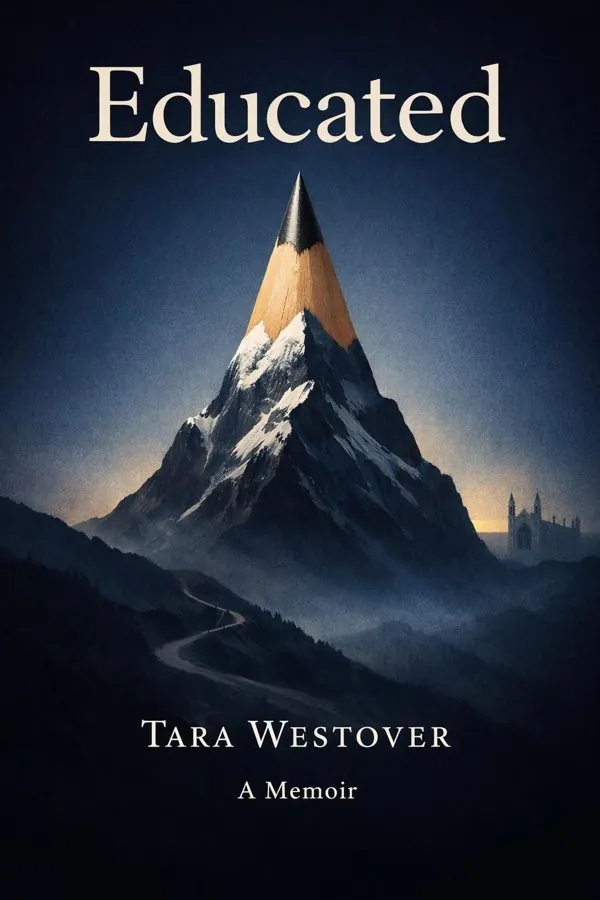

Educated
A Promised Land
In-Depth Analysis
Although both Educated by Tara Westover and A Promised Land by Barack Obama are memoirs about self-making, they approach that theme from opposite ends of power. Westover begins in near-total isolation from formal institutions; Obama writes from inside the most powerful political institution in the world. One memoir is about gaining access to reality after being raised in a closed epistemic system, while the other is about governing reality after persuading millions to believe in a political vision. Read together, they form a striking study in how identity is shaped by education, history, and the stories communities tell about what is true.
In Educated, the central drama is epistemological before it is social. Westover grows up in a survivalist Mormon family in rural Idaho where schools, hospitals, and the federal government are framed as corrupting or dangerous. Her father’s worldview is not merely eccentric background; it governs what counts as legitimate knowledge. The mountain, Buck’s Peak, becomes the emblem of this enclosed universe. When Westover enters BYU with almost no formal schooling, the achievement is dramatic not simply because she is academically underprepared, but because she is crossing a border between incompatible realities. Even basic cultural knowledge is missing. Her ignorance in the classroom becomes proof of how thoroughly isolation shaped her mind.
Obama’s A Promised Land is also concerned with education, but in a civic rather than familial sense. His early life across Hawaii, Indonesia, and Chicago positions him as a learner of plural worlds. Political awakening, for Obama, comes through encounters with institutions and communities rather than withdrawal from them. Where Westover must unlearn inherited suspicion of authority, Obama must learn how authority actually works. His move from organizer to state senator to national political figure charts an education in compromise. He repeatedly tests whether ideals can survive contact with procedure, party strategy, and competing interests. The result is a memoir less about escaping one world than about stitching many worlds into a workable democratic coalition.
The books also differ sharply in scale. Educated is intimate, claustrophobic, and bodily. Some of its defining scenes occur in the junkyard, where Westover is exposed to severe danger and learns that her well-being is always secondary to her father’s convictions and the family economy. The violence associated with Shawn deepens this pattern: abuse is not only physical but interpretive, because it destabilizes Westover’s confidence in her own memory. One of the memoir’s greatest strengths is showing how domination operates by forcing a person to mistrust her own perceptions. Education therefore becomes liberation not because it delivers credentials alone, but because it gives Westover conceptual tools, historical context, and language to recognize abuse.
By contrast, A Promised Land is large-scale, procedural, and institutional. Obama is less concerned with whether an event happened than with how a decision moved through systems. His memoir often zooms out to legislative bargaining, campaign strategy, the financial crisis, and the demands of military and executive power. Even when he writes personally, he tends to analyze. This gives the book a different kind of depth. If Westover anatomizes the family as a site of power, Obama anatomizes the state. He shows how ambition, ideology, media framing, and constitutional limits interact. The reader sees not only what he wanted to do, but why the structure of American government made every major initiative partial, delayed, or morally compromised.
Their prose styles reinforce these differences. Westover writes with scene-driven urgency. Her memoir is built from vivid moments: the mountain, the junkyard, the first shock of university life, the widening world of Cambridge. Her language often carries symbolic force, especially when physical ascent and intellectual awakening mirror each other. Obama’s style is steadier and more essayistic. He excels at reconstructing conversations, balancing personal anecdote with political explanation, and clarifying trade-offs. The pleasure of reading him lies not in suspense but in perspective. He wants the reader to understand why leadership in a democracy so often means choosing among incomplete goods.
Emotionally, Educated is more shattering. Its deepest conflict is not success versus failure but belonging versus truth. Westover’s movement toward education eventually requires her to risk estrangement from the very people who formed her. The memoir refuses any easy emancipation narrative: the cost of becoming oneself is grief. A Promised Land has emotional force too, but it is more tempered. Its dominant feelings are responsibility, fatigue, and disciplined hope. Even moments of victory are shadowed by the awareness that institutions, unlike inspirational speeches, move slowly.
In terms of usefulness, the books serve different readers. Educated is more transformative for readers wrestling with identity, family control, religious rigidity, trauma, or the fear that they are too far behind to begin learning. Its message is existential: education can give you back your mind. A Promised Land is more practically useful for readers interested in leadership and governance. It offers concrete insight into negotiation, coalition-building, and the management of moral aspiration within real constraints.
Ultimately, the books complement each other because both insist that growth requires revision of the self. Westover revises herself against the authority of family myth; Obama revises himself within the burdens of public office. One memoir asks what it takes to claim a voice when you were taught not to have one. The other asks what it takes to use a voice responsibly when millions are listening. If Educated is about entering the world, A Promised Land is about trying to help govern it. Together they reveal that education and leadership both begin with the same difficult act: learning to see clearly.
Side-by-Side Comparison
| Aspect | Educated | A Promised Land |
|---|---|---|
| Core Philosophy | Educated argues that education is not simply schooling but the painful construction of an independent self. Westover treats learning as a moral and psychological break from inherited narratives, especially those enforced by family loyalty and fear. | A Promised Land presents politics as the imperfect art of advancing democratic ideals through institutions, compromise, and persistence. Obama’s core philosophy is that progress depends less on purity than on disciplined engagement with systems of power. |
| Writing Style | Westover writes with lyrical intensity and dramatic compression, often turning memory into scene. Her prose is intimate, sensory, and emotionally escalating, especially in passages about Buck’s Peak, the junkyard, and domestic violence. | Obama writes in a measured, expansive, and reflective style that blends memoir, political analysis, and historical narration. His voice is calm and analytical, often pausing to unpack motives, legislative trade-offs, or the emotional burden of leadership. |
| Practical Application | The book offers less direct advice than lived example: readers learn about self-invention, boundary-setting, and the role of education in escaping coercive environments. Its practical value is strongest for readers navigating identity, family pressure, or nontraditional learning paths. | Obama offers practical insight into leadership, coalition-building, negotiation, and decision-making under uncertainty. Readers can apply its lessons to management, public service, civic participation, and any setting where idealism must contend with bureaucracy. |
| Target Audience | Educated will resonate most with readers drawn to memoirs of trauma, resilience, class mobility, religion, and personal transformation. It is especially compelling for students, first-generation learners, and readers interested in the psychological cost of leaving one world for another. | A Promised Land is best suited for readers interested in politics, governance, presidential history, and public ethics. It also appeals to readers who want a behind-the-scenes account of the 2008 campaign, the financial crisis, and the early Obama presidency. |
| Scientific Rigor | As a memoir, Educated is not scientifically rigorous, but it is intellectually serious in its treatment of memory, narrative reliability, and self-revision. Westover openly shows how family members contest her version of events, which adds complexity rather than empirical certainty. | A Promised Land is not an academic study either, but it has stronger documentary grounding because it recounts public events, policy debates, and institutional processes. Its rigor comes from procedural detail, historical context, and Obama’s effort to explain how decisions were made. |
| Emotional Impact | Educated is the more viscerally affecting book, especially in scenes involving Shawn’s abuse, Gene’s paranoia, and Tara’s fractured sense of reality. The emotional force comes from the tension between love for family and the need to survive apart from them. | A Promised Land produces a quieter emotional effect, rooted in fatigue, responsibility, hope, and disappointment rather than raw personal danger. Its strongest emotional moments often come when Obama reflects on democratic possibility under pressure, or on the distance between rhetoric and governing reality. |
| Actionability | Its lessons are transformative but indirect: seek education, question inherited beliefs, document reality, and accept that growth may require painful separation. Readers come away with courage more than a step-by-step method. | The book is more directly actionable for leaders because it models decision frameworks, strategic patience, message discipline, and the necessity of compromise. It demonstrates how to hold long-term goals while making imperfect short-term choices. |
| Depth of Analysis | Westover’s analysis is deepest when examining the mechanics of control inside a family system and the internal fragmentation produced by abuse and isolation. The book is psychological and symbolic, using education as both subject and interpretive lens. | Obama’s analysis is broader and more structural, spanning race, party politics, media dynamics, foreign policy, and legislative process. He excels at showing how personality, ideology, and institutional constraint interact in modern democracy. |
| Readability | Educated is highly readable because of its narrative momentum, vivid scenes, and escalating stakes. Even its reflective passages are anchored by story, making it accessible to general readers. | Obama’s memoir offers long-term value as a document of democratic leadership during crisis and transition. It is likely to remain useful both as political history and as a study in ethical leadership within constrained institutions. |
| Long-term Value | Educated has lasting value because it speaks to enduring questions about identity, truth, class mobility, and the cost of self-authorship. It is the kind of memoir readers revisit not for plot twists but for its evolving meaning at different stages of life. | Obama’s memoir offers long-term value as a document of democratic leadership during crisis and transition. It is likely to remain useful both as political history and as a study in ethical leadership within constrained institutions. |
Key Differences
Private Survival vs Public Responsibility
Educated is driven by Westover’s struggle to survive and define herself within a dangerous family system. A Promised Land is driven by Obama’s effort to act responsibly within a democratic system, where every decision affects millions rather than one household.
Education as Escape vs Politics as Engagement
For Westover, education is a route out of ignorance, abuse, and inherited limitation; BYU and Cambridge are stages in her emancipation. For Obama, political education means moving deeper into institutions and learning how to work through compromise rather than escaping the system.
Psychological Memoir vs Political Memoir
Educated is primarily psychological, focusing on memory, gaslighting, identity fracture, and the difficulty of trusting oneself. A Promised Land is primarily political, focused on campaigns, lawmaking, executive decision-making, and the mechanics of governance.
Scene-Driven Intensity vs Reflective Exposition
Westover builds momentum through dramatic scenes: the junkyard accidents, classroom disorientation, and family confrontations. Obama often slows the narrative to explain context, competing pressures, and why a decision that looked simple in public was complex in practice.
Knowledge Under Siege vs Knowledge in Action
In Educated, the central question is whether Westover can gain reliable knowledge when her environment punishes independent thought. In A Promised Land, the question becomes how knowledge is used once one has authority—how information, judgment, and values shape action under pressure.
Family Mythology vs National Narrative
Westover’s memoir examines the myths families create to preserve control and coherence, even at the expense of truth. Obama’s memoir examines American national narratives—hope, democracy, race, unity—and tests them against the realities of elections and governance.
Immediate Emotional Shock vs Slow Historical Weight
Educated often lands with immediate emotional force because the stakes are bodily and intimate. A Promised Land accumulates power more gradually, as readers grasp the historical weight of financial crisis, war, and the challenge of leading a polarized nation.
Who Should Read Which?
Readers interested in trauma memoirs, identity formation, religion, or first-generation education
→ Educated
Westover’s memoir offers a piercing account of how learning reshapes a person who was raised to distrust the outside world. It is especially powerful for readers who care about self-invention, family estrangement, and the emotional cost of intellectual freedom.
Readers interested in leadership, democracy, presidential history, or public ethics
→ A Promised Land
Obama provides a detailed insider view of campaigns, governance, and decision-making under pressure. The book is ideal for readers who want to understand not just what leaders believe, but how those beliefs survive—or fail—inside institutions.
General nonfiction readers seeking the strongest single reading experience
→ Educated
It is the more universally accessible and emotionally immediate of the two books. Even readers with little prior interest in memoir, religion, or education often find themselves drawn in by its vivid storytelling and profound questions about truth and belonging.
Which Should You Read First?
If you are deciding which book to read first, start with Educated for narrative momentum and then move to A Promised Land for breadth and context. Westover’s memoir is the more immediate and gripping entry point: its scenes are vivid, its stakes are personal, and its themes of identity, truth, and self-education pull readers in quickly. Beginning there also primes you to think carefully about how beliefs are formed, how institutions can be feared or misrepresented, and how education changes a person’s relationship to power. Then read A Promised Land as a widening of the lens. After witnessing one person struggle to enter the world of institutions, you can better appreciate Obama’s account of operating inside them at the highest level. The transition feels meaningful: Educated asks what it takes to find your voice, while A Promised Land asks what it takes to use that voice responsibly in public life. If you are already a heavy reader of politics, you could reverse the order, but for most readers Westover first, Obama second is the most rewarding progression.
Want the full summary?
Get instant access to this book summary and 100K+ more with Fizz Moment.
Get Free SummaryAvailable on App Store • Free to download
Frequently Asked Questions
Is Educated better than A Promised Land for beginners?
For most beginners, Educated is the easier starting point. Its narrative is more linear, the chapters are driven by dramatic scenes, and the stakes are immediately personal: survival, family control, and the struggle to enter school and later university. A Promised Land is highly readable for a political memoir, but it is longer, denser, and often pauses to explain legislative process, campaign strategy, and policy dilemmas. If you are new to nonfiction or memoir and want emotional immediacy, Educated is likely the better first choice. If you already enjoy politics, history, or leadership books, Obama’s memoir may be just as engaging.
Which memoir is more emotionally powerful: Educated or A Promised Land?
Educated is generally more emotionally intense. Westover’s account of growing up in isolation, being denied conventional schooling, and enduring violence and manipulation inside her family creates a raw, escalating emotional experience. The memoir’s power comes from watching her slowly gain the language to name what happened to her. A Promised Land is emotional in a different register: it conveys the burden of leadership, the disappointment of political compromise, and the fragile hope of democratic change. Readers looking for visceral personal transformation usually find Educated more affecting, while those drawn to public responsibility and history may feel more moved by Obama’s reflective tone.
Is A Promised Land better than Educated for learning about leadership and decision-making?
Yes, if your main goal is leadership insight, A Promised Land is the stronger choice. Obama repeatedly explains how he weighed competing priorities, dealt with imperfect information, managed teams, and navigated conflict between ideals and political feasibility. The memoir is especially useful for readers interested in executive judgment, coalition-building, and governance under pressure. Educated does contain a powerful model of personal leadership, particularly in self-definition and boundary-setting, but it does not function as a leadership manual. Westover teaches readers how to reclaim agency; Obama shows how agency operates when exercised inside large institutions.
Which book offers more value for readers interested in education, identity, and self-transformation?
Educated offers more direct value on education, identity, and self-transformation because these themes are its core subject rather than one thread among many. Westover’s movement from an isolated mountain upbringing to BYU and Cambridge dramatizes education as both intellectual expansion and painful identity reconstruction. She shows that learning can destabilize family loyalty, religious assumptions, and one’s own memory. A Promised Land also explores identity, especially race, belonging, and political formation, but it does so in a broader civic frame. If you want a book about what education feels like from the inside, Westover’s memoir is the more penetrating choice.
Is Educated or A Promised Land more readable for book clubs?
Educated is usually better for book clubs because it generates immediate discussion around family, religion, trauma, class mobility, memory, and the ethics of leaving one’s community. Its scenes are vivid and memorable, and readers often respond strongly to Westover’s evolving understanding of herself. A Promised Land can also work very well for book clubs, especially groups interested in elections, presidential power, race in America, or democratic institutions. However, it demands more shared patience with policy detail and political context. For broad emotional engagement, Educated tends to be the more accessible group read.
Which memoir has more long-term value: Educated by Tara Westover or A Promised Land by Barack Obama?
They have different kinds of long-term value. Educated endures because it speaks to timeless questions: how we know what is true, what we owe our families, and whether self-invention is worth the pain it causes. It is likely to remain a defining memoir of education and emancipation. A Promised Land has durable value as both political history and a case study in democratic leadership during a period of economic crisis, polarization, and global uncertainty. If you want psychological and moral universality, choose Educated; if you want institutional and historical significance, choose A Promised Land.
The Verdict
If you must choose only one, the better pick depends on whether you want intimate transformation or public leadership. Educated is the stronger book on pure narrative force. Tara Westover turns the story of a self-taught girl from an isolated survivalist family into a profound meditation on truth, memory, family loyalty, and the cost of becoming fully human. It is emotionally gripping, highly readable, and often unforgettable. For many readers, it will feel more immediate and urgent than Obama’s memoir. A Promised Land, however, is the more expansive intellectual project. Barack Obama offers not just a life story but a working theory of democratic leadership. He gives readers access to the inner mechanics of campaigns, institutions, compromise, and presidential responsibility. It is especially rewarding for readers interested in politics, history, governance, and the limits of idealism in the real world. Overall, Educated is the better recommendation for general readers because it combines accessibility, emotional depth, and thematic richness with exceptional momentum. A Promised Land is the better recommendation for readers who want institutional insight and a serious account of how power is exercised. Together, they make a remarkable pairing: one shows how a person claims a voice; the other shows what it means to use that voice in history.
Related Comparisons
Want to read both books?
Get AI-powered summaries of both Educated and A Promised Land in just 20 minutes total.