
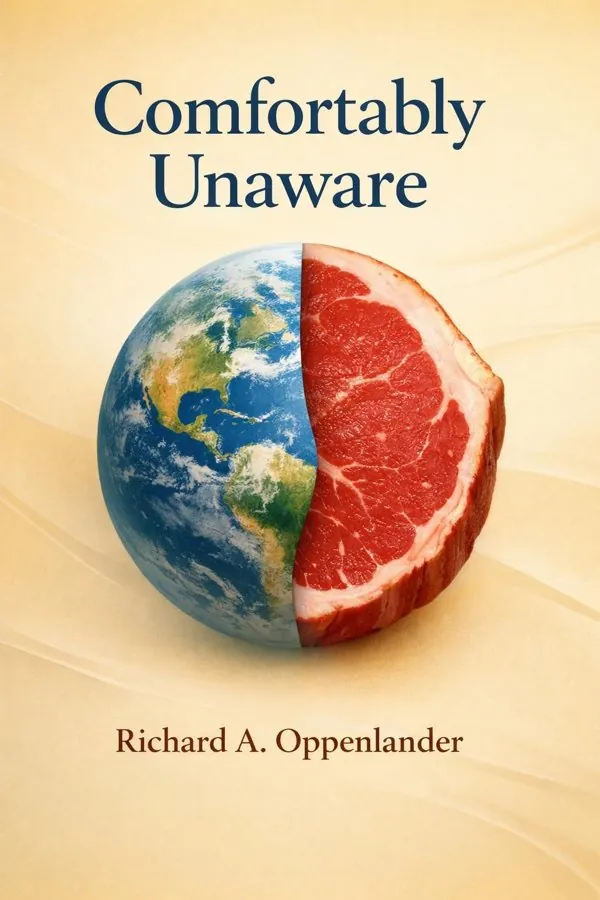
Comfortably Unaware: What We Choose to Eat Is Killing Us and Our Planet: Summary & Key Insights
 10 min9 chaptersAudio available
What Is Comfortably Unaware: What We Choose to Eat Is Killing Us and Our Planet About?
Comfortably Unaware: What We Choose to Eat Is Killing Us and Our Planet by Richard A. Oppenlander is a environment book spanning 9 pages. Comfortably Unaware es un libro que examina el impacto devastador de nuestras elecciones alimentarias en el medio ambiente y la salud global. Richard A. Oppenlander argumenta que la producción y el consumo de productos animales son factores principales en la degradación ambiental, el cambio climático y la pérdida de recursos naturales. El autor invita a los lectores a reconsiderar sus hábitos alimenticios y adoptar una dieta más sostenible y ética.
This FizzRead summary covers all 9 key chapters of Comfortably Unaware: What We Choose to Eat Is Killing Us and Our Planet in approximately 10 minutes, distilling the most important ideas, arguments, and takeaways from Richard A. Oppenlander's work. Also available as an audio summary and Key Quotes Podcast.
Comfortably Unaware: What We Choose to Eat Is Killing Us and Our Planet
Comfortably Unaware es un libro que examina el impacto devastador de nuestras elecciones alimentarias en el medio ambiente y la salud global. Richard A. Oppenlander argumenta que la producción y el consumo de productos animales son factores principales en la degradación ambiental, el cambio climático y la pérdida de recursos naturales. El autor invita a los lectores a reconsiderar sus hábitos alimenticios y adoptar una dieta más sostenible y ética.
Who Should Read Comfortably Unaware: What We Choose to Eat Is Killing Us and Our Planet?
This book is perfect for anyone interested in environment and looking to gain actionable insights in a short read. Whether you're a student, professional, or lifelong learner, the key ideas from Comfortably Unaware: What We Choose to Eat Is Killing Us and Our Planet by Richard A. Oppenlander will help you think differently.
- ✓Readers who enjoy environment and want practical takeaways
- ✓Professionals looking to apply new ideas to their work and life
- ✓Anyone who wants the core insights of Comfortably Unaware: What We Choose to Eat Is Killing Us and Our Planet in just 10 minutes
Want the full summary?
Get instant access to this book summary and 100K+ more with Fizz Moment.
Get Free SummaryAvailable on App Store • Free to download
Key Chapters
The modern global food system is an intricate web of production, transportation, and consumption. It operates with remarkable efficiency on the surface yet relies heavily on unsustainable practices at its core. Animal agriculture sits at the center of this imbalance, consuming vast resources and perpetuating cycles of ecological damage.
When we examine the structure of industrial farming, we see a world driven by profit rather than planetary wellbeing. Millions of animals are raised in confined spaces, fed crops grown on land that could otherwise nourish humans directly. The system depends on massive inputs — water, energy, and feed — and outputs equally massive quantities of waste and pollution. Behind its convenience lies a staggering ecological footprint.
What makes this system particularly dangerous is its invisibility. Most people never see where their food comes from. We are sheltered by marketing images of happy farms and clean packaging. The reality is far different — concentrated animal feeding operations and monocultures that strip soil fertility and exhaust fresh water supplies. The illusion keeps us pacified; the mechanism keeps the industry thriving.
To be aware means to expose the hidden environmental arithmetic behind our meals. It means understanding that a hamburger represents not only a cow but acres of cleared forest and thousands of liters of water. Industrial agriculture is not just feeding the world — it is consuming it. This chapter sets the foundation for the book’s argument: that our global food system cannot be fixed through minor adjustments. It must be fundamentally reimagined, and that reimagining begins with our awareness as consumers.
Deforestation, desertification, water scarcity, and climate change — all roads lead back to the same source more often than we acknowledge: animal agriculture. In my research, the evidence was overwhelming. Raising animals for food is the single most destructive activity on the planet.
Consider the forests of the Amazon, the lungs of Earth. They are cleared primarily to graze cattle or grow soybeans destined for animal feed. Each year millions of hectares vanish, releasing enormous amounts of carbon dioxide and annihilating biodiversity. Our appetite for meat is turning forests into wastelands and vibrant ecosystems into monocultures.
Water tells the same story. To produce one pound of beef requires thousands of liters of water — for feed crops, drinking, and cleaning. Compare this to the small fraction required for grains or vegetables. In regions already facing water stress, this dynamic becomes catastrophic. Rivers dry, aquifers sink, and yet we persist in treating meat as a daily staple.
Then there is pollution. Animal waste contaminates freshwater and coastal ecosystems with nitrates and pathogens. The air near large-scale farms thickens with methane and ammonia, contributing to respiratory illness and global warming alike. When calculated collectively, the livestock sector emits more greenhouse gases than all forms of transportation combined. These are not abstract numbers; they are the measurable signs of a damaged biosphere.
Acknowledging these truths is uncomfortable — but necessary. The planet is not separate from our plates; it reflects them. Every meal is either an act of destruction or preservation. When we choose plant-based foods, we choose forests standing, rivers flowing, air clean enough to breathe. Awareness transforms eating into stewardship.
+ 7 more chapters — available in the FizzRead app
All Chapters in Comfortably Unaware: What We Choose to Eat Is Killing Us and Our Planet
About the Author
Richard A. Oppenlander es un investigador y conferencista estadounidense especializado en sostenibilidad alimentaria y ética ambiental. Ha trabajado en temas de agricultura sostenible y es conocido por su activismo en favor de una alimentación basada en plantas.
Get This Summary in Your Preferred Format
Read or listen to the Comfortably Unaware: What We Choose to Eat Is Killing Us and Our Planet summary by Richard A. Oppenlander anytime, anywhere. FizzRead offers multiple formats so you can learn on your terms — all free.
Available formats: App · Audio · PDF · EPUB — All included free with FizzRead
Download Comfortably Unaware: What We Choose to Eat Is Killing Us and Our Planet PDF and EPUB Summary
Key Quotes from Comfortably Unaware: What We Choose to Eat Is Killing Us and Our Planet
“The modern global food system is an intricate web of production, transportation, and consumption.”
“Deforestation, desertification, water scarcity, and climate change — all roads lead back to the same source more often than we acknowledge: animal agriculture.”
Frequently Asked Questions about Comfortably Unaware: What We Choose to Eat Is Killing Us and Our Planet
Comfortably Unaware: What We Choose to Eat Is Killing Us and Our Planet by Richard A. Oppenlander is a environment book that explores key ideas across 9 chapters. Comfortably Unaware es un libro que examina el impacto devastador de nuestras elecciones alimentarias en el medio ambiente y la salud global. Richard A. Oppenlander argumenta que la producción y el consumo de productos animales son factores principales en la degradación ambiental, el cambio climático y la pérdida de recursos naturales. El autor invita a los lectores a reconsiderar sus hábitos alimenticios y adoptar una dieta más sostenible y ética.
You Might Also Like
A Life on Our Planet: My Witness Statement and a Vision for the Future
David Attenborough
10 min
A Sky Full Of Birds
Matt Merritt
10 min
Carbon Zero: Imagining Cities That Can Save the Planet
Alex Steffen
10 min
Eaarth: Making a Life on a Tough New Planet
Bill McKibben
10 min
The Social Contract and Environmental Governance
Various Editors
10 min
The Wild Places
Robert Macfarlane
10 minBrowse by Category
Ready to read Comfortably Unaware: What We Choose to Eat Is Killing Us and Our Planet?
Get the full summary and 100K+ more books with Fizz Moment.