
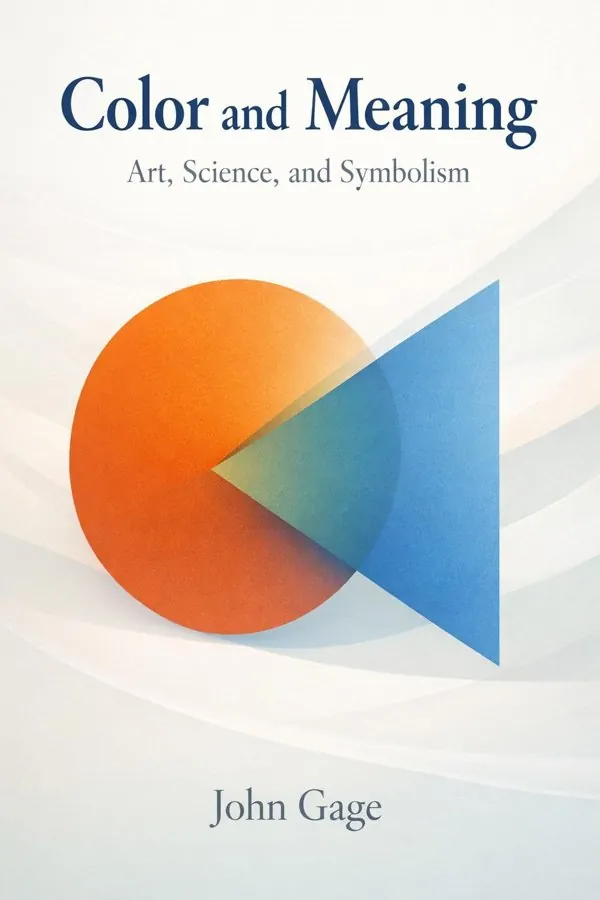
Color and Meaning: Art, Science, and Symbolism: Summary & Key Insights
by John Gage
 10 min12 chaptersAudio available
What Is Color and Meaning: Art, Science, and Symbolism About?
Color and Meaning: Art, Science, and Symbolism by John Gage is a art_history book spanning 12 pages. In this comprehensive study, art historian John Gage explores the complex relationships between color, meaning, and artistic expression from antiquity to modern times. Drawing on art history, science, and cultural studies, Gage examines how artists and thinkers have understood and used color to convey emotion, symbolism, and intellectual ideas. The book bridges disciplines, offering insights into both the material and conceptual dimensions of color in art.
This FizzRead summary covers all 12 key chapters of Color and Meaning: Art, Science, and Symbolism in approximately 10 minutes, distilling the most important ideas, arguments, and takeaways from John Gage's work. Also available as an audio summary and Key Quotes Podcast.
Color and Meaning: Art, Science, and Symbolism
In this comprehensive study, art historian John Gage explores the complex relationships between color, meaning, and artistic expression from antiquity to modern times. Drawing on art history, science, and cultural studies, Gage examines how artists and thinkers have understood and used color to convey emotion, symbolism, and intellectual ideas. The book bridges disciplines, offering insights into both the material and conceptual dimensions of color in art.
Who Should Read Color and Meaning: Art, Science, and Symbolism?
This book is perfect for anyone interested in art_history and looking to gain actionable insights in a short read. Whether you're a student, professional, or lifelong learner, the key ideas from Color and Meaning: Art, Science, and Symbolism by John Gage will help you think differently.
- ✓Readers who enjoy art_history and want practical takeaways
- ✓Professionals looking to apply new ideas to their work and life
- ✓Anyone who wants the core insights of Color and Meaning: Art, Science, and Symbolism in just 10 minutes
Want the full summary?
Get instant access to this book summary and 100K+ more with Fizz Moment.
Get Free SummaryAvailable on App Store • Free to download
Key Chapters
When we turn back to the origins of color theory, we find ourselves in a world where philosophy and sensation were inseparable. In Greece and Rome, thinkers such as Aristotle and Pliny did not see color as mere perception but as an embodiment of substance and element. Aristotle’s theory of color arranged hues within a cosmological scheme of light and darkness—white and black as primary forces mediating between the extremes. This was not merely speculative; it defined how painters and craftsmen mixed materials, believing that the balance of elements determined visual beauty.
I’ve always found the classical approach fascinating in its unity of metaphysics and practice. For example, the Greeks understood yellow and red not as abstract tones but as manifestations of heat and dryness, qualities linked to the body and the soul. Roman authors extended this thinking by connecting colors to rhetorical elegance and social hierarchy. Purple, extracted from murex shells, became a sign of imperial dignity precisely because its rarity mirrored the cosmic preciousness of light.
These ancient ideas continue to resound through later traditions. When Renaissance thinkers revisited Aristotle, they inherited not only theories but a whole vocabulary that conflated color with moral and physical essence. Understanding this foundational moment allows us to trace how color became simultaneously sensory and symbolic — a duality that still shapes our experience.
In the medieval world, color acquired theological depth. It was no longer sufficient to reproduce nature; color had to reveal divine meaning. The Church’s liturgical traditions dictated that each hue corresponded to a spiritual truth. Gold signified the eternal glory of God, blue the purity of the Virgin, and red the passion of Christ’s sacrifice. I devoted much of my study to tracing these associations through illuminated manuscripts and stained glass, where light itself was considered sacred.
Medieval thinkers like Hugh of Saint Victor and Roger Bacon treated color as the mediator between earthly vision and heavenly revelation. When the believer gazed upon a radiant window, the experience was not aesthetic alone—it was a spiritual illumination. The technical mastery of medieval artisans was thus deeply entwined with theological symbolism: pure ultramarine, extracted from lapis lazuli imported from Afghanistan, became more valuable than gold because it embodied the idea of transcendence.
To understand medieval color is to grasp the unity between material and meaning. Pigments, liturgy, and theology formed a single system, reminding us that art in this era was an act of worship as much as creation.
+ 10 more chapters — available in the FizzRead app
All Chapters in Color and Meaning: Art, Science, and Symbolism
About the Author
John Gage (1938–2012) was a British art historian and a leading authority on color theory and its role in art. He served as Head of the Department of History of Art at the University of Cambridge and authored several influential works, including 'Color and Culture' and 'Color and Meaning', which have shaped modern understanding of color in visual culture.
Get This Summary in Your Preferred Format
Read or listen to the Color and Meaning: Art, Science, and Symbolism summary by John Gage anytime, anywhere. FizzRead offers multiple formats so you can learn on your terms — all free.
Available formats: App · Audio · PDF · EPUB — All included free with FizzRead
Download Color and Meaning: Art, Science, and Symbolism PDF and EPUB Summary
Key Quotes from Color and Meaning: Art, Science, and Symbolism
“When we turn back to the origins of color theory, we find ourselves in a world where philosophy and sensation were inseparable.”
“In the medieval world, color acquired theological depth.”
Frequently Asked Questions about Color and Meaning: Art, Science, and Symbolism
Color and Meaning: Art, Science, and Symbolism by John Gage is a art_history book that explores key ideas across 12 chapters. In this comprehensive study, art historian John Gage explores the complex relationships between color, meaning, and artistic expression from antiquity to modern times. Drawing on art history, science, and cultural studies, Gage examines how artists and thinkers have understood and used color to convey emotion, symbolism, and intellectual ideas. The book bridges disciplines, offering insights into both the material and conceptual dimensions of color in art.
You Might Also Like
Studies In Impressionism
John Rewald
10 min
Art Since 1900: Modernism, Antimodernism, Postmodernism
Hal Foster, Rosalind E. Krauss, Yve-Alain Bois, Benjamin H. D. Buchloh
10 min
Art Since 1940: Strategies of Being
Jonathan Fineberg
10 min
Color: Travels Through the Paintbox
Victoria Finlay
10 min
Curatorial Activism: Towards an Ethics of Curating
Maura Reilly
10 min
How to Read a Painting: From Giotto to Jackson Pollock
Patrick De Rynck
10 minBrowse by Category
Ready to read Color and Meaning: Art, Science, and Symbolism?
Get the full summary and 100K+ more books with Fizz Moment.