
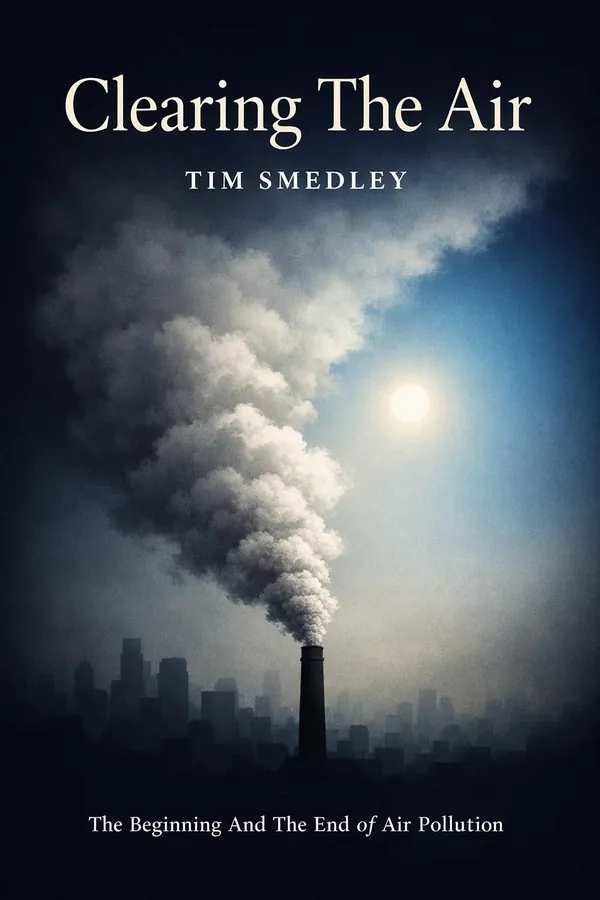
Clearing The Air: The Beginning And The End Of Air Pollution: Summary & Key Insights
by Tim Smedley
 10 min3 chaptersAudio available
What Is Clearing The Air: The Beginning And The End Of Air Pollution About?
Clearing The Air: The Beginning And The End Of Air Pollution by Tim Smedley is a environment book spanning 3 pages. Investigative journalist Tim Smedley explores the global air pollution crisis, revealing its causes, impacts on human health, and potential solutions. Through interviews with scientists, policymakers, and affected individuals, the book examines how air quality has become one of the 21st century’s most urgent environmental and public health issues.
This FizzRead summary covers all 3 key chapters of Clearing The Air: The Beginning And The End Of Air Pollution in approximately 10 minutes, distilling the most important ideas, arguments, and takeaways from Tim Smedley's work. Also available as an audio summary and Key Quotes Podcast.
Clearing The Air: The Beginning And The End Of Air Pollution
Investigative journalist Tim Smedley explores the global air pollution crisis, revealing its causes, impacts on human health, and potential solutions. Through interviews with scientists, policymakers, and affected individuals, the book examines how air quality has become one of the 21st century’s most urgent environmental and public health issues.
Who Should Read Clearing The Air: The Beginning And The End Of Air Pollution?
This book is perfect for anyone interested in environment and looking to gain actionable insights in a short read. Whether you're a student, professional, or lifelong learner, the key ideas from Clearing The Air: The Beginning And The End Of Air Pollution by Tim Smedley will help you think differently.
- ✓Readers who enjoy environment and want practical takeaways
- ✓Professionals looking to apply new ideas to their work and life
- ✓Anyone who wants the core insights of Clearing The Air: The Beginning And The End Of Air Pollution in just 10 minutes
Want the full summary?
Get instant access to this book summary and 100K+ more with Fizz Moment.
Get Free SummaryAvailable on App Store • Free to download
Key Chapters
The story of air pollution begins not in modern cities but centuries ago, with the rise of coal. When Londoners first burned coal in the Middle Ages, they could not foresee that this new fuel would define the industrial era—and poison generations to come. Over time, the black smoke became accepted as the price of progress, a sign of prosperity. It wasn’t until deadly fogs like the Great Smog of 1952 that people began to understand the scale of the tragedy unfolding in the air.
In tracing this history, I found that pollution is deeply intertwined with our economic evolution. Every industrial innovation, from the steam engine to mass car production, left behind invisible residues—particulate matter, nitrogen oxides, volatile organic compounds—molecules that float unseen yet penetrate deeply into our lungs and bloodstreams. Scientists have since mapped these pollutants with the precision of detectives: PM2.5, PM10, NO₂, ozone, sulfur dioxide. Each has its story, its source, and its toxic path.
But knowing the chemistry alone isn’t enough. As I spoke to researchers, they explained that air pollution behaves differently across landscapes and seasons. Heat traps it, valleys hold it, and cities generate it like clockwork. The air becomes not just a scientific problem but a social one—where you live can determine how much poison you inhale. This historical and scientific backdrop is crucial because it reveals that pollution didn’t appear overnight. It was designed into our economies, our infrastructures, even our daily habits. To clear the air, we must understand not only what it is but how it became our most consistent companion.
In Delhi, children grow up under skies tinted grey; in Beijing, masks have become routine; in London, hospitals treat asthma epidemics invisible in official statistics. These are not abstractions—they are the daily realities of millions. When I visited these cities, the sensory assault was overwhelming: burning dust, metallic tastes, and a constant film of soot on clothes and skin. Yet, what struck me most were the people living inside this haze.
Doctors shared how respiratory diseases are now affecting infants who have never seen clean skies. Researchers pointed to studies showing that pollution reaches deep into the bloodstream, aggravating heart disease, strokes, even cognitive decline. The World Health Organization estimates seven million premature deaths annually linked to air pollution, more than from wars or smoking. The tragedy is layered—it is environmental, medical, and moral.
Through interviews and stories, the connection between daily life and policy became clear. Delhi’s smog isn’t just from cars but from agricultural burning; London’s nitrogen dioxide crisis stems largely from diesel vehicles once advertised as eco-friendly. In Beijing, centralized control has allowed dramatic clean-up campaigns, while in other cities, fragmented governance stalls progress. Pollution does not exist in isolation—it is built from systems that prioritize convenience and consumption over lives.
When you begin to see air not as mere atmosphere but as a shared commons, the injustice becomes unbearable. Clean air is a human right denied by systemic choices. Understanding these layers helps transform anger into clarity and hopelessness into determination.
+ 1 more chapters — available in the FizzRead app
All Chapters in Clearing The Air: The Beginning And The End Of Air Pollution
About the Author
Tim Smedley is a UK-based sustainability journalist who writes on environmental and energy issues for publications such as The Guardian, BBC, and Financial Times. His work focuses on climate change, resource efficiency, and sustainable urban development.
Get This Summary in Your Preferred Format
Read or listen to the Clearing The Air: The Beginning And The End Of Air Pollution summary by Tim Smedley anytime, anywhere. FizzRead offers multiple formats so you can learn on your terms — all free.
Available formats: App · Audio · PDF · EPUB — All included free with FizzRead
Download Clearing The Air: The Beginning And The End Of Air Pollution PDF and EPUB Summary
Key Quotes from Clearing The Air: The Beginning And The End Of Air Pollution
“The story of air pollution begins not in modern cities but centuries ago, with the rise of coal.”
“In Delhi, children grow up under skies tinted grey; in Beijing, masks have become routine; in London, hospitals treat asthma epidemics invisible in official statistics.”
Frequently Asked Questions about Clearing The Air: The Beginning And The End Of Air Pollution
Clearing The Air: The Beginning And The End Of Air Pollution by Tim Smedley is a environment book that explores key ideas across 3 chapters. Investigative journalist Tim Smedley explores the global air pollution crisis, revealing its causes, impacts on human health, and potential solutions. Through interviews with scientists, policymakers, and affected individuals, the book examines how air quality has become one of the 21st century’s most urgent environmental and public health issues.
More by Tim Smedley
You Might Also Like
A Life on Our Planet: My Witness Statement and a Vision for the Future
David Attenborough
10 min
A Sky Full Of Birds
Matt Merritt
10 min
Carbon Zero: Imagining Cities That Can Save the Planet
Alex Steffen
10 min
Eaarth: Making a Life on a Tough New Planet
Bill McKibben
10 min
The Social Contract and Environmental Governance
Various Editors
10 min
The Wild Places
Robert Macfarlane
10 minBrowse by Category
Ready to read Clearing The Air: The Beginning And The End Of Air Pollution?
Get the full summary and 100K+ more books with Fizz Moment.