
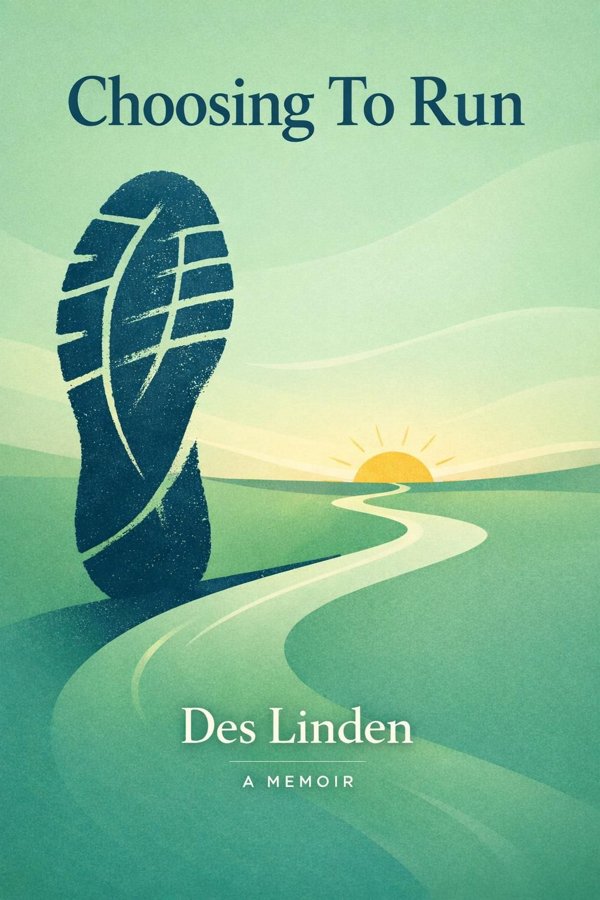
Choosing To Run: A Memoir: Summary & Key Insights
by Des Linden
 10 min9 chaptersAudio available
Key Takeaways from Choosing To Run: A Memoir
Long before achievement becomes public, it begins as private fascination.
Talent opens doors, but structure reveals the true price of ambition.
The leap from promising performer to professional is less like a coronation and more like entering a storm.
Big stages do not automatically reveal your best self; they reveal how well you have trained your mind.
Resilience is not built by avoiding interruption; it is built by learning how to continue through it.
What Is Choosing To Run: A Memoir About?
Choosing To Run: A Memoir by Des Linden is a biographies book spanning 8 pages. Choosing To Run is more than a sports memoir. It is a clear-eyed, deeply human account of what it means to commit to a difficult path for years, often without applause, certainty, or guarantees. In this book, Des Linden—Boston Marathon champion, Olympian, and one of America’s most respected distance runners—recounts the long road from a movement-loving kid in California to the winner of the brutal 2018 Boston Marathon. Co-written with journalist Bonnie D. Ford, the memoir blends race stories with reflections on discipline, identity, injury, disappointment, and the quiet mental habits that sustain elite performance. What makes the book matter is not just Linden’s historic victory, but the way she interprets it. She shows that success in endurance sports is rarely glamorous. It is built through repetition, self-trust, adaptation, and the willingness to keep showing up when progress feels invisible. Her authority comes not only from medals and major races, but from decades spent living the demands of professional running at the highest level. For athletes, ambitious professionals, and anyone facing a long challenge, Choosing To Run offers an honest, practical portrait of resilience in action.
This FizzRead summary covers all 9 key chapters of Choosing To Run: A Memoir in approximately 10 minutes, distilling the most important ideas, arguments, and takeaways from Des Linden's work. Also available as an audio summary and Key Quotes Podcast.
Choosing To Run: A Memoir
Choosing To Run is more than a sports memoir. It is a clear-eyed, deeply human account of what it means to commit to a difficult path for years, often without applause, certainty, or guarantees. In this book, Des Linden—Boston Marathon champion, Olympian, and one of America’s most respected distance runners—recounts the long road from a movement-loving kid in California to the winner of the brutal 2018 Boston Marathon. Co-written with journalist Bonnie D. Ford, the memoir blends race stories with reflections on discipline, identity, injury, disappointment, and the quiet mental habits that sustain elite performance.
What makes the book matter is not just Linden’s historic victory, but the way she interprets it. She shows that success in endurance sports is rarely glamorous. It is built through repetition, self-trust, adaptation, and the willingness to keep showing up when progress feels invisible. Her authority comes not only from medals and major races, but from decades spent living the demands of professional running at the highest level. For athletes, ambitious professionals, and anyone facing a long challenge, Choosing To Run offers an honest, practical portrait of resilience in action.
Who Should Read Choosing To Run: A Memoir?
This book is perfect for anyone interested in biographies and looking to gain actionable insights in a short read. Whether you're a student, professional, or lifelong learner, the key ideas from Choosing To Run: A Memoir by Des Linden will help you think differently.
- ✓Readers who enjoy biographies and want practical takeaways
- ✓Professionals looking to apply new ideas to their work and life
- ✓Anyone who wants the core insights of Choosing To Run: A Memoir in just 10 minutes
Want the full summary?
Get instant access to this book summary and 100K+ more with Fizz Moment.
Get Free SummaryAvailable on App Store • Free to download
Key Chapters
Long before achievement becomes public, it begins as private fascination. One of the strongest threads in Choosing To Run is Des Linden’s early love of movement—the simple, instinctive joy of speed, effort, and physical freedom. Growing up in California, she was not yet a future marathon champion in any formal sense. She was a kid who liked to move, compete, and discover what her body could do. That matters because elite success often gets retold as destiny, when in reality it usually starts with curiosity.
Linden’s childhood helped build a foundation that was emotional as much as athletic. Running was not initially about fame, rankings, or external validation. It was about feeling engaged, capable, and alive. That early relationship to sport gave her something crucial later on: a reason to keep going when competition became more structured and demanding. Athletes who last are often those who remember why they loved the activity before it became a job.
This idea applies far beyond running. In any serious pursuit, the earliest spark matters. A musician may begin with the pleasure of sound before technique. An entrepreneur may start with fascination for solving problems before revenue enters the picture. When pressure increases, returning to that first source of enjoyment can protect motivation from becoming purely transactional.
Linden’s early years also remind readers that identity develops through repetition. Small acts—joining races, testing limits, enjoying effort��gradually formed her self-understanding. She became someone who ran not because others labeled her that way, but because she chose it repeatedly.
Actionable takeaway: Reconnect with the original reason you loved your craft. Write down what first drew you to it, and use that memory as an anchor when ambition, stress, or comparison start to crowd out joy.
Talent opens doors, but structure reveals the true price of ambition. At Arizona State University, running became more serious for Des Linden. College was not just a period of development; it was a reality check. Training, classes, travel, recovery, and competition had to coexist, and the romantic idea of excellence gave way to the daily logistics required to sustain it.
This stage of the memoir shows how growth often happens when enthusiasm meets constraint. Linden began to understand that improvement was not simply about wanting success more. It required routines, trade-offs, and the ability to organize life around priorities. Sleep mattered. Recovery mattered. Consistency mattered. A hard workout had consequences for the rest of the day. The body could not be treated as separate from the mind, schedule, or environment.
College also forced her to confront comparison. In a stronger competitive setting, everyone had some version of talent. That meant identity could no longer rest on being naturally gifted. She had to become someone who could absorb setbacks, listen to coaching, and keep improving even when she was no longer the obvious standout. This is an important lesson for readers entering any higher level of competition. Advancement often strips away the comfort of being exceptional and replaces it with the challenge of becoming disciplined.
Practical application is straightforward. Whether you are pursuing graduate school, building a company, or training for your first marathon, success at a higher level demands systems. Calendars, habits, food, rest, and boundaries stop being optional. Excellence is rarely one heroic effort; it is many ordinary choices made on time.
Actionable takeaway: Audit your current routine and identify one hidden cost of your goals—sleep, recovery, focus, or time. Then build a simple system to support it, because ambition without structure eventually collapses under its own weight.
The leap from promising performer to professional is less like a coronation and more like entering a storm. In Choosing To Run, Linden’s transition to professional running highlights an often-overlooked truth: turning talent into a career can make life feel less secure, not more. Expectations rise, financial realities become sharper, and performance starts to shape identity in more public ways.
As a professional runner, Linden had to navigate contracts, race schedules, coaching relationships, and the constant pressure to justify her place. The sport may appear simple from the outside—put on shoes and race—but professional endurance running is a complex balancing act. Every decision has consequences. Race too often and risk burnout. Race too little and lose momentum, visibility, or income. Trust the process too much and you may miss adjustments; react too quickly and you may derail long-term development.
What makes Linden’s story compelling is her refusal to romanticize this period. She shows that professionalism is not just about higher performance. It is about emotional steadiness amid unstable conditions. There are no guarantees that hard work will immediately translate into results. There are seasons when the work feels invisible and progress hard to measure.
This insight applies to anyone building a life in a competitive field. Freelancers, founders, artists, and athletes all face a version of the same challenge: learning to function without constant reassurance. The transition to the next level often requires a stronger internal compass because external signals are inconsistent.
Linden’s experience suggests that maturity comes from learning to separate effort from ego. You cannot control every outcome, but you can control preparation, honesty, and adaptability. Professionalism is less about status than about how you behave when stakes are high.
Actionable takeaway: If you are entering a more demanding phase of your career, define three process goals you can control each week. Use them to create stability when outcomes remain uncertain.
Big stages do not automatically reveal your best self; they reveal how well you have trained your mind. Linden’s Olympic experiences in the memoir show that qualifying for and competing in the Olympics is not just a physical achievement. It is a psychological test involving pressure, national expectations, logistical complexity, and the enormous emotional weight of representing something larger than yourself.
For many athletes, the Olympics symbolize arrival. But Linden’s perspective complicates that idea. Making an Olympic team is meaningful, yet it does not magically resolve doubt, fear, or imperfection. In fact, elite settings can intensify them. Race plans are disrupted, bodies respond unpredictably, and the margin between a great day and a disappointing one can be very small. What matters then is not fantasy, but composure.
Linden’s account highlights the importance of staying grounded in preparation rather than spectacle. The Olympics can tempt athletes into overthinking because the event appears larger than life. But the actual task remains familiar: pace well, respond intelligently, trust the work, and manage discomfort. In other words, pressure is handled by shrinking the moment back down to its essentials.
That lesson translates well to non-athletic settings. A job interview, public presentation, trial, launch, or exam may feel like a once-in-a-lifetime event, but the best response is often to focus on the next executable action rather than the grand meaning of the occasion. Nerves become more manageable when the task becomes specific.
Linden also shows that elite milestones are valuable even when they do not become perfect stories. The experience itself refines character, clarifies weaknesses, and teaches what preparation really means under stress.
Actionable takeaway: Before any high-pressure event, make a short list of controllable actions you can return to when anxiety rises. Let the size of the moment shrink in the face of a clear process.
Resilience is not built by avoiding interruption; it is built by learning how to continue through it. Injuries and setbacks occupy a central place in Linden’s story because they reveal the less visible side of elite running. Progress is rarely linear. Bodies break down, plans unravel, and identity gets shaken when the thing you rely on most suddenly becomes inaccessible.
Linden’s treatment of injury is especially valuable because she does not frame it as a dramatic detour separate from real training. Instead, setbacks become part of the work itself. Rehabilitation, modified routines, patience, and emotional recalibration all become forms of discipline. For an athlete used to measuring worth through mileage, pace, and race outcomes, this can be deeply uncomfortable. You are forced to confront whether your commitment is to the image of success or to the slower, less glamorous process that might eventually restore it.
A practical insight from this section is that setbacks often expose hidden habits of thought. Many high achievers treat interruption as failure. Linden’s experience suggests a better view: interruption is information. It tells you something about your body, your limits, your preparation, or your need to adapt. That does not make injury easy, but it makes it usable.
Readers outside sports will recognize the pattern. A failed launch, illness, layoff, or personal loss can temporarily sever us from our preferred identity. What matters then is preserving momentum in whatever form remains available. If you cannot do the full version of the work, do the version that is possible now.
Linden’s example shows that maturity includes knowing when toughness means pushing forward and when it means pausing intelligently. Both require courage.
Actionable takeaway: When facing a setback, ask two questions: What is still within my control, and what can this interruption teach me? Use the answers to design your next small, sustainable step.
Extraordinary results often come from ordinary decisions made calmly under extreme conditions. Linden’s 2018 Boston Marathon victory is the defining event of the memoir, but she presents it not as a miracle, but as the outcome of preparation meeting chaos. The weather was brutal—cold, wet, windy, and punishing. Many runners suffered. Linden, however, interpreted the conditions differently. Instead of resisting reality, she accepted the day for what it was and raced the race that existed.
This is one of the book’s most powerful lessons. Great competitors do not waste energy wishing conditions were ideal. They adapt faster than others. Linden’s legendary pre-race message—offering help to teammate Shalane Flanagan before deciding to race hard herself—captured her mindset: stay useful, stay flexible, stay mentally loose. Once the race unfolded, she trusted experience, managed effort intelligently, and recognized that misery was affecting everyone.
The victory was historic—she became the first American woman to win the Boston Marathon in 33 years—but the deeper point is that she did not force greatness. She responded to conditions with clarity. That distinction matters in every domain. During crises, market shifts, organizational turmoil, or personal upheaval, the winners are rarely those with the prettiest plan. They are the ones who can perceive reality accurately and make good decisions inside discomfort.
Linden’s win also underlines the long horizon of achievement. That day looked sudden to outsiders, yet it was built on years of near-misses, endurance, and accumulated knowledge. Breakthroughs are often delayed rewards for persistence.
Actionable takeaway: When circumstances turn unfavorable, stop asking how to get ideal conditions back. Ask instead: Given this reality, what strategy now gives me the best chance to succeed?
The dream outcome can be life-changing and still not solve the deeper questions of identity. After winning Boston, Linden entered a new level of visibility and recognition. She had achieved the kind of result athletes chase for years. Yet one of the memoir’s most grounded insights is that even a landmark victory does not transform a person into someone entirely new.
Public narratives often suggest that success provides closure. The race is won, the title is secured, and everything finally makes sense. Linden complicates that fantasy. Yes, the victory was meaningful, validating, and historic. It changed how others saw her. It expanded her platform and rewrote her place in American running. But internally, the familiar realities remained: training still mattered, the body still demanded care, and life still required ordinary decisions.
This section offers an important corrective to achievement culture. We often project enormous emotional power onto future milestones: the promotion, the book deal, the finish time, the award. We imagine that reaching them will erase insecurity or create permanent fulfillment. Linden’s reflections suggest that while achievement can be joyful and deeply satisfying, it does not replace the ongoing work of self-understanding.
There is also humility in her response to fame. Rather than clinging to one triumphant identity, she keeps returning to the process that produced it. That mindset protects against both complacency and the emptiness that can follow a peak experience. The goal is not to live forever inside one moment, but to let that moment enrich the larger journey.
For readers, this is liberating. You can pursue big goals wholeheartedly without burdening them with the impossible job of fixing your whole life.
Actionable takeaway: Celebrate your wins fully, but do not expect them to define your worth. After any major success, ask: What habits, values, and relationships do I want to keep building now that the spotlight has faded?
A meaningful life is rarely shaped by one grand decision; it is shaped by a thousand renewals of commitment. The title Choosing To Run captures a central idea of the memoir: running was not just something that happened to Des Linden because she was talented. It was something she kept choosing, over and over, through uncertainty, fatigue, disappointment, and change.
This is what gives the memoir its reach beyond sports. Most readers are not training for the Olympics or the Boston Marathon, but nearly everyone faces the challenge of recommitting to a difficult path after the initial excitement fades. You choose the marriage again after conflict. You choose the work again after rejection. You choose the art again after obscurity. Endurance, in this sense, is ethical as much as physical. It expresses what you are willing to keep serving.
Linden also reflects on life beyond competition, showing that identity must remain flexible. Athletes eventually confront aging, changing goals, and the question of who they are when peak performance is no longer the sole organizing principle. Her story suggests that the healthiest form of dedication is one that evolves rather than hardens. You can remain loyal to a core part of yourself while allowing the expression of that identity to change.
The memoir therefore becomes a meditation on agency. We do not control every circumstance, but we do retain the power to choose our response, our effort, and our level of honesty. Choosing a path does not mean guaranteeing the outcome. It means deciding what kind of person you want to be while pursuing it.
Actionable takeaway: Identify one long-term commitment in your life and define what choosing it looks like this week in concrete terms. Commitment becomes real only when it appears in today’s actions.
All Chapters in Choosing To Run: A Memoir
About the Author
Des Linden is an American long-distance runner, Olympian, and memoirist best known for winning the 2018 Boston Marathon in severe weather, becoming the first American woman to claim the title in 33 years. Born in California, she developed into one of the most durable and respected athletes in U.S. distance running through years of steady progress, setbacks, and elite competition. Linden has represented the United States at multiple Olympic Games and competed at the highest levels of the marathon world. She is widely admired not only for her performances, but also for her toughness, candor, and practical view of what excellence really requires. In Choosing To Run, she brings those qualities to the page, offering readers an intimate look at the mindset behind a remarkable athletic career.
Get This Summary in Your Preferred Format
Read or listen to the Choosing To Run: A Memoir summary by Des Linden anytime, anywhere. FizzRead offers multiple formats so you can learn on your terms — all free.
Available formats: App · Audio · PDF · EPUB — All included free with FizzRead
Download Choosing To Run: A Memoir PDF and EPUB Summary
Key Quotes from Choosing To Run: A Memoir
“Long before achievement becomes public, it begins as private fascination.”
“Talent opens doors, but structure reveals the true price of ambition.”
“The leap from promising performer to professional is less like a coronation and more like entering a storm.”
“Big stages do not automatically reveal your best self; they reveal how well you have trained your mind.”
“Resilience is not built by avoiding interruption; it is built by learning how to continue through it.”
Frequently Asked Questions about Choosing To Run: A Memoir
Choosing To Run: A Memoir by Des Linden is a biographies book that explores key ideas across 9 chapters. Choosing To Run is more than a sports memoir. It is a clear-eyed, deeply human account of what it means to commit to a difficult path for years, often without applause, certainty, or guarantees. In this book, Des Linden—Boston Marathon champion, Olympian, and one of America’s most respected distance runners—recounts the long road from a movement-loving kid in California to the winner of the brutal 2018 Boston Marathon. Co-written with journalist Bonnie D. Ford, the memoir blends race stories with reflections on discipline, identity, injury, disappointment, and the quiet mental habits that sustain elite performance. What makes the book matter is not just Linden’s historic victory, but the way she interprets it. She shows that success in endurance sports is rarely glamorous. It is built through repetition, self-trust, adaptation, and the willingness to keep showing up when progress feels invisible. Her authority comes not only from medals and major races, but from decades spent living the demands of professional running at the highest level. For athletes, ambitious professionals, and anyone facing a long challenge, Choosing To Run offers an honest, practical portrait of resilience in action.
You Might Also Like

An American Marriage
Tayari Jones
10 min
Benjamin Franklin: An American Life
Walter Isaacson
10 min
I Know Why The Caged Bird Sings
Maya Angelou
10 min
Long Walk to Freedom
Nelson Mandela
10 min
Persepolis
Marjane Satrapi
10 min
Surely You're Joking, Mr. Feynman!
Richard P. Feynman
10 minBrowse by Category
Ready to read Choosing To Run: A Memoir?
Get the full summary and 100K+ more books with Fizz Moment.