
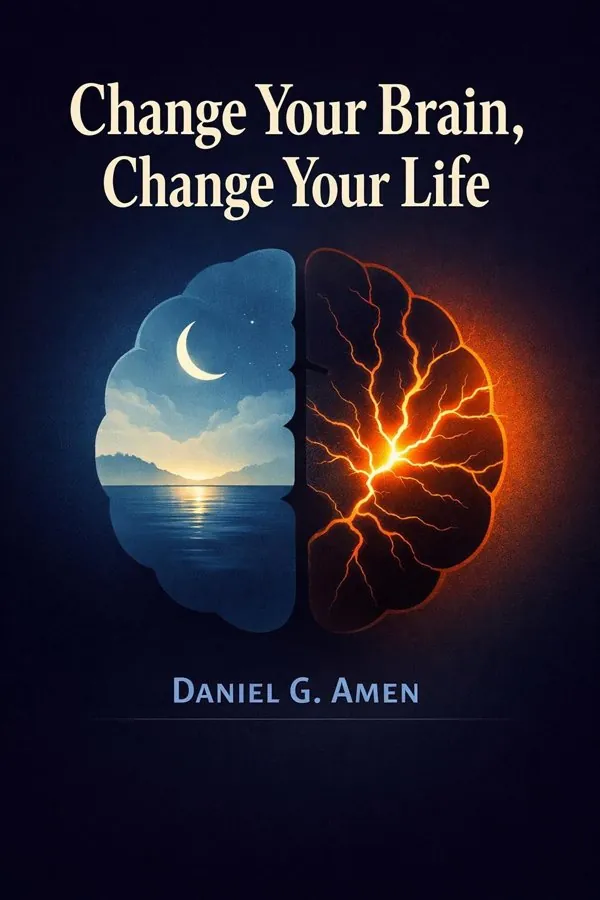
Change Your Brain, Change Your Life: The Breakthrough Program for Conquering Anxiety, Depression, Obsessiveness, Anger, and Impulsiveness: Summary & Key Insights
 10 min3 chaptersAudio available
What Is Change Your Brain, Change Your Life: The Breakthrough Program for Conquering Anxiety, Depression, Obsessiveness, Anger, and Impulsiveness About?
Change Your Brain, Change Your Life: The Breakthrough Program for Conquering Anxiety, Depression, Obsessiveness, Anger, and Impulsiveness by Daniel G. Amen is a mental_health book spanning 3 pages. This book presents Dr. Daniel Amen’s pioneering work on how brain imaging can transform mental health treatment. It explains how specific brain systems influence emotions and behavior, and offers practical strategies to improve mood, focus, and relationships through lifestyle changes, supplements, and therapy.
This FizzRead summary covers all 3 key chapters of Change Your Brain, Change Your Life: The Breakthrough Program for Conquering Anxiety, Depression, Obsessiveness, Anger, and Impulsiveness in approximately 10 minutes, distilling the most important ideas, arguments, and takeaways from Daniel G. Amen's work. Also available as an audio summary and Key Quotes Podcast.
Change Your Brain, Change Your Life: The Breakthrough Program for Conquering Anxiety, Depression, Obsessiveness, Anger, and Impulsiveness
This book presents Dr. Daniel Amen’s pioneering work on how brain imaging can transform mental health treatment. It explains how specific brain systems influence emotions and behavior, and offers practical strategies to improve mood, focus, and relationships through lifestyle changes, supplements, and therapy.
Who Should Read Change Your Brain, Change Your Life: The Breakthrough Program for Conquering Anxiety, Depression, Obsessiveness, Anger, and Impulsiveness?
This book is perfect for anyone interested in mental_health and looking to gain actionable insights in a short read. Whether you're a student, professional, or lifelong learner, the key ideas from Change Your Brain, Change Your Life: The Breakthrough Program for Conquering Anxiety, Depression, Obsessiveness, Anger, and Impulsiveness by Daniel G. Amen will help you think differently.
- ✓Readers who enjoy mental_health and want practical takeaways
- ✓Professionals looking to apply new ideas to their work and life
- ✓Anyone who wants the core insights of Change Your Brain, Change Your Life: The Breakthrough Program for Conquering Anxiety, Depression, Obsessiveness, Anger, and Impulsiveness in just 10 minutes
Want the full summary?
Get instant access to this book summary and 100K+ more with Fizz Moment.
Get Free SummaryAvailable on App Store • Free to download
Key Chapters
When I first held a SPECT image in my hand, I knew psychiatry would never be the same. Traditional medicine relies on physical exams and lab tests, but psychiatry had long operated in darkness. SPECT—Single Photon Emission Computed Tomography—illuminated cerebral blood flow and metabolic patterns, allowing us to observe which areas were overactive, underactive, or balanced. That visibility became revolutionary. It let us move from symptomatic labels—like ‘depression’ or ‘anxiety’—to biological understanding. The overactivity of the cingulate explains obsessive loops; low prefrontal activity can underlie impulsivity; hyperactive basal ganglia sustain chronic anxiety. Once we understand this map, we can design precise interventions instead of guesswork.
Imaging also changed how patients viewed themselves. When I showed people their scans, they often cried in relief. One teenager, previously ridiculed as lazy and defiant, saw that his prefrontal cortex wasn’t engaging as it should. This wasn’t a moral failure—it was biology. That realization restored dignity and accountability. Brain imaging turned shame into responsibility: 'Now that I can see what’s wrong, I can do something about it.' This insight—that behavior is the reflection of brain health—remains the cornerstone of my work and this book.
Through years of imaging, five major brain systems emerged as the foundation of emotional and behavioral control. Each one has its gift and its vulnerability.
The prefrontal cortex is the seat of focus, judgment, and impulse control. When functioning well, it helps you plan and weigh consequences. When underactive, you may leap before looking, struggle with organization, or forget priorities—patterns seen in ADD or impulsivity. In contrast, the cingulate system governs cognitive flexibility and the ability to shift attention. When this zone locks up, thoughts loop endlessly: worry, guilt, or rigidity dominate. Many people labeled as obsessive-compulsive or ‘stubborn’ are experiencing exactly this pattern.
The basal ganglia regulate anxiety and motivation. When balanced, they fuel confidence and persistence. But when they hum too loudly, tension and fear tighten the body; too quiet, and you lose drive and interest. The temporal lobes are the brain’s emotional and memory gates—responsible for temper control, empathy, and stable mood. Damage or low activity here often brings irritability or sudden anger. Finally, the deep limbic system, nestled in the brain’s core, colors every experience with emotional tone. Overactivity here is the biological signature of depression: the gray lens through which you see life.
Each system interacts dynamically with the others. Helping a patient means finding harmony between them, quieting the overfired regions and stimulating the silent ones. Understanding these interdependencies is how we stop treating symptoms in isolation and begin restoring balance to the entire neural orchestra.
+ 1 more chapters — available in the FizzRead app
All Chapters in Change Your Brain, Change Your Life: The Breakthrough Program for Conquering Anxiety, Depression, Obsessiveness, Anger, and Impulsiveness
About the Author
Daniel G. Amen, M.D., is a psychiatrist, brain disorder specialist, and founder of Amen Clinics. He is known for his research using SPECT brain imaging to diagnose and treat mental health conditions and has authored multiple bestselling books on brain health and psychology.
Get This Summary in Your Preferred Format
Read or listen to the Change Your Brain, Change Your Life: The Breakthrough Program for Conquering Anxiety, Depression, Obsessiveness, Anger, and Impulsiveness summary by Daniel G. Amen anytime, anywhere. FizzRead offers multiple formats so you can learn on your terms — all free.
Available formats: App · Audio · PDF · EPUB — All included free with FizzRead
Download Change Your Brain, Change Your Life: The Breakthrough Program for Conquering Anxiety, Depression, Obsessiveness, Anger, and Impulsiveness PDF and EPUB Summary
Key Quotes from Change Your Brain, Change Your Life: The Breakthrough Program for Conquering Anxiety, Depression, Obsessiveness, Anger, and Impulsiveness
“When I first held a SPECT image in my hand, I knew psychiatry would never be the same.”
“Through years of imaging, five major brain systems emerged as the foundation of emotional and behavioral control.”
Frequently Asked Questions about Change Your Brain, Change Your Life: The Breakthrough Program for Conquering Anxiety, Depression, Obsessiveness, Anger, and Impulsiveness
Change Your Brain, Change Your Life: The Breakthrough Program for Conquering Anxiety, Depression, Obsessiveness, Anger, and Impulsiveness by Daniel G. Amen is a mental_health book that explores key ideas across 3 chapters. This book presents Dr. Daniel Amen’s pioneering work on how brain imaging can transform mental health treatment. It explains how specific brain systems influence emotions and behavior, and offers practical strategies to improve mood, focus, and relationships through lifestyle changes, supplements, and therapy.
More by Daniel G. Amen

You Might Also Like

Big Feelings: How to Be Okay When Things Are Not Okay
Liz Fosslien, Mollie West Duffy
10 min
Creative Arts Therapies Handbook: Art, Music and Dance Therapy Practices for Wellbeing
Susan I. Buchalter
10 min
Emotional First Aid: Healing Rejection, Guilt, Failure, and Other Everyday Hurts
Guy Winch
10 min
Lost Connections: Why You're Depressed and How to Find Hope
Johann Hari
10 min
No Time to Panic: How to Stop Worrying and Embrace Life
Matt Gutman
10 min
Overcoming Mobbing: A Recovery Guide for Workplace Aggression and Bullying
Maureen Duffy, Len Sperry
10 minBrowse by Category
Ready to read Change Your Brain, Change Your Life: The Breakthrough Program for Conquering Anxiety, Depression, Obsessiveness, Anger, and Impulsiveness?
Get the full summary and 100K+ more books with Fizz Moment.