

Capital Ideas: The Improbable Origins of Modern Wall Street: Summary & Key Insights
 10 min10 chaptersAudio available
What Is Capital Ideas: The Improbable Origins of Modern Wall Street About?
Capital Ideas: The Improbable Origins of Modern Wall Street by Peter L. Bernstein is a finance book spanning 10 pages. Capital Ideas traces the development of modern investment theory and the rise of quantitative finance. Peter L. Bernstein explores how a group of academic economists and mathematicians revolutionized Wall Street by introducing rigorous analytical methods to portfolio management, risk assessment, and market behavior. The book profiles key figures such as Harry Markowitz, William Sharpe, and Eugene Fama, showing how their groundbreaking ideas reshaped the financial world.
This FizzRead summary covers all 10 key chapters of Capital Ideas: The Improbable Origins of Modern Wall Street in approximately 10 minutes, distilling the most important ideas, arguments, and takeaways from Peter L. Bernstein's work. Also available as an audio summary and Key Quotes Podcast.
Capital Ideas: The Improbable Origins of Modern Wall Street
Capital Ideas traces the development of modern investment theory and the rise of quantitative finance. Peter L. Bernstein explores how a group of academic economists and mathematicians revolutionized Wall Street by introducing rigorous analytical methods to portfolio management, risk assessment, and market behavior. The book profiles key figures such as Harry Markowitz, William Sharpe, and Eugene Fama, showing how their groundbreaking ideas reshaped the financial world.
Who Should Read Capital Ideas: The Improbable Origins of Modern Wall Street?
This book is perfect for anyone interested in finance and looking to gain actionable insights in a short read. Whether you're a student, professional, or lifelong learner, the key ideas from Capital Ideas: The Improbable Origins of Modern Wall Street by Peter L. Bernstein will help you think differently.
- ✓Readers who enjoy finance and want practical takeaways
- ✓Professionals looking to apply new ideas to their work and life
- ✓Anyone who wants the core insights of Capital Ideas: The Improbable Origins of Modern Wall Street in just 10 minutes
Want the full summary?
Get instant access to this book summary and 100K+ more with Fizz Moment.
Get Free SummaryAvailable on App Store • Free to download
Key Chapters
Before the revolution, finance was more art than science. Investors relied on judgment, not formulas, and the markets were thought to be driven by intuition seasoned with luck. Through most of the 19th and early 20th centuries, theory had not yet caught up to practice. Economists were content to discuss value and utility, but they seldom ventured into the unpredictable realm of speculative markets. The dominant view of investment was rooted in stories, reputations, and instinct.
Yet cracks were beginning to show. The market crashes of the late 1920s and the Great Depression had exposed the fragility of intuition-based decision-making. By mid-century, a new generation of scholars began to ask whether risk could be treated as something measurable, something that could be managed rather than merely endured. Out of this quest arose the first attempts to quantify uncertainty and to treat investment choice as an optimization problem. That shift—from narrative to number—marked the starting point of the intellectual transformation I sought to capture in *Capital Ideas*.
The earlier thinkers who paved the ground included the likes of John Burr Williams, whose discounted cash flow model introduced rigorous valuation logic, and others who hinted that rational analysis could replace gut feeling. But the real momentum didn’t come until a young graduate student named Harry Markowitz began to question how investors might construct portfolios not on the basis of picking the ‘best’ stocks, but on how different assets interacted as part of a whole.
When Harry Markowitz presented his theory of portfolio selection in the early 1950s, he didn’t just introduce a new way of thinking—he changed the very vocabulary of investment. Markowitz asked investors to stop thinking about which securities to buy in isolation and start thinking about how each investment affected the risk and return of the entire portfolio. The key insight was that risk could be reduced not by avoiding it altogether, but by diversifying intelligently.
Markowitz’s mathematics, built on concepts of variance and covariance, transformed risk from a vague feeling into a quantifiable dimension. He showed that investors could mathematically optimize portfolios to achieve the highest expected return for a given level of risk—a breakthrough that laid the foundation for what became known as Modern Portfolio Theory (MPT). In his framework, the idea of an ‘efficient frontier’ emerged, a curve representing all possible combinations of risk and return where no superior choice existed.
What was remarkable wasn’t just the elegance of his model, but its audacity. At the time, portfolio managers scoffed at the notion that reality could be captured by equations. Yet within decades, Markowitz’s framework became standard across universities, investment shops, and pension funds. His theory made diversification not merely intuitive but demonstrably optimal, and it invited others to ask: once we can measure risk, can we also explain the relationship between risk and reward?
+ 8 more chapters — available in the FizzRead app
All Chapters in Capital Ideas: The Improbable Origins of Modern Wall Street
About the Author
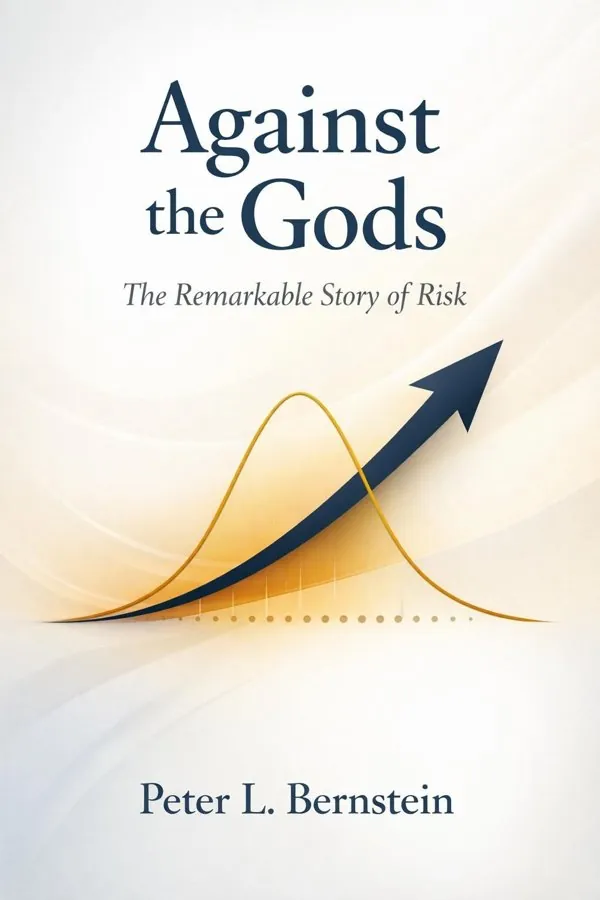
Peter L. Bernstein (1919–2009) was an American financial historian, economist, and investment manager. He authored several influential books on economics and finance, including 'Against the Gods: The Remarkable Story of Risk'. Bernstein was known for his ability to make complex financial concepts accessible to a broad audience.
Get This Summary in Your Preferred Format
Read or listen to the Capital Ideas: The Improbable Origins of Modern Wall Street summary by Peter L. Bernstein anytime, anywhere. FizzRead offers multiple formats so you can learn on your terms — all free.
Available formats: App · Audio · PDF · EPUB — All included free with FizzRead
Download Capital Ideas: The Improbable Origins of Modern Wall Street PDF and EPUB Summary
Key Quotes from Capital Ideas: The Improbable Origins of Modern Wall Street
“Before the revolution, finance was more art than science.”
“When Harry Markowitz presented his theory of portfolio selection in the early 1950s, he didn’t just introduce a new way of thinking—he changed the very vocabulary of investment.”
Frequently Asked Questions about Capital Ideas: The Improbable Origins of Modern Wall Street
Capital Ideas: The Improbable Origins of Modern Wall Street by Peter L. Bernstein is a finance book that explores key ideas across 10 chapters. Capital Ideas traces the development of modern investment theory and the rise of quantitative finance. Peter L. Bernstein explores how a group of academic economists and mathematicians revolutionized Wall Street by introducing rigorous analytical methods to portfolio management, risk assessment, and market behavior. The book profiles key figures such as Harry Markowitz, William Sharpe, and Eugene Fama, showing how their groundbreaking ideas reshaped the financial world.
More by Peter L. Bernstein

You Might Also Like




Browse by Category
Ready to read Capital Ideas: The Improbable Origins of Modern Wall Street?
Get the full summary and 100K+ more books with Fizz Moment.