
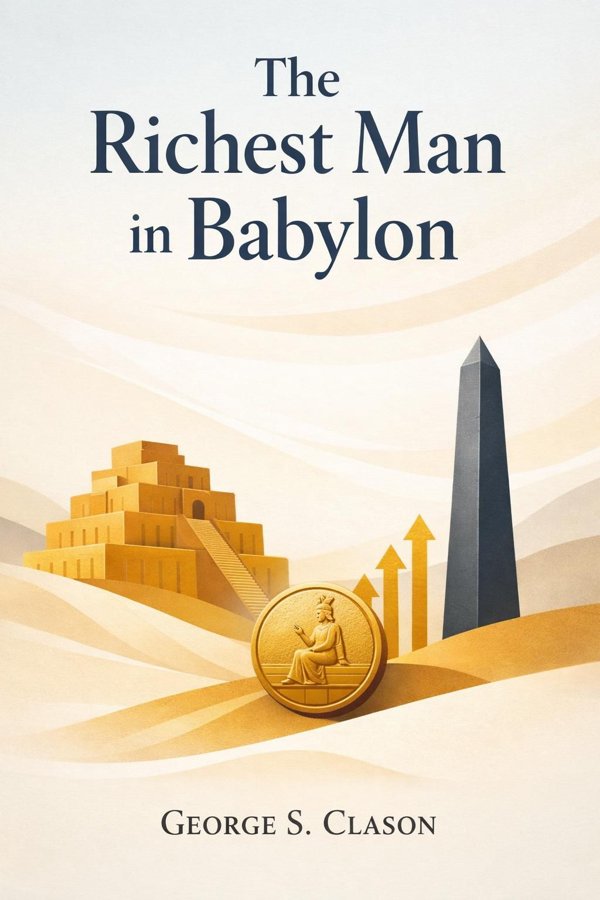
The Richest Man in Babylon: Summary & Key Insights
 10 min10 chaptersAudio available
Key Takeaways from The Richest Man in Babylon
Arkad is the book’s central proof that wealth is usually built, not inherited.
This chapter contains one of the most quoted ideas in personal finance: pay yourself first.
This section expands Clason’s philosophy into a step-by-step wealth plan.
In this chapter, Clason tackles a belief that still traps many people: the idea that wealth comes mainly from luck.
The Five Laws of Gold are Clason’s clearest rules for making money grow without destroying it.
What Is The Richest Man in Babylon About?
The Richest Man in Babylon by George Clason is a finance book published in 1988 spanning 10 pages. Why does a money book written nearly a century ago still feel surprisingly modern? Because The Richest Man in Babylon is not really about Babylon—it is about human behavior. George Clason wraps core financial principles in memorable parables about workers, merchants, lenders, and dreamers, showing that the biggest money problems people face today—overspending, debt, poor investing, and lack of planning—are the same ones people have always faced. That is exactly why this book remains a classic in personal finance. First published in 1926, the book distills wealth-building into clear, repeatable habits: save a portion of every paycheck, control expenses, invest carefully, protect your principal, and seek advice from people who understand money. Clason’s genius lies in making these lessons feel simple without making them shallow. The stories are easy to read, but the ideas are enduring. Clason, an American businessman and writer, became known for his financial parables and practical lessons on thrift and wealth-building. In The Richest Man in Babylon, he offers a timeless framework for anyone who wants more financial security, more freedom, and a healthier relationship with money—whether you are just starting out or trying to rebuild.
This FizzRead summary covers all 10 key chapters of The Richest Man in Babylon in approximately 10 minutes, distilling the most important ideas, arguments, and takeaways from George Clason's work. Also available as an audio summary and Key Quotes Podcast.
The Richest Man in Babylon
Why does a money book written nearly a century ago still feel surprisingly modern? Because The Richest Man in Babylon is not really about Babylon—it is about human behavior. George Clason wraps core financial principles in memorable parables about workers, merchants, lenders, and dreamers, showing that the biggest money problems people face today—overspending, debt, poor investing, and lack of planning—are the same ones people have always faced. That is exactly why this book remains a classic in personal finance.
First published in 1926, the book distills wealth-building into clear, repeatable habits: save a portion of every paycheck, control expenses, invest carefully, protect your principal, and seek advice from people who understand money. Clason’s genius lies in making these lessons feel simple without making them shallow. The stories are easy to read, but the ideas are enduring.
Clason, an American businessman and writer, became known for his financial parables and practical lessons on thrift and wealth-building. In The Richest Man in Babylon, he offers a timeless framework for anyone who wants more financial security, more freedom, and a healthier relationship with money—whether you are just starting out or trying to rebuild.
Who Should Read The Richest Man in Babylon?
This book is perfect for anyone interested in finance and looking to gain actionable insights in a short read. Whether you're a student, professional, or lifelong learner, the key ideas from The Richest Man in Babylon by George Clason will help you think differently.
- ✓Readers who enjoy finance and want practical takeaways
- ✓Professionals looking to apply new ideas to their work and life
- ✓Anyone who wants the core insights of The Richest Man in Babylon in just 10 minutes
Want the full summary?
Get instant access to this book summary and 100K+ more with Fizz Moment.
Get Free SummaryAvailable on App Store • Free to download
Key Chapters
Arkad is the book’s central proof that wealth is usually built, not inherited. He begins as an ordinary scribe with valuable skills but little money, which highlights one of Clason’s most important ideas: earning an income is not the same as building wealth. Many capable, hardworking people stay financially stuck because everything they earn immediately flows back out. Arkad’s turning point comes when he seeks guidance from the experienced money lender Algamish, who teaches him the foundational rule: “A part of all you earn is yours to keep.”
At first, the lesson sounds almost too simple. But Arkad’s success comes from applying it consistently, not just admiring it. He saves one-tenth of every payment, then learns through mistakes how to invest wisely. One practical takeaway here is that financial growth often starts with a behavior change before it becomes an income change. You do not need a perfect salary to begin; you need a system. For a modern reader, that might mean setting up an automatic transfer of 10% into savings or investments the day a paycheck arrives.
Arkad also teaches that mistakes are part of the education. He loses money when he trusts the wrong people, then becomes more selective about where his gold goes. His story reminds readers to start early, stay humble, and let experience sharpen judgment. Wealth, in Clason’s view, is less about brilliance than about discipline repeated over time.
This chapter contains one of the most quoted ideas in personal finance: pay yourself first. Clason’s advice is to keep at least one-tenth of all you earn before paying anyone else. That principle sounds basic, but it directly challenges how most people handle money. Typically, income arrives and is instantly claimed by rent, food, bills, subscriptions, debt, and impulse purchases. Clason asks readers to reverse that order. Your future should be treated like a non-negotiable obligation, not whatever is left over after spending.
The brilliance of this idea is that it works on both the numbers and the mind. Financially, regular saving creates a base for emergencies, investments, and future freedom. Psychologically, it changes your identity. You stop seeing yourself as someone who merely survives from paycheck to paycheck and start acting like someone who builds assets. Even a modest amount matters. For example, someone who earns $3,000 a month and saves 10% is setting aside $300 monthly. Over time, that becomes not just a cushion, but a habit of self-command.
The actionable lesson is to automate the process. Transfer a fixed percentage into a separate savings or investment account before you can spend it. If 10% feels impossible, begin with 3% or 5% and increase gradually. The key is consistency. Clason’s larger point is that wealth begins the moment you decide that part of what you earn belongs to your future, not your current appetites.
This section expands Clason’s philosophy into a step-by-step wealth plan. The seven cures are practical, memorable, and still deeply relevant: start thy purse to fattening, control thy expenditures, make thy gold multiply, guard thy treasures from loss, make of thy dwelling a profitable investment, ensure a future income, and increase thy ability to earn. Together, these cures form a complete personal finance system rather than a single saving tip.
What makes this chapter powerful is that it addresses both offensive and defensive money skills. It is not enough to save; you must also learn to prevent lifestyle inflation, invest productively, and protect yourself from bad decisions. “Control thy expenditures” is especially important because Clason distinguishes between necessary expenses and expanding desires. Many people get raises yet never feel richer because wants grow as fast as income. A modern example is upgrading every aspect of life after a promotion—apartment, car, vacations, and tech—until nothing is left to build wealth.
The actionable use of this chapter is to turn each cure into a monthly check-in. Are you saving automatically? Do you know where your money is going? Is your cash sitting idle, or is it earning? Are your investments sensible and understandable? Are you preparing for retirement and boosting your earning power? Clason’s message is simple: a lean purse is not cured by wishing for more money alone, but by changing how money is managed.
In this chapter, Clason tackles a belief that still traps many people: the idea that wealth comes mainly from luck. Through the metaphor of a goddess who favors action, he argues that so-called luck often appears when preparation meets opportunity. People who delay, hesitate, or wait for the perfect moment miss the openings that could have changed their lives. In Clason’s world, luck smiles most often on those who act decisively and responsibly.
This is a useful correction to magical thinking about money. Many people dream of windfalls—lottery wins, viral success, sudden market gains, or the perfect investment tip. But Clason shows that dependable prosperity is less glamorous and more deliberate. If a business opportunity appears and you have savings, knowledge, and the courage to evaluate it quickly, others may call your success lucky. In reality, your preparation made the opportunity usable.
A modern example could be someone who has built an emergency fund, maintained a strong credit profile, and kept learning. When a downturn creates discounted assets or a career opening, they are positioned to move while others are stuck. The practical takeaway is to stop worshipping chance and start building readiness. Good luck, in Clason’s framework, is not random favor handed to the idle; it is often the reward of prompt decision-making, financial discipline, and the refusal to procrastinate.
The Five Laws of Gold are Clason’s clearest rules for making money grow without destroying it. In essence, gold comes gladly to the person who saves consistently, works diligently for its owner when invested wisely, stays with the cautious, avoids the schemes of the inexperienced, and flees those who chase impossible returns. This chapter is really about respecting money’s nature. Wealth grows when handled with patience, realism, and informed judgment.
The most valuable lesson here is the difference between investing and speculation. Clason repeatedly warns against putting money into opportunities you do not understand or trusting advice from people who are unqualified. That warning is timeless. Today it applies to meme stocks, hype-driven crypto bets, get-rich-quick courses, and “guaranteed” returns promoted online. If the risk is unclear and the pitch is exciting mainly because it promises fast riches, Clason would likely say your gold is in danger.
A practical way to apply these laws is to use a simple filter before investing: Do I understand how this asset makes money? Is the person advising me truly experienced in this field? Is the promised return realistic? Could I tolerate the downside? Clason’s wisdom encourages slow, durable growth over flashy shortcuts. The message is not to fear investing, but to approach it with humility, skepticism, and a commitment to preserving principal before chasing profit.
This chapter focuses on lending, borrowing, and the importance of judging risk before money changes hands. Through the character of Mathon, the gold lender, Clason explains that every loan should be backed either by security, reliable earning power, or a trustworthy plan for repayment. Compassion alone is not a financial strategy. Lending without careful thought can turn generosity into loss, resentment, and damaged relationships.
The chapter is especially relevant because many people confuse helping with enabling. If a friend or family member asks for money, emotion can override judgment. Clason’s point is not to be coldhearted, but to be wise. A lender should ask: What is the money for? Does the borrower have the ability and discipline to repay it? Is there collateral or another form of protection? These questions are just as important for modern personal loans, co-signing, or even informal transfers among relatives.
For borrowers, the chapter also carries a lesson: debt should be used carefully and for productive or necessary purposes, not for vanity or wishful thinking. Borrowing to build a business with a clear plan is different from borrowing to maintain appearances. The practical takeaway is to treat every loan seriously, whether you are the one giving or receiving. Money should flow where there is evidence of responsibility, not merely hope. Clason shows that wise lending protects both gold and relationships.
On the surface, this chapter is about the massive walls that protected Babylon from outside threats. Financially, it serves as a metaphor for security. Just as a great city needs defenses, every person needs safeguards against life’s uncertainties. Clason reminds readers that wealth is not only about accumulation; it is also about protection. A person may earn and invest well, but without defenses, one emergency, poor decision, or unexpected hardship can undo years of effort.
In modern terms, the walls of Babylon look like emergency savings, insurance, sensible diversification, legal planning, and financial boundaries. If you lose your job tomorrow, how long could you manage? If a health crisis hits, are you protected? If one investment collapses, would your entire financial life collapse with it? These are the questions this chapter urges readers to ask. It is a powerful counterbalance to the excitement of making money because it centers resilience rather than speed.
Actionably, this chapter invites readers to build a personal defense system. Start with an emergency fund, reduce unnecessary risk, and avoid concentrating all your resources in one fragile source of income or one speculative asset. Clason’s insight is that peace of mind comes not merely from having money, but from knowing you have protection against the blows of chance. Security is not glamorous, but it is one of wealth’s most important purposes.
This chapter tells a story of perseverance, opportunity, and personal transformation. Its central lesson is that circumstances can improve dramatically when a person combines determination with wise action. Clason highlights that setbacks, poverty, or disadvantage do not have to be permanent identities. What matters is the willingness to keep learning, keep working, and act when a real opportunity appears.
The story resonates because it shifts the focus from victimhood to agency. Many people wait for ideal conditions before changing their lives, but Clason repeatedly suggests that progress usually begins in imperfect situations. A modern parallel might be someone stuck in a low-paying role who begins learning a more valuable skill at night, saves aggressively, and takes on better opportunities as they emerge. The journey is rarely instant, but the direction changes long before the visible results appear.
This chapter also reinforces the idea that character matters in financial life. Reliability, endurance, and courage often create openings that talent alone cannot. The practical takeaway is to ask not only, “How can I earn more?” but also, “What kind of person am I becoming in the process?” Clason suggests that wealth is attracted to those who develop steadiness, competence, and persistence. The camel trader’s story reminds readers that fortunes can shift when preparation meets grit.
This chapter brings the book’s principles into everyday budgeting and debt repayment. Through the recovered clay tablets, Clason presents what feels like a very early financial recovery plan: live on 70% of income, save 10%, and use 20% to repay debt. It is one of the most practical sections in the entire book because it addresses what many readers need most—not how to get rich instantly, but how to regain control when money already feels chaotic.
The brilliance of this plan is its clarity. Debt often creates emotional fog: shame, stress, avoidance, and the sense that nothing will ever improve. Clason replaces that fog with structure. By fixing spending limits, protecting savings even during repayment, and creating a disciplined path for creditors, the debtor moves from panic to progress. A modern reader could adapt this by listing all monthly income, capping essential and discretionary spending, setting aside a small automatic savings amount, and negotiating repayment plans.
The deeper lesson is that financial dignity can be rebuilt. Even if your situation is messy, order is possible when you stop reacting and start directing your money intentionally. This chapter is especially powerful for readers dealing with debt because it says, in effect, that recovery does not begin with a miracle—it begins with a plan, honesty, and consistent action over time.
This closing idea ties the book together by exploring what real luck looks like. The “luckiest” man is not merely someone who stumbled into fortune, but someone whose choices, habits, and character positioned him for a better life. Clason uses this narrative to challenge the fantasy that prosperity belongs only to the favored few. Instead, what appears to be luck is often the visible result of long preparation, moral seriousness, and a readiness to seize the right chance.
The chapter also broadens the definition of wealth. Financial success is not just a larger pile of coins; it includes freedom from desperation, confidence in the future, and the ability to provide for loved ones. In that sense, the luckiest person is one who has learned how to make wise decisions repeatedly. Modern readers can apply this by focusing less on chasing dramatic wins and more on building a life that compounds: stronger skills, better habits, reliable saving, good relationships, and prudent risk-taking.
As a final lesson, this chapter leaves readers with responsibility rather than fantasy. If fortune is influenced by preparation, then your daily actions matter enormously. The practical question becomes: what habits are you practicing today that your future self might one day call luck? For Clason, that is where true prosperity begins.
All Chapters in The Richest Man in Babylon
About the Author
George Samuel Clason (1874–1957) was an American businessman and writer best known for his classic financial parables. He founded two map companies and later became widely recognized for writing a series of pamphlets on thrift, saving, and personal wealth-building. Those writings were eventually compiled into his most famous work, The Richest Man in Babylon. Clason’s lasting contribution to personal finance was his ability to explain money principles through simple, memorable stories rather than technical language. His advice on saving, investing carefully, and living below one’s means has continued to influence readers for generations.
Get This Summary in Your Preferred Format
Read or listen to the The Richest Man in Babylon summary by George Clason anytime, anywhere. FizzRead offers multiple formats so you can learn on your terms — all free.
Available formats: App · Audio · PDF · EPUB — All included free with FizzRead
Download The Richest Man in Babylon PDF and EPUB Summary
Key Quotes from The Richest Man in Babylon
“Arkad is the book’s central proof that wealth is usually built, not inherited.”
“This chapter contains one of the most quoted ideas in personal finance: pay yourself first.”
“This section expands Clason’s philosophy into a step-by-step wealth plan.”
“In this chapter, Clason tackles a belief that still traps many people: the idea that wealth comes mainly from luck.”
“The Five Laws of Gold are Clason’s clearest rules for making money grow without destroying it.”
Frequently Asked Questions about The Richest Man in Babylon
The Richest Man in Babylon by George Clason is a finance book that explores key ideas across 10 chapters. Why does a money book written nearly a century ago still feel surprisingly modern? Because The Richest Man in Babylon is not really about Babylon—it is about human behavior. George Clason wraps core financial principles in memorable parables about workers, merchants, lenders, and dreamers, showing that the biggest money problems people face today—overspending, debt, poor investing, and lack of planning—are the same ones people have always faced. That is exactly why this book remains a classic in personal finance. First published in 1926, the book distills wealth-building into clear, repeatable habits: save a portion of every paycheck, control expenses, invest carefully, protect your principal, and seek advice from people who understand money. Clason’s genius lies in making these lessons feel simple without making them shallow. The stories are easy to read, but the ideas are enduring. Clason, an American businessman and writer, became known for his financial parables and practical lessons on thrift and wealth-building. In The Richest Man in Babylon, he offers a timeless framework for anyone who wants more financial security, more freedom, and a healthier relationship with money—whether you are just starting out or trying to rebuild.
Compare The Richest Man in Babylon


You Might Also Like

Featured In
Browse by Category
Ready to read The Richest Man in Babylon?
Get the full summary and 100K+ more books with Fizz Moment.