
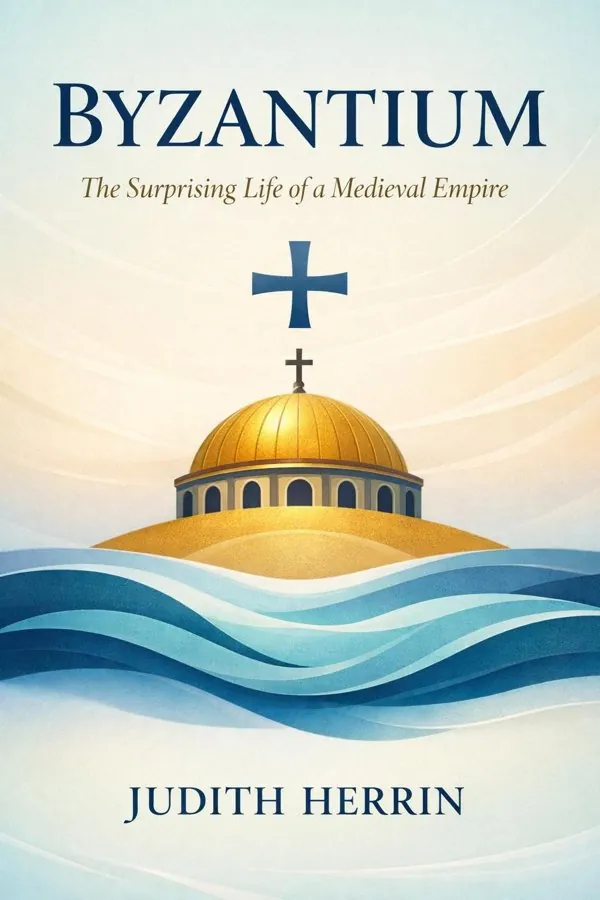
Byzantium: The Surprising Life of a Medieval Empire: Summary & Key Insights
 10 min13 chaptersAudio available
What Is Byzantium: The Surprising Life of a Medieval Empire About?
Byzantium: The Surprising Life of a Medieval Empire by Judith Herrin is a world_history book spanning 13 pages. This book offers a vivid and accessible history of the Byzantine Empire, exploring its political, cultural, and religious life from the foundation of Constantinople to its fall in 1453. Judith Herrin presents Byzantium as a dynamic civilization that bridged the ancient and modern worlds, influencing both the Islamic and Western Christian traditions. Through themes such as art, architecture, law, and daily life, Herrin reveals the empire’s surprising vitality and enduring legacy.
This FizzRead summary covers all 13 key chapters of Byzantium: The Surprising Life of a Medieval Empire in approximately 10 minutes, distilling the most important ideas, arguments, and takeaways from Judith Herrin's work. Also available as an audio summary and Key Quotes Podcast.
Byzantium: The Surprising Life of a Medieval Empire
This book offers a vivid and accessible history of the Byzantine Empire, exploring its political, cultural, and religious life from the foundation of Constantinople to its fall in 1453. Judith Herrin presents Byzantium as a dynamic civilization that bridged the ancient and modern worlds, influencing both the Islamic and Western Christian traditions. Through themes such as art, architecture, law, and daily life, Herrin reveals the empire’s surprising vitality and enduring legacy.
Who Should Read Byzantium: The Surprising Life of a Medieval Empire?
This book is perfect for anyone interested in world_history and looking to gain actionable insights in a short read. Whether you're a student, professional, or lifelong learner, the key ideas from Byzantium: The Surprising Life of a Medieval Empire by Judith Herrin will help you think differently.
- ✓Readers who enjoy world_history and want practical takeaways
- ✓Professionals looking to apply new ideas to their work and life
- ✓Anyone who wants the core insights of Byzantium: The Surprising Life of a Medieval Empire in just 10 minutes
Want the full summary?
Get instant access to this book summary and 100K+ more with Fizz Moment.
Get Free SummaryAvailable on App Store • Free to download
Key Chapters
The heart of Byzantium begins with Constantine. When he moved the seat of empire from Rome to the shores of the Bosporus, he was not merely changing geography—he was reshaping civilization. Constantinople was conceived as a city of Christian destiny, a new capital dedicated to the one God who would now sanction imperial rule. By establishing the city in 330 CE, Constantine made a statement of continuity and renewal: this was still Rome, but now sanctified by faith.
Its construction combined the legacy of ancient urban engineering with the symbolism of Christian triumph. The Hippodrome, the imperial palace, the forums—all echoed Rome’s grandeur. Yet the golden crosses atop its roofs and the proximity of churches proclaimed a profound transformation. The emperor stood as God’s chosen ruler, the earthly reflection of divine order. Constantinople’s walls would withstand centuries of siege, and its strategic position at the intersection of Europe and Asia made it not only the capital of an empire but the guardian of an idea—that faith and state could be joined in universal order.
From the bustling harbor of the Golden Horn to the central columns bearing Constantine’s own statue, the city became the stage upon which all subsequent Byzantine history played out. Every reform, every controversy, every artistic creation unfolded beneath the conviction that this was the New Rome—a place destined to endure.
+ 11 more chapters — available in the FizzRead app
All Chapters in Byzantium: The Surprising Life of a Medieval Empire
About the Author
Judith Herrin is a British historian and archaeologist specializing in Byzantine studies. She has taught at Princeton University and King’s College London, and is known for her accessible works on medieval history, including 'Women in Purple' and 'Ravenna: Capital of Empire, Crucible of Europe'.
Get This Summary in Your Preferred Format
Read or listen to the Byzantium: The Surprising Life of a Medieval Empire summary by Judith Herrin anytime, anywhere. FizzRead offers multiple formats so you can learn on your terms — all free.
Available formats: App · Audio · PDF · EPUB — All included free with FizzRead
Download Byzantium: The Surprising Life of a Medieval Empire PDF and EPUB Summary
Key Quotes from Byzantium: The Surprising Life of a Medieval Empire
“The heart of Byzantium begins with Constantine.”
“The Byzantine Empire was the first great experiment in integrating Christianity into the machinery of empire.”
Frequently Asked Questions about Byzantium: The Surprising Life of a Medieval Empire
Byzantium: The Surprising Life of a Medieval Empire by Judith Herrin is a world_history book that explores key ideas across 13 chapters. This book offers a vivid and accessible history of the Byzantine Empire, exploring its political, cultural, and religious life from the foundation of Constantinople to its fall in 1453. Judith Herrin presents Byzantium as a dynamic civilization that bridged the ancient and modern worlds, influencing both the Islamic and Western Christian traditions. Through themes such as art, architecture, law, and daily life, Herrin reveals the empire’s surprising vitality and enduring legacy.
You Might Also Like
The Age of Capital
Eric Hobsbawm
10 min
The Gulag Archipelago
Aleksandr Solzhenitsyn
10 min
Jerusalem: The Biography
Simon Sebag Montefiore
10 min
The Anglo-Saxons
James Campbell
10 min
The Boer War
Thomas Pakenham
10 min
The Industrial Revolutionaries: The Making of the Modern World 1776–1914
Gavin Weightman
10 minBrowse by Category
Ready to read Byzantium: The Surprising Life of a Medieval Empire?
Get the full summary and 100K+ more books with Fizz Moment.