
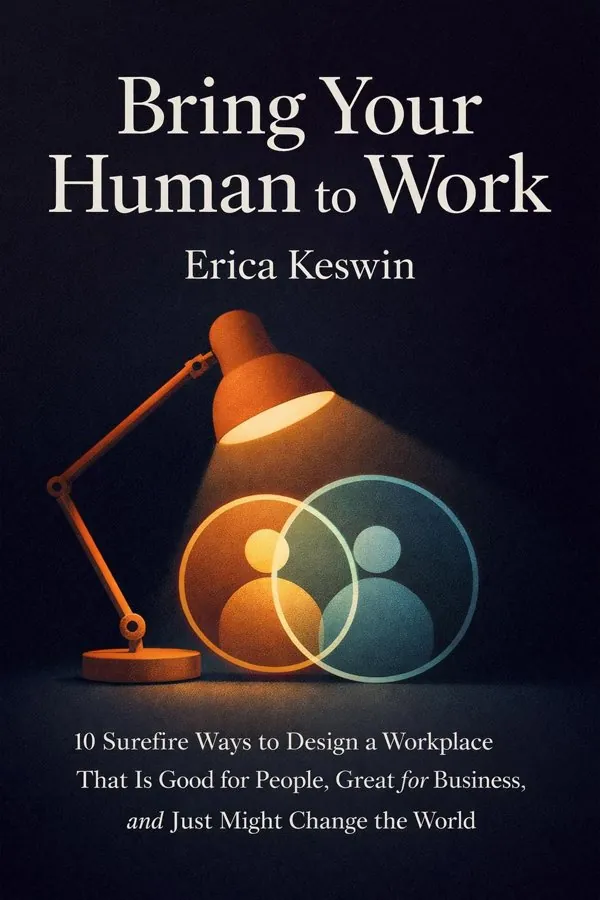
Bring Your Human to Work: 10 Surefire Ways to Design a Workplace That Is Good for People, Great for Business, and Just Might Change the World: Summary & Key Insights
by Erica Keswin
 10 min9 chaptersAudio available
Key Takeaways from Bring Your Human to Work: 10 Surefire Ways to Design a Workplace That Is Good for People, Great for Business, and Just Might Change the World
The strongest organizations are not held together by software, strategy decks, or org charts, but by the quality of their relationships.
People rarely do their best work in environments where they feel they must perform a professional mask all day.
Serious work often improves when people are given room to be playful.
Few rituals are as universally human as sharing a meal.
A distracted culture cannot be a deeply connected culture.
What Is Bring Your Human to Work: 10 Surefire Ways to Design a Workplace That Is Good for People, Great for Business, and Just Might Change the World About?
Bring Your Human to Work: 10 Surefire Ways to Design a Workplace That Is Good for People, Great for Business, and Just Might Change the World by Erica Keswin is a leadership book spanning 11 pages. In Bring Your Human to Work, workplace strategist Erica Keswin argues that the future of high performance depends less on flashy perks and more on something timeless: human connection. At a moment when organizations are overwhelmed by constant change, digital overload, and declining trust, Keswin makes a practical business case for empathy, authenticity, and relationships. Her central claim is simple but powerful: companies do better when people feel seen, valued, and connected to one another. Rather than offering vague inspiration, Keswin builds her case through research, interviews, and examples from organizations that intentionally design more human workplaces. She explores ten principles that help leaders create stronger cultures, from being real and mindful to eating together, investing in relationships, and taking responsibility for the broader impact of work. These ideas are not sentimental; they are strategic. They improve collaboration, strengthen engagement, reduce burnout, and support better decision-making. Keswin writes with credibility earned from advising both Fortune 500 firms and fast-growing startups. The result is a leadership guide that feels especially relevant in an era of hybrid work, loneliness, and cultural fragmentation. It is a book about building workplaces where people can thrive—and where business results improve because of it.
This FizzRead summary covers all 9 key chapters of Bring Your Human to Work: 10 Surefire Ways to Design a Workplace That Is Good for People, Great for Business, and Just Might Change the World in approximately 10 minutes, distilling the most important ideas, arguments, and takeaways from Erica Keswin's work. Also available as an audio summary and Key Quotes Podcast.
Bring Your Human to Work: 10 Surefire Ways to Design a Workplace That Is Good for People, Great for Business, and Just Might Change the World
In Bring Your Human to Work, workplace strategist Erica Keswin argues that the future of high performance depends less on flashy perks and more on something timeless: human connection. At a moment when organizations are overwhelmed by constant change, digital overload, and declining trust, Keswin makes a practical business case for empathy, authenticity, and relationships. Her central claim is simple but powerful: companies do better when people feel seen, valued, and connected to one another.
Rather than offering vague inspiration, Keswin builds her case through research, interviews, and examples from organizations that intentionally design more human workplaces. She explores ten principles that help leaders create stronger cultures, from being real and mindful to eating together, investing in relationships, and taking responsibility for the broader impact of work. These ideas are not sentimental; they are strategic. They improve collaboration, strengthen engagement, reduce burnout, and support better decision-making.
Keswin writes with credibility earned from advising both Fortune 500 firms and fast-growing startups. The result is a leadership guide that feels especially relevant in an era of hybrid work, loneliness, and cultural fragmentation. It is a book about building workplaces where people can thrive—and where business results improve because of it.
Who Should Read Bring Your Human to Work: 10 Surefire Ways to Design a Workplace That Is Good for People, Great for Business, and Just Might Change the World?
This book is perfect for anyone interested in leadership and looking to gain actionable insights in a short read. Whether you're a student, professional, or lifelong learner, the key ideas from Bring Your Human to Work: 10 Surefire Ways to Design a Workplace That Is Good for People, Great for Business, and Just Might Change the World by Erica Keswin will help you think differently.
- ✓Readers who enjoy leadership and want practical takeaways
- ✓Professionals looking to apply new ideas to their work and life
- ✓Anyone who wants the core insights of Bring Your Human to Work: 10 Surefire Ways to Design a Workplace That Is Good for People, Great for Business, and Just Might Change the World in just 10 minutes
Want the full summary?
Get instant access to this book summary and 100K+ more with Fizz Moment.
Get Free SummaryAvailable on App Store • Free to download
Key Chapters
The strongest organizations are not held together by software, strategy decks, or org charts, but by the quality of their relationships. That is the foundation of Erica Keswin’s argument: human connection is not a soft extra layered on top of work; it is what makes work function in the first place. When people trust one another, communicate honestly, and feel a sense of belonging, teams move faster, solve problems better, and show more resilience under pressure.
Keswin pushes back against a modern workplace paradox. We are more digitally connected than ever, yet many employees feel isolated, distracted, and emotionally detached. Endless notifications and back-to-back meetings create the appearance of collaboration while often weakening real connection. In that environment, leaders can mistakenly believe that efficiency tools are enough. Keswin insists they are not. Relationships are the real operating system of a healthy company.
She illustrates how cultures built on genuine connection outperform those driven only by metrics and process. People are more likely to stay in jobs where they feel recognized as human beings. They are more willing to share ideas, admit mistakes, and support colleagues. Connection also matters during change, because employees are more likely to trust difficult decisions when they believe leaders care about them.
The practical implication is that leaders must treat connection as something to design, not something to hope for. Team rituals, thoughtful communication, shared experiences, and visible care all strengthen the social fabric of work. Actionable takeaway: audit your workplace for moments of real connection and intentionally create more of them, especially in meetings, onboarding, and team communication.
People rarely do their best work in environments where they feel they must perform a professional mask all day. Keswin’s first principle, being real, is about authenticity: creating a culture where people can show up as themselves and where leaders model honesty instead of perfection. Authenticity does not mean oversharing or abandoning standards. It means aligning words, actions, and values so that trust can grow.
When leaders pretend to have all the answers, hide uncertainty, or communicate in polished but emotionally empty language, employees notice. That disconnect creates cynicism. By contrast, leaders who admit challenges, acknowledge mistakes, and speak with clarity and humility create psychological safety. Employees become more willing to ask questions, raise concerns, and contribute ideas.
Keswin’s point is especially relevant in high-pressure cultures where image management often replaces genuine communication. Authentic workplaces do not eliminate accountability; they make accountability stronger because expectations are grounded in trust rather than fear. Teams can disagree productively when they do not have to protect a fragile facade.
In practice, being real might look like a manager opening a meeting by naming the stress a team is under, inviting honest discussion about obstacles, and sharing personal lessons from failure. It might also mean examining whether company values are actually visible in promotions, feedback, and behavior. If leaders say they value openness but punish candor, the culture becomes performative.
Authenticity scales through small consistent signals. Leaders can ask more meaningful questions, speak plainly, and make space for people’s real experiences. Actionable takeaway: choose one leadership situation this week—a team meeting, feedback conversation, or company update—and replace polished corporate language with direct, honest, human communication.
Serious work often improves when people are given room to be playful. Keswin’s principle of playing together challenges the assumption that fun is a distraction from productivity. In reality, shared play can build trust, reduce hierarchy, spark creativity, and strengthen the emotional bonds that make teams effective.
Play matters because it changes how people relate to one another. In formal work settings, employees can become defined by title, status, or expertise. Play interrupts that script. When colleagues laugh, compete in a low-stakes activity, or collaborate in a novel way, they see one another as fuller human beings. That shift can improve communication long after the activity ends.
Keswin does not argue for forced fun or superficial team-building exercises that employees secretly resent. The point is to create genuine shared experiences that bring energy and connection into the workplace. This might mean celebrating wins creatively, using interactive workshops instead of passive presentations, or building rituals that encourage curiosity and lightness. For remote teams, it could involve virtual games, storytelling sessions, or informal channels where people share hobbies and humor.
Play is also linked to innovation. People are more likely to experiment and think expansively when the environment feels open rather than rigid. That matters in any organization trying to solve new problems. A culture that makes space for play signals that imagination is welcome.
The key is intention. Play should fit the team, not feel imposed. Introverted teams may prefer reflective challenges or creative exercises over loud competitions. Actionable takeaway: add one low-pressure, enjoyable ritual to your team’s routine—such as a storytelling prompt, shared celebration, or creative warm-up—to strengthen connection without making it feel artificial.
Few rituals are as universally human as sharing a meal. Keswin highlights eating together as a deceptively simple but powerful way to build community at work. Meals slow people down, create informal conversation, and flatten hierarchy in ways that conference rooms often cannot. Around a table, people tend to talk more openly, listen more carefully, and connect beyond their job descriptions.
The value of shared meals is not really about food; it is about presence. In many organizations, every interaction is tied to an agenda, a deadline, or a decision. That constant task orientation leaves little room for relationship-building. Eating together creates a pause in which colleagues can discover common ground, understand one another’s lives, and strengthen trust. Those social bonds later improve collaboration when work becomes demanding.
Keswin points to companies that build intentional meal rituals into their culture. Some create communal lunches, executive breakfasts, or team dinners that encourage cross-functional interaction. Others use meals to welcome new hires, celebrate milestones, or host conversations that would be more guarded in formal meetings. Even simple practices, such as beginning a retreat with a shared meal rather than a slide deck, can change the tone of the entire experience.
This principle also translates to hybrid work, though it requires creativity. Teams can host virtual lunches, send meal stipends for online gatherings, or prioritize in-person meals during offsites. The point is not extravagance but consistency and intentionality.
In a fragmented workplace, shared meals become a cultural tool for belonging. They remind people that teams are communities, not just production units. Actionable takeaway: schedule one recurring shared meal—virtual or in person—with no formal agenda other than conversation and connection.
A distracted culture cannot be a deeply connected culture. Keswin’s principle of mindfulness addresses one of the defining problems of modern work: constant attention fragmentation. When people are pulled between emails, messages, meetings, and mental overload, they become less present with their colleagues and less aware of their own stress. Mindfulness, in this context, is not a trendy wellness add-on. It is a discipline of attention that helps people work with greater focus, empathy, and intention.
Keswin argues that mindful workplaces create space for reflection instead of rewarding nonstop reactivity. Leaders set the tone by how they communicate, make decisions, and structure time. If every interaction is urgent, employees stay in a state of low-grade anxiety. That damages judgment, weakens listening, and increases burnout. Mindfulness helps interrupt that cycle.
Practical applications can be simple. Teams can begin meetings with a moment to pause and focus. Leaders can encourage device-free conversations for important topics. Organizations can rethink norms around after-hours communication, unrealistic response times, and overloaded calendars. Mindfulness also shows up in listening: giving someone full attention instead of multitasking through the exchange.
This principle becomes even more important in hybrid environments where digital habits can easily become compulsive. A mindful team is more deliberate about how it uses tools and more aware of how those tools affect energy and relationships. The benefit is not just calmer employees but better work. Focus improves quality. Presence improves trust. Reflection improves decisions.
Mindfulness is ultimately a cultural choice to value attention as a resource worth protecting. Actionable takeaway: introduce one mindful norm this week—such as a no-device meeting rule, a pause at the start of discussions, or a clearer boundary on after-hours messages.
Technology becomes harmful at work when it replaces human relationships instead of supporting them. Keswin does not reject digital tools; she argues for using them more intentionally. The real question is not whether technology belongs in the workplace, but whether it helps people connect, collaborate, and feel included—or whether it overwhelms and distances them.
Many organizations fall into the trap of adopting tools for speed while ignoring the human cost. More channels, more pings, and more dashboards can create noise rather than clarity. Employees may feel constantly reachable but rarely meaningfully connected. Keswin encourages leaders to evaluate technology through a human lens: does this tool make communication clearer, more equitable, and more relational?
Used well, technology can strengthen culture. It can help distributed teams communicate across geography, surface recognition for good work, and provide flexible ways for people to participate. Video calls can preserve facial cues that email misses. Collaboration platforms can make information more accessible. Internal communities can help people with shared interests find one another. But none of these tools works automatically. They need norms.
For example, teams can agree on which channels are for urgent communication and which are not. They can reserve video for conversations that benefit from emotional nuance. They can avoid hiding difficult feedback in chat when a direct conversation would be more respectful. They can also protect people from digital exhaustion by reducing unnecessary meetings and clarifying response expectations.
The principle is simple: technology should serve human needs, not train humans to behave like machines. Actionable takeaway: review your team’s communication tools and set clear norms for when each should be used to improve connection, reduce overload, and preserve the quality of important conversations.
People want to know that their work matters beyond quarterly targets. Keswin’s principle of giving back reflects a broader view of what makes organizations human: the understanding that companies are part of communities, not separate from them. When workplaces create opportunities to contribute to social good, they strengthen meaning, belonging, and pride.
Giving back serves both cultural and strategic purposes. Employees are more engaged when they feel aligned with an organization’s values. Community involvement can deepen that alignment by turning abstract mission statements into visible action. It also creates shared experiences that connect colleagues across departments and levels. Volunteering together, mentoring students, or supporting local causes can foster the same kind of trust and perspective-building that formal team-building often fails to achieve.
Keswin’s approach is not about public relations theater. A human workplace does not treat social impact as a branding accessory. It integrates responsibility into how the company shows up in the world. That could include paid volunteer days, matching donations, mission-aligned partnerships, or using company expertise to solve community problems. The strongest examples connect external impact with internal culture.
This principle also reminds leaders that employees increasingly evaluate organizations based on values as well as salary and role. Especially younger workers want evidence that their employer stands for something meaningful. Giving back can help companies attract and retain people who are motivated by purpose.
Even small efforts matter when they are sincere and consistent. The key is to involve employees in choosing causes and designing programs so participation feels authentic rather than mandatory. Actionable takeaway: identify one community initiative your team can support together and tie it clearly to your organization’s values, so purpose becomes a lived experience rather than a slogan.
A workplace cannot claim to value people while ignoring the conditions that wear them down. Keswin’s principles of being well and designing spaces for connection both recognize that culture is not just emotional or verbal; it is physical, behavioral, and environmental. People perform better when they have the energy, support, and surroundings needed to function as healthy human beings.
Well-being in this book is broader than gym discounts or wellness apps. It includes workload, boundaries, recovery, mental health, and whether employees feel permission to care for themselves without penalty. In many companies, the language of well-being coexists with expectations that reward overwork. Keswin calls for more honesty. If leaders glorify exhaustion, no wellness program will fix the problem.
Physical space also communicates values. Offices can either encourage connection or reinforce isolation. Layout, common areas, natural gathering points, and even where leaders sit can influence who talks to whom and how often. Spaces designed only for efficiency may miss opportunities for serendipitous interaction. Spaces designed for connection create room for informal conversation, collaboration, and belonging.
In hybrid work, space design expands beyond the office. It includes how in-person time is used and whether it offers something people cannot get from home: richer interaction, community, and shared experience. Bringing people together just to sit on separate video calls in the same building misses the point.
When organizations invest in well-being and thoughtful space, they signal that people are not just resources to be extracted from. Actionable takeaway: assess one aspect of your team’s environment—workload norms, meeting fatigue, office layout, or hybrid gatherings—and redesign it to support energy, health, and human interaction.
Culture becomes real when leaders choose to own it. Keswin’s final principles—investing in relationships and taking responsibility—bring the entire book together. A human workplace does not emerge from values posters or occasional initiatives. It is built through consistent leadership choices that prioritize relationships, model accountability, and recognize the wider consequences of organizational behavior.
Investing in relationships means treating them as long-term assets. Leaders often say people matter most, yet spend little time nurturing the connections that sustain trust. Keswin argues that managers should know their people, not just supervise their output. They should create regular one-on-ones, celebrate milestones, offer mentorship, and check in during difficult moments. These efforts may seem small, but they compound into loyalty and stronger collaboration.
Taking responsibility extends this idea beyond interpersonal care. Leaders are responsible for the tone they set, the systems they reward, and the impact their companies have on employees, customers, and society. If the culture is fearful, transactional, or disconnected, leadership cannot outsource the blame. Human-centered organizations ask hard questions about fairness, inclusion, communication, and purpose.
This principle is especially important during crisis or change. In difficult moments, employees watch what leaders do more than what they say. Transparent communication, visible empathy, and ethical decision-making become culture-defining acts. Responsibility also means acknowledging when the workplace falls short and taking concrete steps to improve it.
Ultimately, bringing your human to work is a leadership commitment, not a slogan. Actionable takeaway: choose one relationship you should invest in more intentionally and one cultural issue you need to take clearer ownership of, then act on both within the next month.
All Chapters in Bring Your Human to Work: 10 Surefire Ways to Design a Workplace That Is Good for People, Great for Business, and Just Might Change the World
About the Author
Erica Keswin is a workplace strategist, speaker, and author focused on helping organizations build stronger cultures through connection, purpose, and trust. She has advised Fortune 500 companies, startups, and leadership teams on issues including employee engagement, organizational culture, and the future of work. Keswin is known for translating broad workplace challenges into practical, human-centered strategies that leaders can apply immediately. Her work emphasizes that business performance and human well-being are not competing priorities but mutually reinforcing ones. Through her writing, consulting, and speaking, she has become a prominent voice on how organizations can create more authentic, resilient, and connected environments. Bring Your Human to Work reflects her belief that the best workplaces are designed intentionally to support both people and performance.
Get This Summary in Your Preferred Format
Read or listen to the Bring Your Human to Work: 10 Surefire Ways to Design a Workplace That Is Good for People, Great for Business, and Just Might Change the World summary by Erica Keswin anytime, anywhere. FizzRead offers multiple formats so you can learn on your terms — all free.
Available formats: App · Audio · PDF · EPUB — All included free with FizzRead
Download Bring Your Human to Work: 10 Surefire Ways to Design a Workplace That Is Good for People, Great for Business, and Just Might Change the World PDF and EPUB Summary
Key Quotes from Bring Your Human to Work: 10 Surefire Ways to Design a Workplace That Is Good for People, Great for Business, and Just Might Change the World
“The strongest organizations are not held together by software, strategy decks, or org charts, but by the quality of their relationships.”
“People rarely do their best work in environments where they feel they must perform a professional mask all day.”
“Serious work often improves when people are given room to be playful.”
“Few rituals are as universally human as sharing a meal.”
“A distracted culture cannot be a deeply connected culture.”
Frequently Asked Questions about Bring Your Human to Work: 10 Surefire Ways to Design a Workplace That Is Good for People, Great for Business, and Just Might Change the World
Bring Your Human to Work: 10 Surefire Ways to Design a Workplace That Is Good for People, Great for Business, and Just Might Change the World by Erica Keswin is a leadership book that explores key ideas across 9 chapters. In Bring Your Human to Work, workplace strategist Erica Keswin argues that the future of high performance depends less on flashy perks and more on something timeless: human connection. At a moment when organizations are overwhelmed by constant change, digital overload, and declining trust, Keswin makes a practical business case for empathy, authenticity, and relationships. Her central claim is simple but powerful: companies do better when people feel seen, valued, and connected to one another. Rather than offering vague inspiration, Keswin builds her case through research, interviews, and examples from organizations that intentionally design more human workplaces. She explores ten principles that help leaders create stronger cultures, from being real and mindful to eating together, investing in relationships, and taking responsibility for the broader impact of work. These ideas are not sentimental; they are strategic. They improve collaboration, strengthen engagement, reduce burnout, and support better decision-making. Keswin writes with credibility earned from advising both Fortune 500 firms and fast-growing startups. The result is a leadership guide that feels especially relevant in an era of hybrid work, loneliness, and cultural fragmentation. It is a book about building workplaces where people can thrive—and where business results improve because of it.
More by Erica Keswin

You Might Also Like

Extreme Ownership
Jocko Willink
10 min
Dare to Lead
Brene Brown
10 min
Leaders Eat Last
Simon Sinek
10 min
The 21 Irrefutable Laws of Leadership
John Maxwell
10 min
Start With Why
Simon Sinek
10 min
How to Lead When You're Not in Charge
Clay Scroggins
10 minBrowse by Category
Ready to read Bring Your Human to Work: 10 Surefire Ways to Design a Workplace That Is Good for People, Great for Business, and Just Might Change the World?
Get the full summary and 100K+ more books with Fizz Moment.