
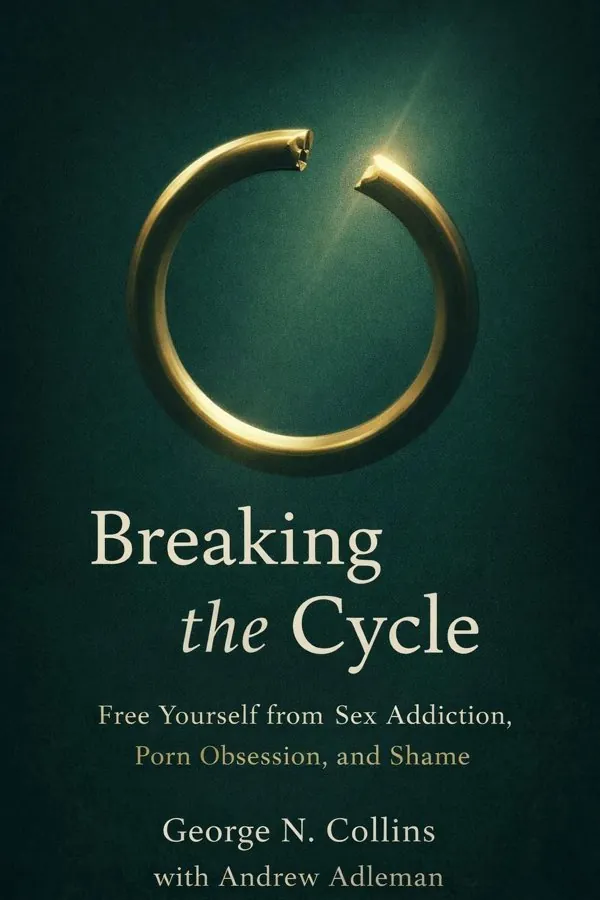
Breaking the Cycle: Summary & Key Insights
 10 min10 chaptersAudio available
Key Takeaways from Breaking the Cycle
A powerful urge is not always the same as a healthy desire.
Addictions rarely begin in the present moment; they are often rooted in old emotional learning.
Many people assume shame will force change, but Collins shows that shame often strengthens the very behavior a person wants to stop.
Relapse often looks sudden, but Collins reminds readers that it is usually a process, not an event.
Recovery does not happen because cravings disappear; it happens because new responses are practiced often enough to become stronger than old ones.
What Is Breaking the Cycle About?
Breaking the Cycle by George Collins is a self-help book published in 2011 spanning 10 pages. Breaking the Cycle is a direct, compassionate self-help guide for men caught in patterns of compulsive sexual behavior, pornography use, secrecy, and shame. Rather than treating the problem as a moral failure or a sign of weak character, therapist George N. Collins presents it as a cycle driven by emotional pain, learned coping habits, and disconnection from self and others. The book shows readers how compulsive behavior develops, why willpower alone rarely works, and what practical steps can create lasting change. Collins writes with unusual credibility: he is both a licensed therapist who has spent years working with men in recovery and someone who has personally confronted similar struggles. That dual perspective gives the book a tone that is honest without being harsh and practical without being simplistic. What makes Breaking the Cycle matter is its refusal to stop at symptom control. Collins helps readers understand the roots of addiction, manage triggers, reduce shame, build accountability, and form healthier relationships. It is ultimately a book about recovery, self-respect, and the possibility of becoming whole again.
This FizzRead summary covers all 10 key chapters of Breaking the Cycle in approximately 10 minutes, distilling the most important ideas, arguments, and takeaways from George Collins's work. Also available as an audio summary and Key Quotes Podcast.
Breaking the Cycle
Breaking the Cycle is a direct, compassionate self-help guide for men caught in patterns of compulsive sexual behavior, pornography use, secrecy, and shame. Rather than treating the problem as a moral failure or a sign of weak character, therapist George N. Collins presents it as a cycle driven by emotional pain, learned coping habits, and disconnection from self and others. The book shows readers how compulsive behavior develops, why willpower alone rarely works, and what practical steps can create lasting change. Collins writes with unusual credibility: he is both a licensed therapist who has spent years working with men in recovery and someone who has personally confronted similar struggles. That dual perspective gives the book a tone that is honest without being harsh and practical without being simplistic. What makes Breaking the Cycle matter is its refusal to stop at symptom control. Collins helps readers understand the roots of addiction, manage triggers, reduce shame, build accountability, and form healthier relationships. It is ultimately a book about recovery, self-respect, and the possibility of becoming whole again.
Who Should Read Breaking the Cycle?
This book is perfect for anyone interested in self-help and looking to gain actionable insights in a short read. Whether you're a student, professional, or lifelong learner, the key ideas from Breaking the Cycle by George Collins will help you think differently.
- ✓Readers who enjoy self-help and want practical takeaways
- ✓Professionals looking to apply new ideas to their work and life
- ✓Anyone who wants the core insights of Breaking the Cycle in just 10 minutes
Want the full summary?
Get instant access to this book summary and 100K+ more with Fizz Moment.
Get Free SummaryAvailable on App Store • Free to download
Key Chapters
A powerful urge is not always the same as a healthy desire. One of Collins's most important distinctions is that sexual compulsion is not driven primarily by pleasure, intimacy, or connection. It is driven by tension, anxiety, emptiness, and the need for relief. Healthy sexuality leaves a person more grounded and connected. Compulsive behavior, by contrast, often produces secrecy, disconnection, and self-contempt. This distinction matters because many men confuse a behavioral addiction with a naturally high sex drive, which keeps them from honestly addressing the problem.
Collins explains that compulsion usually follows a pattern: emotional discomfort builds, a fantasy or trigger appears, the person seeks immediate release, and shame follows. Then the shame itself creates more emotional pain, making the next episode more likely. The behavior is less about sex than about escape. A man may tell himself, "I wanted it," when what is more accurate is, "I needed relief from stress, loneliness, fear, or boredom." Recognizing this difference opens the door to change.
In daily life, this means learning to pause and ask better questions. Before acting out, a reader can ask: What am I feeling right now? Am I seeking connection or trying to numb myself? Did something stressful, humiliating, or disappointing happen today? That kind of self-inquiry interrupts automatic behavior and begins to weaken the cycle.
The practical takeaway is simple: stop labeling every urge as sexual desire. For one week, track urges and write down the emotion underneath each one. Naming the real driver is the first act of recovery.
Many people assume shame will force change, but Collins shows that shame often strengthens the very behavior a person wants to stop. Shame says, "I am broken," not merely, "I made a harmful choice." That identity-level judgment creates despair, secrecy, and hopelessness. Once a man sees himself as dirty, weak, or beyond help, acting out can feel inevitable. The addiction then becomes both the source of shame and the temporary anesthetic for it.
This is why harsh self-criticism usually fails. After an episode of compulsive behavior, a person may promise never to do it again, fill with disgust, and then isolate. But isolation increases emotional pressure. Without support, honesty, or self-understanding, the tension rises until the cycle repeats. Collins emphasizes that recovery depends on replacing shame with responsibility. Responsibility says, "This behavior is hurting me and others, and I can face it honestly." That mindset is firm without being self-destructive.
In practical terms, reducing shame means speaking the truth in safe settings. It may involve therapy, a support group, or one trusted accountability partner. It also means changing self-talk. Instead of saying, "I'm pathetic," a man can say, "I'm struggling, and I need help using healthier tools." This shift sounds small, but it changes the entire emotional environment of recovery.
The actionable takeaway is to identify one recurring shame statement you tell yourself and rewrite it in language of honesty and responsibility. Repeat the healthier version whenever a setback occurs.
Relapse often looks sudden, but Collins reminds readers that it is usually a process, not an event. Long before the behavior happens, there are triggers, cues, moods, and thought patterns that prepare the ground. If a man only focuses on stopping at the last possible moment, he is fighting the problem too late. Real progress comes from learning to detect the sequence early.
Triggers can be external, such as being alone late at night, access to devices, travel, conflict with a partner, or exposure to suggestive media. They can also be internal, including boredom, resentment, anxiety, fatigue, loneliness, or self-pity. Collins encourages readers to become students of their own patterns. For example, someone may notice that after criticism at work, he feels inadequate, withdraws emotionally, starts fantasizing, and then seeks porn or other acting-out behavior. Once that sequence becomes visible, intervention becomes possible.
Practical strategies include keeping a trigger journal, rating emotional intensity during the day, and creating specific if-then plans. If it is 11 p.m. and I am alone with my phone, then I plug it in outside the bedroom. If I feel rejected after an argument, then I call my accountability partner instead of isolating. These plans reduce the power of impulse by replacing vague intention with structure.
The actionable takeaway: make a list of your top five triggers and write one preventive response for each. Review that list daily until it becomes automatic.
Recovery does not happen because cravings disappear; it happens because new responses are practiced often enough to become stronger than old ones. Collins describes addiction as a cycle of discomfort, ritual, acting out, and regret. To break that cycle, a man must intervene at multiple points, especially in the ritual stage where the mind starts negotiating, fantasizing, rationalizing, or setting up opportunities.
One reason people stay stuck is that they focus only on stopping the final behavior. Collins argues that lasting change requires replacing the entire sequence with healthier actions. If stress normally leads to fantasy, then the work is to create an alternate path: stress leads to movement, conversation, journaling, prayer, breathing, or leaving an unsafe environment. This rewiring takes repetition. It is not dramatic, but it is effective.
Examples help make this concrete. A man who usually acts out after drinking alone might decide to remove alcohol from the house and schedule evening activities with others. Someone who spirals into compulsive behavior during business travel might plan calls, exercise, and stricter digital boundaries before leaving home. The point is not just resistance; it is substitution.
Collins also emphasizes the importance of immediate action. Waiting for motivation is dangerous because compulsion thrives in delay and ambiguity. The actionable takeaway is to design a three-step emergency plan for high-risk moments: leave the triggering situation, contact support, and engage in a specific grounding activity for at least 20 minutes.
One of the deepest insights in Breaking the Cycle is that many compulsive behaviors grow in emotional illiteracy. When a person cannot identify, express, or tolerate feelings, he is more likely to convert those feelings into urges. Sexual acting out becomes a shortcut around emotion. Collins therefore makes emotional awareness a central part of recovery, not a side issue.
Many men were never taught how to recognize sadness, fear, disappointment, grief, or shame with precision. Everything gets lumped together as stress, frustration, or desire. But the more vague an emotional state is, the harder it is to manage. Collins encourages readers to slow down and become fluent in what they are actually experiencing. A man may think he is horny when he is really lonely. He may think he wants stimulation when he is actually angry and looking for escape.
Tolerance matters just as much as awareness. Feelings are not emergencies, even when they are uncomfortable. Learning to sit with tension for a few minutes without immediately numbing it is a major recovery skill. Practical tools include body scans, journaling, naming emotions out loud, exercise, and mindfulness techniques that help create space between feeling and action.
A useful daily practice is a short emotional check-in: What am I feeling? What happened before this feeling? What do I need right now that is not acting out? The actionable takeaway is to do this check-in three times a day for the next week and note any connection between unrecognized emotions and sexual urges.
Compulsive sexual behavior often imitates intimacy while making true intimacy harder. Collins explains that addiction trains a person to seek control, fantasy, and immediate gratification rather than mutual presence, honesty, and emotional closeness. This affects romantic relationships, friendships, and even the way a man relates to himself. Recovery therefore involves more than stopping problematic behavior; it involves learning how to connect in real life.
Healthy relationships require openness, empathy, and the ability to stay present when things feel imperfect or uncomfortable. That can be challenging for someone who has long used sexual behavior to avoid conflict, loneliness, or vulnerability. Collins urges readers to rebuild trust slowly through consistency rather than dramatic promises. In a marriage or partnership, that may mean honest disclosure, clearer boundaries, listening without defensiveness, and accepting that trust takes time to restore.
Outside romance, friendship matters too. Addiction flourishes in isolation, while healthy connection offers perspective, accountability, and belonging. Men who have hidden for years may need to relearn basic relational habits such as asking for help, sharing feelings, and showing up consistently. Real intimacy is built in ordinary moments of honesty, not only in emotional breakthroughs.
A practical application is to choose one relationship and improve it through a specific behavior: more truthful conversation, more listening, or a regular check-in. The actionable takeaway is to practice one act of nonsexual intimacy each day, such as expressing a feeling honestly, offering support, or spending device-free time with someone important.
Private promises are easy to make and easy to break. Collins insists that accountability is not a punishment but a structure that protects recovery when motivation weakens. Compulsive behavior thrives in secrecy because secrecy allows rationalization, delay, and self-deception. The moment a man brings his struggle into the light with trustworthy support, the addiction loses some of its power.
Effective accountability is more than confessing after a relapse. It includes regular check-ins, clear honesty standards, and agreed-upon steps for high-risk situations. That support might come from a therapist, sponsor, recovery group, spiritual mentor, or close friend. The key is choosing people who are honest, stable, and not easily manipulated. Accountability should combine compassion with clarity.
Collins also suggests that support systems work best when they are practical. Instead of vague statements like "I'll do better," a man can report concrete realities: triggers this week, emotional state, urges, slips, and the prevention plan for the next few days. In some cases, accountability may include digital safeguards, scheduled calls, or financial and relational transparency. These tools do not replace inner work, but they make honest living easier.
A common fear is that needing accountability means weakness. Collins reframes it as wisdom. We use external structure in every area where something matters, from fitness to finances. Recovery deserves the same seriousness. The actionable takeaway is to ask one trusted person for a standing weekly check-in and agree on exactly what you will report each time.
People change more effectively when they stop seeing recovery as endless resistance and start seeing it as identity formation. Collins emphasizes that a man cannot build a meaningful life if his only goal is "not acting out." Recovery becomes sustainable when it is tied to a larger sense of who he wants to be: honest, dependable, emotionally alive, sexually healthy, spiritually grounded, or relationally present.
Addiction narrows identity. It convinces a person that he is his worst habit, his secret life, or his repeated failures. Collins challenges that reduction. The struggle is real, but it is not the whole self. A man in recovery is not merely someone fighting urges; he is someone learning integrity, courage, and self-respect. This shift matters because identity influences behavior. When people act from a chosen identity, discipline becomes more coherent and less exhausting.
Building a new identity involves daily alignment. That may include routines, values statements, service, honest work, physical health, spiritual practice, and relationships that reflect the person one wants to become. Instead of asking, "Can I get away with this?" the better question becomes, "Is this consistent with the man I am becoming?" That question strengthens decision-making in moments of temptation.
The actionable takeaway is to write a one-paragraph personal recovery identity statement beginning with the words, "I am becoming a man who..." Read it each morning and use it to guide one concrete action every day.
The most important recovery work often happens after the crisis has passed. Collins warns that early success can create overconfidence, which leads people to drop the very habits that helped them improve. Sustained recovery is less about dramatic breakthroughs than about ongoing maintenance. In that sense, freedom is a practice, not a finish line.
Long-term recovery includes routines that reduce vulnerability and strengthen resilience. Sleep, exercise, stress management, honest relationships, purposeful work, and spiritual or reflective practices all matter because addiction feeds on depletion and disconnection. Collins encourages readers to think in terms of maintenance rather than emergency response. Waiting until urges are intense is like waiting for a fire to spread before looking for water.
Setbacks may still happen, and Collins takes a realistic approach to them. A lapse should trigger analysis, honesty, and renewed commitment, not collapse into self-hatred. The key question after a setback is not "What's wrong with me?" but "What did I miss in the sequence, and what support or structure needs strengthening?" This mindset protects recovery from the all-or-nothing thinking that turns one bad decision into a longer relapse.
A practical maintenance plan might include daily check-ins, weekly accountability, limited exposure to triggering media, and regular reflection on emotional state. The actionable takeaway is to create a written recovery routine for mornings, evenings, and high-risk situations, then follow it consistently for 30 days before evaluating results.
All Chapters in Breaking the Cycle
About the Author
George N. Collins is a licensed therapist and addiction specialist best known for his work with men facing compulsive sexual behavior, pornography addiction, and related shame. He is the founder of Compulsion Solutions, a counseling practice focused on helping clients understand the emotional roots of addictive patterns and develop practical strategies for recovery. Collins brings a distinctive voice to this subject because his perspective is both clinical and personal, combining professional expertise with lived experience. That combination allows him to write with empathy, candor, and credibility rather than judgment. In Breaking the Cycle, he translates therapeutic principles into accessible guidance for readers who feel trapped in secrecy and relapse. His work has helped broaden the conversation around sexual addiction from blame and stigma toward accountability, healing, and lasting behavioral change.
Get This Summary in Your Preferred Format
Read or listen to the Breaking the Cycle summary by George Collins anytime, anywhere. FizzRead offers multiple formats so you can learn on your terms — all free.
Available formats: App · Audio · PDF · EPUB — All included free with FizzRead
Download Breaking the Cycle PDF and EPUB Summary
Key Quotes from Breaking the Cycle
“A powerful urge is not always the same as a healthy desire.”
“Addictions rarely begin in the present moment; they are often rooted in old emotional learning.”
“Many people assume shame will force change, but Collins shows that shame often strengthens the very behavior a person wants to stop.”
“Relapse often looks sudden, but Collins reminds readers that it is usually a process, not an event.”
“Recovery does not happen because cravings disappear; it happens because new responses are practiced often enough to become stronger than old ones.”
Frequently Asked Questions about Breaking the Cycle
Breaking the Cycle by George Collins is a self-help book that explores key ideas across 10 chapters. Breaking the Cycle is a direct, compassionate self-help guide for men caught in patterns of compulsive sexual behavior, pornography use, secrecy, and shame. Rather than treating the problem as a moral failure or a sign of weak character, therapist George N. Collins presents it as a cycle driven by emotional pain, learned coping habits, and disconnection from self and others. The book shows readers how compulsive behavior develops, why willpower alone rarely works, and what practical steps can create lasting change. Collins writes with unusual credibility: he is both a licensed therapist who has spent years working with men in recovery and someone who has personally confronted similar struggles. That dual perspective gives the book a tone that is honest without being harsh and practical without being simplistic. What makes Breaking the Cycle matter is its refusal to stop at symptom control. Collins helps readers understand the roots of addiction, manage triggers, reduce shame, build accountability, and form healthier relationships. It is ultimately a book about recovery, self-respect, and the possibility of becoming whole again.
More by George Collins
You Might Also Like


Browse by Category
Ready to read Breaking the Cycle?
Get the full summary and 100K+ more books with Fizz Moment.