
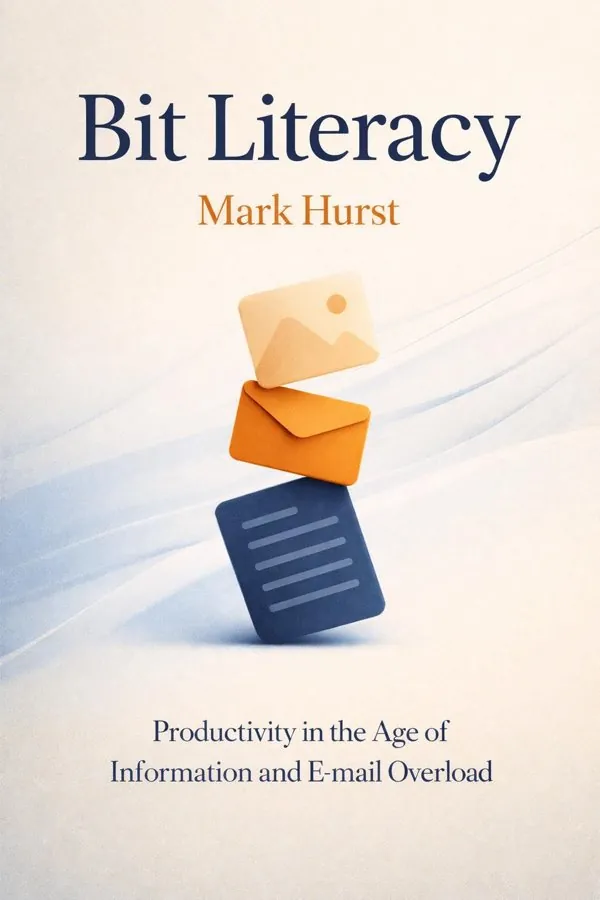
Bit Literacy: Productivity in the Age of Information and E-mail Overload: Summary & Key Insights
by Mark Hurst
 10 min8 chaptersAudio available
What Is Bit Literacy: Productivity in the Age of Information and E-mail Overload About?
Bit Literacy: Productivity in the Age of Information and E-mail Overload by Mark Hurst is a productivity book spanning 8 pages. Bit Literacy is a guide to managing the overwhelming flow of digital information in modern life. Mark Hurst introduces practical methods for handling e-mail, files, photos, and other digital bits efficiently, helping readers regain control of their time and attention. The book emphasizes minimalism, clarity, and intentionality in digital habits to achieve true productivity and focus.
This FizzRead summary covers all 8 key chapters of Bit Literacy: Productivity in the Age of Information and E-mail Overload in approximately 10 minutes, distilling the most important ideas, arguments, and takeaways from Mark Hurst's work. Also available as an audio summary and Key Quotes Podcast.
Bit Literacy: Productivity in the Age of Information and E-mail Overload
Bit Literacy is a guide to managing the overwhelming flow of digital information in modern life. Mark Hurst introduces practical methods for handling e-mail, files, photos, and other digital bits efficiently, helping readers regain control of their time and attention. The book emphasizes minimalism, clarity, and intentionality in digital habits to achieve true productivity and focus.
Who Should Read Bit Literacy: Productivity in the Age of Information and E-mail Overload?
This book is perfect for anyone interested in productivity and looking to gain actionable insights in a short read. Whether you're a student, professional, or lifelong learner, the key ideas from Bit Literacy: Productivity in the Age of Information and E-mail Overload by Mark Hurst will help you think differently.
- ✓Readers who enjoy productivity and want practical takeaways
- ✓Professionals looking to apply new ideas to their work and life
- ✓Anyone who wants the core insights of Bit Literacy: Productivity in the Age of Information and E-mail Overload in just 10 minutes
Want the full summary?
Get instant access to this book summary and 100K+ more with Fizz Moment.
Get Free SummaryAvailable on App Store • Free to download
Key Chapters
Bits are the smallest units of digital information — photos, emails, videos, texts, documents, web pages. They multiply effortlessly, piling up without weight or space limits, yet taking an enormous toll on our clarity and focus. In earlier eras, scarcity defined value. In the digital age, abundance does. Anyone can create bits; the challenge is learning how to live responsibly with them.
When I first conceived of 'bit literacy,' I realized that most people were behaving as if bits were free — free to store, free to keep, free to click. But every bit we retain demands cognitive energy. A full inbox doesn’t cost physical space, but it keeps our minds tethered to unresolved tasks. When millions of bits are demanding attention, our bandwidth for creativity and focus evaporates. Bit literacy starts with recognizing that bits aren’t benign; they are commitments. To handle them well, we must develop the habit of conscious engagement. Every incoming message, every stored file, is a decision — keep, delete, act, or ignore. Without that consciousness, we become servants to our devices.
This awareness leads naturally to a more disciplined approach. Just as reading and writing once empowered people to engage productively with the print world, bit literacy empowers us to manage the digital world with the same confidence. It’s not technical, but mental — about attention, boundaries, and choice. True productivity is regained not through more efficient consumption, but through selective consumption, where only meaningful bits are allowed to occupy space in our limited attention.
Information overload is not a technological problem; it’s a psychological one. Most of us were never taught how to say no to bits. We feel compelled to check every notification, read every message, follow every link, because each bit carries the seductive illusion of importance. But attention is finite. In a world of constant stimuli, our greatest skill becomes discernment.
Through years of working with digital professionals, I noticed the same pattern: people prided themselves on multitasking and inbox management but felt perpetually exhausted. They mistook activity for effectiveness. Bit literacy exposes that illusion and replaces it with intention. It encourages you to slow the inflow, not accelerate your processing. When you consciously decide what deserves space in your digital life, you reclaim focus.
To manage overload, you must see every bit as a potential interruption, and your attention as sacred. Emails, feeds, alerts — they all compete for the same scarce mental space. Practicing bit literacy means training yourself to respond from choice rather than reflex. When you decide which channels genuinely contribute to your goals, and ruthlessly cut the rest, you not only reduce stress but heighten the quality of your thinking. The ultimate goal isn’t more throughput but more meaning.
+ 6 more chapters — available in the FizzRead app
All Chapters in Bit Literacy: Productivity in the Age of Information and E-mail Overload
About the Author
Mark Hurst is an American entrepreneur, author, and founder of Creative Good, a consulting firm focused on improving customer experience. He is also the creator of the Good Experience newsletter and the Gel Conference, both dedicated to exploring how technology can better serve human needs.
Get This Summary in Your Preferred Format
Read or listen to the Bit Literacy: Productivity in the Age of Information and E-mail Overload summary by Mark Hurst anytime, anywhere. FizzRead offers multiple formats so you can learn on your terms — all free.
Available formats: App · Audio · PDF · EPUB — All included free with FizzRead
Download Bit Literacy: Productivity in the Age of Information and E-mail Overload PDF and EPUB Summary
Key Quotes from Bit Literacy: Productivity in the Age of Information and E-mail Overload
“Bits are the smallest units of digital information — photos, emails, videos, texts, documents, web pages.”
“Information overload is not a technological problem; it’s a psychological one.”
Frequently Asked Questions about Bit Literacy: Productivity in the Age of Information and E-mail Overload
Bit Literacy: Productivity in the Age of Information and E-mail Overload by Mark Hurst is a productivity book that explores key ideas across 8 chapters. Bit Literacy is a guide to managing the overwhelming flow of digital information in modern life. Mark Hurst introduces practical methods for handling e-mail, files, photos, and other digital bits efficiently, helping readers regain control of their time and attention. The book emphasizes minimalism, clarity, and intentionality in digital habits to achieve true productivity and focus.
You Might Also Like
Featured In
Browse by Category
Ready to read Bit Literacy: Productivity in the Age of Information and E-mail Overload?
Get the full summary and 100K+ more books with Fizz Moment.