
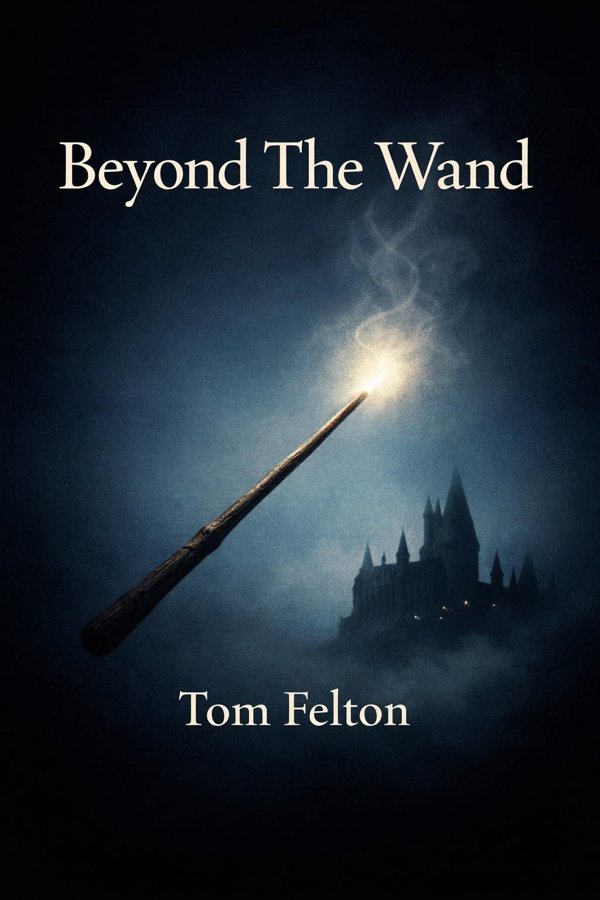
Beyond The Wand: The Magic And Mayhem Of Growing Up A Wizard: Summary & Key Insights
by Tom Felton
 10 min10 chaptersAudio available
Key Takeaways from Beyond The Wand: The Magic And Mayhem Of Growing Up A Wizard
Fame often looks glamorous from a distance, but its deepest tests are usually met with lessons learned long before success arrives.
Careers rarely begin with a defining moment; they usually begin with small chances that only look important in hindsight.
Some of life’s biggest turning points arrive before we feel ready, and often they reward authenticity more than control.
What audiences experience as cinematic enchantment is built on repetition, structure, and the patient labor of hundreds of people.
When millions of strangers think they know you, it becomes harder to know yourself.
What Is Beyond The Wand: The Magic And Mayhem Of Growing Up A Wizard About?
Beyond The Wand: The Magic And Mayhem Of Growing Up A Wizard by Tom Felton is a biographies book spanning 10 pages. What happens when an ordinary child is handed an extraordinary role before he is old enough to understand its consequences? In Beyond The Wand, Tom Felton answers that question with warmth, humor, and striking honesty. Best known for playing Draco Malfoy in the Harry Potter films, Felton uses this memoir to tell a much bigger story than celebrity gossip or behind-the-scenes trivia. He reflects on childhood, sudden fame, artistic ambition, friendship, family, addiction, recovery, and the long process of figuring out who he is outside the role that made him famous. What makes the book compelling is its balance. Felton is funny and self-aware, but he is also willing to discuss insecurity, professional uncertainty, and personal collapse. He writes not as a distant star, but as someone trying to make sense of a life shaped by massive public attention. His authority comes from lived experience: he grew up inside one of the most beloved film franchises in the world while also navigating the private confusion that often hides behind public success. The result is a candid memoir about identity, resilience, gratitude, and learning how to live beyond the story others wrote for you.
This FizzRead summary covers all 10 key chapters of Beyond The Wand: The Magic And Mayhem Of Growing Up A Wizard in approximately 10 minutes, distilling the most important ideas, arguments, and takeaways from Tom Felton's work. Also available as an audio summary and Key Quotes Podcast.
Beyond The Wand: The Magic And Mayhem Of Growing Up A Wizard
What happens when an ordinary child is handed an extraordinary role before he is old enough to understand its consequences? In Beyond The Wand, Tom Felton answers that question with warmth, humor, and striking honesty. Best known for playing Draco Malfoy in the Harry Potter films, Felton uses this memoir to tell a much bigger story than celebrity gossip or behind-the-scenes trivia. He reflects on childhood, sudden fame, artistic ambition, friendship, family, addiction, recovery, and the long process of figuring out who he is outside the role that made him famous.
What makes the book compelling is its balance. Felton is funny and self-aware, but he is also willing to discuss insecurity, professional uncertainty, and personal collapse. He writes not as a distant star, but as someone trying to make sense of a life shaped by massive public attention. His authority comes from lived experience: he grew up inside one of the most beloved film franchises in the world while also navigating the private confusion that often hides behind public success. The result is a candid memoir about identity, resilience, gratitude, and learning how to live beyond the story others wrote for you.
Who Should Read Beyond The Wand: The Magic And Mayhem Of Growing Up A Wizard?
This book is perfect for anyone interested in biographies and looking to gain actionable insights in a short read. Whether you're a student, professional, or lifelong learner, the key ideas from Beyond The Wand: The Magic And Mayhem Of Growing Up A Wizard by Tom Felton will help you think differently.
- ✓Readers who enjoy biographies and want practical takeaways
- ✓Professionals looking to apply new ideas to their work and life
- ✓Anyone who wants the core insights of Beyond The Wand: The Magic And Mayhem Of Growing Up A Wizard in just 10 minutes
Want the full summary?
Get instant access to this book summary and 100K+ more with Fizz Moment.
Get Free SummaryAvailable on App Store • Free to download
Key Chapters
Fame often looks glamorous from a distance, but its deepest tests are usually met with lessons learned long before success arrives. Tom Felton begins his story not with red carpets or film sets, but with a grounded childhood in Surrey. He grew up in a family far removed from the film industry, surrounded by the familiar rhythms of suburban English life. There were brothers, jokes, mischief, outdoor adventures, schooldays, and the kind of small everyday moments that build character without announcing themselves as important.
This early normalcy matters because it becomes the emotional anchor for everything that follows. Felton’s childhood gave him a sense of humor, resilience, and perspective that helped him navigate an unusually public life. He was not raised to think of himself as exceptional, which made the surreal experience of becoming globally recognized both stranger and, in some ways, more manageable. The memoir suggests that when the world starts projecting identities onto you, your earliest environment can serve as a private compass.
For readers, this idea has practical relevance well beyond celebrity. Whether someone enters a competitive career, gains social visibility, or simply faces periods of intense change, strong roots matter. Familiar values, trusted relationships, and ordinary habits can protect against losing oneself in external pressure. Felton’s story reminds us that a modest upbringing is not a limitation; it can be a stabilizing force.
Actionable takeaway: Identify three grounding influences from your early life, such as family values, routines, or childhood passions, and consciously return to them during stressful or high-pressure periods.
Careers rarely begin with a defining moment; they usually begin with small chances that only look important in hindsight. Before Harry Potter transformed his life, Tom Felton was already learning the discipline of performance through commercials and early acting roles. Projects like The Borrowers and Anna and the King gave him practical exposure to sets, directors, travel, and the odd rhythms of professional acting. These experiences were not yet life-changing in the public sense, but they trained him in the habits that make larger opportunities possible.
Felton’s account shows how early work teaches more than technique. It teaches patience, adaptability, and the ability to function inside systems larger than oneself. Child acting can easily be romanticized, but he portrays it as a mix of excitement, boredom, unpredictability, and constant adjustment. Even at a young age, he had to absorb instruction, deal with rejection, and perform under scrutiny. Those small roles were a rehearsal not just for bigger projects, but for the emotional complexity of a career in entertainment.
This lesson applies broadly. Many people overlook modest beginnings because they seem too small to matter. Yet internships, side projects, entry-level jobs, volunteer work, and creative experiments often provide the invisible skills that later define success. What feels minor today may become the foundation of confidence tomorrow.
Felton’s journey suggests that ambition works best when paired with openness. You do not always know which experience will prepare you for the turning point ahead, so the wise move is to show up fully for the chance in front of you.
Actionable takeaway: Treat your current role, however small it seems, as training for a future you cannot yet see, and ask yourself what skill it is quietly teaching you.
Some of life’s biggest turning points arrive before we feel ready, and often they reward authenticity more than control. Felton’s audition process for Harry Potter captures this truth beautifully. He did not approach the opportunity as someone certain he was destined to become part of a global phenomenon. In fact, his account is marked by a mixture of innocence, curiosity, and childlike improvisation. The eventual casting of Draco Malfoy was not simply the result of polished technique; it also reflected timing, personality, and the strange chemistry casting directors search for but cannot fully explain.
This part of the memoir highlights an uncomfortable but liberating reality: major opportunities are not always won by the most meticulously prepared person in the room. Sometimes they go to the person who is relaxed enough to be memorable, open enough to adapt, and confident enough not to collapse under uncertainty. Felton’s experience reminds readers that career-defining moments are often shaped by presence rather than perfection.
There is also a deeper lesson in how identities form. Being cast as Draco gave Felton a role the public would associate with him for decades. Yet at the moment of audition, he was simply a child stepping into an unknown possibility. This contrast shows how dramatically a single yes can redirect a life.
For readers, the practical implication is clear: do the preparation you can, but do not become so obsessed with flawless performance that you lose your natural self. Whether in interviews, auditions, presentations, or relationships, authenticity is often what makes people trust you.
Actionable takeaway: Before your next high-stakes opportunity, prepare thoroughly but also choose one way to stay relaxed and genuine, such as focusing on curiosity instead of self-judgment.
What audiences experience as cinematic enchantment is built on repetition, structure, and the patient labor of hundreds of people. One of the pleasures of Beyond The Wand is Felton’s behind-the-scenes portrait of life on the Harry Potter films. He recalls long shooting days, practical jokes, tutors, cast friendships, awkward adolescence, and the strange normality that develops inside an extraordinary production. The films may have looked magical, but making them required consistency, routine, and professionalism.
Felton shows that the set became both workplace and schoolyard. The cast grew up together, which created a rare bond: they were experiencing global success while still dealing with homework, crushes, self-consciousness, and ordinary teenage confusion. At the same time, they were part of a massive machine where every actor, crew member, and department contributed to the final illusion. That environment taught responsibility. Even young performers had to hit marks, remember lines, manage fatigue, and respect the collaborative nature of filmmaking.
This idea matters because many people admire outcomes without understanding process. Whether the field is art, business, sports, or education, excellence often depends on unseen discipline. Felton’s memories pull back the curtain and reveal that wonder itself is often produced through routine effort.
There is also a human lesson here: shared work creates durable relationships. The cast’s bond did not emerge from fame alone, but from years of showing up together under unusual circumstances.
Actionable takeaway: The next time you admire an impressive result, ask what steady routines made it possible, and then design one repeatable habit that supports your own long-term goals.
When millions of strangers think they know you, it becomes harder to know yourself. One of Felton’s most insightful contributions is his portrayal of what it means to mature under constant public association with a fictional role. For many viewers, he was Draco Malfoy, and that identification could be amusing, flattering, limiting, or alienating depending on the situation. The world often confuses actors with characters, but for a child actor the confusion can seep inward as well.
Felton describes the odd split between public image and private reality. Outwardly, he was part of one of the most successful franchises in history. Inwardly, he was still developing as a person, trying to understand friendship, ambition, romance, and self-worth. This mismatch creates pressure. If external validation arrives before internal identity is stable, a person can become dependent on attention while still feeling uncertain underneath it.
The memoir makes this issue relatable even for readers far from celebrity. Social media, professional branding, and public expectations now encourage many people to perform fixed versions of themselves. We curate identities, then feel trapped by them. Felton’s experience dramatizes a modern problem: the self others reward is not always the self that feels real.
His honesty suggests that identity must remain flexible. Roles change, industries shift, and public opinion moves quickly. A life built only on external recognition is fragile. A healthier path is to treat labels as temporary and self-understanding as ongoing work.
Actionable takeaway: Write down the roles or labels others most often assign you, then ask which parts truly fit and which ones you may have outgrown.
Achieving a dream does not end uncertainty; it often introduces a new and more difficult one: who are you when the dream is over? Felton’s post-Potter transition is one of the memoir’s most valuable sections because it avoids the simplistic idea that success naturally leads to clarity. Once the film series ended, he had to face a challenge familiar to many high achievers: how to move forward after the defining chapter of your life closes.
The problem was not a lack of accomplishment. It was the psychological vacuum that can follow a long period of structure, momentum, and identity reinforcement. For years, Harry Potter had offered routine, community, and meaning. When that framework disappeared, Felton was left to navigate career choices, public expectation, and personal purpose without the map that had guided him since childhood. He pursued new acting roles and creative projects, but the transition was not neat. It involved uncertainty, comparison, and the pressure to prove he was more than one iconic character.
This idea resonates with anyone who has left a major institution, relationship, job, or life phase. Graduation, retirement, career change, and even parenthood can trigger the same question: now what? Felton’s story shows that post-success disorientation is not failure. It is a normal part of redefinition.
The practical lesson is to build identity around values and capacities, not just milestones. If your sense of self depends entirely on one role, any ending will feel like collapse. But if you understand what you care about and what strengths you carry forward, transitions become survivable.
Actionable takeaway: If you are leaving or have left a major life chapter, list the skills, values, and relationships that remain yours independent of that role.
The people who seem most easygoing are not always the people who are doing well. Felton’s discussion of personal struggles gives Beyond The Wand its emotional depth. He writes candidly about reaching a point where charm, deflection, and outward momentum could no longer conceal internal distress. Addiction, emotional confusion, and the unraveling of a carefully managed public self forced him to confront truths he had postponed.
What makes this section effective is its lack of self-pity. Felton does not dramatize suffering for effect, nor does he present recovery as a clean inspirational arc. Instead, he shows how personal crises often build gradually. A person can be successful, liked, and visibly functioning while privately drifting into unhealthy patterns. This is an important corrective to the common assumption that breakdowns come out of nowhere. More often, they are the result of ignored warning signs, avoidance, and accumulated pain.
For readers, the practical applications are significant. The memoir encourages a more honest view of wellbeing. Career progress, social approval, and humor are not reliable indicators of mental health. Neither are busyness and achievement. Real stability requires self-awareness, support, and the willingness to admit when something is wrong.
Felton’s vulnerability also reduces stigma. Asking for help does not erase strength; it demonstrates it. Recovery begins not with image management, but with truth-telling.
Actionable takeaway: Pay attention to the coping mechanisms you use most often, especially humor, distraction, or work, and ask whether they are helping you heal or helping you avoid what needs attention.
Turning points rarely begin with confidence; they often begin with admitting that your current way of living is no longer working. Felton’s path toward recovery and rediscovering purpose emphasizes this difficult but transformative step. He recounts interventions, treatment, and the humbling process of accepting help. In a culture that celebrates self-sufficiency, this part of the memoir stands out because it shows that genuine change usually requires dependence on others, at least for a time.
Recovery in Felton’s telling is not just about stopping destructive behavior. It is about rebuilding a relationship with oneself. That includes facing shame, questioning old habits, and slowly developing healthier forms of meaning. The book suggests that crises can become clarifying moments when they strip away illusion. Once the performance of being fine collapses, a person can finally begin the harder and more hopeful work of becoming honest.
This lesson applies far beyond addiction. Anyone stuck in burnout, denial, toxic relationships, or repeated self-sabotage may recognize the same pattern. Improvement often starts when we stop negotiating with what is clearly harming us. From there, progress is built through structure, accountability, and patience.
Felton also highlights the importance of purpose after recovery. Healing is more sustainable when it is connected to something larger than avoidance. Creativity, relationships, service, and gratitude all help fill the space once occupied by destructive habits.
Actionable takeaway: Choose one area of your life where you know something must change, name it plainly without minimizing it, and tell one trusted person so the burden is no longer carried alone.
In a life distorted by fame, genuine friendship becomes more than companionship; it becomes evidence that you are still seen as a person rather than a symbol. One of the warmest threads in Beyond The Wand is Felton’s gratitude for the relationships that sustained him. He writes affectionately about family, castmates, and friends who remained important across years of chaos, change, and public expectation. These bonds are not presented as background details, but as central to survival.
Felton’s reflections suggest that gratitude is not a sentimental extra. It is a discipline that restores proportion. When life becomes overwhelming, competitive, or self-absorbed, gratitude redirects attention toward what is stable and life-giving. It reminds us that meaning often resides not in achievement itself, but in the people who make the journey bearable.
There is practical wisdom here. Ambition can encourage people to treat relationships as secondary to work or identity-building. But success without trustworthy connection is isolating. Felton’s memoir repeatedly returns to the value of those who can laugh with you, challenge you, and stay present when the spotlight fades.
This idea also reframes legacy. Public recognition may be broad, but private loyalty is deeper. The people who know your unguarded self are the ones who help you remain whole.
Actionable takeaway: Reach out to one person who has supported you through a major life chapter, thank them specifically for how they helped, and strengthen that relationship intentionally rather than assuming it will maintain itself.
The most hopeful message in Felton’s memoir is that identity does not have to remain trapped in the role that first made you visible. The title Beyond The Wand captures more than a career transition; it captures a philosophical shift. Felton is learning to live beyond Draco, beyond Harry Potter, and beyond the simplistic narratives other people attach to him. That process is unfinished, which is part of what makes the book convincing. Reinvention is not a dramatic one-time act but an ongoing practice of choosing who you want to become.
He explores new creative work, music, reflection, and a more grounded relationship with fame. Rather than rejecting the past, he learns to integrate it. Harry Potter remains a cherished part of his life, but it no longer has to define the whole story. This is a mature form of self-acceptance: honoring a formative chapter without becoming imprisoned by it.
For readers, the lesson is widely applicable. Many people carry an old identity that once served them but now limits them: former athlete, top student, failed founder, caregiver, divorcee, overachiever, outsider. Felton’s journey encourages a broader and kinder view of the self. Your history matters, but it is not the same thing as your destiny.
The practical challenge is to create a life that includes your past without being ruled by it. That means experimenting, staying curious, and allowing yourself to be known in new ways.
Actionable takeaway: Identify one outdated identity you still carry, then take a concrete step this month that reflects who you are becoming rather than who you used to be.
All Chapters in Beyond The Wand: The Magic And Mayhem Of Growing Up A Wizard
About the Author
Tom Felton is an English actor and musician best known for playing Draco Malfoy in the Harry Potter film series, a role that made him internationally recognizable and shaped much of his early public identity. Born in 1987 in Epsom, Surrey, he began acting as a child and appeared in commercials and films such as The Borrowers and Anna and the King before joining the Harry Potter franchise. After the series ended, he continued acting in film and television while also pursuing music and other creative projects. Beyond his screen work, Felton has become appreciated for his humor, openness, and willingness to speak honestly about fame, mental health, and recovery. Beyond The Wand reveals him not just as a former child star, but as a reflective storyteller exploring identity, resilience, and life beyond celebrity.
Get This Summary in Your Preferred Format
Read or listen to the Beyond The Wand: The Magic And Mayhem Of Growing Up A Wizard summary by Tom Felton anytime, anywhere. FizzRead offers multiple formats so you can learn on your terms — all free.
Available formats: App · Audio · PDF · EPUB — All included free with FizzRead
Download Beyond The Wand: The Magic And Mayhem Of Growing Up A Wizard PDF and EPUB Summary
Key Quotes from Beyond The Wand: The Magic And Mayhem Of Growing Up A Wizard
“Fame often looks glamorous from a distance, but its deepest tests are usually met with lessons learned long before success arrives.”
“Careers rarely begin with a defining moment; they usually begin with small chances that only look important in hindsight.”
“Some of life’s biggest turning points arrive before we feel ready, and often they reward authenticity more than control.”
“What audiences experience as cinematic enchantment is built on repetition, structure, and the patient labor of hundreds of people.”
“When millions of strangers think they know you, it becomes harder to know yourself.”
Frequently Asked Questions about Beyond The Wand: The Magic And Mayhem Of Growing Up A Wizard
Beyond The Wand: The Magic And Mayhem Of Growing Up A Wizard by Tom Felton is a biographies book that explores key ideas across 10 chapters. What happens when an ordinary child is handed an extraordinary role before he is old enough to understand its consequences? In Beyond The Wand, Tom Felton answers that question with warmth, humor, and striking honesty. Best known for playing Draco Malfoy in the Harry Potter films, Felton uses this memoir to tell a much bigger story than celebrity gossip or behind-the-scenes trivia. He reflects on childhood, sudden fame, artistic ambition, friendship, family, addiction, recovery, and the long process of figuring out who he is outside the role that made him famous. What makes the book compelling is its balance. Felton is funny and self-aware, but he is also willing to discuss insecurity, professional uncertainty, and personal collapse. He writes not as a distant star, but as someone trying to make sense of a life shaped by massive public attention. His authority comes from lived experience: he grew up inside one of the most beloved film franchises in the world while also navigating the private confusion that often hides behind public success. The result is a candid memoir about identity, resilience, gratitude, and learning how to live beyond the story others wrote for you.
You Might Also Like
An American Marriage
Tayari Jones
10 min
Benjamin Franklin: An American Life
Walter Isaacson
10 min
I Know Why The Caged Bird Sings
Maya Angelou
10 min
Long Walk to Freedom
Nelson Mandela
10 min
Persepolis
Marjane Satrapi
10 min
Surely You're Joking, Mr. Feynman!
Richard P. Feynman
10 minBrowse by Category
Ready to read Beyond The Wand: The Magic And Mayhem Of Growing Up A Wizard?
Get the full summary and 100K+ more books with Fizz Moment.