
Brian Cox Books
Brian Cox is a British physicist and professor of particle physics at the University of Manchester, known for his work on the Large Hadron Collider and for popular science broadcasting.
Known for: The Quantum Universe: Everything That Can Happen Does Happen, Why Does E=mc²?: And Why Should We Care?, Wonders of the Solar System
Books by Brian Cox
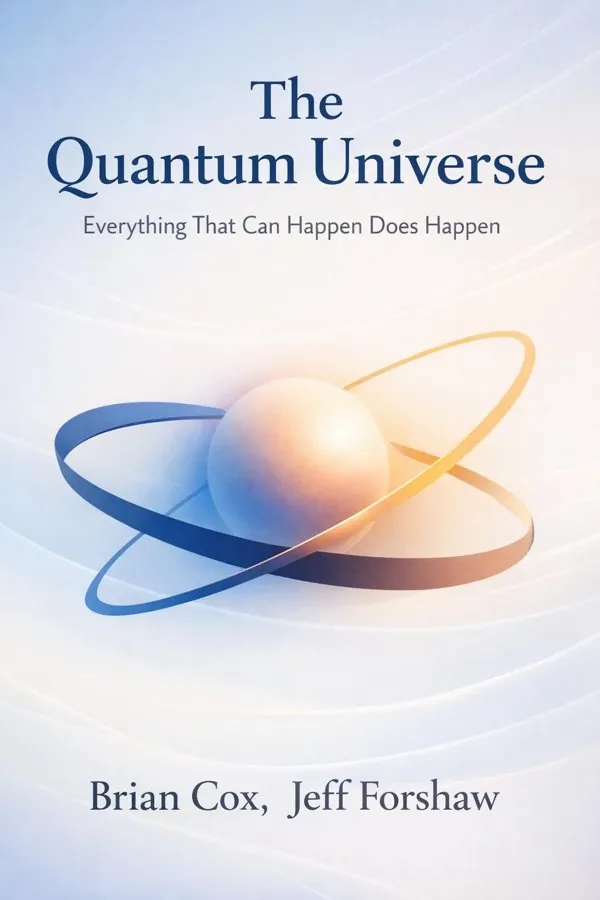
The Quantum Universe: Everything That Can Happen Does Happen
The Quantum Universe is an ambitious and remarkably readable guide to the most successful and most bewildering theory in modern science: quantum mechanics. In this book, physicists Brian Cox and Jeff ...
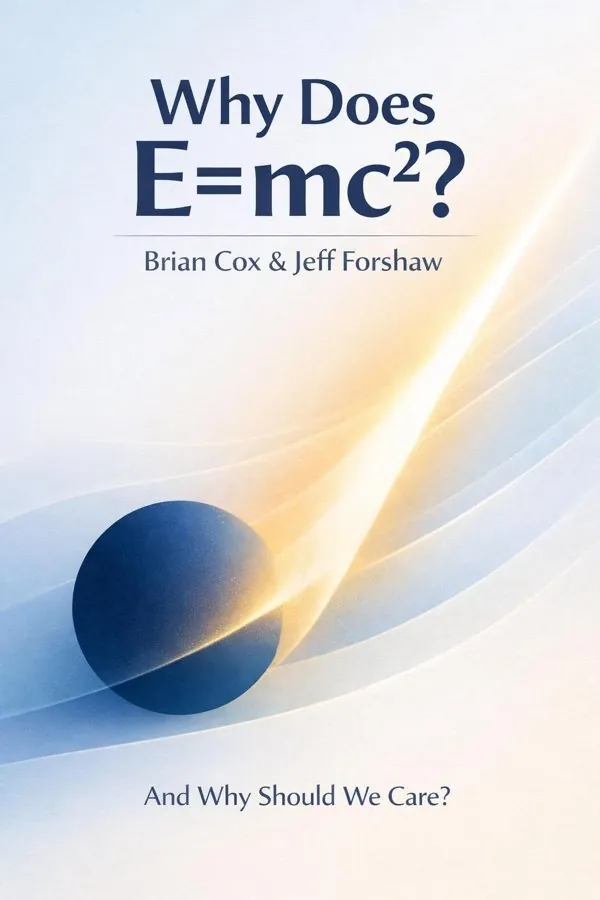
Why Does E=mc²?: And Why Should We Care?
This book explains Einstein’s famous equation E=mc² in accessible terms, exploring the fundamental principles of physics that underpin it. Brian Cox and Jeff Forshaw guide readers through the concepts...
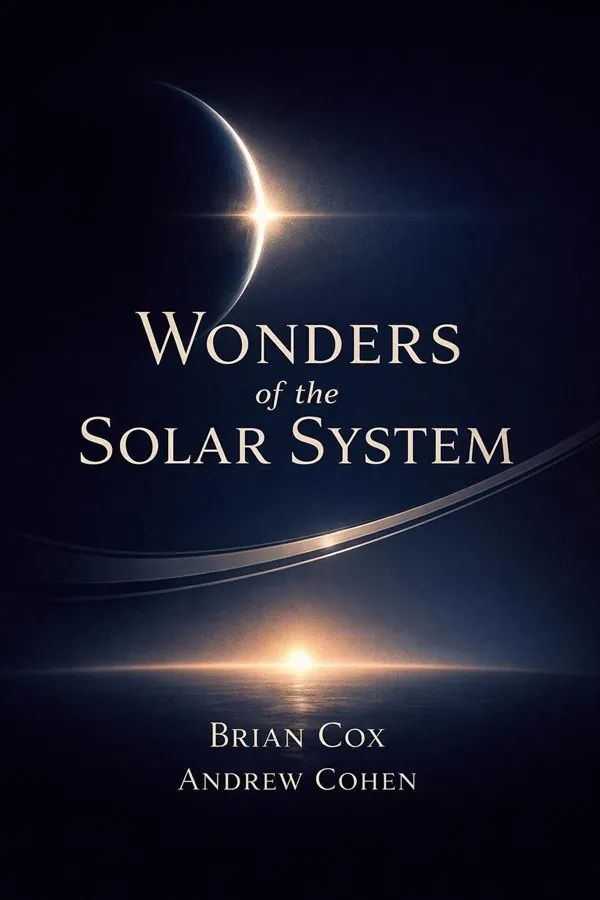
Wonders of the Solar System
Wonders of the Solar System explores the beauty and complexity of our planetary neighborhood, combining stunning imagery with scientific insight. Brian Cox and Andrew Cohen guide readers through the p...
Key Insights from Brian Cox
From Classical Certainty to Quantum Beginnings
The real shock of quantum mechanics is not that nature is complicated, but that certainty itself has limits. For centuries, physics was shaped by the Newtonian dream: if you knew the position and speed of every object, you could predict the future exactly. The universe appeared to be a giant machine...
From The Quantum Universe: Everything That Can Happen Does Happen
The Two-Slit Experiment Reveals Reality
If one experiment captures the unsettling beauty of quantum mechanics, it is the double-slit experiment. Cox and Forshaw use it to show, with minimal mystification, that the world does not behave according to ordinary visual logic. Imagine firing particles such as electrons toward a barrier with two...
From The Quantum Universe: Everything That Can Happen Does Happen
The Wave Function Encodes Possibility
Quantum mechanics does not tell us what a particle is doing in the classical sense; it tells us what can happen and with what likelihood. The tool for this is the wave function, one of the most important and misunderstood ideas in physics. Cox and Forshaw explain it not as mystical vapor but as a pr...
From The Quantum Universe: Everything That Can Happen Does Happen
Superposition Changes the Rules of Logic
One of quantum mechanics’ most radical claims is that a system can exist in a combination of states before measurement. This is superposition, and it is the engine behind much of the theory’s strangeness. Cox and Forshaw make clear that superposition does not mean particles are vaguely indecisive. I...
From The Quantum Universe: Everything That Can Happen Does Happen
Uncertainty Sets a Fundamental Limit
The uncertainty principle is often reduced to a slogan about measurement being clumsy, but Cox and Forshaw show that its meaning is far deeper. Heisenberg’s uncertainty principle says that certain pairs of properties, such as position and momentum, cannot both be known with unlimited precision at th...
From The Quantum Universe: Everything That Can Happen Does Happen
Entanglement Connects Distant Quantum Systems
Entanglement is the point where quantum mechanics seems to challenge not just intuition, but our whole picture of separateness. Cox and Forshaw explain that when two particles interact in certain ways, their quantum states can become linked so completely that neither particle has an independent desc...
From The Quantum Universe: Everything That Can Happen Does Happen
About Brian Cox
Brian Cox is a British physicist and professor of particle physics at the University of Manchester, known for his work on the Large Hadron Collider and for popular science broadcasting.


Frequently Asked Questions
Brian Cox is a British physicist and professor of particle physics at the University of Manchester, known for his work on the Large Hadron Collider and for popular science broadcasting.
Read Brian Cox's books in 15 minutes
Get AI-powered summaries with key insights from 3 books by Brian Cox.