
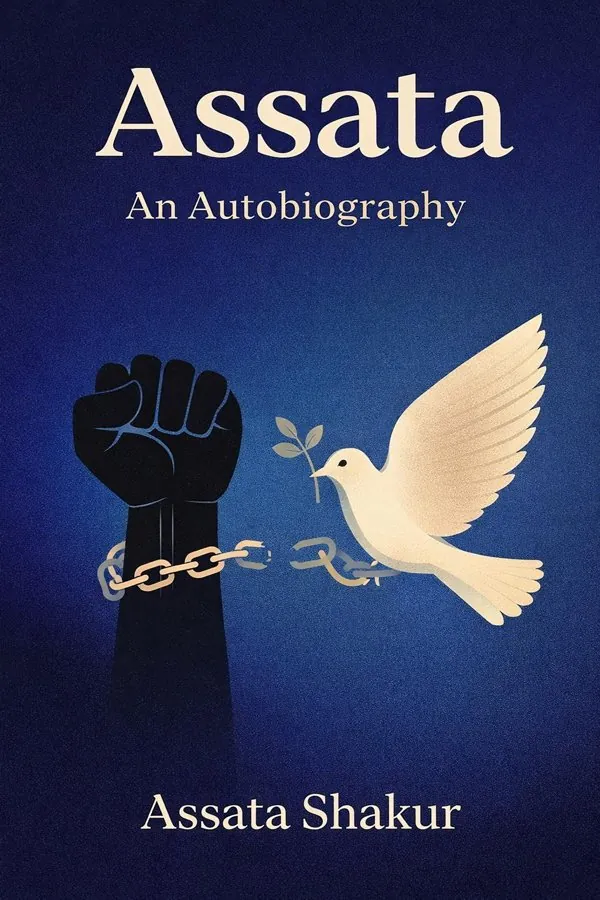
Assata: An Autobiography: Summary & Key Insights
 10 min12 chaptersAudio available
What Is Assata: An Autobiography About?
Assata: An Autobiography by Assata Shakur is a biographies book spanning 12 pages. Assata: An Autobiography is the memoir of Assata Shakur, a former member of the Black Panther Party and the Black Liberation Army. The book recounts her experiences growing up as a Black woman in America, her political awakening, her involvement in the Black liberation movement, and her eventual imprisonment and escape to Cuba. It is both a personal narrative and a political statement, reflecting on race, justice, and resistance in the United States.
This FizzRead summary covers all 12 key chapters of Assata: An Autobiography in approximately 10 minutes, distilling the most important ideas, arguments, and takeaways from Assata Shakur's work. Also available as an audio summary and Key Quotes Podcast.
Assata: An Autobiography
Assata: An Autobiography is the memoir of Assata Shakur, a former member of the Black Panther Party and the Black Liberation Army. The book recounts her experiences growing up as a Black woman in America, her political awakening, her involvement in the Black liberation movement, and her eventual imprisonment and escape to Cuba. It is both a personal narrative and a political statement, reflecting on race, justice, and resistance in the United States.
Who Should Read Assata: An Autobiography?
This book is perfect for anyone interested in biographies and looking to gain actionable insights in a short read. Whether you're a student, professional, or lifelong learner, the key ideas from Assata: An Autobiography by Assata Shakur will help you think differently.
- ✓Readers who enjoy biographies and want practical takeaways
- ✓Professionals looking to apply new ideas to their work and life
- ✓Anyone who wants the core insights of Assata: An Autobiography in just 10 minutes
Want the full summary?
Get instant access to this book summary and 100K+ more with Fizz Moment.
Get Free SummaryAvailable on App Store • Free to download
Key Chapters
I began life in the South—in Wilmington, North Carolina—a place steeped in contradictions. I was surrounded by love from my family, yet shadowed by the ugly truth of segregation. My mother and grandmother taught me dignity, even when the world around us tried to deny us that right. They showed me that pride was survival, and that resilience was passed down like a treasured heirloom. When I was still a child, my mother took me to New York, seeking the promise of opportunity that so many Black families believed the North could offer. But what awaited us was not freedom—it was a different kind of confinement.
In Queens, the racism was subtle but no less cruel; the segregation wasn’t marked by signs but by neighborhoods and schools. It was there that I began to understand the invisible lines America drew between its people. The lessons of my childhood came not from textbooks, but from watching who was allowed to dream and who was told to stay in their place. The warmth of my grandmother’s kitchen contrasted sharply with the cold indifference of the institutions outside. And though we learned to laugh and find beauty in small things, I never forgot how uneven the world seemed for people who looked like me.
+ 10 more chapters — available in the FizzRead app
All Chapters in Assata: An Autobiography
About the Author
Assata Shakur, born JoAnne Deborah Byron (later Chesimard), is an African-American activist and former member of the Black Panther Party and the Black Liberation Army. She was convicted in 1977 for the murder of a New Jersey state trooper, a charge she has consistently denied. In 1979, she escaped from prison and was granted asylum in Cuba, where she continues to live. Her autobiography has become an influential work in Black feminist and revolutionary literature.
Get This Summary in Your Preferred Format
Read or listen to the Assata: An Autobiography summary by Assata Shakur anytime, anywhere. FizzRead offers multiple formats so you can learn on your terms — all free.
Available formats: App · Audio · PDF · EPUB — All included free with FizzRead
Download Assata: An Autobiography PDF and EPUB Summary
Key Quotes from Assata: An Autobiography
“I began life in the South—in Wilmington, North Carolina—a place steeped in contradictions.”
“My teenage years were the time of awakening.”
Frequently Asked Questions about Assata: An Autobiography
Assata: An Autobiography by Assata Shakur is a biographies book that explores key ideas across 12 chapters. Assata: An Autobiography is the memoir of Assata Shakur, a former member of the Black Panther Party and the Black Liberation Army. The book recounts her experiences growing up as a Black woman in America, her political awakening, her involvement in the Black liberation movement, and her eventual imprisonment and escape to Cuba. It is both a personal narrative and a political statement, reflecting on race, justice, and resistance in the United States.
You Might Also Like

An American Marriage
Tayari Jones
10 min
Benjamin Franklin: An American Life
Walter Isaacson
10 min
I Know Why The Caged Bird Sings
Maya Angelou
10 min
Long Walk to Freedom
Nelson Mandela
10 min
Persepolis
Marjane Satrapi
10 min
Surely You're Joking, Mr. Feynman!
Richard P. Feynman
10 minBrowse by Category
Ready to read Assata: An Autobiography?
Get the full summary and 100K+ more books with Fizz Moment.