
Anna Karenina: Summary & Key Insights
by Leo Tolstoy
 10 min9 chaptersAudio available
Key Takeaways from Anna Karenina
Tolstoy begins with a domestic scandal because the deepest human dramas rarely start in palaces or battlefields; they begin at the breakfast table.
Some encounters feel accidental only in appearance; in literature and in life, they can reveal hidden desires before anyone speaks them aloud.
One of the novel’s most painful truths is that people often suffer not only from disappointment, but from believing they correctly understood what others felt.
A society reveals its values not by what it condemns in principle, but by whom it chooses to condemn in practice.
What many people call freedom can quietly become dependence if it rests entirely on another person’s attention.
What Is Anna Karenina About?
Anna Karenina by Leo Tolstoy is a classics book spanning 10 pages. What happens when private desire collides with public duty, and when the search for love becomes inseparable from the search for meaning? Leo Tolstoy’s Anna Karenina, first published in 1877, is one of the most powerful novels ever written because it refuses easy answers. Set in aristocratic and rural Russia, it follows Anna, a brilliant, sensitive married woman whose passionate affair with Count Vronsky sets in motion a devastating conflict between love, family, conscience, and social judgment. Alongside Anna’s tragedy runs the quieter but equally profound story of Konstantin Levin, whose struggles with work, marriage, faith, and purpose offer a counterpoint to Anna’s descent. Tolstoy transforms domestic life, social rituals, jealousy, childbirth, politics, and even farming into a sweeping meditation on how human beings ought to live. His authority comes not only from his mastery of psychological realism, but from his rare ability to see people in all their contradictions: noble and selfish, lucid and confused, loving and destructive. Anna Karenina matters because it turns intimate emotional life into a moral and philosophical drama that still feels startlingly modern.
This FizzRead summary covers all 9 key chapters of Anna Karenina in approximately 10 minutes, distilling the most important ideas, arguments, and takeaways from Leo Tolstoy's work. Also available as an audio summary and Key Quotes Podcast.
Anna Karenina
What happens when private desire collides with public duty, and when the search for love becomes inseparable from the search for meaning? Leo Tolstoy’s Anna Karenina, first published in 1877, is one of the most powerful novels ever written because it refuses easy answers. Set in aristocratic and rural Russia, it follows Anna, a brilliant, sensitive married woman whose passionate affair with Count Vronsky sets in motion a devastating conflict between love, family, conscience, and social judgment. Alongside Anna’s tragedy runs the quieter but equally profound story of Konstantin Levin, whose struggles with work, marriage, faith, and purpose offer a counterpoint to Anna’s descent. Tolstoy transforms domestic life, social rituals, jealousy, childbirth, politics, and even farming into a sweeping meditation on how human beings ought to live. His authority comes not only from his mastery of psychological realism, but from his rare ability to see people in all their contradictions: noble and selfish, lucid and confused, loving and destructive. Anna Karenina matters because it turns intimate emotional life into a moral and philosophical drama that still feels startlingly modern.
Who Should Read Anna Karenina?
This book is perfect for anyone interested in classics and looking to gain actionable insights in a short read. Whether you're a student, professional, or lifelong learner, the key ideas from Anna Karenina by Leo Tolstoy will help you think differently.
- ✓Readers who enjoy classics and want practical takeaways
- ✓Professionals looking to apply new ideas to their work and life
- ✓Anyone who wants the core insights of Anna Karenina in just 10 minutes
Want the full summary?
Get instant access to this book summary and 100K+ more with Fizz Moment.
Get Free SummaryAvailable on App Store • Free to download
Key Chapters
Tolstoy begins with a domestic scandal because the deepest human dramas rarely start in palaces or battlefields; they begin at the breakfast table. The novel opens in the Oblonsky household, where Stiva Oblonsky’s affair has been discovered by his wife Dolly, plunging the family into misery. This opening is not just plot setup. It establishes one of Tolstoy’s central insights: family life is the testing ground of character, and charm is no substitute for responsibility. Stiva is warm, sociable, and likable, but his pleasant temperament cannot repair the damage caused by selfishness. Dolly, exhausted and wounded, represents the emotional labor that keeps family life intact even when it is taken for granted.
Into this turmoil comes Anna Karenina, who seems at first like a force of grace and reconciliation. She restores peace between Dolly and Stiva through empathy and tact, showing her intelligence and emotional sensitivity. Yet the irony is crucial: the woman who can heal another family will soon become trapped in the collapse of her own. Tolstoy uses this contrast to show how fragile moral order is. People often understand pain clearly when it belongs to others, but much less clearly when passion enters their own lives.
The opening also teaches a practical truth about relationships: crises expose patterns that comfort often hides. Infidelity, resentment, neglect, and forgiveness are not abstract themes here; they are lived realities with consequences for spouses, children, and social standing. In modern life, the forms may differ, but the lesson remains the same. Trust is hard to rebuild once broken, and avoidance only deepens the wound.
Actionable takeaway: treat ordinary relationships as morally significant, because the habits of honesty, attention, and repair in daily life shape the entire course of a life.
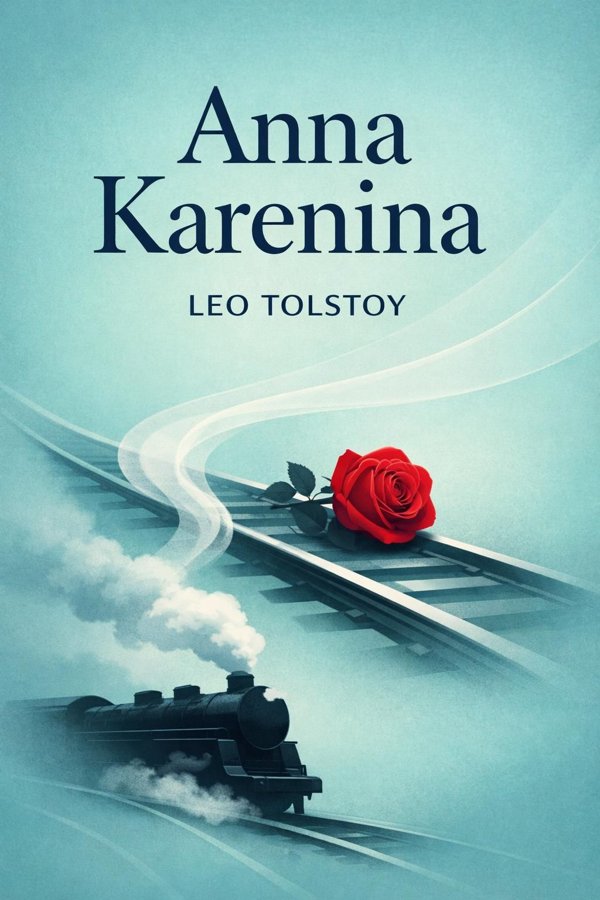
Some encounters feel accidental only in appearance; in literature and in life, they can reveal hidden desires before anyone speaks them aloud. Anna’s first meaningful meeting with Count Vronsky at the train station is one of the most famous moments in the novel because it combines attraction, symbolism, and foreboding in a single scene. The station, filled with noise, iron, steam, and movement, represents a modern world driven by forces larger than any individual. The accidental death of a railway worker at the station casts a shadow over Anna and Vronsky’s connection, hinting that passion may carry destruction within it from the very beginning.
Tolstoy does not present love here as a calm, rational choice. He shows how quickly one person can become charged with emotional significance. Vronsky is captivated by Anna’s presence, and Anna, despite her self-command, feels something in herself awaken. This matters because Tolstoy understands that decisive turning points often occur before we have language to explain them. A glance, a conversation, a coincidence, and suddenly a life begins to divide into before and after.
The train image returns throughout the novel as a symbol of inevitability, speed, and the terrifying momentum of events once they have been set in motion. In contemporary terms, we might compare this to moments when a new relationship, opportunity, or obsession seems thrilling precisely because it interrupts routine. The danger is that excitement can be mistaken for destiny. Not everything that feels powerful is good, and not everything inevitable is wise.
Tolstoy asks us to notice early signs: the atmosphere around a choice, the costs ignored in the rush of feeling, the stories we tell ourselves when desire wants to become fate.
Actionable takeaway: when a new attraction or turning point feels overwhelming, pause long enough to ask not only what you desire, but what consequences are already gathering around that desire.
One of the novel’s most painful truths is that people often suffer not only from disappointment, but from believing they correctly understood what others felt. Kitty Shcherbatskaya imagines that Vronsky will propose to her, while Levin arrives with sincere but awkward devotion, hoping for marriage. Kitty rejects Levin because she is dazzled by Vronsky’s attention and by the glittering social future she associates with him. But Vronsky, captivated by Anna, never intended the commitment Kitty assumed. The result is heartbreak, humiliation, and a painful education in the gap between romantic fantasy and reality.
Tolstoy treats Kitty’s suffering with seriousness, not condescension. Her experience reveals how youth can confuse admiration, flirtation, and genuine love. She is not foolish merely because she dreams; she is human. Levin, too, suffers from his own form of idealism. He longs for authenticity, yet he is socially clumsy and emotionally vulnerable. Their failed early connection matters because it shows that timing, maturity, and self-knowledge are often more important than intensity.
This part of the novel also highlights a practical issue that remains relevant: many people make major emotional decisions based on signals they have not tested. A warm conversation, repeated attention, or social chemistry can be mistaken for commitment. Tolstoy suggests that emotional honesty matters more than social performance. Kitty must learn to see beyond appearances; Levin must learn resilience and patience.
The broader lesson is that disappointment can become formative rather than merely destructive. Kitty’s illness and withdrawal after rejection lead her toward greater depth and humility. Levin’s refusal becomes part of his moral education. Neither gets what they want when they want it, yet both become more capable of love through suffering.
Actionable takeaway: do not build your future on assumptions, signals, or fantasies; seek clarity, accept disappointment as instruction, and let emotional pain refine rather than define you.
A society reveals its values not by what it condemns in principle, but by whom it chooses to condemn in practice. Tolstoy’s portrayal of Anna’s affair exposes a brutally unequal moral world. Men such as Stiva can be openly unfaithful and remain socially welcome, even charming. Anna, by contrast, is gradually excluded, watched, judged, and stripped of dignity once her relationship with Vronsky becomes known. The standard is not simply moral; it is deeply gendered. Her transgression becomes public identity, while male transgression remains a forgivable flaw.
What makes this especially tragic is that Anna is neither shallow nor indifferent to right and wrong. She understands the cost of her choices, feels guilt intensely, and suffers under the contradiction between her desire for emotional truth and the rigid hypocrisy of elite society. Tolstoy does not excuse everything she does, but he refuses to reduce her to a symbol of sin. She is a person trapped between authenticity and social law, between longing and shame. That complexity is what gives the novel its enduring power.
The issue goes beyond 19th-century Russia. Even today, public judgment often falls unevenly according to gender, status, appearance, or the ability to control the narrative. People may celebrate honesty in theory while punishing anyone whose choices make others uncomfortable. Social exclusion can become a form of moral violence.
Tolstoy invites readers to distinguish between true moral concern and the pleasure of condemnation. He asks whether communities actually help people recover, repent, change, or live truthfully, or whether they merely defend appearances. Anna’s isolation deepens not only because of what she has done, but because the world around her offers no humane path back into dignity.
Actionable takeaway: examine where your own judgments are selective or hypocritical, and choose compassion over social cruelty when confronting the failures of others.
What many people call freedom can quietly become dependence if it rests entirely on another person’s attention. Anna and Vronsky’s affair begins with intoxicating intensity, seeming to promise honesty, vitality, and escape from a loveless social arrangement. For a time, their passion feels more real than the formal world of marriage, etiquette, and status. Yet Tolstoy gradually reveals a devastating paradox: the relationship that appears to liberate Anna ends up narrowing her world. Severed from social belonging, estranged from her son, and increasingly dependent on Vronsky’s emotional constancy, Anna finds that love alone cannot sustain a whole life.
Vronsky also suffers, though differently. He sacrifices career and social ease, but retains more mobility than Anna ever can. Their unequal vulnerability poisons the bond between them. As Anna becomes more anxious and jealous, Vronsky feels trapped by expectations he cannot fully satisfy. The tragedy is not that passion was false, but that passion was expected to do what only a broader moral and social life can do. Romance cannot replace purpose, friendship, work, family, and inner stability.
This insight remains deeply practical. Modern culture often tells us that the right relationship should provide identity, healing, excitement, and meaning all at once. Tolstoy warns that such expectations place impossible weight on love. When one partner becomes the center of emotional existence, fear enters the relationship: fear of abandonment, divided attention, boredom, and change. Love then turns defensive and possessive.
The novel does not deny the beauty of passion; it shows its limits. Human flourishing requires a more durable architecture than desire alone. Without trust, independent purpose, and moral grounding, intense love can decay into surveillance and despair.
Actionable takeaway: cherish love deeply, but never ask one relationship to carry the entire burden of your identity, worth, and meaning.
Not all crises are romantic; some are existential, and they can be just as consuming. While Anna’s story moves through desire and social ruin, Levin’s story unfolds through work, doubt, and the longing to live truthfully. He is preoccupied with agriculture, labor, class relations, marriage, and the meaning of a good life. Often restless and self-critical, Levin feels alienated from fashionable society and suspicious of abstract theories that ignore real human experience. His concerns make him one of literature’s most recognizable seekers: a person who cannot simply drift through life without asking what it is all for.
Levin’s engagement with farming is not a side plot but a philosophical one. He wants to understand how people should work, how land should be managed, and how owners and peasants might live with greater justice and realism. He repeatedly discovers that grand systems fail when they ignore human nature. Tolstoy uses these agricultural debates to dramatize a larger point: meaningful life is built through contact with reality, not through vanity or ideology. Levin values what can be tested in daily practice.
His spiritual struggle is equally important. He experiences joy, love, frustration, and terror, yet none of these fully answers his deepest question about meaning. Many readers see themselves in Levin because his problem is modern: how to live well when inherited beliefs feel uncertain and social roles feel hollow. He does not arrive at wisdom through brilliance alone, but through humility, ordinary responsibilities, and openness to truths embodied by simpler people.
In practical life, Levin reminds us that purpose often emerges from committed engagement rather than sudden revelation. Meaning is found in work done attentively, relationships tended honestly, and questions faced without evasion.
Actionable takeaway: when life feels abstract or empty, return to concrete duties, honest work, and lived experience; clarity often grows from participation, not speculation.
Tolstoy’s most hopeful insight is that love matures not through perfect feeling, but through shared reality. After earlier misunderstanding and rejection, Kitty and Levin eventually marry, yet Tolstoy does not end their story at the wedding as if commitment solved everything. Instead, he explores the actual work of married life: adjustment, vulnerability, pride, illness, childbirth, quarrels, reconciliation, and the gradual discovery of each other’s strengths and weaknesses. In doing so, he offers one of literature’s most realistic portraits of marriage.
Levin and Kitty must both shed illusions. Levin learns that sincerity does not exempt him from selfishness, moodiness, or confusion. Kitty proves stronger, steadier, and more perceptive than he expected. Their marriage succeeds not because they are ideal, but because they keep learning how to love in truth rather than fantasy. This is the opposite of Anna and Vronsky’s dynamic, where emotional intensity isolates them from the wider structures that support life.
Tolstoy suggests that enduring love is less theatrical than passion and more demanding. It requires patience with another person’s difference, the ability to forgive small injuries, and willingness to be changed by domestic responsibility. Scenes involving family illness and childbirth especially reveal that love deepens when it becomes service. Affection becomes more durable when joined to sacrifice.
This idea has obvious modern application. Many people evaluate relationships by excitement alone, then feel disillusioned when ordinary life arrives. Tolstoy argues that ordinary life is the relationship. Shared meals, money worries, parenting, fatigue, and mutual care are not interruptions of love; they are its proving ground.
A strong partnership is built less by constant emotional intensity than by trust, honesty, and repeated acts of attention.
Actionable takeaway: judge relationships not only by how deeply you feel, but by how well you and the other person face reality together.
Human beings can endure guilt, disappointment, and uncertainty far longer than they can endure complete emotional isolation. As Anna becomes increasingly cut off from respectable society, from stable family life, and even from her own sense of self, her suffering intensifies into paranoia and despair. She fears Vronsky’s waning affection, reads betrayal into ordinary events, and becomes trapped in cycles of suspicion and emotional volatility. Tolstoy shows with heartbreaking precision how a mind under pressure can turn inward until it becomes its own tormentor.
Anna’s decline is not merely the punishment of sin, nor simply the result of social judgment. It emerges from the interaction of personal choices, external exclusion, wounded pride, dependence, and loneliness. That complexity is crucial. People often look for single causes when tragedy unfolds, but Tolstoy insists that despair is cumulative. It grows when someone loses not just one relationship, but the larger web of meaning that makes suffering bearable.
There is a deeply contemporary lesson here. In modern terms, Anna’s story speaks to the psychological cost of living without trusted community, stable identity, or emotional support. Intense relationships can become dangerous when they replace all other forms of belonging. Jealousy and anxiety expand in isolation because nothing outside the relationship can restore perspective.
Tolstoy’s compassion lies in his refusal to mock inner collapse. He understands how quickly fear can distort interpretation, how shame can make help feel impossible, and how a person can become exhausted by trying to sustain a life that no longer feels livable. The reader is invited not to judge from a distance, but to recognize vulnerability in themselves and others.
Actionable takeaway: protect yourself and those you love from emotional isolation by building multiple sources of support, perspective, and belonging before crisis arrives.
The final power of Anna Karenina lies in its refusal to end in simple darkness. Anna’s death is one of the most devastating scenes in literature, not because it is merely shocking, but because Tolstoy has shown how many missed chances, invisible pressures, and inner wounds converge in a single irreversible act. Her end reveals the destruction that can follow when desire, pride, fear, and isolation outrun hope. Yet the novel does not conclude there. It turns instead toward Levin, whose spiritual struggle reaches a modest but profound resolution.
Levin does not receive a grand philosophical system or miraculous certainty. What he discovers is smaller and greater at once: life has meaning when lived in goodness, love, humility, and service, even if intellectual doubt remains. He realizes that the search for perfect rational proof had blinded him to the moral knowledge already present in ordinary life. Faith, for Levin, is not the elimination of questions, but the reorientation of living. He understands that one can still be impatient, flawed, and confused while choosing to live toward the good.
This ending matters because Tolstoy places tragedy and renewal side by side. The novel acknowledges that some lives break under unbearable strain, yet it also insists that meaning is still possible. That dual vision is what makes the book feel so true. Life contains both ruin and revelation, often uncomfortably close together.
For readers today, the final lesson is not to divide the world into winners and failures, saints and sinners. Instead, Tolstoy asks us to see that every life depends on the daily direction of the heart: toward vanity or humility, toward self-enclosure or love, toward despair or responsibility.
Actionable takeaway: accept that certainty may never come, and build your life anyway around everyday acts of goodness, love, and moral attention.
All Chapters in Anna Karenina
About the Author
Leo Tolstoy (1828–1910) was a Russian novelist, essayist, and moral thinker whose work transformed world literature. Born into an aristocratic family, he served in the military before turning to writing, drawing on both privileged society and ordinary rural life for his fiction. He became internationally famous for War and Peace and Anna Karenina, novels celebrated for their realism, psychological depth, and philosophical reach. In his later years, Tolstoy underwent a profound spiritual crisis that led him to write extensively about religion, ethics, nonviolence, education, and social justice. His ideas influenced generations of readers and thinkers, including Mahatma Gandhi and Martin Luther King Jr. Tolstoy remains one of the defining literary voices of the 19th century because he combined narrative brilliance with a relentless search for moral truth.
Get This Summary in Your Preferred Format
Read or listen to the Anna Karenina summary by Leo Tolstoy anytime, anywhere. FizzRead offers multiple formats so you can learn on your terms — all free.
Available formats: App · Audio · PDF · EPUB — All included free with FizzRead
Download Anna Karenina PDF and EPUB Summary
Key Quotes from Anna Karenina
“Tolstoy begins with a domestic scandal because the deepest human dramas rarely start in palaces or battlefields; they begin at the breakfast table.”
“Some encounters feel accidental only in appearance; in literature and in life, they can reveal hidden desires before anyone speaks them aloud.”
“One of the novel’s most painful truths is that people often suffer not only from disappointment, but from believing they correctly understood what others felt.”
“A society reveals its values not by what it condemns in principle, but by whom it chooses to condemn in practice.”
“What many people call freedom can quietly become dependence if it rests entirely on another person’s attention.”
Frequently Asked Questions about Anna Karenina
Anna Karenina by Leo Tolstoy is a classics book that explores key ideas across 9 chapters. What happens when private desire collides with public duty, and when the search for love becomes inseparable from the search for meaning? Leo Tolstoy’s Anna Karenina, first published in 1877, is one of the most powerful novels ever written because it refuses easy answers. Set in aristocratic and rural Russia, it follows Anna, a brilliant, sensitive married woman whose passionate affair with Count Vronsky sets in motion a devastating conflict between love, family, conscience, and social judgment. Alongside Anna’s tragedy runs the quieter but equally profound story of Konstantin Levin, whose struggles with work, marriage, faith, and purpose offer a counterpoint to Anna’s descent. Tolstoy transforms domestic life, social rituals, jealousy, childbirth, politics, and even farming into a sweeping meditation on how human beings ought to live. His authority comes not only from his mastery of psychological realism, but from his rare ability to see people in all their contradictions: noble and selfish, lucid and confused, loving and destructive. Anna Karenina matters because it turns intimate emotional life into a moral and philosophical drama that still feels startlingly modern.
More by Leo Tolstoy



You Might Also Like


Browse by Category
Ready to read Anna Karenina?
Get the full summary and 100K+ more books with Fizz Moment.